@bilmoko67@historyinmemes Annual total: Over 3.56 million hectares of trees were planted.
· That's roughly 9,753 hectares per day.
· At a moderate density, this easily exceeds 1 billion trees planted per day on average.
China is now testing AI-powered drones that can plant 100,000 trees per day
10 BROWSER EXTENSIONS THAT GIVE YOU AN UNFAIR ADVANTAGE
Install every single one. Everyone has the same browser. These are the difference between using the internet and weaponizing it.
1. uBlock Origin
The best ad blocker ever made, and it does more than kill ads. It cuts page load times 30 to 50% on heavy sites and uses less memory than every competitor. Free, open source, and it never sold out to an "acceptable ads" deal. The hours you lose to slow, ad-stuffed pages, gone.
2. Vimium
Browse the entire web from your keyboard. Click any link, scroll any page, switch any tab without ever touching the mouse. One week to learn, then a lifetime of never reaching for the trackpad again. The tiny delay of mouse-to-keyboard, multiplied by hundreds of times a day, deleted.
3. SponsorBlock
Skips the sponsored segment of any YouTube video automatically, because thousands of users crowdsource exactly where each ad-read starts and ends. The "and today's video is brought to you by" you've heard 10,000 times just disappears. Free and open source.
4. Dark Reader
Forces a clean dark mode on every website on the internet, even the ones that don't offer one. Tune brightness, contrast, and sepia per site. Long research sessions stop frying your eyes, which is the difference between quitting at 9pm and working clean until midnight.
5. Keepa
Shows the full price history of any Amazon product as a graph the second you land on the page. That "limited time deal" was the normal price last week. You stop getting played by fake discounts and you buy at the actual bottom. One install pays for itself on the first order.
6. Refined GitHub
Adds dozens of quiet upgrades to GitHub that the site should have shipped years ago. One-click branch cleanup, mark files as viewed in pull requests, whitespace-aware diffs. If you live on GitHub, it strips the friction out of every single session.
7. Session Buddy
Saves every open tab into a named session you can restore with one click, and survives the browser crash that used to wipe out two hours of research. Your 40 open tabs become a saved workspace instead of a memory leak. Close them without fear and bring them all back later.
8. ClearURLs
Strips the tracking junk off every link before it loads, the long tail of "?utm_source=" and click IDs companies use to follow you. Cleaner links, fewer trackers, and URLs you can actually share without broadcasting where you came from. Runs silently in the background.
9. Privacy Badger
The EFF's tracker blocker that learns as you browse instead of using a fixed list. It watches which companies follow you across sites and silently blocks the ones that do. Built by the lawyers who actually fight for the open web in court. No commercial deals, no compromise.
10. Wappalyzer
Tells you exactly what any website is built with the moment you open it. The framework, the analytics, the hosting, the payment stack, the ad tools. Founders use it to scout competitors. Developers use it to learn. You see the machinery behind every site you visit.
Same browser as everyone else. Completely different machine.
As someone who partially grew up among European elite kids like him, this reminds me just how incredibly hollow some of them are.
For a quick background, I went to one of the poshest high schools in France (Janson de Sailly, for those who know) and, afterwards, to what was at the time - and probably still is - the most expensive undergraduate school in Europe (EHL in Lausanne, Switzerland).
Needless to say, many of my classmates were from unbelievably privileged backgrounds. Just in my classroom in Lausanne I had the son of a (very famous) Russian oligarch, the son of Italy's largest real estate developer and the son of Spain's largest real estate developer (funnily, the latter two were flat mates).
Another classmate of mine came from the richest family in Naples, Italy and - while we were at school - his father (known in Naples under the nickname "Il Sultano") got arrested for having bribed half of Naples's city council - which, if you know Naples, ought to tell you something.
These were the kids I was doing group projects on business ethics with (literally) 😅
Anyhow, my story, and probably my luck, was that - before going to high school in Paris - I was raised in very normal public schools in the South of France where my friends were anything but wealthy. Their parents were farmers and everyday workers.
Which means - and I'd come to realize this was very important in life - that it was easy for me to understand how big a mistake it is to see money as identity and meaning - and to confuse someone's net worth with their actual worth.
What really struck me at the time was the contrast with my "poor" classmates of earlier in my life. They couldn't define themselves by what they had - by definition - and this forced them to reach deeper for their identity: their skills, knowledge, humor, etc.
Rich kids can skip that entire process, and the tragedy is that most of them do: they reach for the readymade identity that money provides. I remember being incredibly frustrated by many of my classmates, like "ok, I get it, your dad is rich and you own a lot of nice things but who are YOU, what else is there?" The answer, more often than not, was nothing.
To be fair, there were exceptions. One of my classmates I was most impressed by came from one of Zurich's wealthiest families (which, if you know Zurich, means insanely wealthy) yet he was almost OCD in not showing he had money: driving the shittiest car imaginable, living in a small studio, etc. He was very intellectual, very contrarian, and clearly at war with the idea that his family's wealth ought to define who he was.
I only discovered who he actually was when I started my first company and he approached me to invest: to discuss the investment I went to one of his family homes, which it turned out was a literal palatial castle on the shores of Geneva lake. The guy had decided to live in a small rundown studio when he literally had a castle sitting empty a 5-min drive away.
THAT I was impressed by: it's easy to see that money isn't meaning when you don't have any. To see it when you have more than almost anyone - when everyone around you is organized around the opposite assumption - is much harder. But to actually live it, to choose the studio when you have the castle keys in your pockets - with no audience to applaud you for that - that shows real depth.
At the end of the day, I think, the real distinction isn't between rich and poor but between people who exist from the inside out and people who exist from the outside in.
Wealth just happens to make it incredibly easy to be the latter, to skip the work of becoming someone and settle for a borrowed identity that glitters from the outside but is hollow all the way through. A Potemkin village identity.
This is actually a real societal issue, and magnified by social media (with idiotic posts like this one 👇): the more "outside in" folks out there, the less people with genuine internal anchors, the more fragile everything becomes.
When you think about it, everything that genuinely matters in a society is built by people who think for themselves: they take the world in, pass it through something genuinely their own, and give back something that didn't exist before: an idea, a conviction, a stand.
Every reform, every invention, every act of moral courage in history came from someone with an internal anchor strong enough to resist the current. Remove those people and all you have left is the current.
This isn't new, by the way. Most ancient traditions warn against exactly this, from the Bible (the golden calf story) to Confucius, who built his entire ethics around the distinction between the exemplary person (the Junzi, 君子) - oriented around internal cultivation and righteousness - and the petty person (Xiaoren, 小人), oriented around profit and gain. The junzi builds himself from the inside, the xiaoren chases what's outside.
So please, do not make the mistake of being impressed by wealthy people flaunting their wealth. Don't focus on the glitter, focus on the hollowness it's trying to hide.
YouTube deleted 16.7 million videos in six months.
Gone.
Channels you subscribed to.
Tutorials you bookmarked.
Music you saved for later.
Creators you supported for years.
Gone.
So one engineer named Simon, originally from Switzerland, now living in South East Asia, built a tool that ends this forever.
It is called TubeArchivist.
Nearly 8,000 stars on GitHub. GPL-3.0. Free.
It downloads any YouTube channel you subscribe to, stores every video on your own server, and gives you a Netflix-style library you fully own.
No ads.
No "this video is no longer available."
No algorithm.
No Premium subscription.
Then YouTube did the unthinkable.
July 18, 2024. They rolled out the "Sign in to confirm you're not a bot" wall.
October 29, 2024. They started IP-banning entire data centers. Hetzner gone. OVH gone.
Coincidence.
Here is the wildest part.
TubeArchivist did not fold.
March 28, 2026. Simon shipped v0.5.10. New release. Same one engineer. 17x more commits than anyone else on the repo.
It still works.
It still downloads.
It still restores the dislike count YouTube deleted in November 2021.
One Swiss engineer vs. a trillion-dollar ad machine.
YouTube Premium costs $13.99 a month. $167.88 a year. Forever.
TubeArchivist costs zero. Forever.
But DO NOT install it. We should all keep paying Google $168 a year to watch the videos we already chose to watch.
100% Open Source. (Link in the comments)
Arabic has 14 words for love. Each one describes a different stage. And here's what got me. Each one comes from a root that has nothing to do with love. Until you see the connection. And then you can't unsee it.
All 14. Let me walk you through them.
The Cato Institute is a libertarian think tank.
It just published a 30-year study showing immigrants paid 14.5 trillion dollars more in taxes than they received in government benefits.
Every single year. For thirty years. Without exception.
The country was lied to.
Here is what the study found.🧵
10 free websites that feel like cheat codes for life.
You used to pay for half of these. Bookmark them before you forget.
1. Photopea
A free Photoshop that runs inside your browser. Opens PSD files.
Site → https://t.co/Ca9FHLI3XA
2. TinyWow
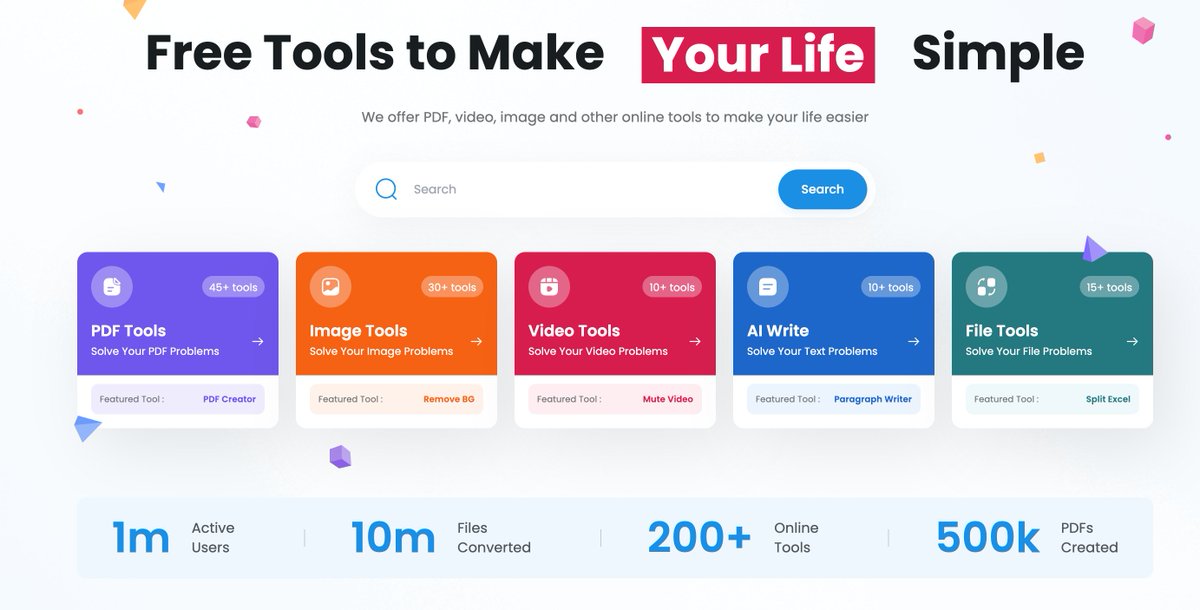
100+ free tools in one place. No signup. No watermarks.
Site → https://t.co/mEhQaaVdkF
3. Cobalt. tools
Paste any video link. Get the video. No ads. No tracking.
Site → https://t.co/gSrMs9kTbA
4. Remove .bg
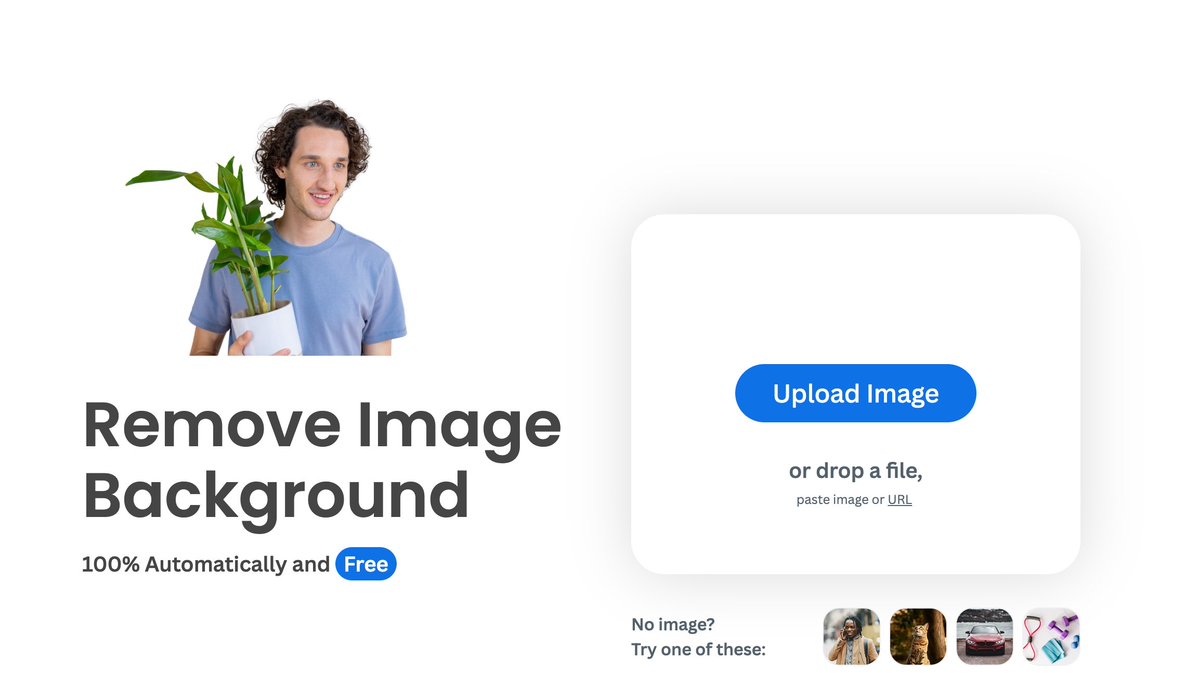
Removes the background from any photo in five seconds.
Site → https://t.co/nqr6K2F6mA
5. Hemingway Editor
Paste your writing. It highlights everything weak, wordy, and unclear.
Site → https://t.co/623MGBrGWV
6. WolframAlpha
Solves any math or science problem and shows the steps.
Site → https://t.co/Ti4sC26NVT
7. Squoosh
A free image compressor built by Google. Shrinks photos to a fraction of their size with no quality loss.
Site → https://t.co/PBBv1AU6Vi
8. Internet Archive
Free access to 35 million books, films, and the entire history of the web.
Site → https://t.co/cU1bkJTFnD
9. Crash Course
Full college-level courses on history, science, philosophy, and economics. 100% free on YouTube.
Site → https://t.co/k1Z65WOQgD
10. Excalidraw
A free whiteboard for diagrams, flowcharts, and wireframes that actually look professional.
Site → https://t.co/Vxb1OkOn5P
Here's the wildest part:
If you replaced these with paid alternatives, you would spend $200 to $500 every single month.
All of them. Free. Forever. No accounts. No subscriptions.
The internet has secret rooms most people never enter.
These 10 are the doors.
Save this before you forget.
100% free. Forever.
@thejuicemedia@karen4the6th putting Iran and Russia in same boat as western aggressors, and repeating the "thousands of innocent Iranian citizens massacred" propaganda (many bystanders were killed in the western armed attack on Iran government though) was very disappointing coming from you guys
So begins the largest veteran and military family act of civil disobedience since the Iraq war began, occupying the Cannon building Rotunda - protesting yet another forever war with Iran which includes the genocide in Palestine, the ethnic cleansing in southern Lebanon, and the potential ground operation in Cuba. Whatever violence we do overseas always comes back home and every war fought by this government is a war on the working class, which is you… we’re here until arrest or speaker Mike Johnson come out to answer for the dead and meet our demands.
If you’re an active duty service member and do not wish to join the 5th US generation fighting in a senseless self-destructive war, immoral war for the rich, we will stand with you, there is a way out. Info below:
You can file as a conscientious objector and keep your benefits based off time in service. Please call the G.I Rights Hotline (1-877-447-4487) and visit center on conscience on war
The coalition includes members from: About Face, Veterans for Peace, Common defense, 5051 vets contingent, Military families speak out, and the Center on Conscience and War.
If governments were actually doing their job, this Palantir document 👇 wouldn't be a manifesto they proudly boast about, but a clear sign of the urgent need to purge its software from the public institutions it has infiltrated.
What are they saying, essentially?
They basically promote a clash of civilization worldview in which there exists a "they" - the supposed enemies of Western civilization, whose cultures the document codes as inferior - and a "we" who must stop indulging in decadent restraint and invest massively in AI weapons and defense software (which conveniently makes Palantir's product catalog the civilizational cure).
Look at point 4 for instance. They write that "the limits of soft power, of soaring rhetoric alone, have been exposed. The ability of free and democratic societies to prevail requires something more than moral appeal. It requires hard power, and hard power in this century will be built on software."
It all rests on a pretty massive assumption: that coexistence is impossible. Why would "free and democratic societies" (by which they obviously mean Western-style liberal-democracies) need to "prevail"? Why can't they simply coexist with other civilizations or political systems out there?
Nowhere in the document do they defend this assumption: it's simply asserted as the starting condition of the argument.
But it's the entire ballgame: if civilizations and political systems can coexist - as they largely have, imperfectly but recognizably, throughout history - then the entire case they make in the document evaporates.
In fact one can argue that, studying history, the big problem was not that civilizations couldn't coexist: it was that, from time to time, one of them decided that others were inferior, threatening, or standing in the way of its rightful expansion - and acted accordingly.
So many catastrophes and so much human suffering in history trace back not to the fact of plural civilizations, but to one of them deciding it could no longer tolerate the others.
The problem, in other words, has almost always been exactly the worldview Palantir is now selling. Their manifesto isn't warning against the cause of some of the worst periods in history: it's arguing for reviving them!
Or take point 15: they explicitly call for the re-armament of Germany and Japan, and an end to "Japanese pacifism". Basically undoing one of the foundational settlements of the post-WW2 order.
I mean, think about the insanity of this for a second: a private company - unelected, answerable only to its shareholders - is casually proposing to overturn the security architecture of two continents. A settlement that took a world war, and tens of millions of dead to establish.
Why do they propose this? There is obviously a commercial motivation: a remilitarized Germany and Japan are massive new defense-software markets.
But the more troubling answer is that point 15 fits into the ideological project the rest of the manifesto lays out - a civilizational contest requires a consolidated Western bloc, and pacifist members are a liability in such a contest.
So taking a step back we now have what's the most influential defense-software company in the world, with its code deeply embedded in all the machinery of Western states - intelligence agencies, militaries, police forces, welfare systems, border controls - openly outing itself as an ideological project.
They're effectively saying "our tools aren't meant to serve your foreign policy. They're meant to enforce ours."
Because, worryingly, that's what they CAN do. Palantir software is all about basically telling states: "these are your threats, these are the people and groups to watch, these are the patterns that matter, these are the targets that warrant action."
For instance the DGSI - the French intelligence services - use Palantir (see: https://t.co/3YJk88k4QY): do you honestly think the software is warning them about, say, the NSA tapping the phones of French government officials? About the weaponization of US extraterritorial law against French companies? Did it warn them about the AUKUS ambush that cost France a sixty-billion-euro submarine contract? Obviously not.
And that's exactly what the manifesto is saying. They've positioned themselves as advocates of Western civilizational unity, so their software can't undermine it. The ideological position and the product roadmap have to align, or the whole project falls apart.
This makes their software not only deeply dangerous for the world as a whole but also, almost by definition, for any country using it. When it comes to your security as a state, it is primordial you base yourself on truth as opposed to ideology. The entire point of an intelligence agency is to tell its government what is true, not what your so-called "allies'" defense contractors would like you to see.
A state that outsources its threat assessment to a company with an explicit ideological agenda is not gathering intelligence, it is essentially subscribing to propaganda.
The conclusion couldn't be more obvious. Every government still running Palantir software in its intelligence, security, or public-service infrastructure needs to start ripping it out, now! Lest they want to be embarked on the delusional and deeply destructive clash-of-civilizations crusade Palantir has now openly committed itself to.
Mushrooms are unique: they can make Vitamin D from sunlight, just like human skin. Sunlight converts their natural ergosterol into Vitamin D2, meaning even store-bought mushrooms can skyrocket in nutrients after a short sunbath. Place them on in the sun and you’re literally charging your food with solar energy