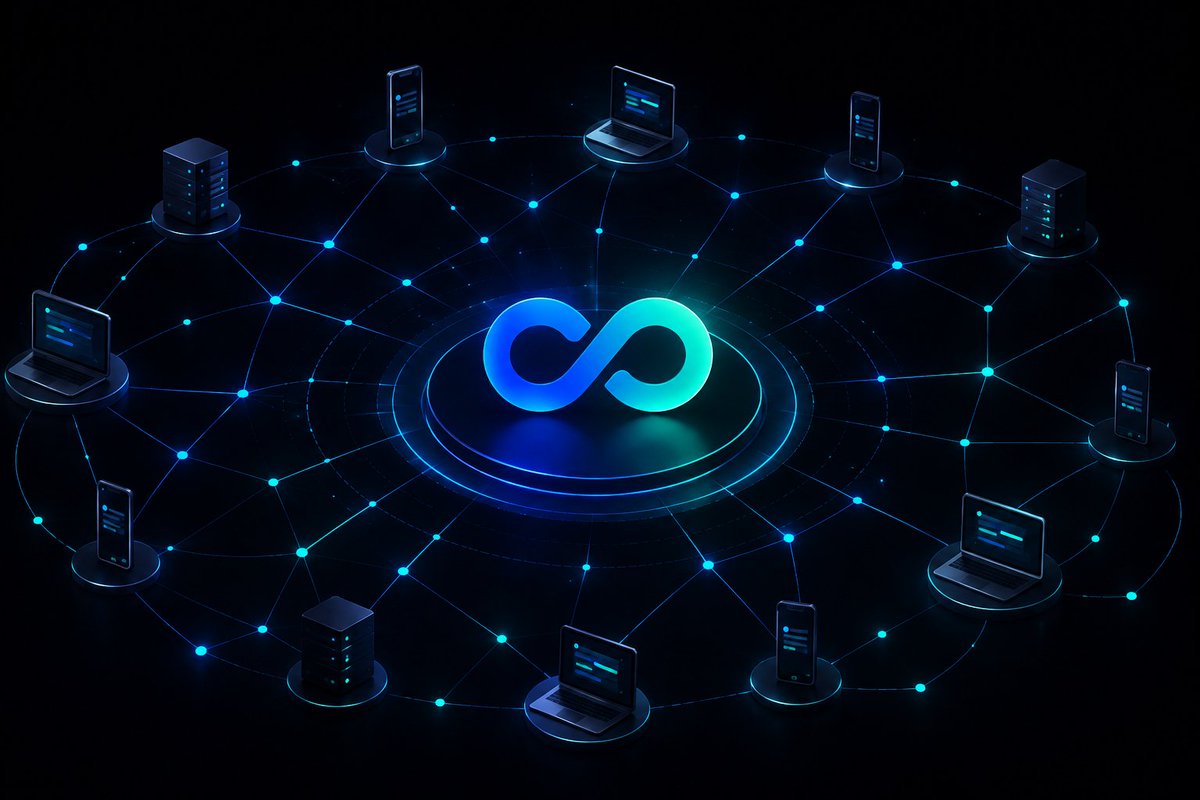
How do you discover a trade without a central marketplace?
In OpenFiat, merchants don't rely on a single platform to host and distribute their advertisements.
Advertisements are distributed across the OpenFiat Network.
When a merchant publishes or updates an advertisement, that information propagates between independent nodes through the network. Nodes maintain marketplace information and make it available to compatible applications searching for trades.
This means trade discovery isn't tied to one website, one application, or one marketplace operator.
Different applications can connect to the OpenFiat Network, search available advertisements, and help users discover merchants and trading opportunities. If one node becomes unavailable, another compatible node can continue providing access to marketplace information.
The distinction is simple:
A centralized marketplace owns the directory.
An open network distributes it.
That's how OpenFiat approaches trade discovery.
#OpenFiat #P2P #DeFi #Solana #Decentralization
What is an OpenFiat node?
An OpenFiat node is an independent piece of infrastructure that participates in the OpenFiat Network.
Nodes communicate with one another to keep the marketplace synchronized. They propagate advertisements, merchant availability, reputation, risk information, trade-session data, and other marketplace information across the network.
No single node owns the marketplace.
Developers, businesses, and communities can operate their own nodes and connect applications to them. As more independent nodes participate, the marketplace becomes distributed across the network rather than depending on one company's servers or infrastructure.
That is what makes the OpenFiat Network different from a centralized marketplace: the protocol defines how the network works, while independent operators provide the infrastructure that keeps it running.
#OpenFiat #DeFi #Crypto #Web3 #Decentralization
Decentralization isn't about putting everything on a blockchain.
It's about removing unnecessary points of control.
A protocol can be open source, run on Solana, and still depend heavily on a single organization if that organization controls the infrastructure, determines who can participate, controls critical services, or has privileged access to change how the system operates.
True decentralization requires a different approach.
The protocol should define the rules, while independent participants provide the infrastructure, applications, services, and governance around it. No single company should be required for the marketplace to remain operational.
That is why OpenFiat is designed as a protocol rather than a platform.
Anyone should be able to build on it, operate infrastructure, run applications, and participate in the network without the entire system depending on a single operator.
The goal isn't simply to make financial infrastructure decentralized on paper.
It's to make the system itself less dependent on any single point of control.
#OpenFiat #DeFi #Crypto #Decentralization #Web3
What would a truly open financial marketplace look like?
At OpenFiat, we believe it should be a network where merchants, applications, infrastructure providers, and users can participate independently without the entire marketplace depending on a single operator.
That is the direction decentralized financial infrastructure needs to move.
#OpenFiat #DeFi #Crypto #Web3 #Decentralization
Solana is the settlement layer for OpenFiat.
It provides the blockchain infrastructure for escrow, stablecoin custody, staking, governance, and final settlement.
The marketplace itself operates through the OpenFiat Network, a decentralized peer-to-peer network of independent nodes. These nodes propagate advertisements, merchant availability, reputation, risk information, and trade-session data across the network.
When a new advertisement is published, it is propagated through the network using the gossip protocol. Marketplace information is replicated across independent peers, so the network can continue operating even when individual nodes or infrastructure providers go offline.
Applications are not tied to a single OpenFiat server. They can connect to compatible nodes, while developers, businesses, and communities can operate their own nodes and build their own applications and interfaces on top of the protocol.
This separates the protocol from any single database, API, application, or infrastructure provider. The protocol defines the rules, while independent implementations provide the infrastructure and user-facing applications.
Solana provides the financial settlement.
OpenFiat provides the decentralized marketplace infrastructure.
#OpenFiat #Solana #DeFi #Crypto #Blockchain #Web3 #Decentralization
Bitcoin gave us decentralized money.
Stablecoins made that money useful for everyday payments.
But when you want to exchange those stablecoins for local fiat, the marketplace is still usually controlled by a centralized company.
That company runs the servers, controls the advertisements, stores reputation, manages disputes, decides which regions and payment methods are supported, and can ultimately discontinue the service.
The blockchain can keep running.
Your assets can remain on-chain.
But the marketplace connecting buyers and sellers can disappear.
That's the problem OpenFiat is built to solve.
Most peer-to-peer marketplaces today have something in common.
One operator.
One platform.
One set of rules.
One point of failure.
OpenFiat takes a different approach.
Instead of operating the marketplace itself, we're building the protocol that defines how decentralized marketplaces can function.
The goal isn't to own the marketplace.
The goal is to build open infrastructure for decentralized peer-to-peer exchange.
Why build a protocol instead of another application?
Because applications change.
Protocols endure.
Instead of creating one marketplace operated by one organization, OpenFiat defines a common protocol that decentralized marketplaces can implement.
The protocol establishes how participants discover trades, coordinate with one another, communicate, and settle transactions.
The first implementation is being developed by AllenHark.
The protocol is designed to outlive any single implementation.
That's the difference.
Why is moving between fiat and stablecoins still dependent on centralized marketplaces?
Crypto introduced decentralized money.
Yet when people want to exchange between local fiat currencies and stablecoins, they still rely on centralized platforms to coordinate the marketplace.
That means one operator controls how the marketplace functions.
We think there's a better way.
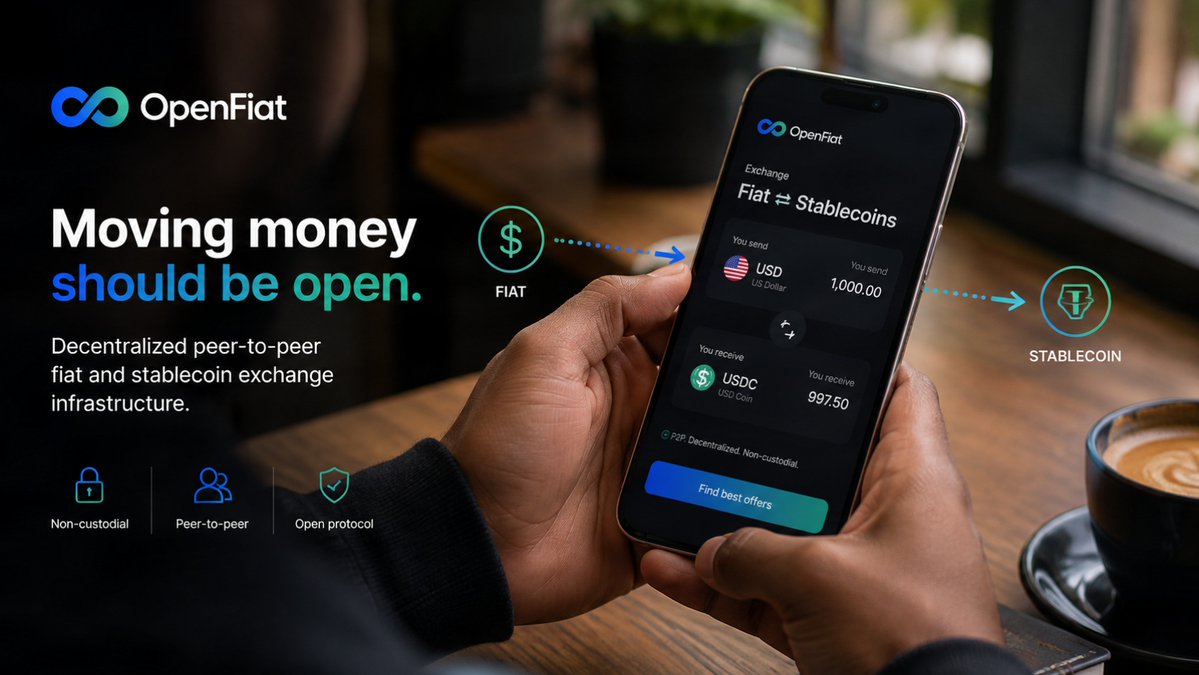
OpenFiat is building an open-source protocol for decentralized peer-to-peer fiat and stablecoin exchange.
Not another marketplace.
A protocol designed to make decentralized marketplaces possible.
This is where our journey begins.
Introducing OpenFiat.
OpenFiat is an open-source protocol for decentralized peer-to-peer fiat and stablecoin exchange.
The protocol defines how decentralized marketplaces can coordinate trade discovery, communication, reputation, and settlement without relying on a single centralized operator.
The first implementation of the protocol is currently being developed by AllenHark.
Our goal is to establish an open foundation that can evolve through community participation over time.
Follow along as we build OpenFiat.