Jeff Bezos reveals why compromise is one of the worst ways to resolve a disagreement
"An example of a really bad way of coming to agreement is compromise. If I say the ceiling is 11 feet and you say 12 feet, we say let's call it 11 and a half. That's compromise"
"The advantage of compromise is it's low energy. But it doesn't lead to truth"
"Another really bad resolution mechanism is who's more stubborn. Two executives disagree, they have a war of attrition, and whichever one gets exhausted first capitulates. You haven't arrived at truth, and this is very demoralizing"
"Escalation is better than a war of attrition. Escalate to your boss and say, we can't agree, we like each other, we're respectful, but we strongly disagree, we need you to make a decision"
"Exhausting the other person is not truth seeking. Compromise is not truth seeking"
The past 12 years in Nigeria has drained something from us. The part of us that used to break when we heard of kidnappings, terrorism, and murder.
We used to lose sleep for months. Now we scroll, feel a little pain, and move on.
This is how a people become numb. This is how a people become beasts without even knowing it.
Now think of the children being born and raised in this Nigeria today.
They won’t know the difference. Cruelty will feel normal. Blood will feel cheap. Humanity will feel optional.
As a matter of urgency, we must restore humanity to Nigeria. Before the next generation forgets what it means to be human.
State visits by Leaders are not tourism, and diplomacy is not a fashion parade. Every foreign trip undertaken by a government must deliver measurable benefits to the people, including investments, technology transfer, trade agreements, factory expansion, industrial partnerships, and job creation.
During President Trump’s recent visit to China, the American delegation reportedly included a few top government officials, and many of the biggest figures in global business and technology:
Consequently, huge trade deals worth several billion dollars including about 200 Boeing orders were achieved.
The list of the entourage included
1. Donald J. Trump – President of the United States
2. Marco Rubio – Secretary of State
3. Pete Hegseth – Secretary of Defence
4. Elon Musk – CEO, Tesla & SpaceX
5. Jensen Huang – CEO, Nvidia
6. Tim Cook – CEO, Apple
7. Larry Fink – CEO, BlackRock
8. Stephen Schwarzman – CEO, Blackstone
9. Kelly Ortberg – CEO, Boeing
10. Brian Sikes – CEO, Cargill
11. Jane Fraser – CEO, Citigroup
12. Larry Culp – CEO, General Electric
13. David Solomon – CEO, Goldman Sachs
14. Sanjay Mehrotra – CEO, Micron Technology
15.Cristiano Amon – CEO, Qualcomm
16. Dina P. McCormick – President of Meta
17. Ryan McInerney – CEO, Visa
18. Michael Miebach – President, Mastercard
19. Jim Anderson – CEO, Coherent
20. Jacob Thaysen – CEO, Illumina
That is how serious nations approach diplomacy, by aligning foreign policy with economic expansion, industrial growth, innovation, and national productivity.
I hope that lessons can be learned from these recent visits comparing them with the President of Nigeria’s recent state visit to the United Kingdom.
A large entourage of politicians, aides, and government officials travelled, yet Nigerians are still asking a simple question: what exactly did Nigeria bring home?
Which factories are coming to Nigeria?
What power, technology, manufacturing, agricultural, or industrial agreements were secured?
How many direct jobs will this visit create for Nigerian youths?
What investments were attracted?
What measurable economic outcomes can the ordinary Nigerian point to?
The delegation reportedly included:
1. President Bola Tinubu
2. Senator (Mrs) Tinubu
3.12 governors
4.9 ministers
5.7 members of the National Assembly
6. Over 20 senior State House staff
7. Over 30 security personnel
8. Over 10 domestic staff
9. Several supporters and associates
It is not enough to ride horses, wear matching uniforms, attend royal banquets, and release glossy photographs. Symbolism without substance cannot feed hungry citizens.
Today, Nigeria is in decline, battling serious insecurity, food insecurity, unemployment, a weakened naira, declining industrial productivity, and worsening poverty.
At a time when millions of Nigerians struggle daily to afford food and survive economic hardship, every kobo spent on foreign trips must produce tangible national value: investments, factories, jobs, exports, infrastructure, and economic opportunities.
Nigeria needs leadership that is focused less on optics and more on productivity; less on ceremony and more on measurable economic results.
A New Nigeria is POssible. -PO
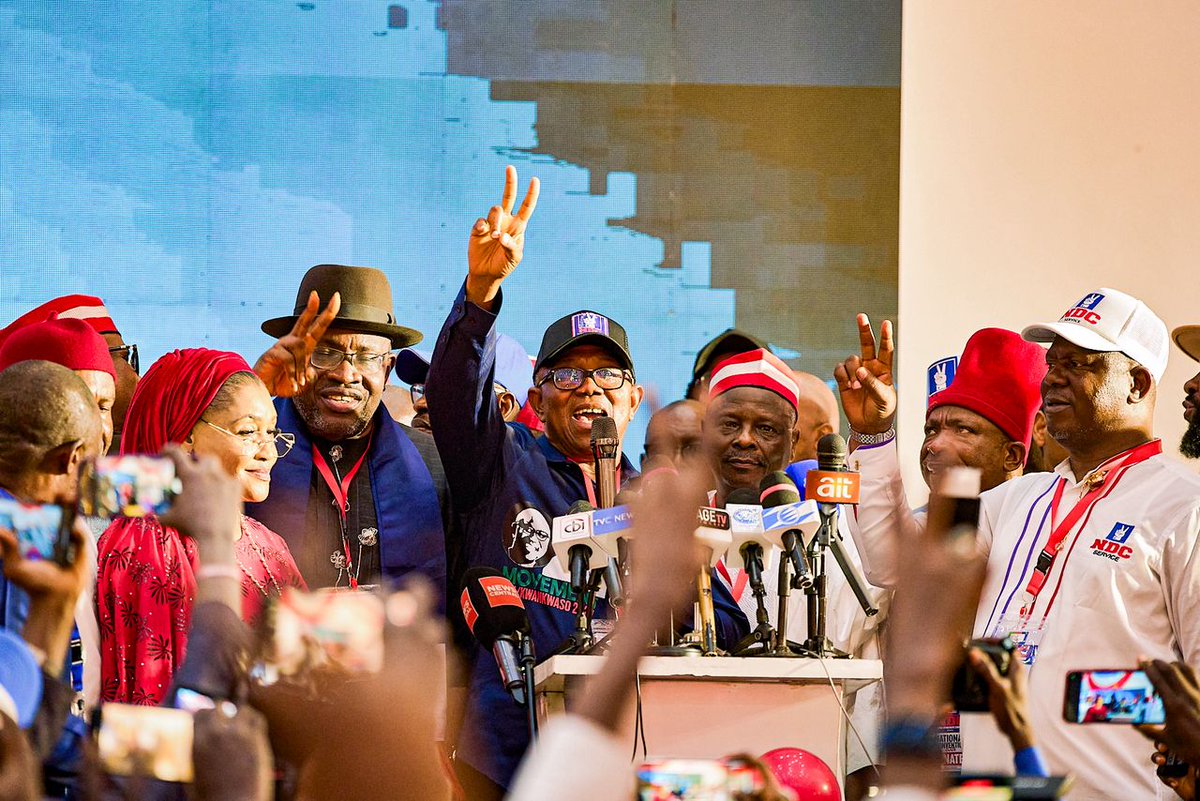
MY SPEECH AS THE NATIONAL LEADER OF THE NDC AT OUR INAUGURAL NATIONAL CONVENTION HELD TODAY
“First, they ignore you, then they laugh at you, then they attack you, and then you win.” — Mahatma Gandhi
My fellow compatriots, leaders, and delegates.
I join the National Chairman and members of the Protem National Executive Committee to warmly welcome you all to our nation’s capital and to this historic venue for our inaugural national convention.
Today, I address you with a deep sense of honour, gratitude, and responsibility as we gather for a convention whose primary purpose is to affirm and elect our protem national leadership and further strengthen the foundation of our great party.
I use this opportunity to sincerely thank Nigerians from all walks of life for the trust and confidence they have reposed in me and in the leaders of our party, believing in the ideals upon which the NDC was founded — ideals of service, national unity and cohesion, political inclusion, women and youth empowerment, and the protection of democratic values.
As you all know, this party is barely three months old, yet no political party in the history of our country has enjoyed this level of acceptance, enthusiasm, and trust from Nigerians within such a short period of time as the NDC has received.
You will recall that, in our collective effort to establish an alternative opposition platform that would keep the flames of Nigeria’s multi-party democracy alive, we first sought to register this party as far back as 2017, when I realised that the foundations of my party—the PDP, had been weakened and the ideals compromised. Unfortunately, that effort did not materialise at the time.
However, when INEC resumed party registration last year, we revisited and updated our earlier application. Even then, when we encountered bureaucratic bottlenecks that violated our constitutional right to freedom of association, we approached the courts, and in December 2025, judgment was delivered in our favour. That judgment was duly served on INEC, which complied and issued us our certificate of registration in February this year.
Following that, I publicly announced my involvement and role in this great party, and we immediately commenced nationwide mobilisation and sensitisation. Since then, Nigerians from every region of our country, North, South, East, and West, have embraced and shared in our vision.
I thank the Judiciary for upholding our constitutional rights to freedom of association in the judgment at the Federal High Court that led to the registration of our party. I equally commend INEC and its Chairman, Prof. Joash Amupitan, SAN, who obeyed the court judgements in respect of the NDC and the NDP, which was registered later.
While INEC and the judiciary did well in the case of NDC and NDP, they should also do well to ensure the survival of multi-party democracy—the survival of PDP, ADC, Labour Party, SDP, NNPP, and all other opposition parties. Nigeria needs a strong party in government and also strong parties in opposition.
Let me say that, contrary to propaganda, there is no appeal against the judgement by INEC or by anyone. The judgment has been obeyed and implemented fully, and besides, the timeline for appeal has since passed, and only INEC has the proper locus standi, and they have not appealed.
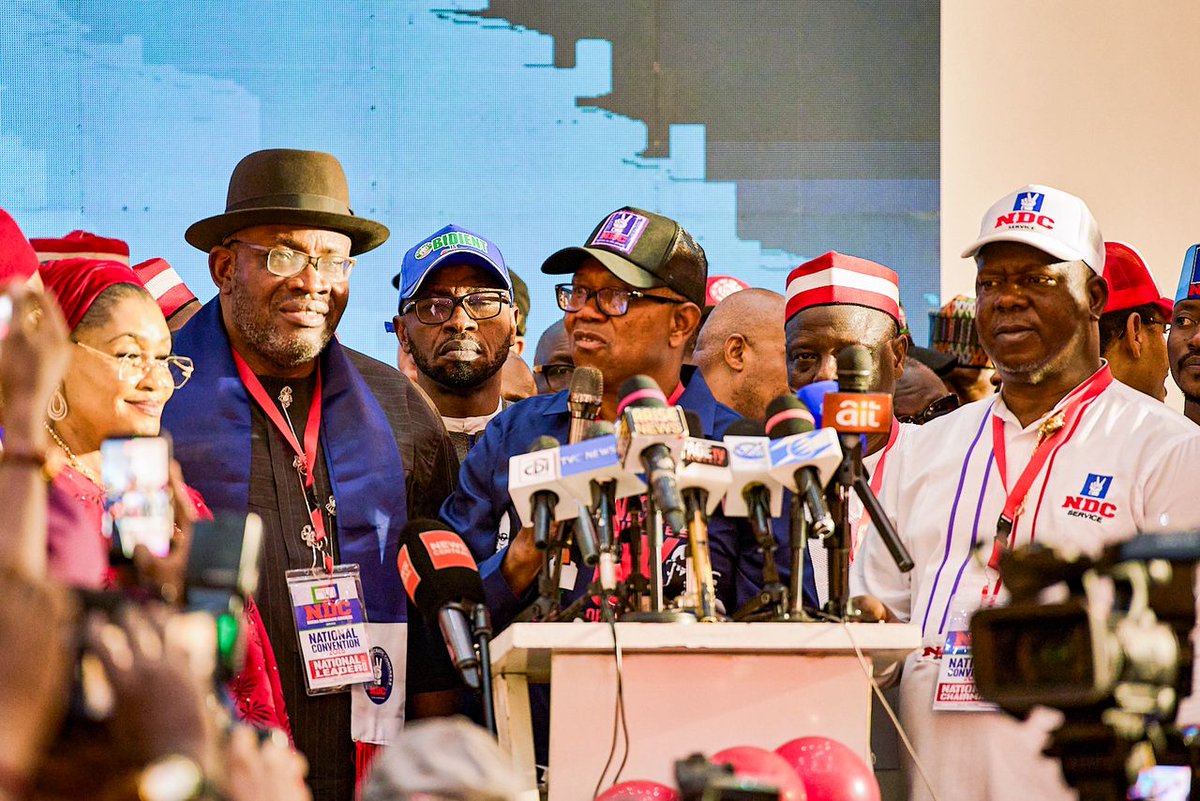
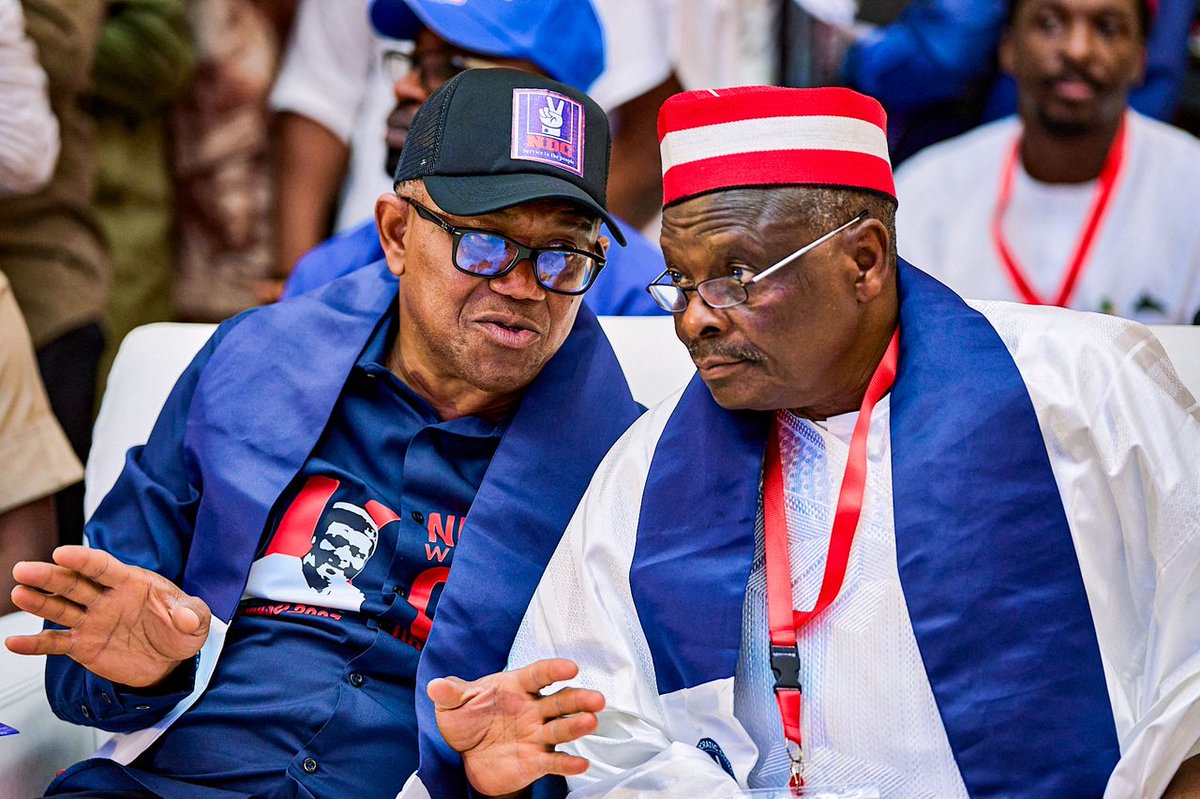
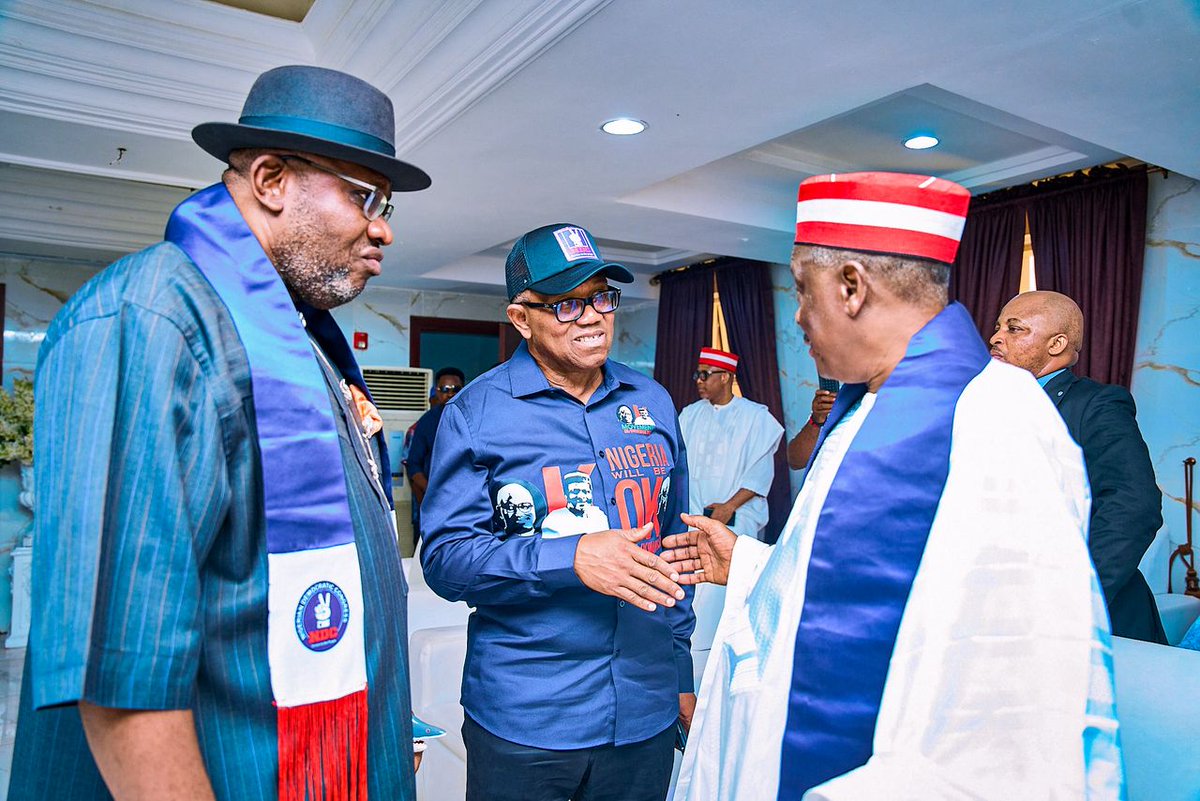
About a week ago, two influential figures in our nation’s political history, His Excellency Peter Obi and His Excellency Senator Rabiu Musa Kwankwaso, officially joined our party after weeks of consultations and engagements with me. I thank them specially for their trust, confidence, and partnership, both in the journey so far and in the journey ahead.
This partnership represents a unique convergence of political experience, administrative competence, national reach, and a shared hope for the future of Nigeria.
Where we are, national unity is no longer optional; it is a national necessity. We must rise above ethnicity, religion, region, and political divisions to recover the soul of our nation.
With unity and effective leadership, Nigeria can become a productive and prosperous nation once again. We must deliberately support agriculture and manufacturing so they become the highest contributors to our Gross Domestic Product. Special strategic attention must be given to unlocking the enormous agricultural potential of Northern Nigeria and connecting it to industrial production across the federation. We must move decisively from a nation of consumption to a nation of production.
We can no longer afford policies that foreclose our youth.
With competent, compassionate and transformative leadership, we can defeat insecurity, reduce corruption, create jobs, tame inflation, improve education, and restore hope to millions of Nigerians. Our youths must no longer be viewed as problems to manage, but as assets to empower. Our women must no longer be neglected, but included as equal partners in nation-building.
I remain convinced that a new Nigeria is possible, a Nigeria that is united, secure, productive, inclusive, and governed by justice and fairness. Let us therefore move forward with courage, with unity, and with our collective resolve. -PO
"Some men change their party for the sake of their principles; others change their principles for the sake of their party." Winston Churchill
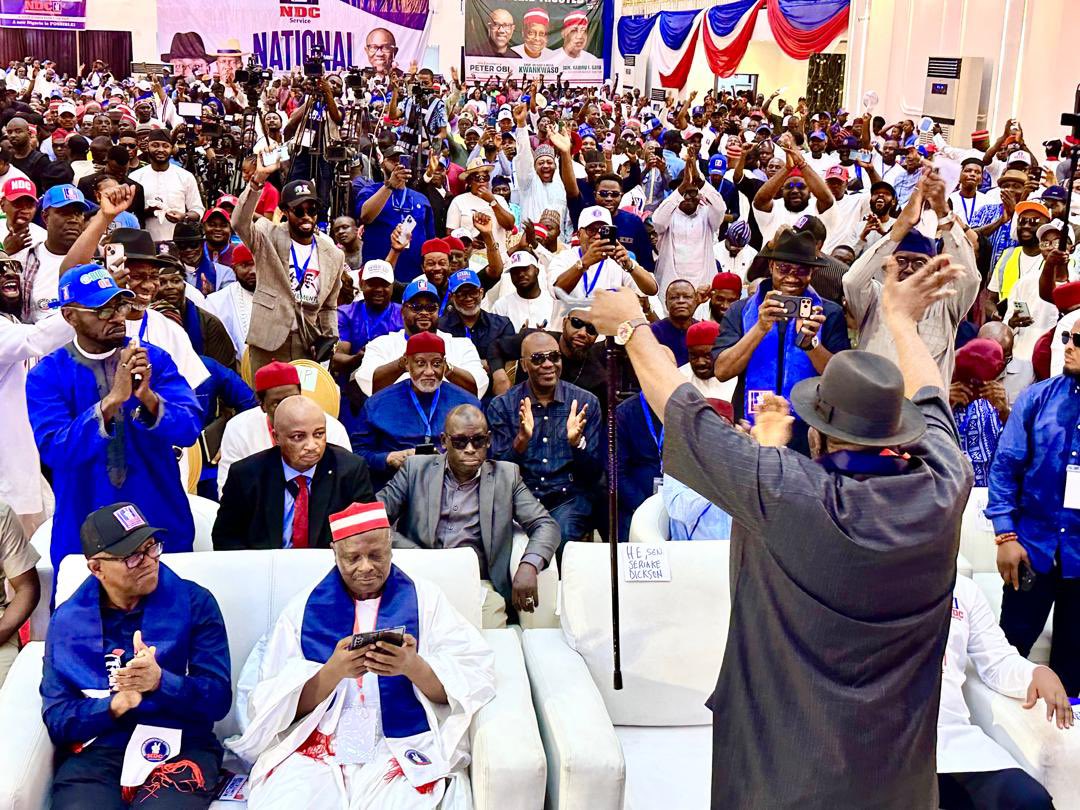
Today, May 9th, I attended the 1st convention of my latest party, the Nigeria Democratic Congress (NDC) in Abuja, Nigeria. The convention was successful and continued to show the resilience of Nigerians to change
I express my sincere appreciation and gratitude to the NDC family, led by the distinguished Senator Henry Seriake Dickson, for inviting us and for the generosity of spirit with which they have accommodated us at this critical moment in our national journey.
I also wish to express profound gratitude to the African Democratic Congress(ADC), particularly Distinguished Senator David Mark, for providing a democratic platform and showing uncommon understanding when the ongoing litigation forced us out of the Labour Party and the New Nigeria People's Party, NNPP respectively. That spirit of solidarity must remain the foundation upon which a better Nigeria will be built.
Today, the most painful aspect of our political existence is that many who once benefited from democratic governance have now become willing accessories to the destruction of democracy itself. Those who once fought for justice now openly celebrate electoral injustice. Those who once spoke against impunity now defend coercion, manipulation, intimidation, and outright political gangsterism, especially against opposition voices. What we are witnessing is not politics; it is a systematic assault on democracy and the will of the people.
Nigeria today stands at a dangerous crossroads. Our democracy is under severe threat. Our nation is drifting without direction, and our people are passing through immense suffering. Across the world, Nigeria is increasingly described as a failing and disgraced nation. This is not the destiny God ordained for our great country. It was not always so, and it must never be allowed to remain so.
Across virtually every recognised indicator of good governance - accountability, political stability, rule of law, control of corruption, government effectiveness, regulatory quality, and the separation of powers - Nigeria continues to record alarming failures. The institutions that should protect the people are weakening daily, while the burden on ordinary citizens grows heavier with each passing moment.
Today, over 140 million Nigerians live in multidimensional poverty. Tens of millions of young people remain unemployed or underemployed. Inflation continues to crush families. Businesses are shutting down. Farmers can no longer safely access their farms. Communities live in fear. In this month alone, hundreds of innocent Nigerians have lost their lives to insecurity, while many others have been kidnapped, displaced, or thrown deeper into poverty.
The most heartbreaking question confronting us is this: Who consoles the grieving mother whose child was abducted on the way to school? Who speaks for the father who can no longer feed his family despite working every day? Who defends the young Nigerian whose dreams have been destroyed by a nation that rewards connections over competence and corruption over character?
Our present tragedy is not accidental. It is the direct consequence of years of deliberate sabotage by a political class that prospers by dividing the people and weakening the nation. Nigeria is not a poor country; rather, we are being looted into poverty. We have abundant human and natural resources, yet we remain trapped in deprivation because leadership has failed to place the common good above personal interest.
Our choice as a people is therefore clear: whether to surrender to despair and national decline, or to summon the courage to rescue our country and rebuild it on the foundations of unity, equity, justice, competence, and productivity.
In the bustling heart of Ibadan, where the old city gates have never learned how to close against a sincere soul, something beautiful happened again today.
Oba Rasheed Adewolu Ladoja, the Imperial Majesty himself, stepped forward and wrapped Peter Obi in a hug so warm and genuine that the palace walls seemed to smile. "My brother," the king called him, the words carrying the weight of true friendship. No cameras were needed to capture the moment; the embrace said everything.
It was not the first time Ibadan had opened its arms wide to this man.
I still remember November 23, 2022, like yesterday. The day Peter Obi came to campaign at Lekan Salami Stadium in Adamasingba. The whole city felt it. The air itself changed. Traders left their stalls, artisans dropped their tools, and the streets swelled with people who simply wanted to see the visitor who carried no tribal flag, only hope. Ibadan has always been that kind of place... the foremost city in the Southwest that never asks where you are from before offering you a seat under its ancient iroko tree. Here, the stranger is not a stranger; he is family still finding his way home. The city does not victimise a man for the colour of his tongue or the accent of his prayer. It simply says, "Come, and if your hands are clean, prosper with us."
That same spirit was on display when the present Olubadan was crowned. Peter Obi sent warm congratulations, calling the new king “my brother” with the enthusiasm of a man who means every word. Some small-hearted children of despair tried to twist the message into poison. But the king stepped out boldly, like a true elder, and declared: "Peter Obi spoke no lie. We are indeed friends."
And so the circle closes. The same brotherly bond that made the late Pa Ayo Adebanjo – that revered voice of the Southwest – leave his comfort zone to campaign side by side with Peter Obi right here in Adamasingba. The same bond that makes elites lean in when he speaks, and the market woman nod her head in quiet agreement.
Because Peter Obi is that rare seed the soil of Nigeria has been waiting for. He moves among the highest and the lowest without changing his cloth. He does not shout “I am for you”; he simply is. The common man sees his own reflection in him. The progressive cannot look away. He has become, without noise or boast, the living symbol of what unity can look like when a man refuses to be owned by tribe or title.
In a land hungry for hope, some stories do not need long speeches. A simple hug in Ibadan today told it all. The city that welcomes every traveller has once again recognised its own, a man whose heart is big enough for every corner of Nigeria.
First Nigerian to go to the backyard of the Louvre in France 🇫🇷 🗼, and dance "Snake In The Monkey Shadow"
The Chinese government have asked me to come and replicate;
Very soon, First Nigerian on the Walls of China 🇨🇳
Please congratulate me guys. 🙏
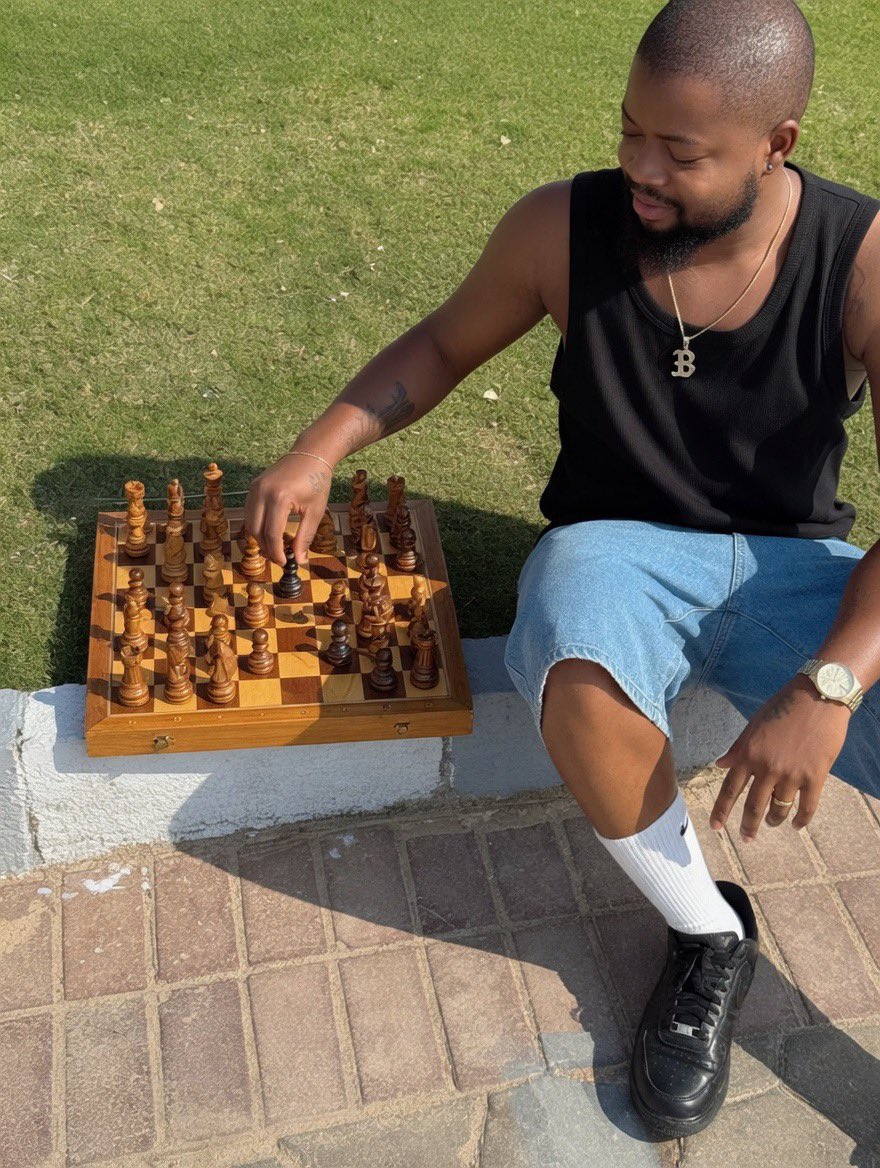
Some black dude turned up to a public museum dressed like a retard and played chess against himself and other blacks are congratulating him in the comments
Mr. Chagoury, Your Lawyer Is Waiting. So Am I.
By Kio Amachree | Stockholm, Sweden | President, Worldview International
Gilbert Chagoury, a political operative published an article in The Punch on April 16, 2026, urging you to sue me for defamation.
I am writing to tell you directly: please do.
I am not hiding in Stockholm. I am not anonymous. My name is Kio Amachree. My father was Chief Godfrey Kio Jaja Amachree QC — Nigeria’s first indigenous Solicitor-General, first Permanent Secretary of the Federal Ministry of Justice, first African Under-Secretary-General of the United Nations. He built the legal infrastructure of the country you have profited from for six decades. I am his eldest son. I know what courts are for. I know what discovery means. And I know precisely what happens when a man with your legal history walks into one voluntarily.
So let me be precise. Every charge. Every count. On the record.
COUNT ONE: The Swiss Conviction for Money Laundering
In the year 2000, a court in Geneva, Switzerland, convicted Gilbert Chagoury of money laundering and aiding a criminal organisation. The funds in question were stolen from the Nigerian treasury by military dictator Sani Abacha, whose regime looted an estimated $2 billion to $5 billion from the Nigerian people during his years in power from 1993 to 1998.
The court found that Chagoury helped establish accounts at SG Ruegg Bank in Geneva through which more than $120 million was transferred from the Central Bank of Nigeria on behalf of the Abacha family. He was fined one million Swiss francs. He was ordered to return $66 million to the Nigerian government. He later secured immunity from Nigerian prosecution by returning an estimated $300 million held in Swiss accounts — a figure that itself tells you the scale of what passed through his hands.
This is not an allegation. This is a verdict. It is in the Geneva court record. It has never been overturned. It has never been appealed successfully. It stands.
While that money was moving through Swiss banks, Nigerian children were dying in hospitals without medicine. Nigerian roads were collapsing. Nigerian teachers were going unpaid. The treasury that should have built this nation was being emptied — and Gilbert Chagoury was the man holding the pipe.
COUNT TWO: The United States Visa Denial on Terrorism-Related Grounds
The United States government denied Gilbert Chagoury a visa in 2015. The denial was based on intelligence findings that he had provided financial support to Michel Aoun, a Lebanese political figure whose party, the Free Patriotic Movement, operates in political coalition with Hezbollah — an organisation designated as a terrorist group by the United States, the European Union, the United Kingdom, and numerous other governments.
An FBI intelligence report, cited in U.S. government proceedings, stated that Chagoury had sent funds to Aoun, who in turn directed money to Hezbollah. The report described Aoun as facilitating fundraising for Hezbollah. The intelligence was described as unverified from a source — but it was sufficient for the United States government to bar one of the world’s wealthiest men from entering American territory.
Chagoury disputed the findings. He sued. He lost. The visa denial stood.
This is not gossip. This is the record of a proceeding he initiated himself — in which he named as defendants the FBI, the Department of Justice, the CIA, the Department of Homeland Security, the Department of State, and the National Counterterrorism Center. He put every American security agency on the stand to clear his name. None of them capitulated. The records remain open.
Nigeria’s current president counts this man as his closest personal confidante. His son sits on this man’s company board. Nigeria has given this man its second-highest national honour. And the United States government will not let him through its airports.
COUNT THREE: The Federal Election Law Conspiracy and Deferred Prosecution Agreement
In 2018, Gilbert Chagoury and two associates resolved a federal investigation in the United States into a conspiracy to violate federal election laws. The investigation found that he had schemed to make illegal foreign political contributions to United States presidential and congressional candidates across multiple election cycles — contributions routed through American citizens acting as straw donors to disguise their foreign origin.
One of the political figures implicated in the downstream consequences of this scheme was Nebraska Congressman Jeff Fortenberry, who was subsequently convicted of lying to federal investigators about the illegal contributions and resigned from Congress on March 31, 2022.
In 2021, Chagoury entered a civil forfeiture settlement of $1.8 million with United States authorities. He later entered a deferred prosecution agreement with the United States Department of Justice. He has maintained he committed no wrongdoing — which is precisely what deferred prosecution agreements are designed to accommodate while preserving the full prosecutorial record.
That record exists. In a lawsuit, it becomes an exhibit.
COUNT FOUR: The Lagos-Calabar Coastal Highway — $13 Billion Without a Single Competitive Bid
In 2024, the administration of President Bola Ahmed Tinubu awarded the Lagos-Calabar Coastal Highway contract to Hitech Construction Company Limited — a subsidiary of the Chagoury Group — at an estimated cost of between $11 billion and $13 billion. This is, by most calculations, the single most expensive infrastructure contract in Nigerian history.
It was awarded without a public competitive tender. Without advertisement in the federal procurement gazette. Without the process mandated by the Nigerian Public Procurement Act. The Federal Ministry of Works has not produced documentation of a compliant tender process because no such process occurred.
The contract is currently the subject of active litigation in the Federal High Court, brought by a plaintiff invoking the Freedom of Information Act to compel disclosure of procurement documents. The Federal Government has hired no fewer than six Senior Advocates of Nigeria and seventeen other lawyers to resist that disclosure.
When a government fights this hard to keep procurement documents secret, the documents are not innocent.
At the time of this award, President Tinubu’s son, Seyi Tinubu, was a serving board member of CDK Integrated Industries — a Chagoury Group subsidiary. Documents reviewed by the International Consortium of Investigative Journalists and the Organised Crime and Corruption Reporting Project revealed that Seyi Tinubu was also a majority shareholder in an offshore company incorporated in the British Virgin Islands alongside Ronald Chagoury Jr., Gilbert Chagoury’s son. The BVI is a jurisdiction chosen specifically for its corporate opacity.
The President of Nigeria awarded a $13 billion no-bid contract to the business empire of a man whose son co-owned an offshore company with the President’s son. Segun Showunmi calls this “infrastructure.” I call it what a Geneva court would recognise.
COUNT FIVE: The Snake Island Port — $1 Billion, 45 Years, No Tender
In March 2026, a second major contract was awarded to Chagoury Group interests — a 45-year concession for the Snake Island container terminal in Lagos, valued at $1 billion, in partnership with MSC Group, the Geneva-based container shipping giant. ITB Nigeria, the Chagoury subsidiary involved, was awarded this concession without a public competitive process.
The companies involved in this transaction carry a documented history of bribery penalties, money laundering convictions, and criminal investigations across multiple European jurisdictions. The Foundation for Investigative Journalism in Nigeria published a detailed account of these legal histories. The Nigerian public has received no explanation of why these companies were selected, on what terms, and under whose authority.
Two major port concessions. One coastal highway. All awarded to the same family. All without public tender. All during the presidency of a man who has described Gilbert Chagoury as someone with whom he can “sleep with a still mind.”
That is not infrastructure policy. That is a private estate.
COUNT SIX: The Citizenship That Abacha Gave Him
My critics insist I have no right to examine Gilbert Chagoury’s Nigerian citizenship. They are wrong — legally, constitutionally, and historically.
Gilbert Chagoury was born in Lagos in 1946 to Lebanese immigrant parents. His parents were not Nigerian citizens. They were Lebanese nationals who had migrated to colonial Nigeria. He was educated not in Nigeria but at the Collège des Frères Chrétiens in Lebanon. His ancestral village is Miziara in northern Lebanon — where a boulevard bears his name, where the town square is named after his father, and where, by the admission of its own deputy mayor, the entire local economy depends on money earned in Nigeria.
It is publicly documented and credibly reported that Gilbert Chagoury received Nigerian citizenship during the military dictatorship of Sani Abacha — the very regime he served as personal economic adviser, and whose stolen funds he was convicted in Switzerland of laundering. The grant of citizenship was not the product of a transparent constitutional process. It was the product of a relationship — between a military dictator who operated entirely outside the law and a businessman who made himself indispensable to that dictator’s financial machinery.
A citizenship conferred by a criminal regime, as a reward for services rendered to a looting enterprise, is not a citizenship that places itself beyond scrutiny. It is precisely the kind of citizenship that demands it.
COUNT SEVEN: The Passports He Holds But Does Not Disclose
Gilbert Chagoury is not simply Nigerian. He is a man of multiple nationalities and multiple passports — a fact his defenders in the Nigerian press conspicuously omit.
He holds Lebanese citizenship. He holds British citizenship — he identified himself as a British citizen in his own legal filings before the United States District Court for the District of Columbia when he sued the FBI and the Department of Justice. He holds Saint Lucian citizenship, in whose name he has served as Ambassador to the Holy See and Permanent Delegate to UNESCO in Paris since 1995 — funding that diplomatic mission entirely at his own personal expense, an arrangement that raises the question of what a private billionaire actually purchases when he acquires the diplomatic passport of a small Caribbean island nation.
There are credible grounds to believe he holds or has held French residency or citizenship. He has maintained a sustained presence in Paris across decades. He has made major philanthropic contributions to French institutions — the Louvre named a gallery for him and his wife. These are not the habits of a visitor. These are the habits of a man who has ensured that wherever the legal weather turns, he has an exit.
When the weather turns in Nigeria — when a new government arrives, when the court orders are enforced, when the FBI files are finally unsealed — Gilbert Chagoury will not be stranded. He has options. He has always had options. The Nigerian people, whose treasury funded those options, do not.
COUNT EIGHT: Fifty-Five Years, No Integration, No Intermarriage
I will say what others have been too careful to say, and I will say it plainly.
Gilbert Chagoury has operated in Nigeria for over fifty-five years. His group employs Nigerians. He has built on Nigerian land, obtained through a concession granted by a governor who is now president. He has extracted Nigerian contracts worth billions. He has received Nigeria’s second-highest national honour.
And in fifty-five years, the Chagoury family has not produced a single recorded intermarriage with an indigenous Nigerian family. Not one union. Not one child of mixed Chagoury-Nigerian parentage within the Black Nigerian community. The family has remained entirely within its Lebanese-Christian communal identity — socially separate, culturally distinct, endogamous — while extracting from the Nigerian state on a scale that no indigenous Nigerian family has ever been permitted to approach, let alone achieve.
I do not say this to promote ethnic hostility. I say it because it is the legal and social reality of what genuine national belonging means. A man who takes billions from a country’s public treasury while remaining entirely separate from that country’s indigenous social fabric is not Nigerian in any meaningful cultural or familial sense. He is an investor with a passport obtained from a military dictator.
That is not the same thing as being Nigerian in the way that the Amachrees are Nigerian. My grandfather Chief Sekin Amachree stood before the Willink Commission in London in 1958 and argued for the rights of Niger Delta minorities before this nation was even formally born. He did not do so as a visiting businessman. He did so as a man whose roots were in that soil across generations. My father Chief Godfrey Kio Jaja Amachree QC built the legal system of this country from the inside — as Solicitor-General, as Acting Attorney-General, as Permanent Secretary of the Federal Ministry of Justice, as the first African to serve as Under-Secretary-General of the United Nations.
We did not come to Nigeria to extract. We are Nigeria.
Do not tell me I cannot question who belongs here.
COUNT NINE: The FBI Files and Judge Beryl Howell
This is the count that concerns Gilbert Chagoury most. I know it. His lawyers know it. The Presidency knows it.
In the United States District Court for the District of Columbia, a case is currently proceeding before Judge Beryl Howell compelling the FBI and the DEA to disclose files relating to Bola Ahmed Tinubu and his associates. The court has set a disclosure deadline of June 2026.
These files exist within the broader landscape of American law enforcement’s decades-long interest in the financial networks surrounding the Abacha regime — networks in which Gilbert Chagoury was a central node. When those files are released, they will not be released into a vacuum. They will be released into a Nigerian political environment twelve months from a general election, with an active, documented, internationally published body of reporting — this reporting — already in place to contextualise every page.
I am not speculating about what those files contain. I am stating that they exist, that their release is court-ordered, and that Gilbert Chagoury should consider very carefully whether a defamation action filed between now and June 2026 is the wisest use of his legal resources.
A Final Word
You have built roads. You have built towers. You have built a city from reclaimed ocean. You have put your name on a gallery in the Louvre and a boulevard in Lebanon. You have made yourself, by any measure, a man of consequence.
But you helped a dictator steal from the poorest people on earth. You moved his money through Swiss banks while Nigerian children died in hospitals without medicine. A Geneva court said so. You paid for that verdict. Nigeria is still paying for what preceded it.
No concrete poured since then changes what the court found. No national honour conferred secretly on a birthday changes the record. No political operative publishing articles in The Punch changes what I have written — because what I have written is documented, sourced, and true.
I am Kio Amachree. I am my father’s son. And I know what an Amachree does when slandered.
We go to court.
Sue me, Mr. Chagoury. I will be there before you finish briefing your first lawyer.
Kio Amachree | Stockholm, Sweden | President, Worldview International
#KioAmachree #WorldviewInternational #TheKioSolution #NigeriaDecides2027
From Pharisee to Tax Collector: Rethinking Tinubu’s Kenyan Comparison
In a recent remark in Yenagoa, Bola Ahmed Tinubu suggested that Nigerians should find solace in being “better off than Kenya and other African countries.” While this may have been intended to soften the impact of economic hardship and rising fuel prices, the comment risks downplaying the severity of the current crisis. It echoes the biblical parable of the Pharisee and the Tax Collector in the Gospel of Luke (18:9–14). A similar warning is found in the Qur’an (53:32), which cautions against self-righteousness.
Like the Pharisee who boasted of his superiority over others to mask his own spiritual void, such downward comparisons serve more as a refuge than a remedy. This validated an earlier dismissive remark by President Ahmed Bola Tinubu during electioneering: “Na statistics we go shop?” Yet statistics remain indispensable - they are the language through which nations understand their condition and chart progress. No country can develop in isolation from measurable realities or without comparing itself with peers. Comparisons, when properly grounded, are not instruments of escapism but tools of accountability. What is objectionable is not comparison itself, but comparison stripped of credible, verifiable data—mere tax collector comparisons that soothe rather than solve.
On key development indicators such as security, the Human Development Index, life expectancy, GDP per capita, literacy levels, and electricity access, Kenya consistently outperforms Nigeria. Nigeria is the fourth most terrorised nation in the world, while Kenya is not among the ten worst. Kenya’s HDI ranking is 143 out of 180 countries, with a coefficient of about 0.630, compared to Nigeria’s ranking of 164 out of 180, with a coefficient of about 0.530. Its GDP per capita is roughly $2,200–$2,300, compared to Nigeria’s $807–$835. Kenya’s poverty rate is about 43% of the population (approximately 23 million people), while Nigeria’s is about 63% (around 150 million people), over six times that of Kenya. Kenya’s life expectancy is about 67 years, while Nigeria’s is about 54 years. The literacy rate in Kenya is approximately 81–85%, compared to Nigeria’s 62–65%.
Kenya’s electricity access is higher, while Nigeria has one of the lowest levels of electricity access in the world. Kenya has about 3.5 million out-of-school children, while Nigeria has about 20 million. Kenya’s inflation rate has been about 4.5% or lower over the past three years, while Nigeria’s has remained above 15% within the same period. Kenya’s exchange rate has been around USD 1 to KES 130 over the past three years, whereas Nigeria’s exchange rate rose from below ₦500/$1 to above ₦1,250/$1 within the same period. Even with developments in the Middle East and rising oil prices, Kenyans have not experienced the sharp increases in petroleum product prices seen in Nigeria.
Across other key indicators, Kenya also performs better. In the end, these indices clearly show that Kenya ranks higher than Nigeria on several development metrics. The standard of living of Kenyans is better than that of Nigerians. If the President considers Kenyans to be suffering despite these stronger figures, then Nigerians are in a far more difficult situation. He should therefore refrain from self-consolation and, in honest reflection, take responsibility for the situation and make a determined effort to drive improvement. This requires a posture of humility, accountability, and commitment to addressing the factors that have slowed Nigeria’s development.
A new Nigeria is POssible. -PO
“This Experience Will Not Repeat Itself” - Another Presidential Promise fails in less than 24 Hours.
Less than 24 hours after President Tinubu stood at the Jos Plateau State airport on April 2, 2026, and promised the grieving Nigerian citizens, “I promise you that this experience will not repeat itself,” another brutal attack occurred in Nyamgo Gyel, Jos South LGA, resulting in the deaths of several innocent citizens.
Since then, and only a week following that reassuring promise from the President, Nasarawa State has been plunged into grief as the Akyawa and Udege Kasa communities fled for their lives after gunmen killed at least 11 people. Many homes were reduced to ashes, and numerous families remain missing.
In Zamfara State, 150 innocent Nigerians were abducted from the Kurfa Danya and Kurfan Magaji communities in one of the largest mass kidnappings in recent times. On the same day of the Zamfara kidnappings, terrorists in Borno State stormed Chibok, killing four officers and burning down homes.
Yesterday, on Easter Sunday, Benue State was rocked by violence again, with over 17 Nigerians massacred, entire communities left in ruins, and many individuals still unaccounted for. Today, in Kaduna State, several innocent citizens were killed by terrorists inside churches, with many others abducted in the Ariko community of Kachia LGA.
Yet we were told, “This experience will not repeat itself.” This represents a failure of leadership and responsibility, and sadly, Nigerians are paying for it with their lives.
These attackers are not ghostly figures; our inaction emboldens them. How can a President make such a categorical promise and, mere hours later, the nation continues to count the dead across multiple states? The primary responsibility of any government is to protect lives and property; however, this responsibility is failing today. Nigerians are being slaughtered in their homes, in their communities, and in the very places they should feel safest. Even the President did not enter these communities, so who is truly safe in Nigeria?
This is a national emergency. Nigeria is bleeding, and the situation is worsening and increasingly helpless.
A New Nigeria is POssible. -PO
Astronaut Victor Glover delivers beautiful Easter message from space, praises God’s creation.
“When I read the Bible and I look at all of the amazing things that were done for us…”
“You're on a spaceship called Earth that was created to give us a place to live in the universe, in the cosmos.”
“In all of this emptiness, this is a whole bunch of nothing, this thing we call the universe, you have this oasis, this beautiful place that we get to exist together…”
Let Easter give us hope of a better Nigeria ahead.
As we commemorate the resurrection of our Lord Jesus Christ, even amid difficult times, we encourage you to remain steadfast in hope. Indeed, “Good Friday must come before Easter Sunday,” and our present challenges must not define our future.
We understand the heavy burden many families are carrying as a result of economic hardship. As we share in your struggles, we urge you not to lose heart. These difficult moments are temporary trials—our collective “cross”—that can lead to renewal if we remain resilient and committed to the common good.
Our nation continues to face serious challenges, especially in governance and the impact it has on the daily lives of citizens. Yet, Easter reminds us that after sacrifice comes renewal, and after darkness comes light. A better Nigeria is possible when we, together, choose accountability, compassion, and responsible leadership.
We remain hopeful that, through God’s grace and the determination of our people, the journey ahead will lead to a brighter future. Though the road may be rough, we believe in a Nigeria that works for everyone.
May this Easter renew our faith, strengthen our resolve, and inspire us to work together for a just and prosperous nation.
Happy Easter. -PO