@yonkojohn Federal contract dollars concentrate in a few hands. Five companies took $75.6B, or 16.3% of all federal contract dollars. The top two each took $19.2B. Big federal awards go to a small group of firms.
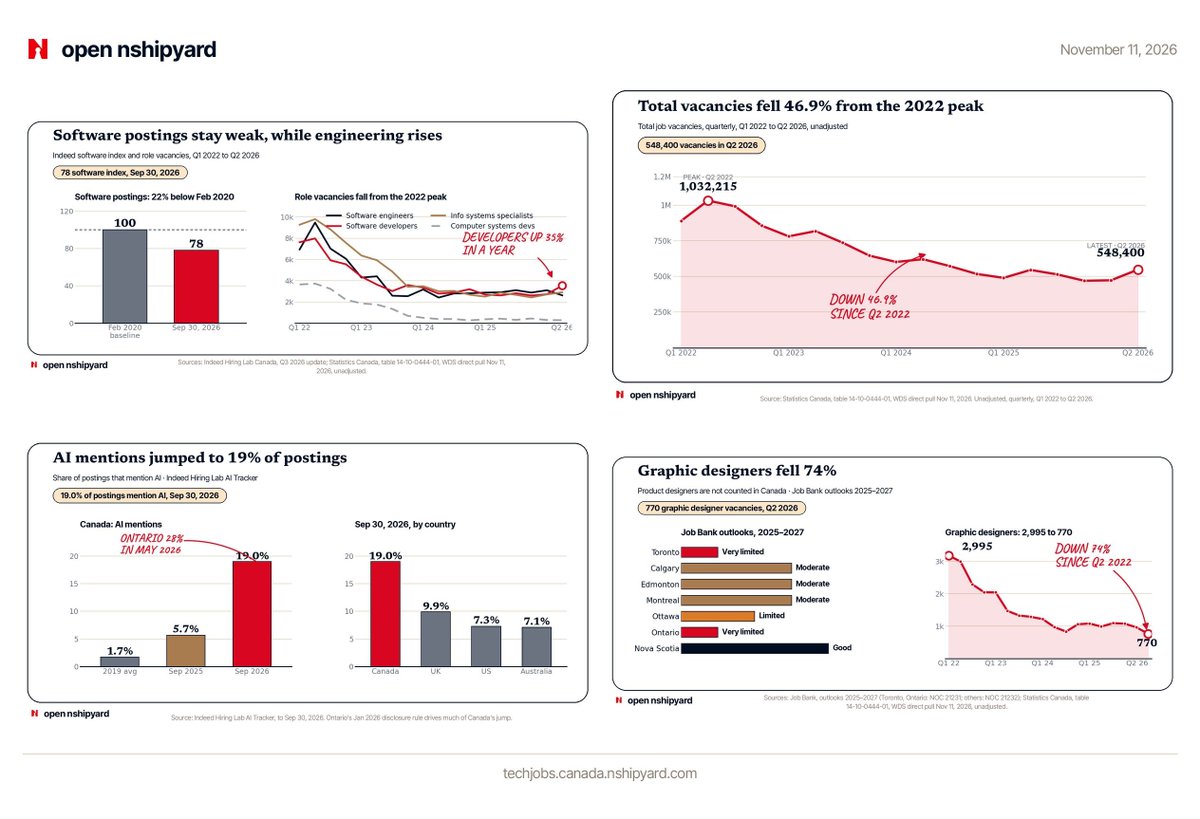
5. Talent sits in six cities, led by Toronto, 3rd in North America.
6. Only 4% of tech postings are fully remote.
7. Growth is outside software. Manufacturing up 17.1%, trades up 6.6%. Health has 63,850 open roles, down 7.8%.
No count exists for product managers.
State of the Canadian tech job market, late 2026 🇨🇦
We measured hiring and job openings in Canada with open Canadian data. Here are the 7 takeaways.
Full report: https://t.co/aRAVqEzH4s
3. Graphic designers fell 74%, 2,995 to 770. Product designers are not counted in Canada.
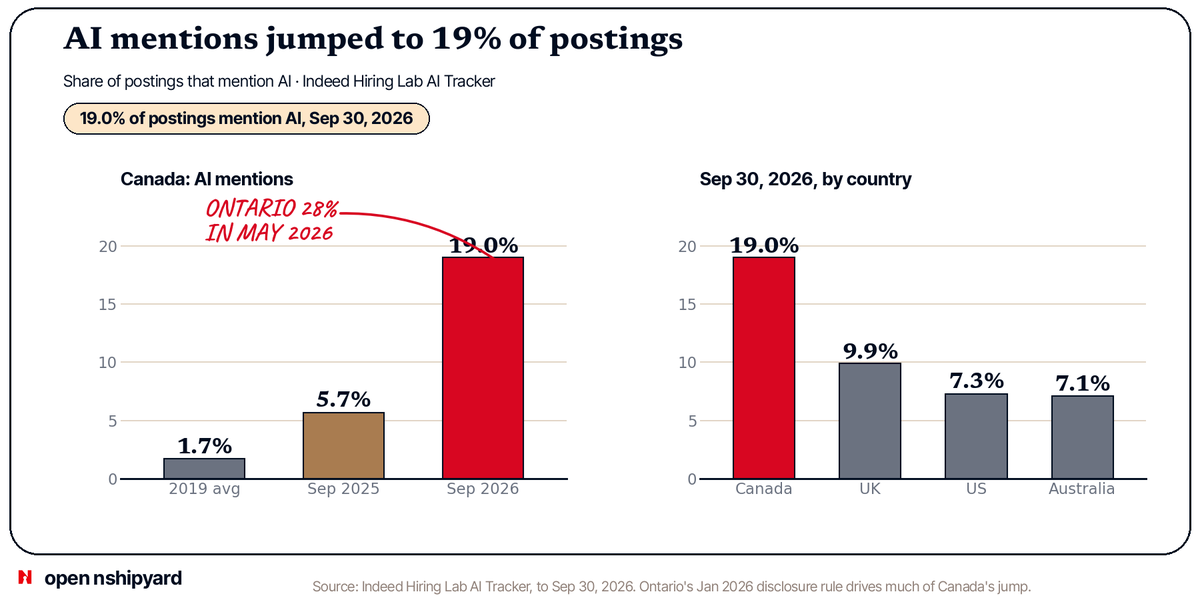
4. AI mentions hit 19% of postings, up from 5.7% a year ago. Ontario's January rule helped push it up.
1. Tech vacancies fell 46.9% from the 2022 peak, 1,032,215 to 548,400. Software engineers fell 72%, 9,480 to 2,625.
2. Software postings stay weak, index 78, down 8% this year. Civil engineering postings are up 30%.
@AlexanderGlista GO Expansion is the bigger reach buy. The $13.5B GO expansion adds 17.7 square kilometres of land reachable within 30 minutes of downtown. The $27.2B Ontario Line adds 1.0 square kilometre. Per dollar, GO buys 33 times more 30-minute reach.
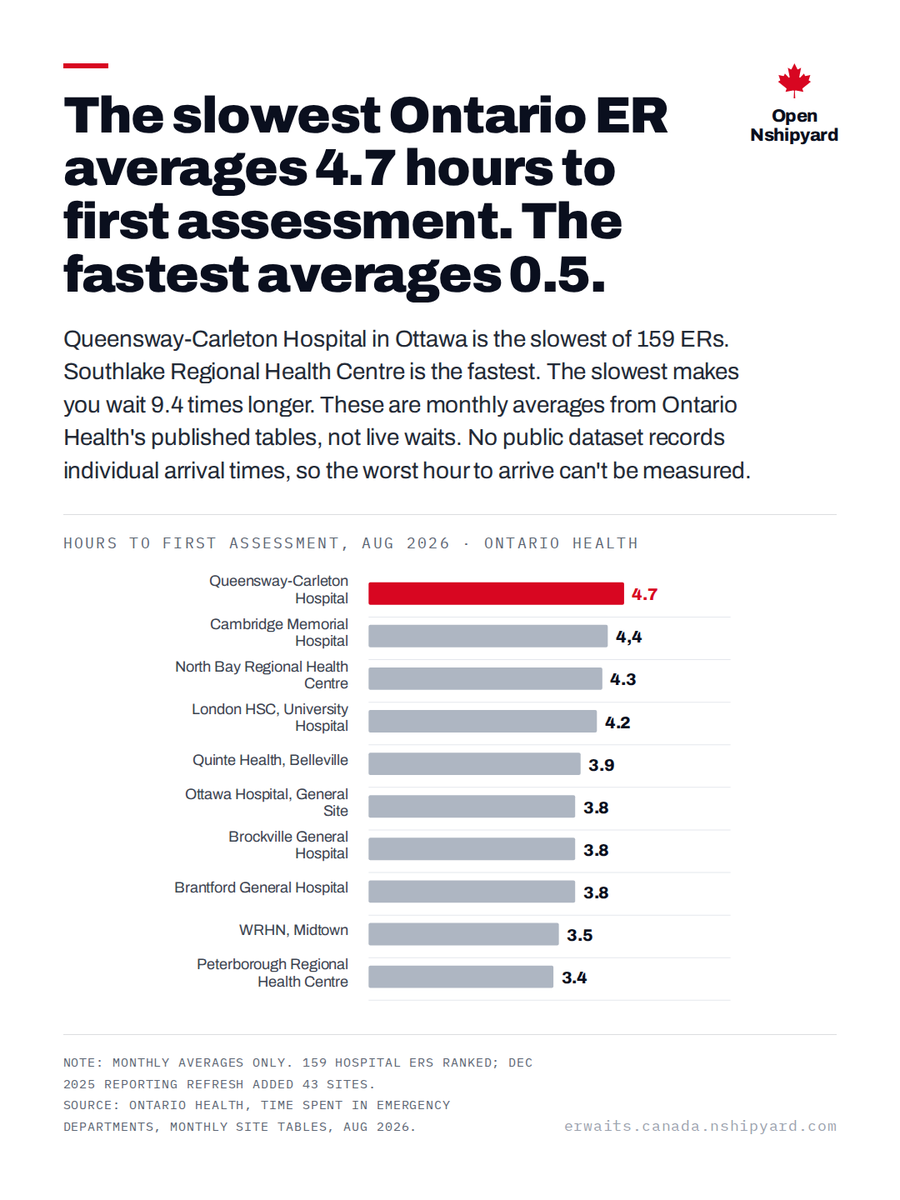
@raghu_venugopal The median hides a wide spread across Ontario's 159 ERs. The slowest averages 4.7 hours to first assessment, the first time a doctor sees you. The fastest averages 0.5 hours. That is a 9.4 times gap, so where you go sets how long you wait.
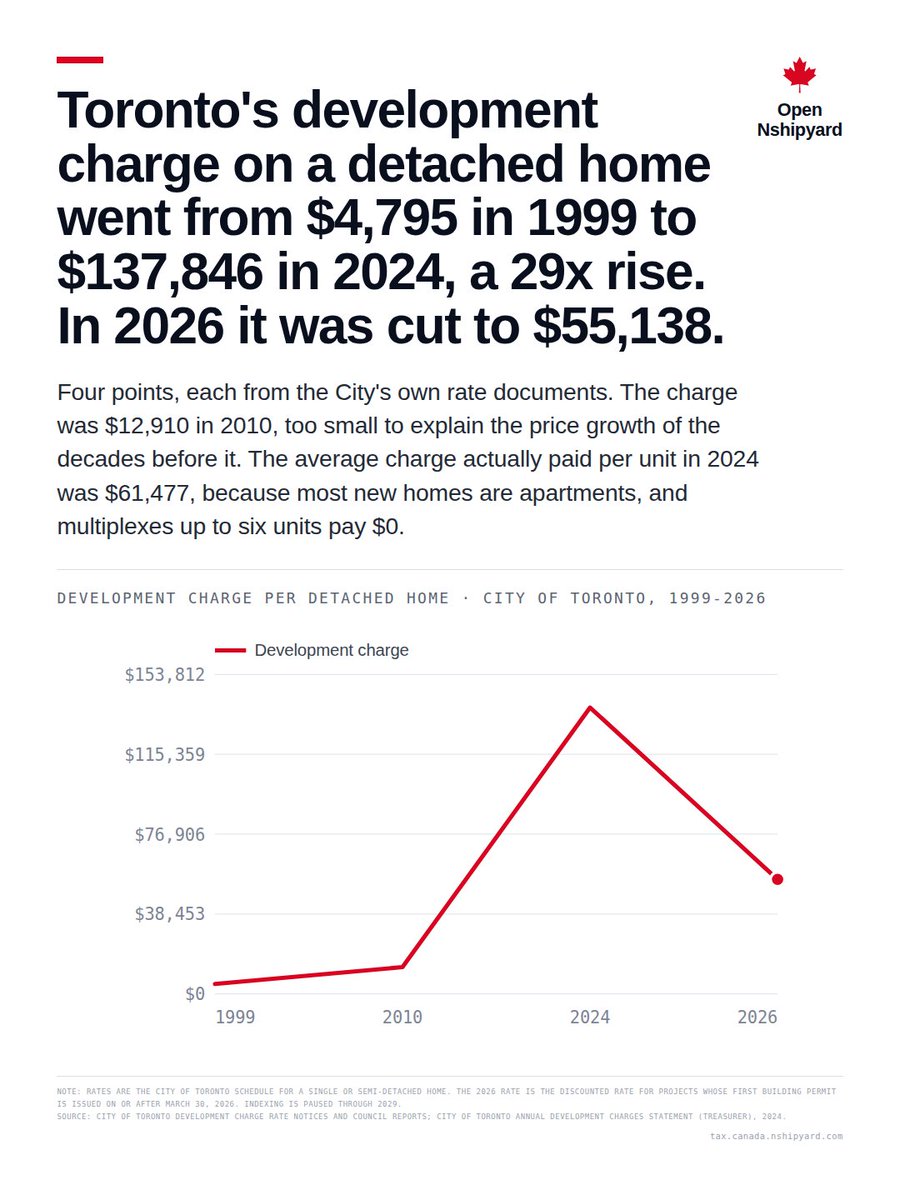
@OGGY_North A development charge is the fee the city charges on a new home. A new detached house carries a $137,846 development charge. A sixplex typically owes $0. Toronto exempts developments of up to six units from the fee.
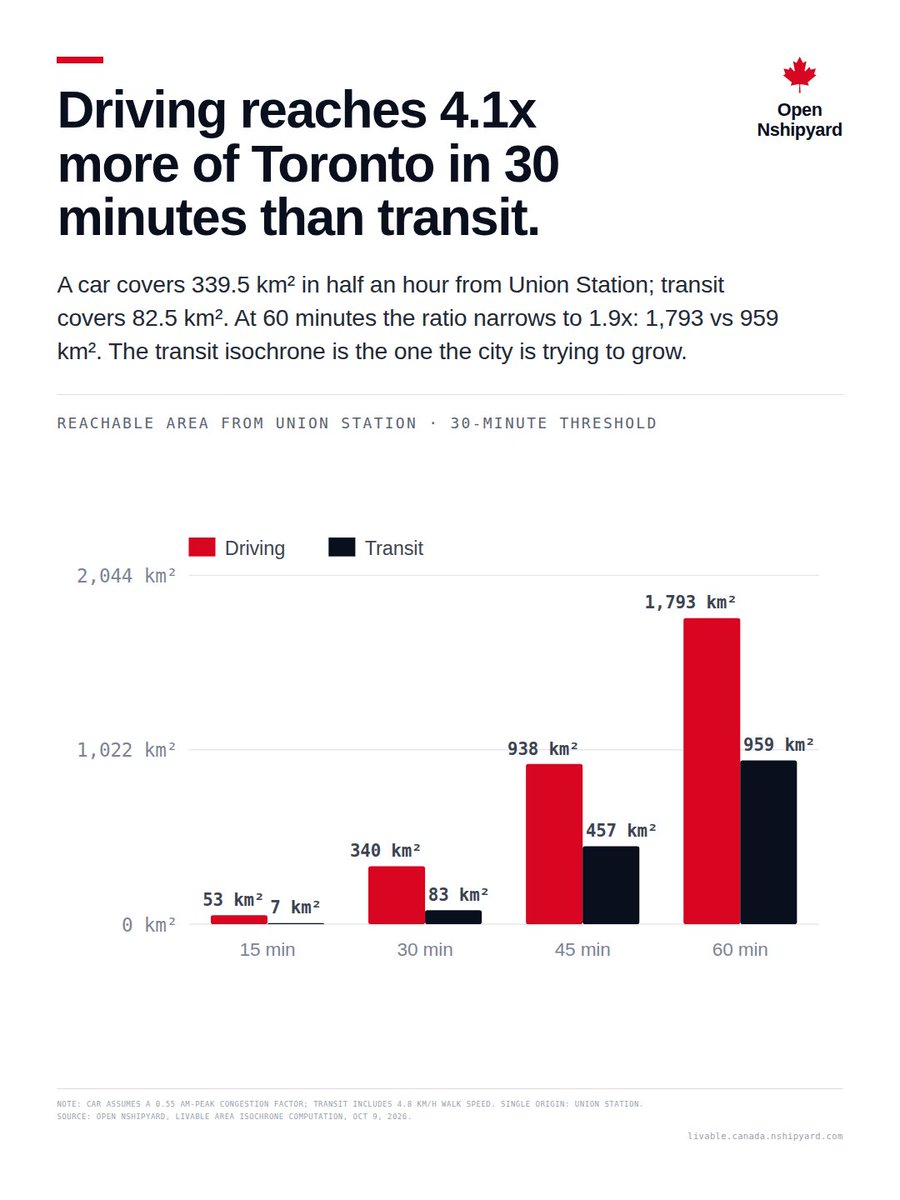
@Cam_Oflage In 30 minutes from Union Station, a car reaches 339.5 square kilometres of Toronto. Transit reaches 82.5. Driving covers 4.1 times as much ground in the same half hour. The gap is widest on short trips.
@SustainableTall That one building is part of a much bigger build. Toronto gained 124,326 homes net, and 803,206 more homes sit in the pipeline. One waterfront neighbourhood built 12,113 of them. Toronto is adding homes at scale.
Alberta unemployment jumped to 7.3% in October.
Up 0.9 points from 6.4% in September.
The biggest one-month jump in 15 months.
23 straight months at or above 6.0%.
Alberta's job market took a sharp turn for the worse.
@piaking Quadriga is one case in a bigger pattern. Investment fraud cost Canadians $1.382B in reported losses from Jan 2021 to Sep 2025, over half of the $2.687B lost to all fraud, and 4.7x the next biggest scam type. Investment fraud dominates reported fraud losses in Canada.
@1TheFabulousOne@iAnonPatriot@grok Across Ontario's 159 emergency rooms, the wait to first assessment averages 0.5 hours at the fastest hospital and 4.7 hours at the slowest. That is a 9.4 times gap from one end of the province to the other.
Toronto's charge on a detached home went from $4,795 in 1999 to $137,846 in 2024, a 29x rise.
It is the fee the city collects per home.
In 2026 it was cut to $55,138.
The average paid in 2024 was $61,477, because most new homes are apartments.
Multiplexes up to six units pay $0.
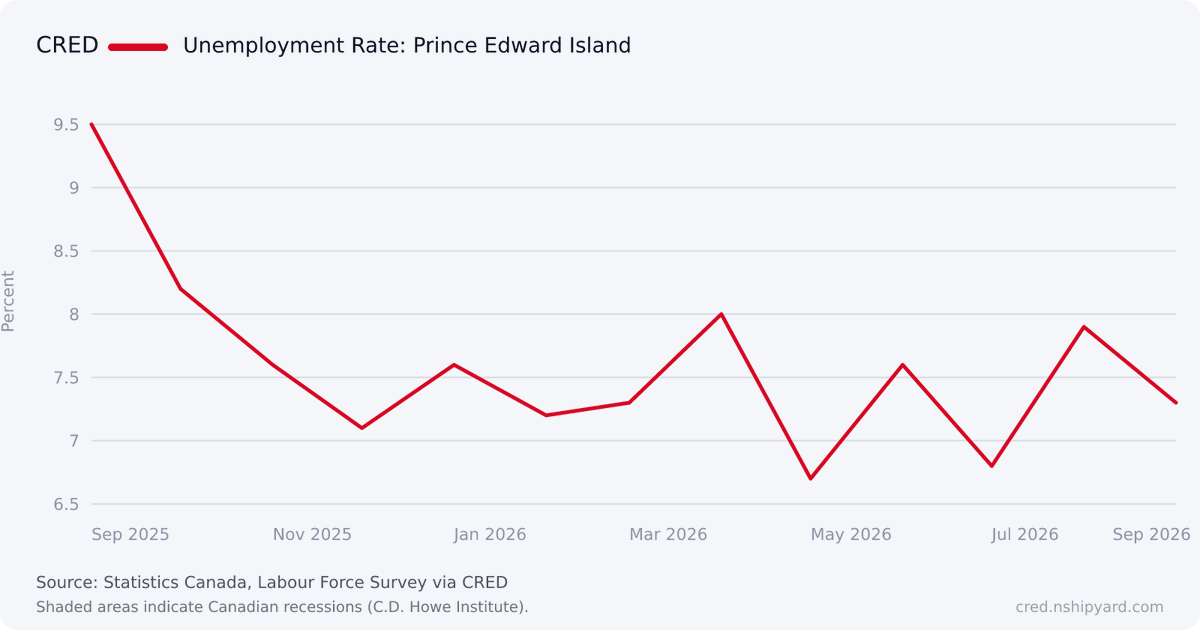
Prince Edward Island unemployment fell to 7.3% in September.
Down from 7.9% in August and 9.5% a year ago.
A 2.2 point drop in one year.
Still 0.8 points above Canada's 6.5% rate.
The island's job market is improving, but lags the country.
@terrynewman Ottawa's AI spending counted in federal records totals $655.3 million. Two items make up $590.6 million of it, or 90.1 percent. One is a $240 million Cohere investment, and the other is a $350.6 million Dayforce payroll contract.
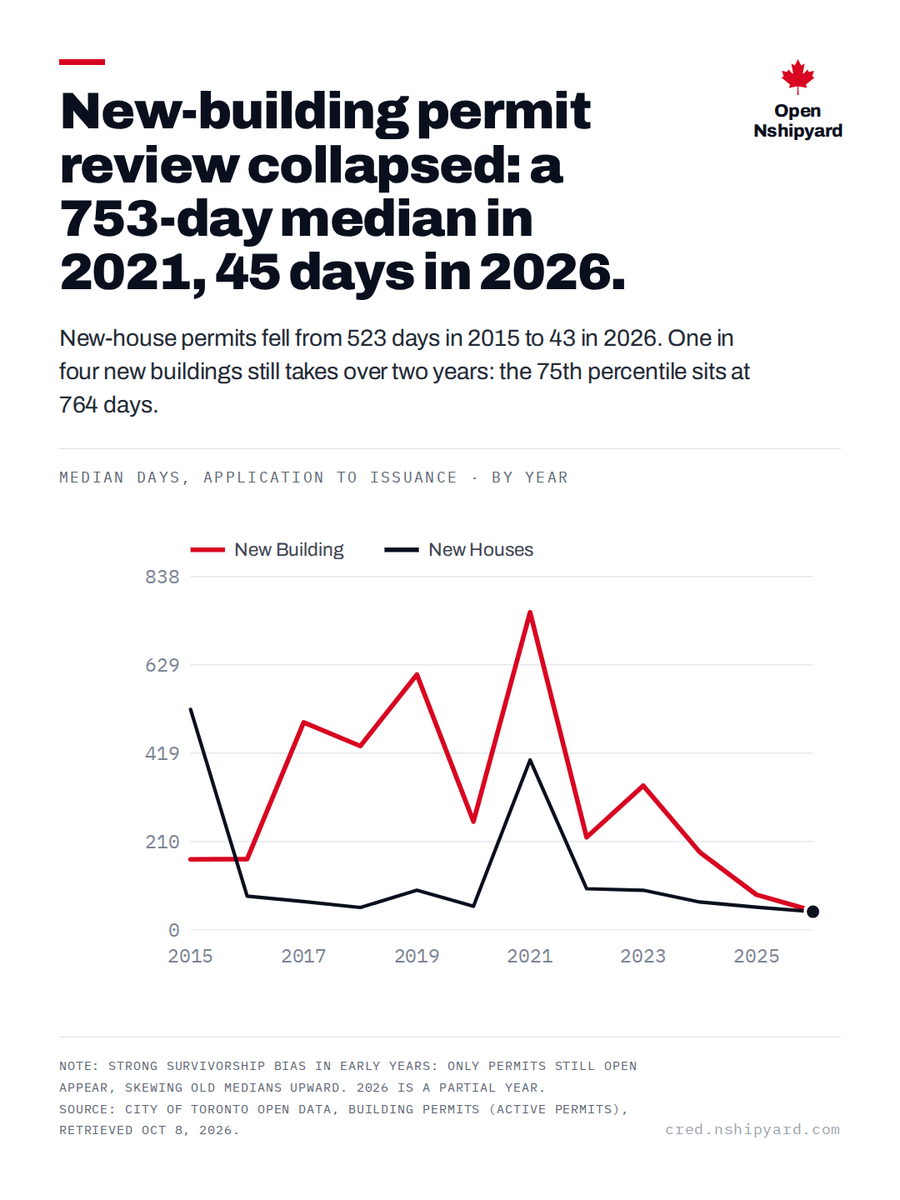
@ChrisSpoke Toronto new-building permit reviews have already shortened a lot. The typical review took 753 days in 2021 and 45 days in 2026. One in four new buildings still takes 764 days or more, so a 24 to 48 hour target is still a large step from the typical review today.
@TheFrankDomenic Ontario's slowest emergency room averages 4.7 hours before a patient is first assessed, and the fastest averages 0.5 hours. That covers 159 emergency rooms in August 2026. The slowest is 9.4 times the fastest.
@taxspendlib That slow trip fits a wider reach gap. In 30 minutes from Union Station, a car reaches 339.5 square kilometres of Toronto, while transit reaches 82.5. That is 4.1 times the reach. The chart measures citywide reach, not this one streetcar route.