Perpetual contracts derivatives that allow indefinite leveraged exposure to assets like SOL, BTC, or ETH without expiration dates have exploded in popularity on Solana. Protocols like Drift, Zeta Markets, and the open-source Solana Perpetuals framework (from Solana Labs) enable non-custodial trading with funding rates, oracles for price feeds, and automated liquidations. However, traditional brokerage models in DeFi suffer from silos: trades execute on-chain, but ancillary services (e.g., premium analytics, oracle subscriptions, or cross-margin collateral swaps) rely on slow, gas-heavy Ethereum-style payments or centralized custodians. This introduces latency, counterparty risk, and high costs up to 0.5% per trade in some cases.
Brokerage Engine (Rust Smart Contracts):
Deployed as Anchor programs on Solana, the engine uses Sealevel's parallel execution to process thousands of brokerage requests concurrently. It employs a request-for-quote (RFQ) matcher that scans on-chain order books (integrated with Phoenix or OpenBook) for perpetual positions.
Example flow: A trader submits a long BTC-PERP position at 5x leverage. The engine brokers liquidity from staked pools, computes funding premiums via Pyth oracles, and quotes a total service fee (e.g., 0.01% + micropay for oracle data).
On-chain settlement uses Solana's Token Program for atomic swaps, preventing MEV exploits via Jito bundles.
🔹 In X402 architecture, payments are not endpoints but directional signals.
🔹 Open Post consumes these signals to map intent before liquidity commits.
https://t.co/EaFoiCx8ob
The Perpetual Challenge: Friction in On-Chain Brokerage
Perpetual contracts derivatives that allow indefinite leveraged exposure to assets like SOL, BTC, or ETH without expiration dates have exploded in popularity on Solana. Protocols like Drift, Zeta Markets, and the open-source Solana Perpetuals framework (from Solana Labs) enable non-custodial trading with funding rates, oracles for price feeds, and automated liquidations. However, traditional brokerage models in DeFi suffer from silos: trades execute on-chain, but ancillary services (e.g., premium analytics, oracle subscriptions, or cross-margin collateral swaps) rely on slow, gas-heavy Ethereum-style payments or centralized custodians. This introduces latency, counterparty risk, and high costs up to 0.5% per trade in some cases.
Brokerage Engine (Rust Smart Contracts):
⚡ Deployed as Anchor programs on Solana, the engine uses Sealevel's parallel execution to process thousands of brokerage requests concurrently. It employs a request-for-quote (RFQ) matcher that scans on-chain order books (integrated with Phoenix or OpenBook) for perpetual positions.
🗺Example flow: A trader submits a long BTC-PERP position at 5x leverage. The engine brokers liquidity from staked pools, computes funding premiums via Pyth oracles, and quotes a total service fee (e.g., 0.01% + micropay for oracle data).
🟢On-chain settlement uses Solana's Token Program for atomic swaps, preventing MEV exploits via Jito bundles.
Architectural Deep Dive: x402 as the Payment Backbone
x402, popularized by Coinbase and the x402 Foundation in 2025, is an open protocol for embedding payments directly into HTTP requests. On Solana, it shines through instant stablecoin transfers (e.g., USDC via SPL tokens) without facilitators or API keys clients sign intents, validators confirm, and content unlocks in a single block. OPL extends this with spl402-inspired optimizations (a Solana-specific variant achieving 4x speedups over vanilla x402), ensuring payments are peer-to-peer and dependency-free.
Key components of OPL's stack:
AI-powered forecasting that analyzes market behavior and collateral performance in real time — helping traders manage perpetual positions with precision.
Architectural Deep Dive: x402 as the Payment Backbone
x402, popularized by Coinbase and the x402 Foundation in 2025, is an open protocol for embedding payments directly into HTTP requests. On Solana, it shines through instant stablecoin transfers (e.g., USDC via SPL tokens) without facilitators or API keys—clients sign intents, validators confirm, and content unlocks in a single block. OPL extends this with spl402-inspired optimizations (a Solana-specific variant achieving 4x speedups over vanilla x402), ensuring payments are peer-to-peer and dependency-free.
The Perpetual Challenge: Friction in On-Chain Brokerage
Perpetual contracts derivatives that allow indefinite leveraged exposure to assets like SOL, BTC, or ETH without expiration dates have exploded in popularity on Solana. Protocols like Drift, Zeta Markets, and the open-source Solana Perpetuals framework (from Solana Labs) enable non-custodial trading with funding rates, oracles for price feeds, and automated liquidations. However, traditional brokerage models in DeFi suffer from silos: trades execute on-chain, but ancillary services (e.g., premium analytics, oracle subscriptions, or cross-margin collateral swaps) rely on slow, gas-heavy Ethereum-style payments or centralized custodians. This introduces latency, counterparty risk, and high costs up to 0.5% per trade in some cases.
When a service requires payment (e.g., accessing a premium liquidation predictor API), the client receives an HTTP 402 response with a Solana Program Derived Address (PDA) for escrow.
Deployed as Anchor programs on Solana, the engine uses Sealevel's parallel execution to process thousands of brokerage requests concurrently. It employs a request-for-quote (RFQ) matcher that scans on-chain order books (integrated with Phoenix or OpenBook) for perpetual positions.
x402, popularized by Coinbase and the x402 Foundation in 2025, is an open protocol for embedding payments directly into HTTP requests. On Solana, it shines through instant stablecoin transfers (e.g., USDC via SPL tokens) without facilitators or API keys clients sign intents, validators confirm, and content unlocks in a single block. OPL extends this with spl402-inspired optimizations (a Solana-specific variant achieving 4x speedups over vanilla x402), ensuring payments are peer-to-peer and dependency-free.
The Perpetual Challenge: Friction in On-Chain Brokerage
Perpetual contracts derivatives that allow indefinite leveraged exposure to assets like SOL, BTC, or ETH without expiration dates have exploded in popularity on Solana. Protocols like Drift, Zeta Markets, and the open-source Solana Perpetuals framework (from Solana Labs) enable non-custodial trading with funding rates, oracles for price feeds, and automated liquidations. However, traditional brokerage models in DeFi suffer from silos: trades execute on-chain, but ancillary services (e.g., premium analytics, oracle subscriptions, or cross-margin collateral swaps) rely on slow, gas-heavy Ethereum-style payments or centralized custodians. This introduces latency, counterparty risk, and high costs up to 0.5% per trade in some cases.
“The thesis is to be the best place for sustainable capital formation. From memecoins and social tokens to rev coins and ownership coins.”
- @Pedromiranda on @11AMdotclub
Looking ahead, OPL's Q1 2026 roadmap targets cross-chain bridging via Wormhole for hybrid EVM-Solana perps, and native support for spl402's zero-dep facilitator model. In a world where DeFi TVL nears $1T, OPL positions Solana as the unchallenged king of real-time, payment-native trading where every tick, trade, and transfer is as fluid as the markets themselves.
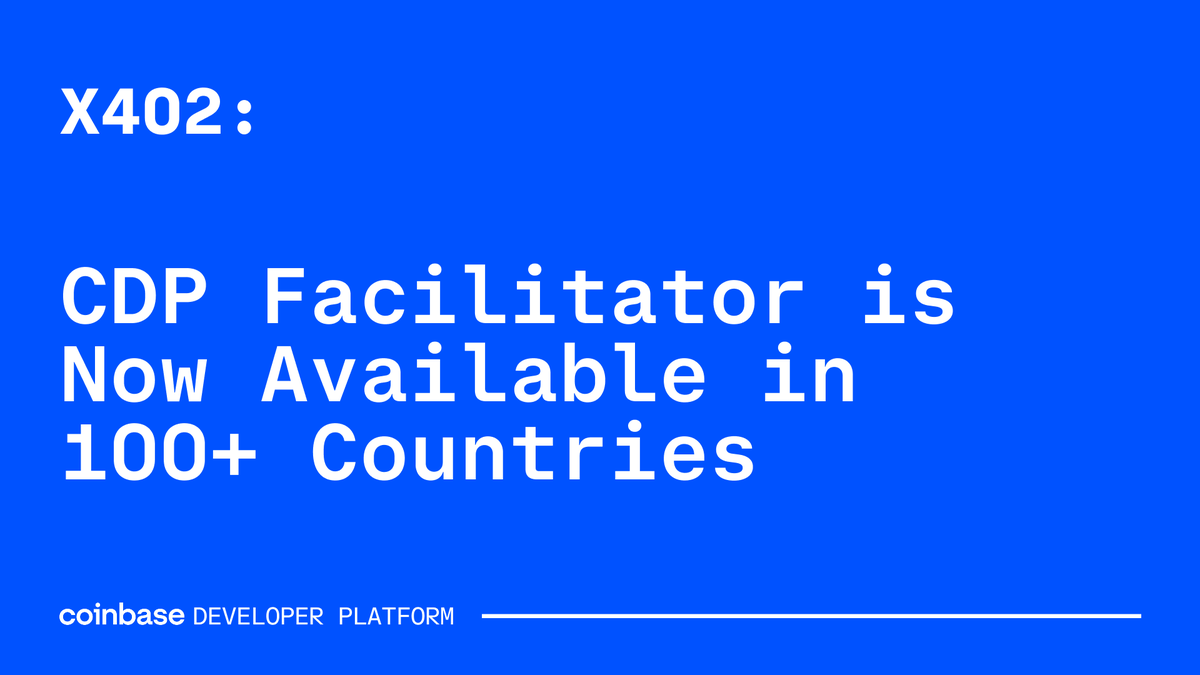
Our CDP x402 Facilitator is now available in 100+ countries, adding to benefits like:
→ Coinbase-grade security, scale, and throughput powered by our Server Wallets
→ Simple devex with no key management
→ Built-in compliance checks
→ Discoverability with auto-inclusion in x402 Bazaar
... and more!
Let us know what else you'd like to see from our facilitator. 💬👇
OPL isn't just a brokerage—it's an open lab for perpetual innovation. Its SDK (Rust + TypeScript) allows devs to fork primitives for custom markets (e.g., tokenized real-world assets). Early integrations include Raydium Perps for liquidity routing and Supra Oracles for multi-asset feeds. The native OPL token (SPL-governed) accrues fees via staking, with 20% allocated to x402 liquidity incentives.
kalshi vs. polymarket is fascinating because I'm not sure I've ever seen them compete on product, but just partnerships?
like I have no idea what they do differently, the competition has made them commoditize themselves
whoever whips up a unique marketing angle from here wins