Open Science Tanzania promotes transparency, collaboration, and innovation in research. We connect enthusiasts to foster a culture of open access and sharing
We share our new findings on the influence of age, diverse food categories, diarrhea, extended breastfeeding, hand washing practices and residence on shaping both gut microbiome and child growth
These results have been published as a preprint
Link: https://t.co/B6i8T5iYy9
We asked two microbiologists, Antonella Colque and Nurdana Orynbek, to test a selection of AI tools built for scientific publishing. The goal? To see how well these tools perform in real research tasks. Here is what worked for them.
And what did not : https://t.co/NYTR7MwKDQ
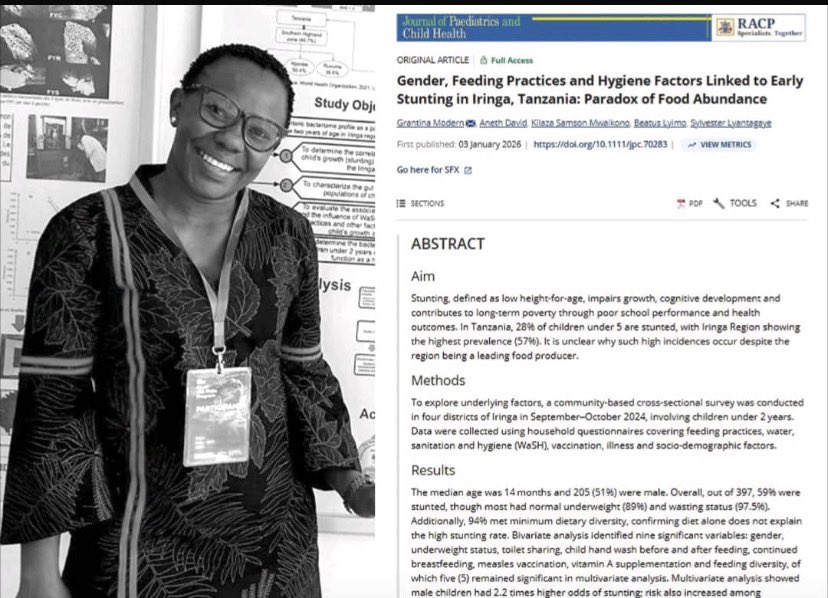
🎉 Congratulations to Ms. Grantina Modern
We proudly celebrate Ms. Grantina Modern, Member of the THGO Executive Committee and Deputy General Secretary, for her outstanding research published with EPFL on child stunting in Iringa, Tanzania.
Read more 👉🏽 https://t.co/rHiRKoLB9P
Her work sheds light on critical factors beyond food availability, highlighting the importance of breastfeeding, WaSH practices, and integrated health strategies in improving child nutrition outcomes.
This is a remarkable contribution to child health research and policy in Africa.
#THGO #Humangeneticstz #WomenInScience #100PhDsforAfrica #NutritionResearch
More good news for scholars in @EIFL countries! We've renewed our agreement with OUP for free & discounted access to journals & online products & waived APCs when publishing in fully #OpenAccess journals - for details https://t.co/b0NauKk19S @academic.oup.com @OxfordJournals
“Around the world, we see countries that have advanced and prospered, some of which started where we were, or even behind us.
Their ability to transform people’s lives and develop their nations is not because they were created differently from us. There is no difference. Human beings everywhere are fundamentally the same.
What changes along the way is that some seem to think that they are superior to others, that is simply not true, and you should never accept it. Accepting that idea only means choosing to remain where you are, even when it is not good, and convincing yourself that it is okay.” President Kagame | #Umushyikirano2026
Webinar: Developing & Implementing AI Guidelines in Higher Learning Institutions
Join the discussion on ethical and responsible use of AI in teaching, learning, and research.
📅 11 Feb 2026
⏰ 2:00–4:00 PM
🔗 https://t.co/1iTH1GY88N
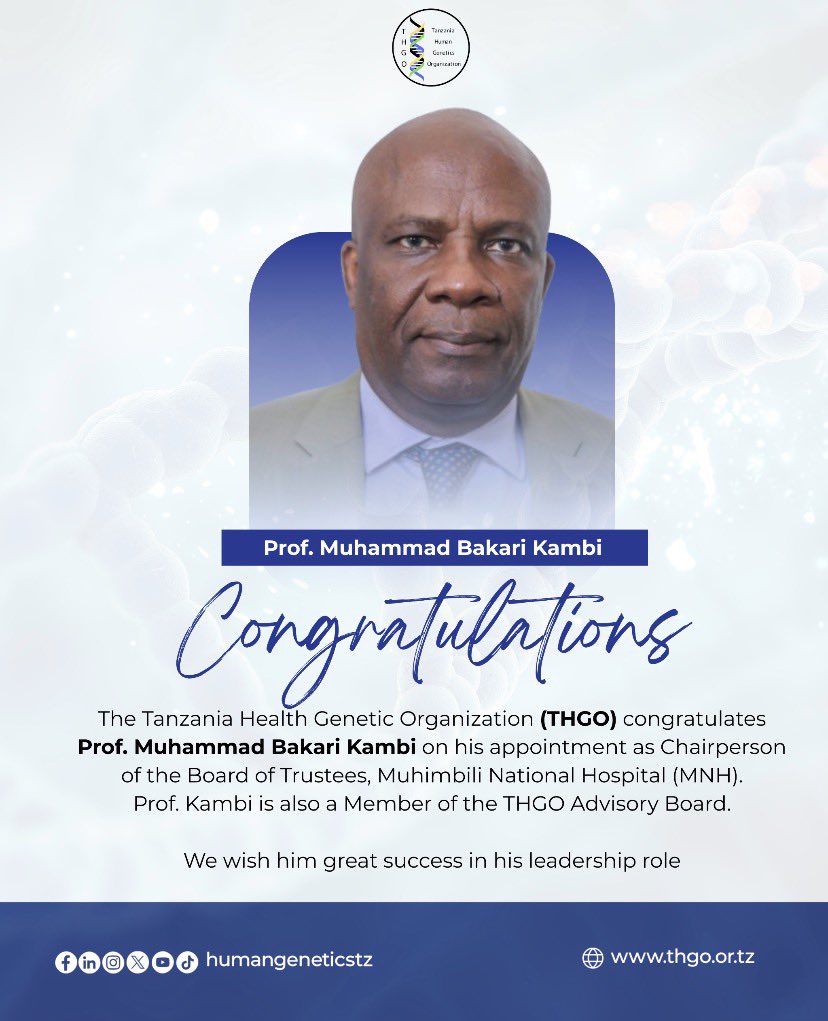
We dearly congratulate Prof. Muhammad Bakari Kambi our esteemed member at THGO on this well-deserved appointment as the Chairperson board of trustees Muhimbili National Hospital. Wishing him success in his leadership journey.
#Leadership#THGO
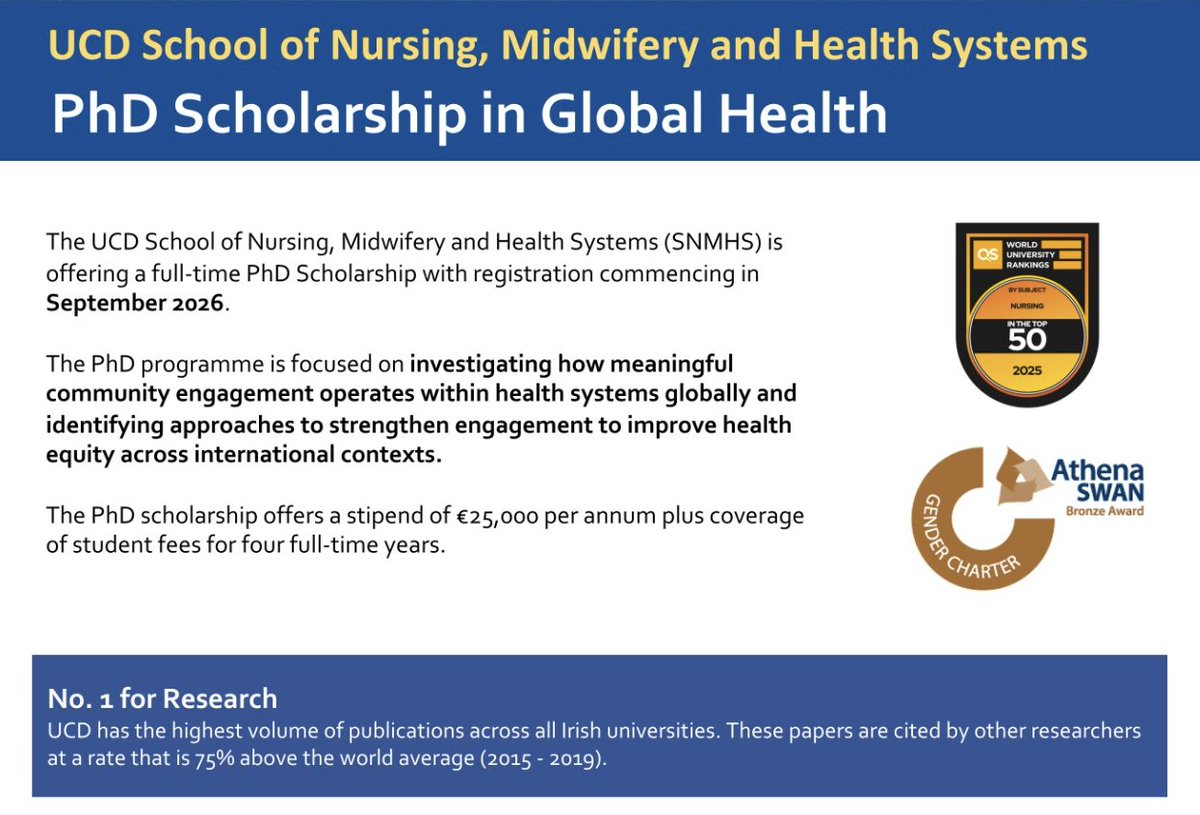
I'm recruiting a #PhD candidate interested in exploring #communityengagement and/or #equity in #globalhealth. Have a look & circulate with your networks or anyone you know who may be interested! 🌍
Includes funding for fees, stipend + research budget 💰
https://t.co/a2G1r5uS7p
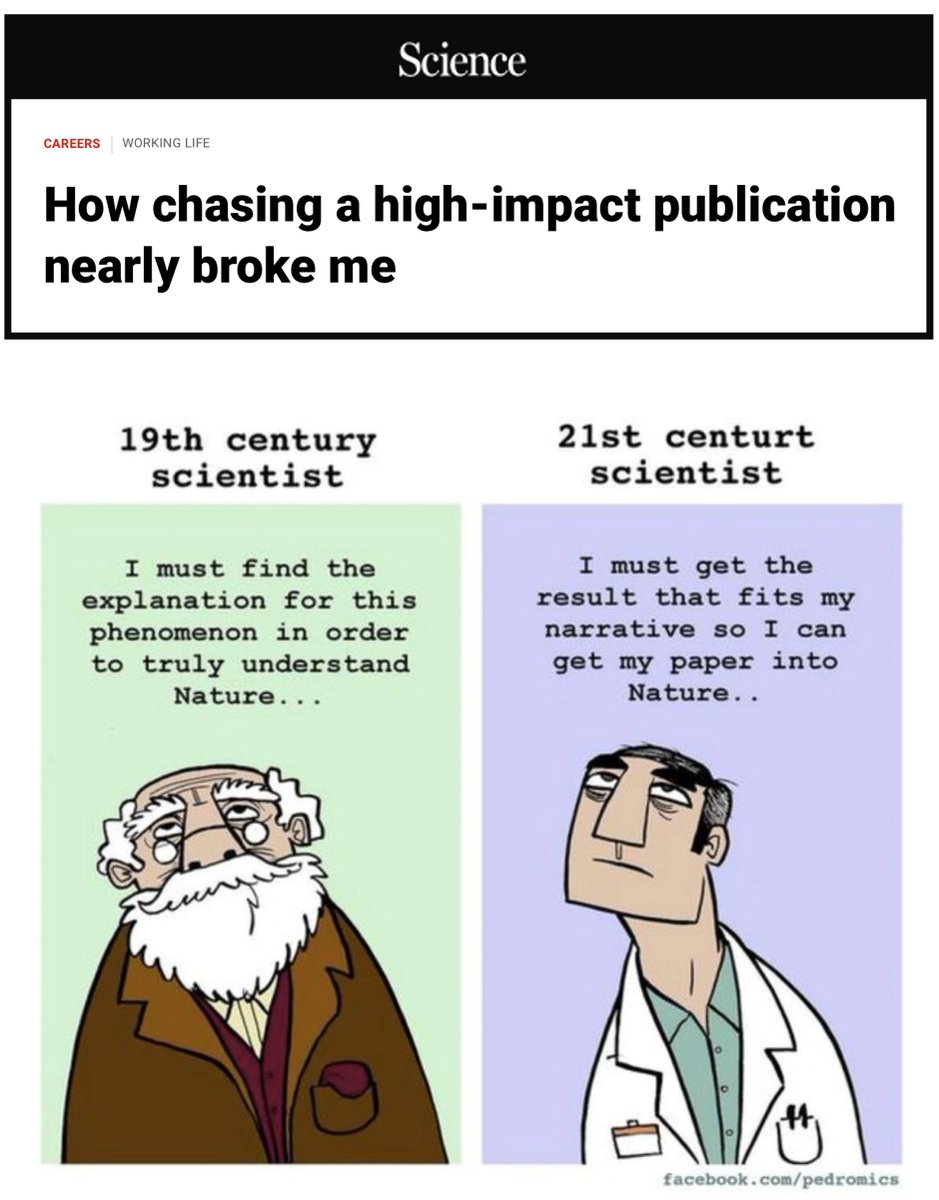
High-impact papers are crucial in academia.
Like it or not.
As a PhD student, you quickly learn that such papers are cool. They make advisors happy. Everyone admires you.
During a postdoc, high-IF papers are not just cool. They are mandatory for a PI job. They give you awards and interviews.
During the tenure track, they often become your ticket to a permanent position. Many young PIs are fighting to get their papers published in Nature/Science/Cell. It’s like getting a micro-Nobel prize. Many feel relaxed only when they publish in Nature (their tenure is finally safe!).
But:
Because such papers require a lot of time (often years), you live in constant uncertainty.
You HOPE you will get it. You spend evenings at work, you look for stronger results, and you’re battling through a battalion of failed experiments.
Then you submit it…
Then:
Stage 1. Editors reject 9/10 papers. Yours might be among them.
Stage 2. The paper goes to reviewers but they are brutal. For some reason (and you know why!) they just don’t want to see your paper in Nature. Many papers get rejected in the first round.
Stage 3. If reviewers can’t come up with reasons to kick you out immediately, they will request a lot of new experiments and changes to your work. Obviously, that will take months (if not years). Of course, some reviewers are great and genuinely help improve your work. But they are not as common as you might hope.
Stage 4. After addressing all problems and submitting it again, you will likely see some reviewers still resisting. They can simply reject your paper because they didn’t like how you addressed their requests. Or they will find new flaws and will get you to do another round of revision. (If you’re lucky, they will accept the paper.)
Stage 5. If reviewers are divided between “accept” and “reject”, the editors may send your paper to additional reviewers. That will start another cycle of hell with a likely negative outcome.
Stage 6. If you are rejected, congratulations - you’ve just wasted months on nothing. But because you need that paper, you resubmit it to another high-IF journal, and it all starts with Stage 1.
So, it’s like gambling.
You gamble your career on this publication.
During those 6–24 months of fighting with reviewers and editors, someone else may publish the same work. Then you’re screwed.
Or your paper is likely not accepted in any high-IF journal. After loosing a year or more on trying to push it through, you will have to publish it in a low-IF journal.
Is it a healthy game?
No. You get exhausted. Anxiety skyrockets.
But unfortunately that’s how academia works. I’ve been through this myself. Most of my colleagues have the same experience. We definitely despise it.
And the worst part of it?
We’ve started to see it as completely normal.
🎉 Congratulations to our General Secretary, Dr. Mohamed Zahir Alimohamed, on being selected as an AFOX 2025 Fellow!
This is a remarkable and well-deserved achievement, reflecting your dedication, excellence, and growing impact in advancing health research and innovation.
👏 THGO celebrates you and wishes you continued success in this exciting journey. Read more: https://t.co/i3aGjNXoaA
#AFOX2025 #Fellowship #THGO
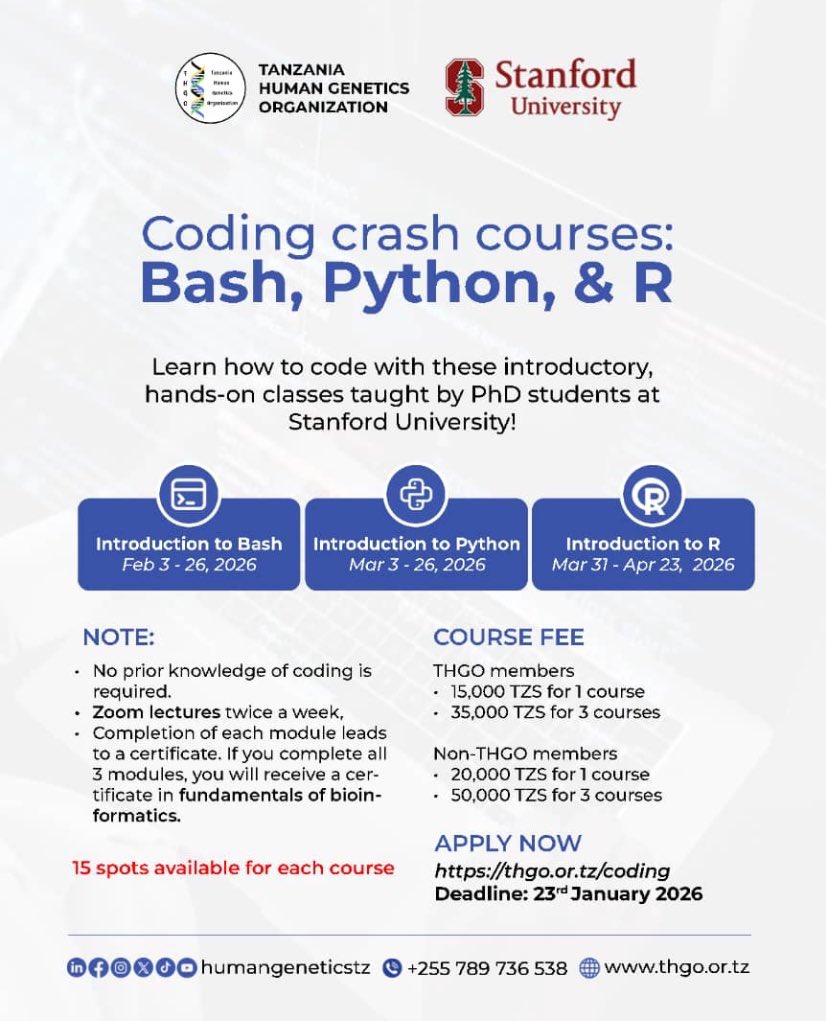
Ready to start your coding journey? 💻✨
Join our Coding Crash Courses in Bash, Python & R
Learn from Stanford PhD students and earn a certificate in bioinformatics fundamentals.
📌 Limited slots available apply https://t.co/C0CsVLPGxG before 23rd Jan 2026
NB: Indicated fees payable after successful selection
#CodingCrashCourse #Bioinformatics
#Humangeneticstz
I'd emailed a scientist whose recent paper shaped my perspective on biocatalysis; just to appreciate his paper. He replied with insights into what he’s working on now and also a personalized invite to an upcoming conference. Pause & appreciate. Everyone needs pat on their backs; scientists too. #science
📝NEW READ!!!
Tanzanian scientists have studied how wild mosquitoes with reduced vectorial capacity due to genetic modifications introduced by gene-drive technology respond to naturally circulating malaria parasites.
Read full article at https: https://t.co/3eDL6shitq
🎉 Kudos to the whole team, including our very own Rachel Mtama, member of the #THGO advocacy team.
#EndMalaria #GeneDriveTechnology
Upcoming Workshop: ARTIC Viral Genomics Training
WACCBIP, in collaboration with the ARTIC Network, is hosting a hands-on workshop on the ARTIC amplicon-based sequencing method for real-time viral outbreak surveillance. The training will cover the full workflow—from sample preparation to data analysis.
Who should apply: Researchers and public health laboratory staff with a background in molecular biology and an interest in outbreak genomics.
Apply by: 10 January 2026
Applications should be submitted at: https://t.co/zW7h5MwfHL
More info: https://t.co/6hDzueVFfN
The 8th #OpenAIRE Open Science Train-the-Trainer Bootcamp kicks off next week!
Over five intensive days, selected trainers from around the world will hone their skills in #OpenScience, #RDM, #FAIRPrinciples, #OpenAccess, #EOSC, and effective training practices, combining live sessions, hands-on work & peer exchange.
Missed out? Stay tuned for the next Bootcamp in 2026!
Freshwater ecosystems that exacerbate schistosomiasis-transmission: creating an integrated framework for sustainable control that accounts for climate variability, ecological dynamics, and community practices.
❤️🩹 Read more: https://t.co/7x1ObGRygh
#researchmatter#farleaf