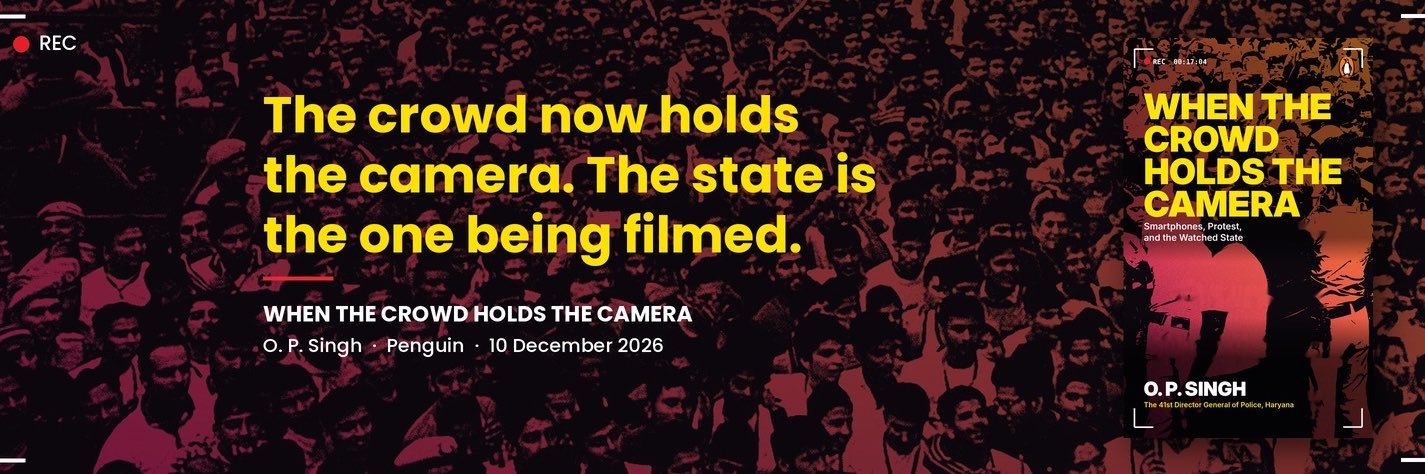
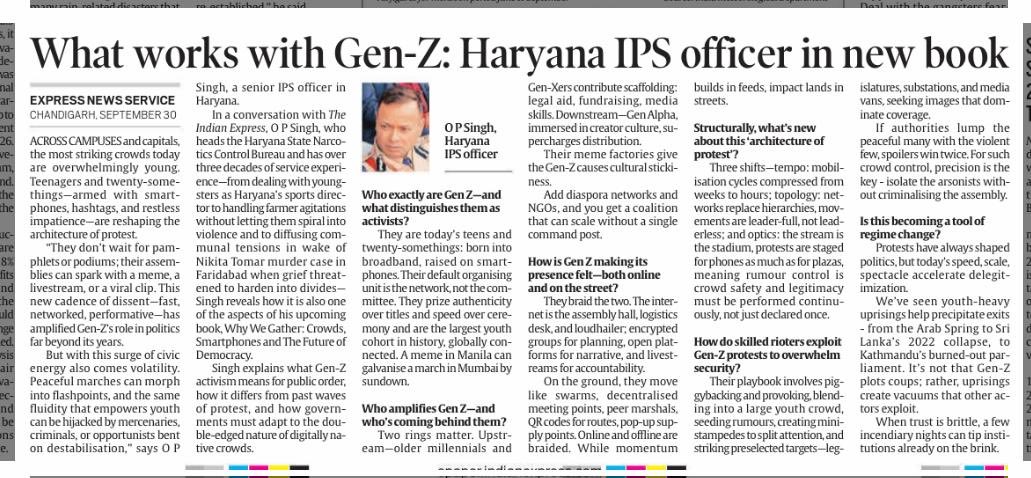
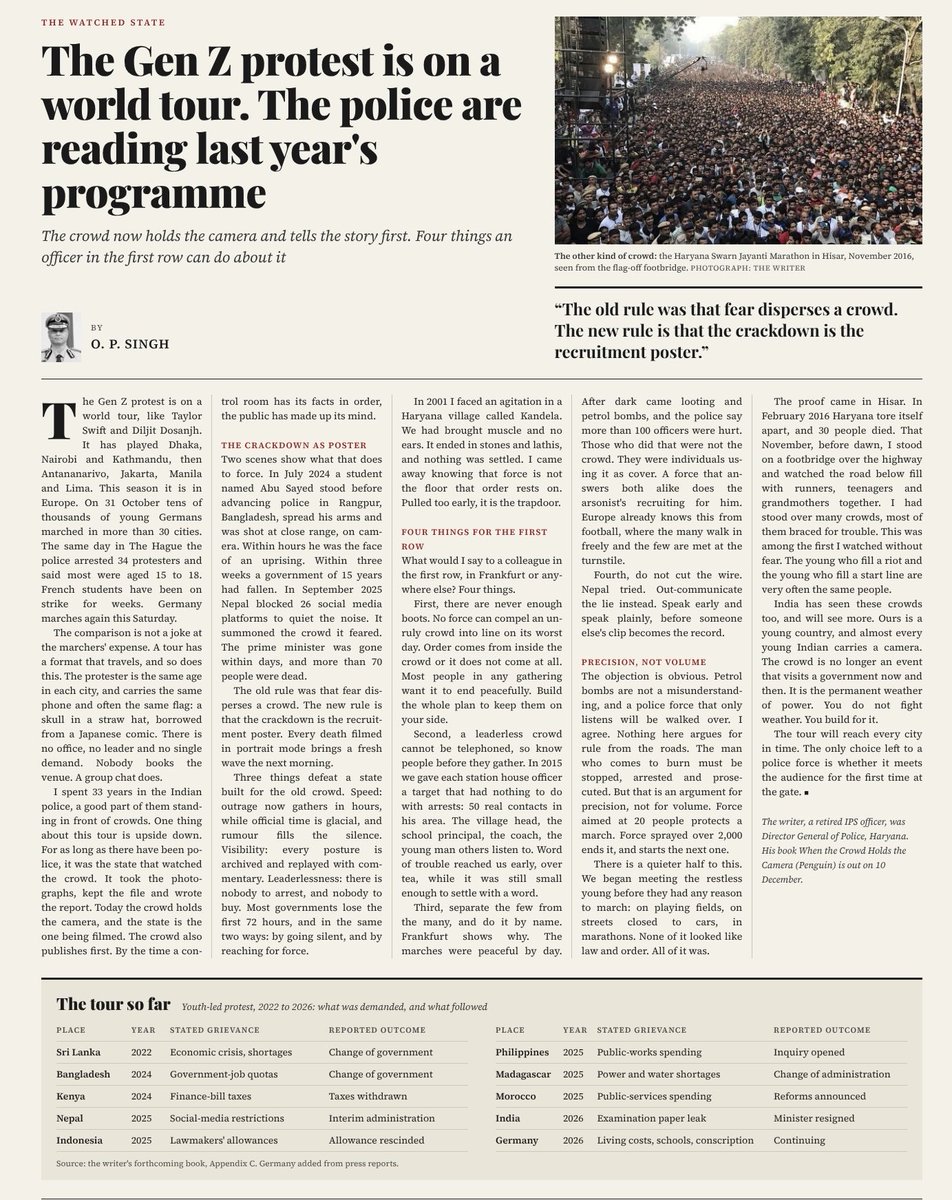
The book on changing nature of protests was in the making for last 2 years. Now ready as “When the Crowd Holds the Camera - Smartphone, Protests & the Watched State”. Publisher: @PenguinIndia . Will be in the book stores by 10 Dec. May like to read my interview to @IndianExpress
The Gen Z protest is on a world tour. Kathmandu. Dhaka. Nairobi. Antananarivo.
This season it is playing Europe: Frankfurt, The Hague, Paris.
The setlist never changes. No office, no leader, no single demand. Entry by group chat.
And one thing is upside down. The camera at a protest used to belong to the police. Now the crowd holds it, and the state is the one being filmed.
To my colleagues in the first row, four suggestions from 33 years in uniform:
1. You cannot telephone a crowd with no leader. So know the people before they gather: the teacher, the coach, the class representative.
2. Put a face they know in the first row. Keep the riot gear behind, in sight.
3. Most came to be heard. A few came to fight. Treat them alike and you recruit for the few.
4. The first clip writes the history. Do nothing in it that you would need to explain.
A crowd is a relationship you built, or did not, on all the days before.
#WhenTheCrowdHoldsTheCamera, Penguin, 10 December.
Hindustan Times’ Delhi-based Metro Feature Editor Shri Manoj Sharma has written a well-researched and investigative article on stampedes that kill hundreds every year in India. May like to read. Here is the digital link https://t.co/J78sYnKb2g
#TheCrowdThatHoldsTheCamera
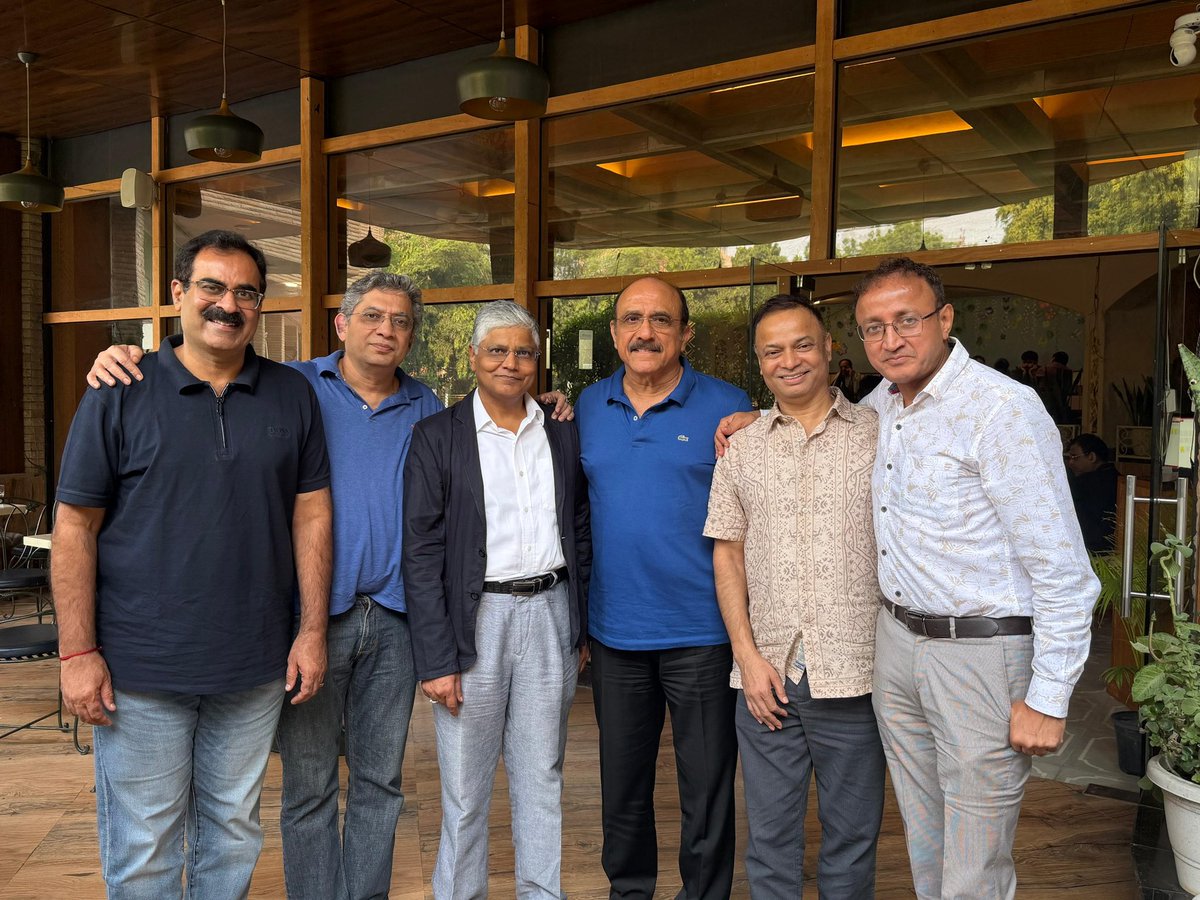
Sunday noon about life, service and books with dear batchmates and distinguished friends - (from left) Rajeev Verma, Chief Secretary, Delhi, Vijay Kumar, Secretary, Shipping, GoI, Pradeep Rawat, IFS 1990 former Ambassador to China, Thomas Mathew IAS 1983 and author of the book ‘Ratan Tata: A life’ and right most Anand Kedia IRS and Chief Commissioner of Income Tax, Delhi.
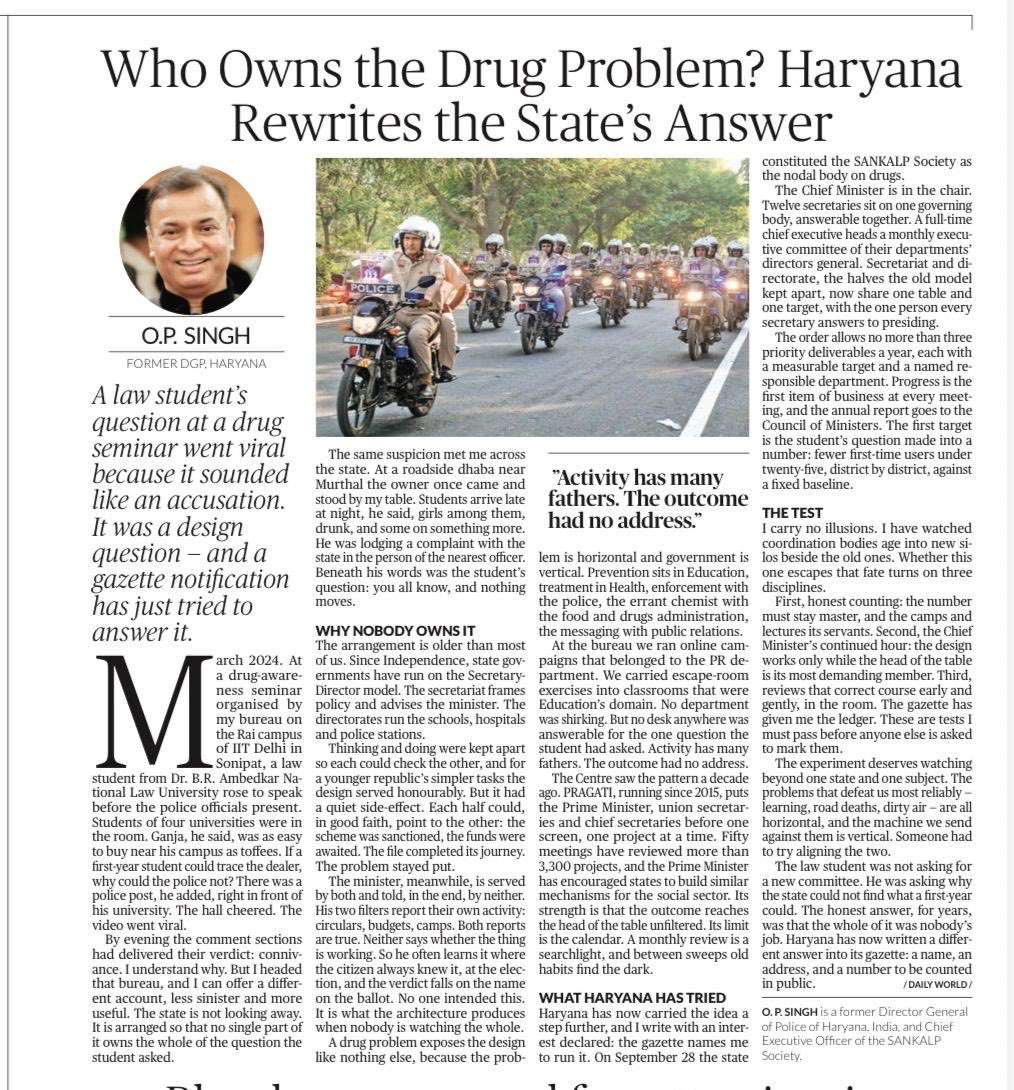
The SANKALP Anti-Drug Society is work in progress. Drawing upon my years in police, narcotics bureau and sports and youth affairs department, I am proposing an action plan that will have visible impact on the ground - jailed smugglers, cleared suspected/reported drug dens, hospitals with de-addiction facilities and sports and cultural infrastructure offering organised physical and cultural activities as anti-dote to drug. Read my article below 👇
Sometime ago, the centre urged the states to adopt PRAGATI dashboard model for social sector. Haryana has taken the lead by setting up SANKALP mechanism to put all twelve departments - their secretaries and directors- on one table and nudge them to act in a coordinated way towards the shared outcome of prevention, enforcement and treatment of drugs. The initiative aims to align a vertical government (department-limited) to a horizontal (inter-departmental) problem. May like to read my article on the subject below:
#WarAgainstDrugs #DrugFreeIndia
Governance must be territorial and the one incharge of it must be enabled and held accountable for good ‘user experience’ in regulation and delivery. Read my thoughts on the subject in the article published in the magazine @Outlookindia https://t.co/uJkrGuCYI5