I’ve lived in enough countries to know I don’t want my whole life tied to one government.
So over time I started building options in other places too.
I write about it here ⬇️
https://t.co/JCVPCfT660
Residencies. Bank accounts. Property abroad. Investments. Second citizenships.
Not because I’m planning to escape anywhere.
I just like knowing that if the rules change, my family and I have other doors open.
That’s basically what The Optionality Report is about.
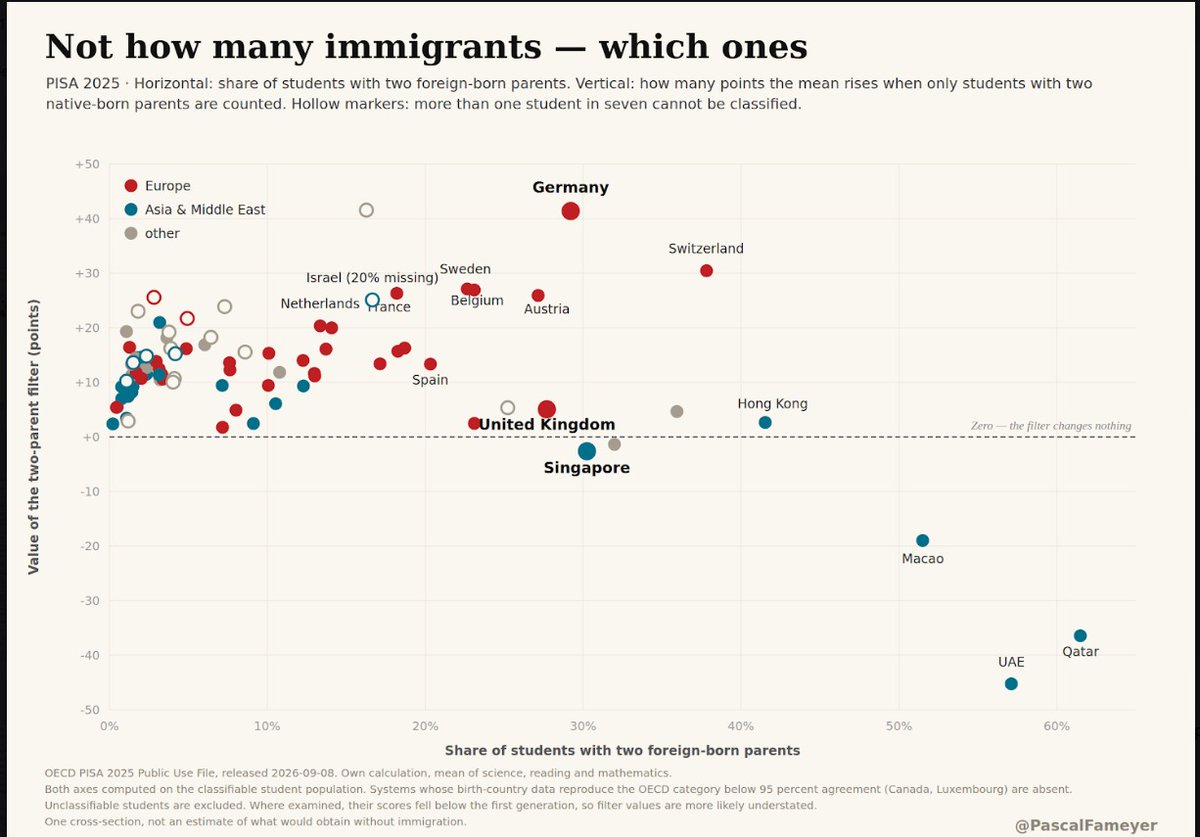
Germany's PISA score rises 41 points if you exclude immigrant kids. Switzerland: +30. The UAE's score drops 45 points without immigrants.
Singapore, Macao, the UAE, and Qatar recruit immigrants smarter than their native populations; Europe, the opposite
Western Europe:
€7 coffee.
€2,500 rent.
15 forms to open a business.
Nobody knows their neighbors.
Paraguay:
Guy you met yesterday already invited you to a barbecue and knows someone who can fix your problem.
Different development models.
The wealthier you become, the more geography should become a choice.
Where you live.
Where you spend winter.
Where your company operates.
Where your money sits.
Where your children study.
At some point, location stops being destiny.
I don’t disagree. The West is far more willing to push Poland and the Baltics into a war with Russia than to fight it in France or Germany. If you’re military-age in those countries and you don’t want to die as a buffer, leave while you still can. You may be more useful alive and organising than dead at the front.
You don't really know a country until something goes wrong.
You need a doctor.
A contractor disappears.
A bank blocks something.
You have a legal issue.
You need the government office.
That's when the Instagram version ends and the country begins.
One thing people underestimate when choosing where to live:
Cultural familiarity.
You notice it in tiny things.
How people dress.
How families behave.
How public space feels.
What is considered normal.
How much social tension there is.
You don't need to hate anyone to prefer a place where the culture feels familiar.
Kyiv’s 482 date is legendary, pushed for the 1982 Soviet anniversary. It was an East Slavic Polyane settlement, not Ukrainians. That identity formed much later. Same as Istanbul not being founded by Turks.
Warsaw wasn’t even Poland’s first capital. Gniezno was from 966. Then Krakow from 1038. Warsaw only became capital in 1596 and is first mentioned around 1313.
Faced with the facts you’ll probably delete this tweet.
@ferpasan Western Europe is trying to force all its best people to leave. Then it acts surprised when they pick a different country that at least leaves them alone.
I thought German bureaucracy was done surprising me. I’m an EU citizen, just not German.
Driving Poland → Germany, Schengen checkpoint anyway. Late for a meeting. Twenty officers searched the car whether I agreed or not. Found the pepper spray I keep in the car. “Illegal here. Hand it over and you can go.” So I did.
Two months later the state takes me to court. €1,500 on a lawyer. I won.
A year after that, another letter: fine for destroying the spray they confiscated. Officers’ hourly wages plus another €200 on top.
No idea why anyone lives there voluntarily.
I thought Germany and German bureaucracy cannot shock me anymore, but it did.
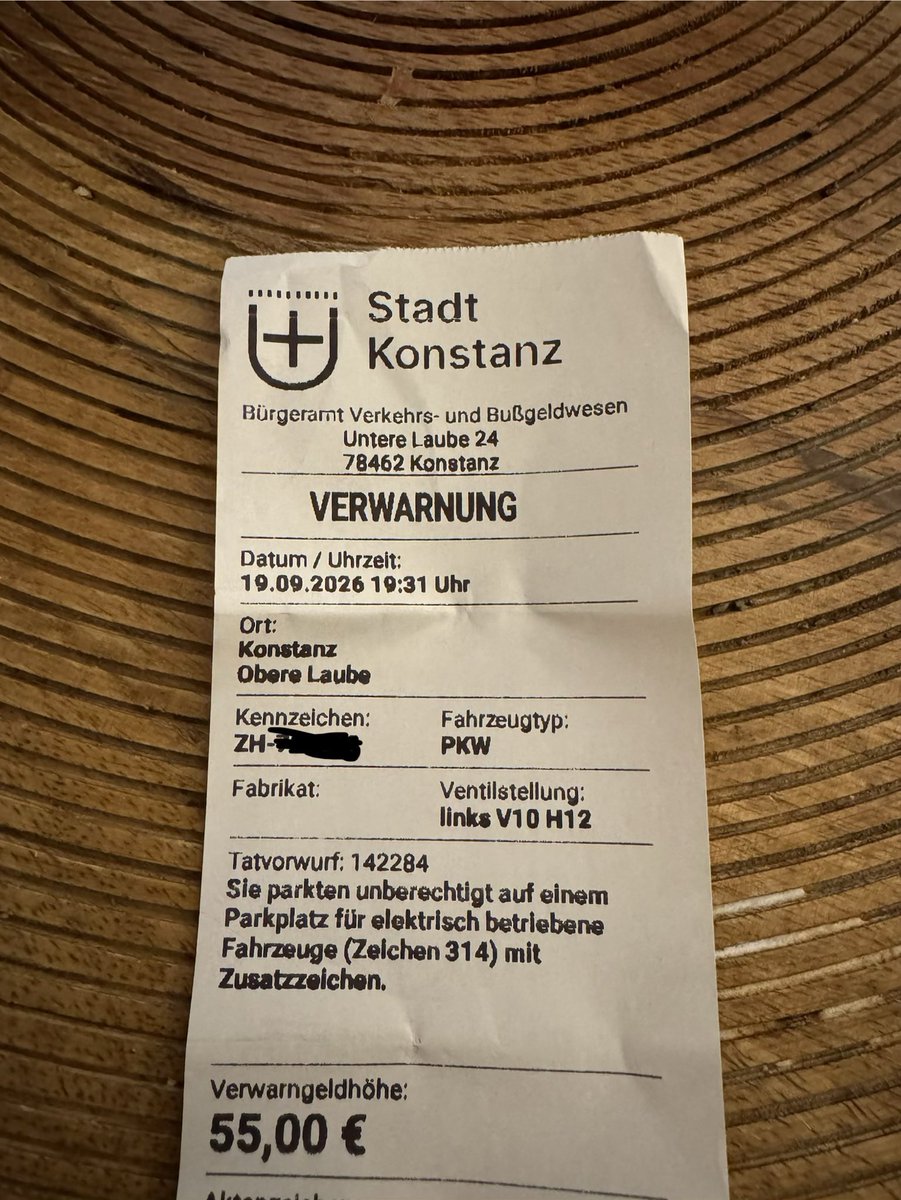
I parked my TESLA (!) on an EV-only parking spot in @Konstanz and plugged it into an EV charger. Came back to this fine. Had to use Grok to even understand what was wrong. Turns out you need to have a special EV licence or an EV sticker to indicate it is a real EV. Guess the Tesla logo and charging cable was not enough.
@levelsio@ffaebi@eurofounder
Which would you choose for your family?
A) 0% income tax, perfect weather, gated community, private everything
B) 20% tax, mediocre winter, extremely safe, walkable, great public spaces, kids can roam freely
I suspect people's answer changes dramatically after they have children.
A second residency is useful.
A second bank account may be more useful.
A second source of income may be even more useful.
It's not about collecting impressive documents.
Resilience is usually built from boring things.