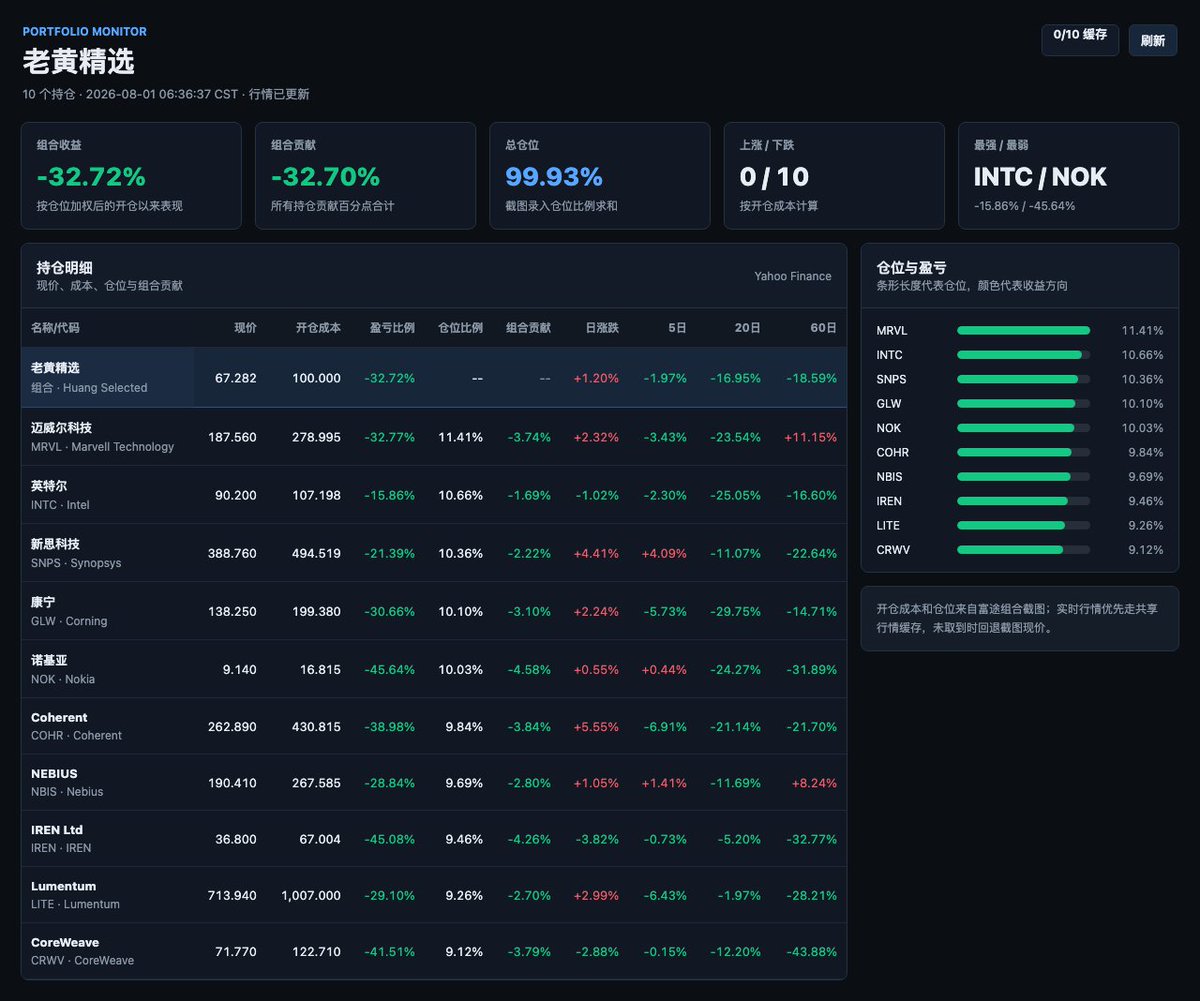
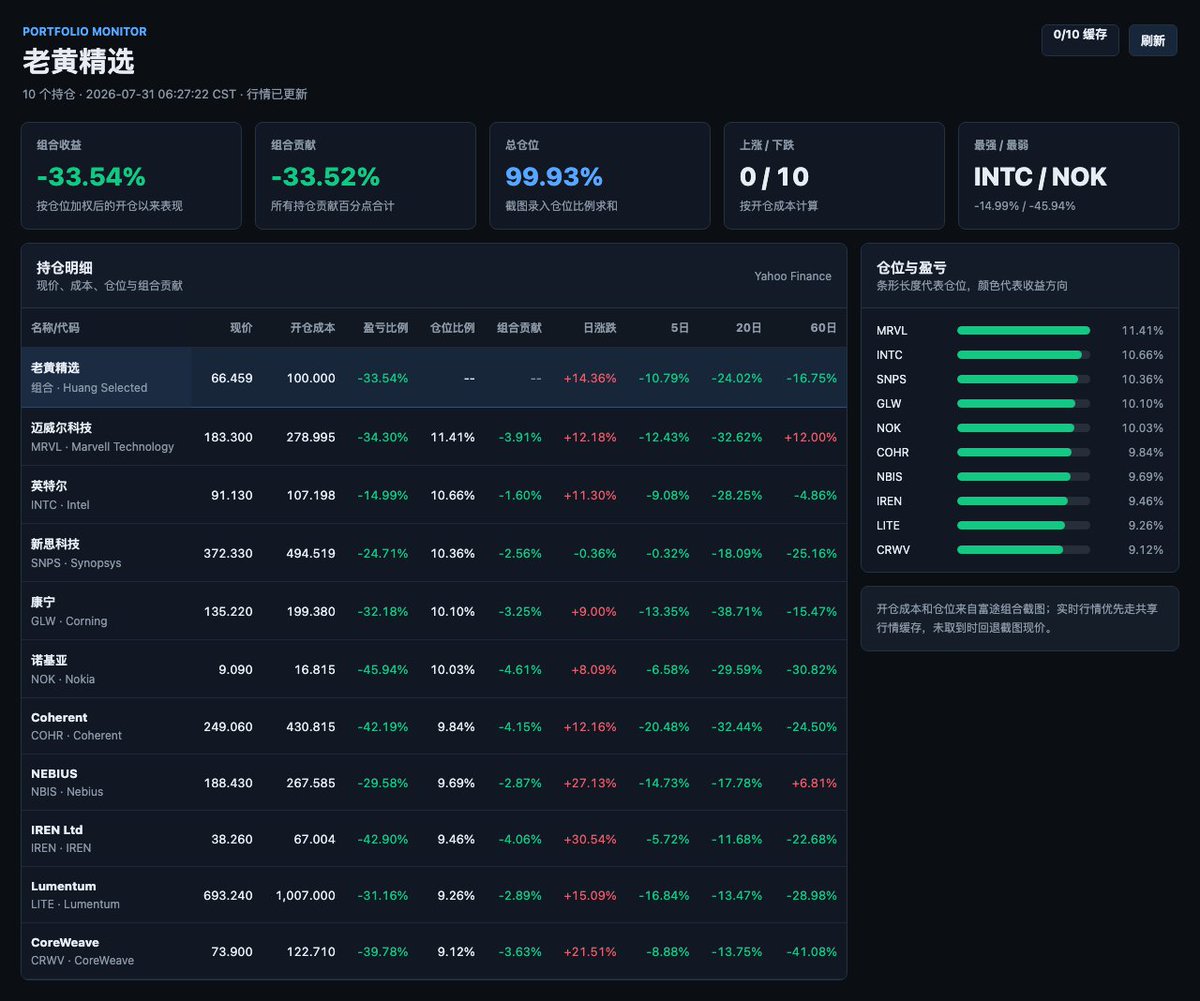
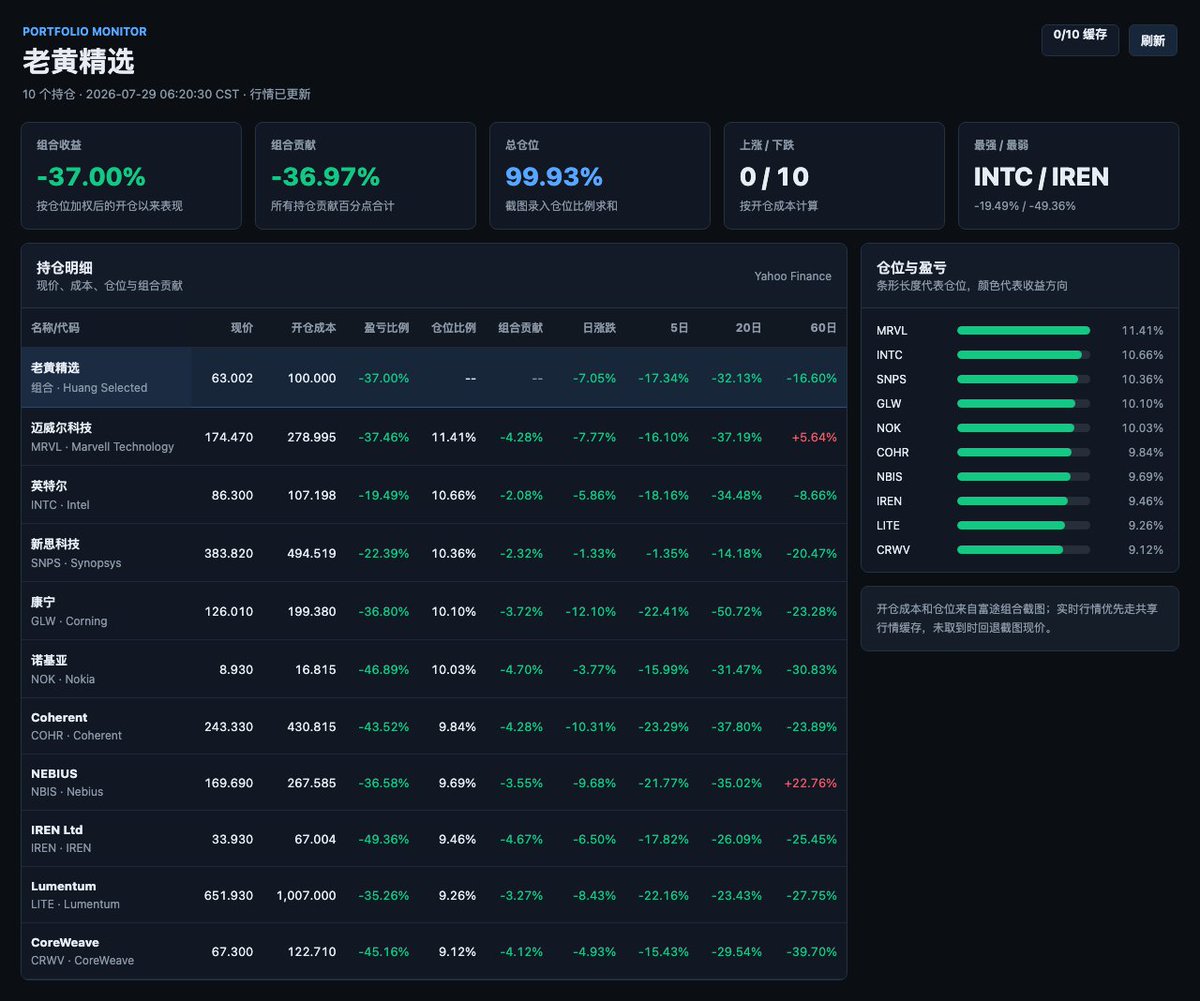
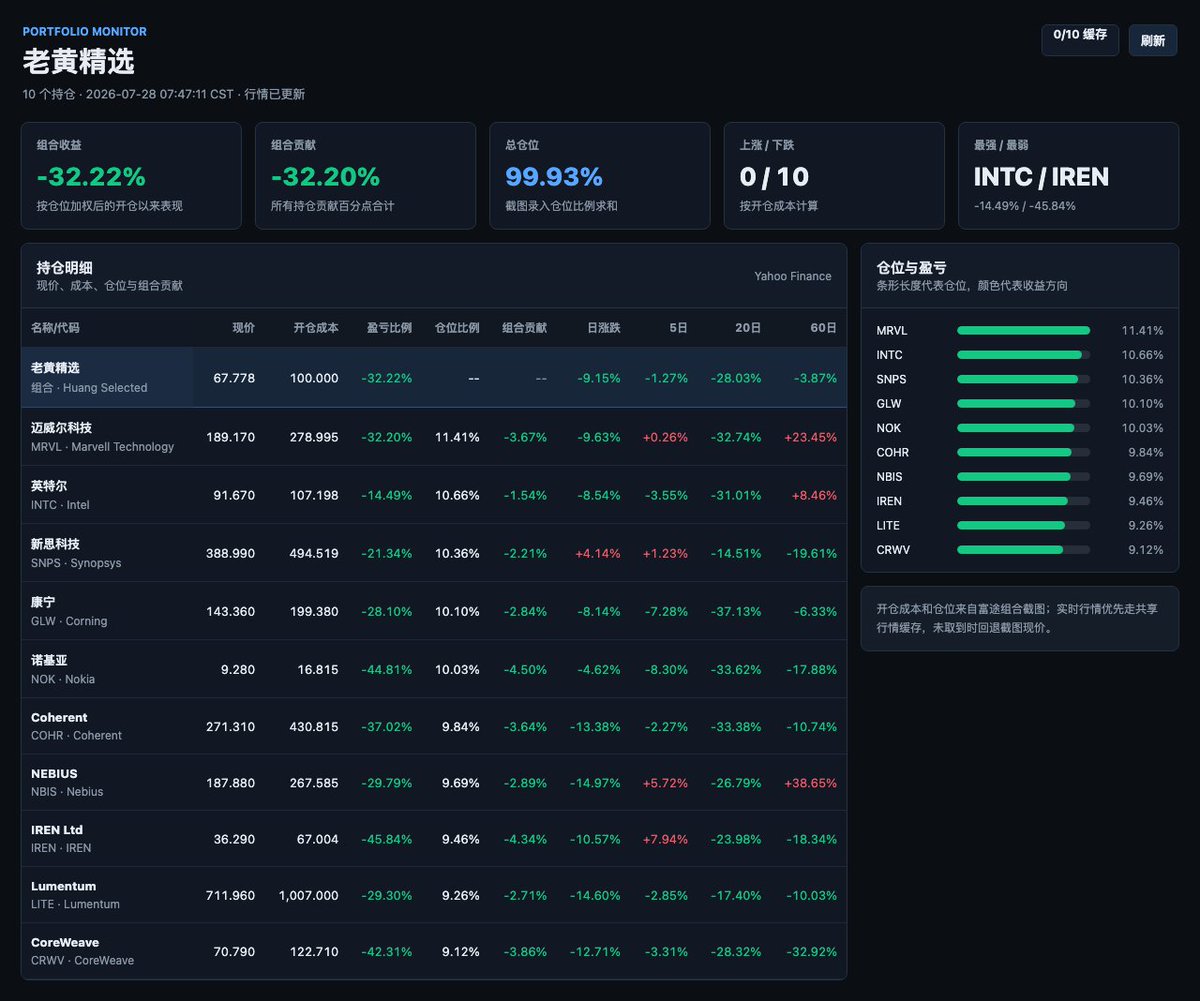
Leopold’s Full Letter to Investors: 67% Drawdown in July, 80% Year-to-Date Return
“We let you down this month.” Read the complete original English letter free:
https://t.co/O8vQsxcHGQ
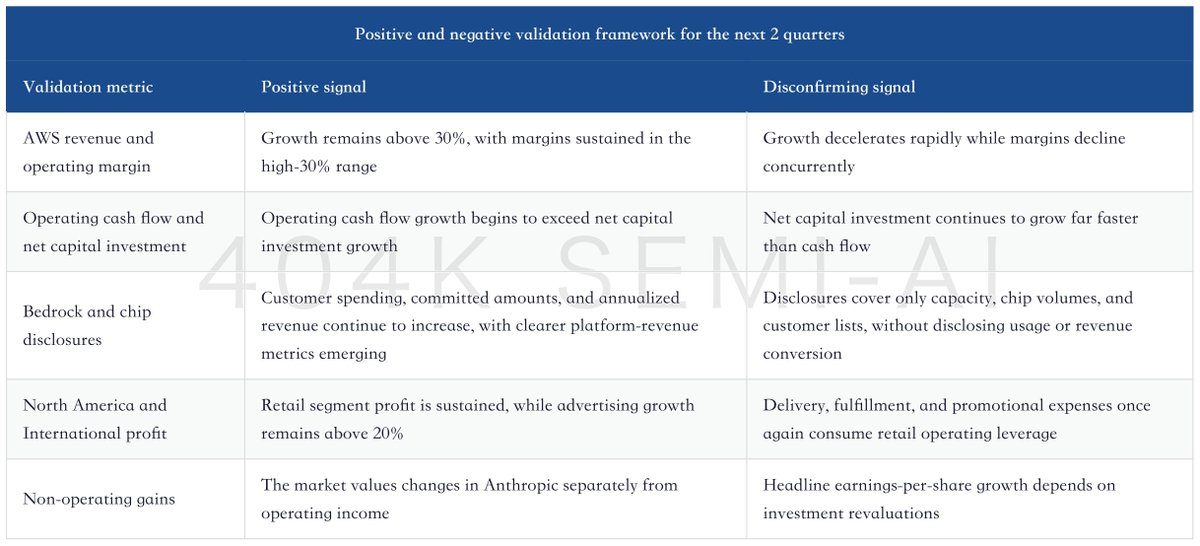
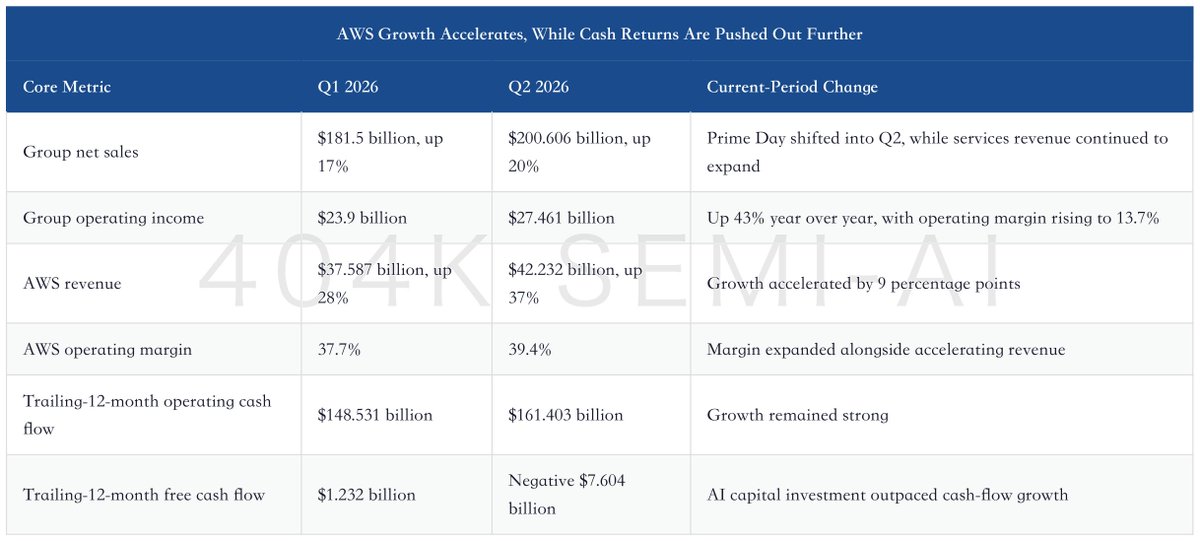
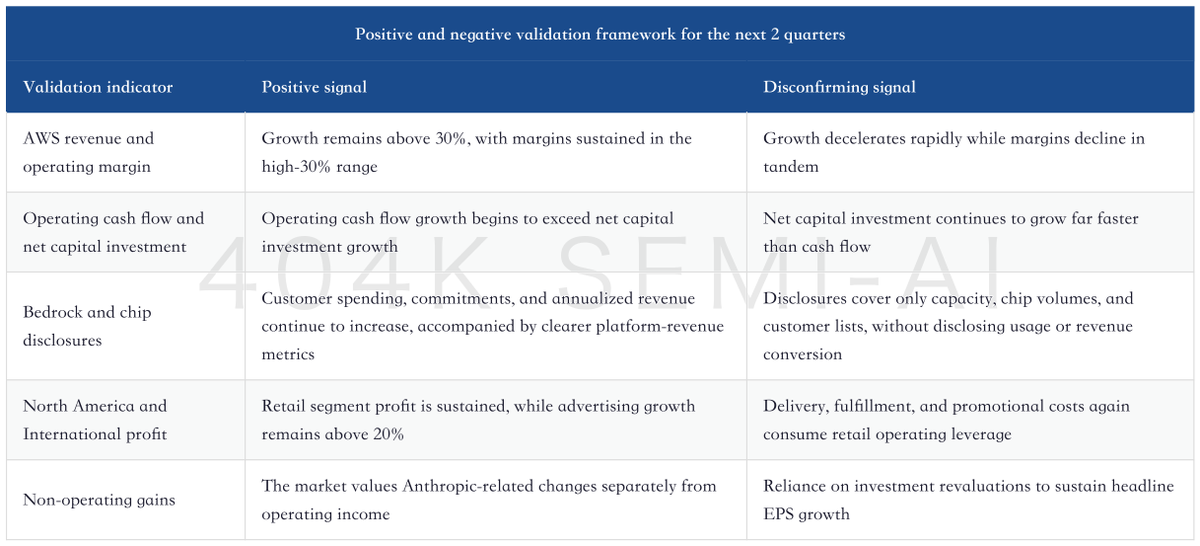
AWS's 37% growth is the headline. The reversal is cost pass-through: revenue hit $42.2 billion, backlog hit $496 billion, and new contracts will reflect component inflation. Test: adjusted margins hold.
https://t.co/NsawD7bUKb
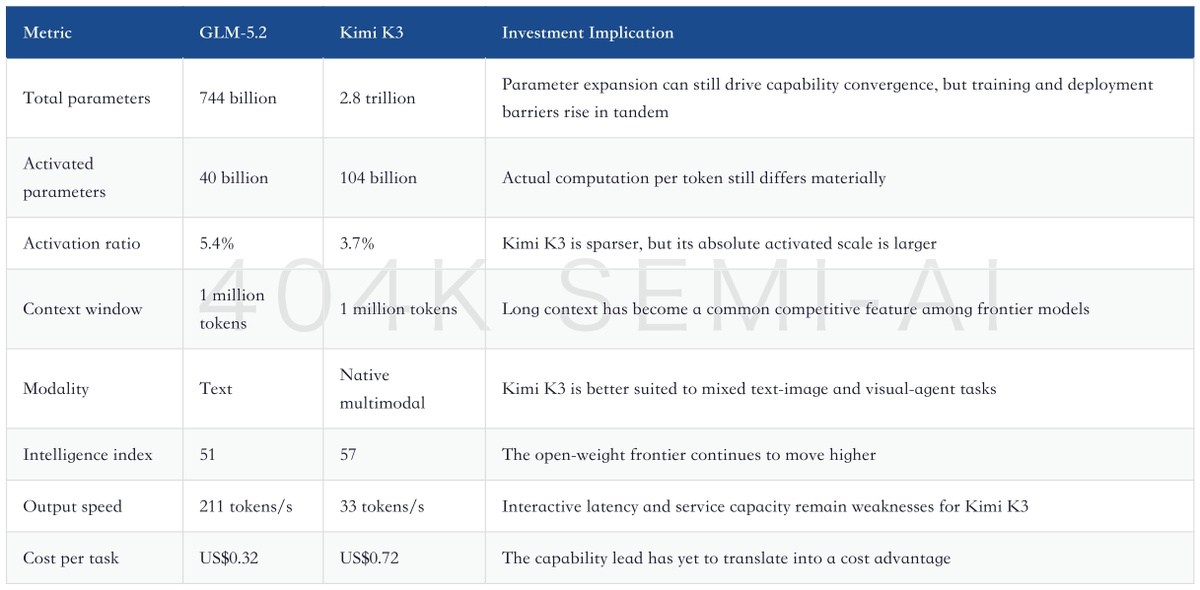
Kimi K3 is 4 points off the closed-source frontier, but delivery is the real gap: $0.72 per task and 33 tokens/s versus GLM-5.2 at $0.32 and 211 tokens/s. Validation: usage must outpace gross-margin erosion.
https://t.co/QzwDAa27eq
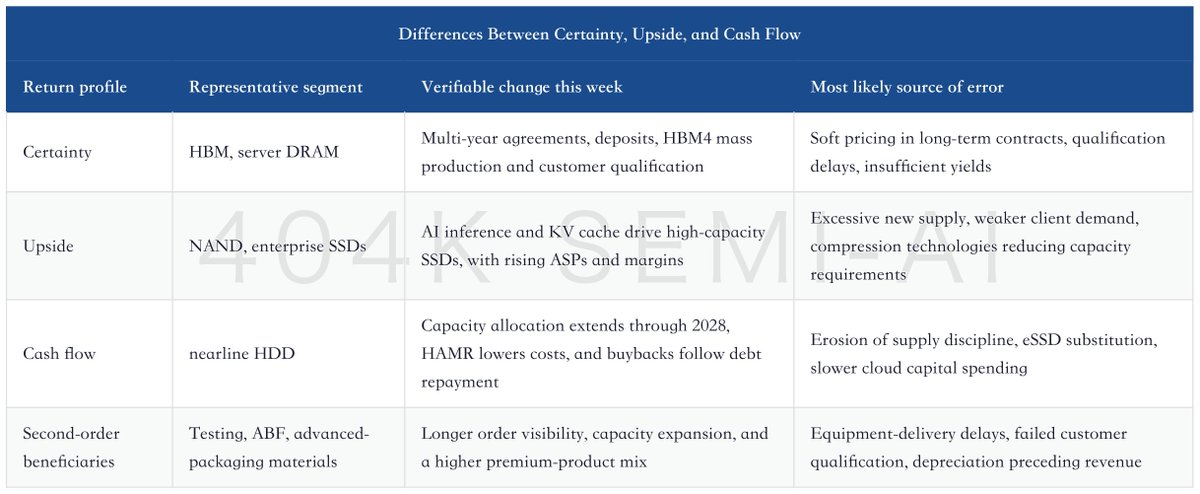
Memory prices are rising, but lock-ins matter more: SK hynix has signed approximately 10 long-term agreements. Validation fails if brands cut configurations or delay procurement.
https://t.co/VrsI7UpTFJ
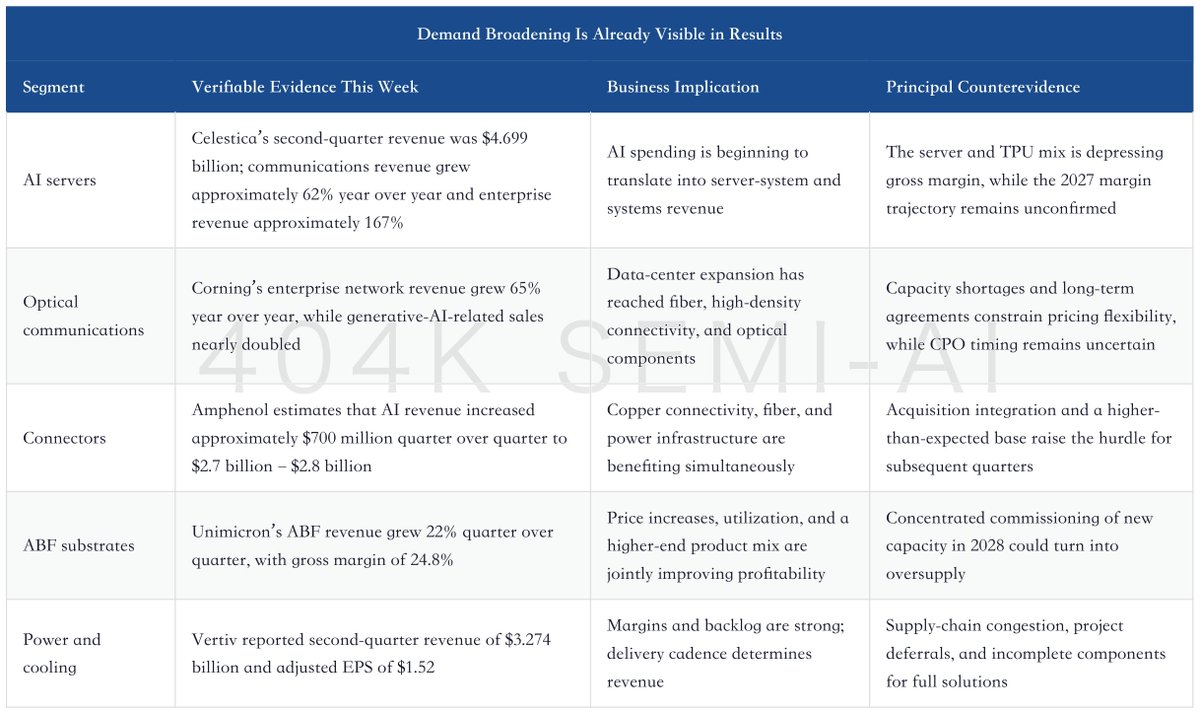
Cloud capex is rising, but orders are no longer the key signal: delivery sets revenue timing. Celestica beat forecasts by about 8%; Vertiv missed on supply congestion. Watch AMD Helios shipments in September.
https://t.co/QaoQU86m5N
AI cloud demand is the headline: AWS grew 36.7% in Q2. The deeper shift is funding: five hyperscalers report $1.2tn in lease obligations. Validation is revenue accelerating while financing costs stay stable.
https://t.co/mz5IctBFlO
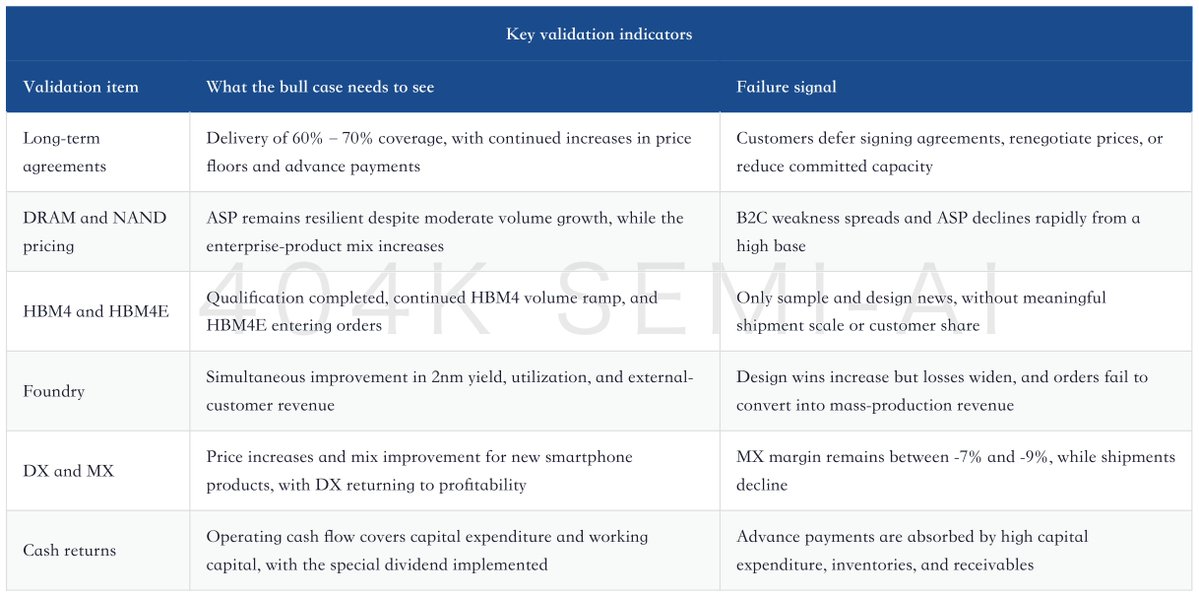
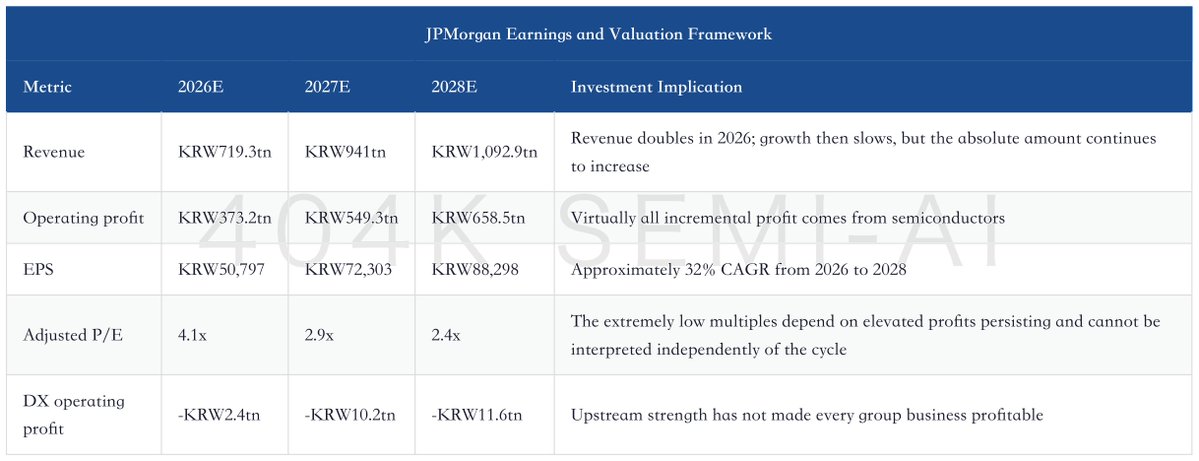
JPMorgan cut Samsung’s target to KRW400,000, but the mechanism could put 60%–70% of memory capacity under 5-year agreements with price floors. The test: whether end demand absorbs higher pricing.
https://t.co/lDotnXtOC7
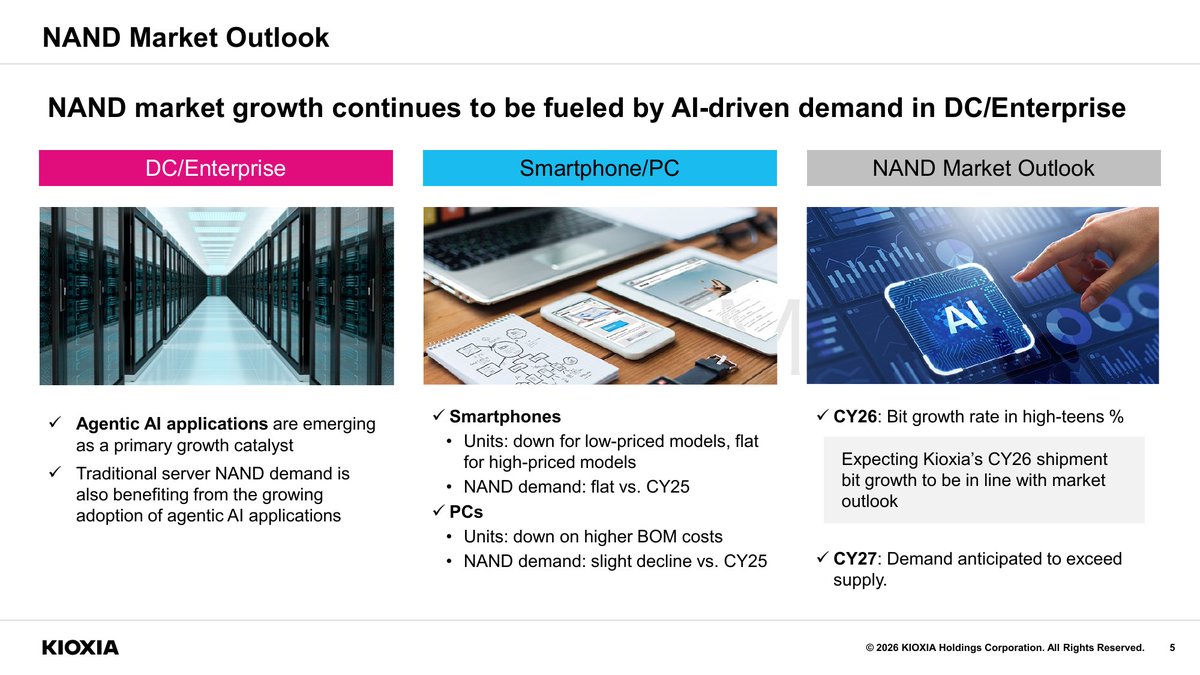
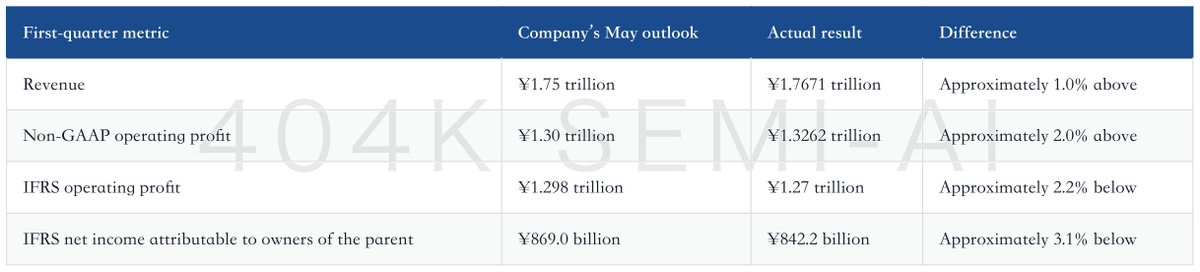
Q1 net income missed outlook, but Kioxia’s profit surge was price-led: ASP rose ~70% QoQ with low-single-digit bit shipment growth. Test: 2027 supply-demand conditions; falling prices would contract margins.
https://t.co/BvoJOQIX4f
Azure growth says AI spending is paying off. But the test is conversion: Microsoft’s ~$627 billion cloud backlog must become revenue over 12–24 months; capex growth and Azure gross margins are the checks.
https://t.co/S5OzDhIdKE
KLA's WFE upgrade is the headline; spending mix is the bigger shift. Packaging process-control revenue could rise from $635m in 2025 to about $1.1bn in 2026. Timely delivery and gross margins are the test.
https://t.co/hBYhLG4LNk
AI buildout is accelerating. But modular data centers buy speed, not cheap capacity: a 50 MW liquid-cooled hall falls from 18–24 to 12–18 months. Permitting, power and GPU delivery remain the test.
https://t.co/cS4EgMpcnO
Hardware weakness looks like fading AI demand. But OpenAI and Anthropic spending is already in supplier backlogs and financial data. The test is whether usage growth outpaces falling unit prices.
https://t.co/uYLIMwzEeH
AI infrastructure demand still looks firm. But the real constraint is financing: five major cloud providers’ PP&E rose from 40% of operating cash flow to 75%, with Amazon at 102%. Watch inference demand.
https://t.co/JlLhHLO8M1
AI hardware's pullback looks like weak demand. The deeper signal is execution: Applied Digital disclosed 1.4 GW across five campuses. Test: power, acceptance and rent commencement.
https://t.co/V3rfdCeJsA
AI demand remains strong, but the test has shifted to financing. NVIDIA reportedly plans up to $250bn of support, though talks are unconfirmed; project cash flow and credit spreads must validate it.
https://t.co/21wfbEZdTO
EMIB-T seems a CoPoS challenger. The key is coexistence: EMIB-T is a second source, not a replacement. Package yield is 90%–92%, but substrate yield is ~50%; mass-production yield must prove savings survive.
https://t.co/qcBuFEH9XK
Google’s $195–205bn capex guide looks like an AI spending surge. The real issue is cash conversion: Q2 free cash flow was about -$5.9bn. Utilization and post-depreciation free cash flow are the test.
https://t.co/7XPExfdFpG
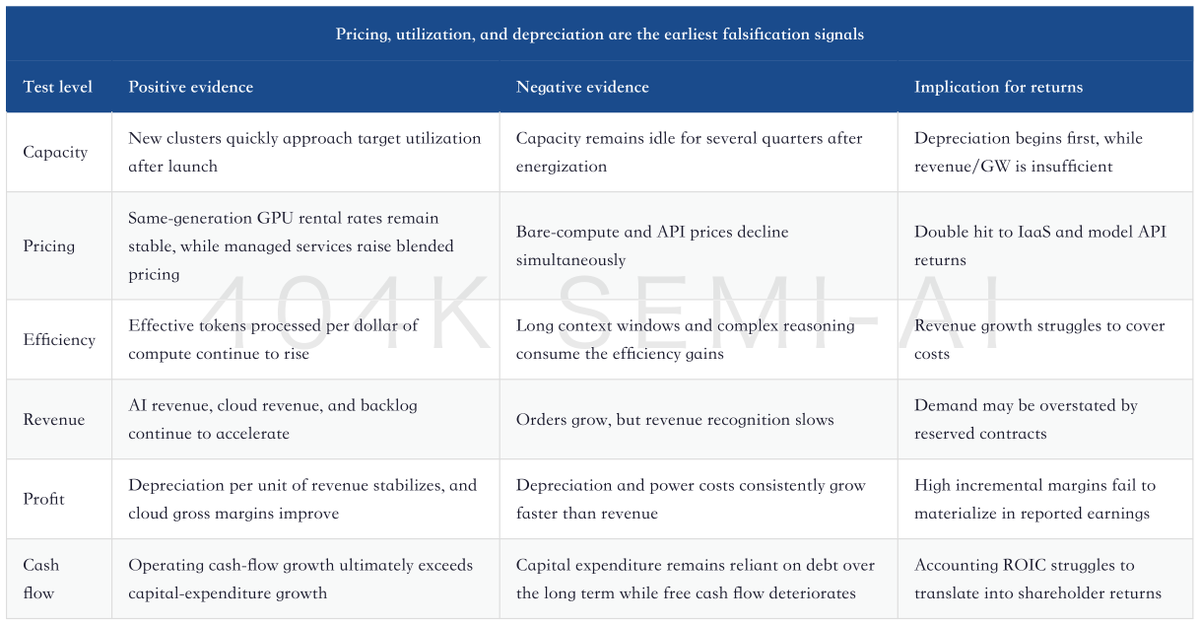
AI compute promises 25%–50% returns, but capex is not the mechanism: utilization is. GPU leasing needs ~75% utilization at $8.5/hour. If price and utilization fall together, the return path fails.
https://t.co/6QDxf1YTq9