So pleased to share our latest work: "The tethered humanity hypothesis among victims of interpersonal harm: The role of apologies, forgiveness, and the relation between self-, other-, and meta-perceptions of humanity" @UniTrentoDIPSCO
https://t.co/NWaTtb4mSo
#tetheredhumanity
So pleased to share our latest work:
“The interplay between morality and humanness: Related facets of a shared reality”
w/ Dr. Jeroen Vaes
@UniTrentoDIPSCO
Published in the Handbook of Ethics and Social Psychology – @ElgarPublishing
🔗 https://t.co/wcjOoXaabV
!! Must-read for the summer !!
Prof. Sabina Čehajić-Clancy's latest work reveals that context-level contact plays a more crucial role in reconciliation than individual-level contact across five post-war countries.
https://t.co/rewSb5bf3v
2025 is a great year to make sure all new studies you perform have a solid sample size justification, where your peers can see the study was designed to have high informational value for the question you are asking:
https://t.co/MBAqD1RhOe
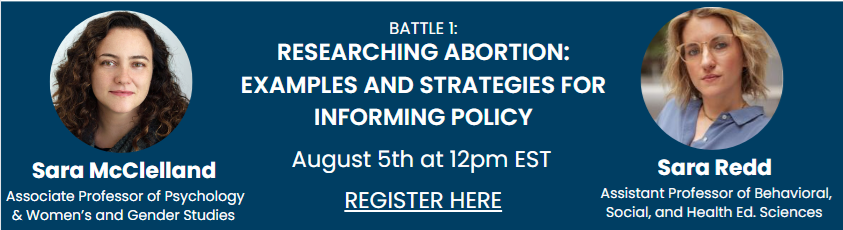
The 2024 Summer Policy Webinar Series kicks off in one week with, "Researching Abortion: Examples and Strategies for Informing Policy."
Featuring Dr. @Sara_McClelland and @dr_skredd.
August 5 at 12pm ET.
Register now: https://t.co/wPUDgXxp5s
The University of Trento has opened two calls for at-risk scholars. 12-month fellowships, renewable for a further 12 months.
1) Post-PhD: https://t.co/1iwiy7acOG
2) Post-MA: https://t.co/7i8P8kt71j
Beyond excited to share our new paper @PICRLab on Intergroup Interventions out in @NatRevPsych where we show how to optimize interventions for improving intergroup relations
https://t.co/gdHboGxCzL
Moderate #HRV is associated with higher probability of #cooperating in #children. A new extension of Johnson-Neyman test to test quadratic-by-and linear interactions suggests that this association varies with age.
@GirardiP83@JonasGMiller1@MeScrimin
https://t.co/Gr4ft6GGGF
This Resolution offers an opportunity to acknowledge and thus restore the moral standing of a group whose members have perpetrated the wrong and, at the same time, empower those against whom the genocide was committed.
From a social-psychological perspective, intergroup reconciliation requires systematic acknowledgment of wrongdoings on behalf of descendants and formal recognition of those who have been victimized.
For anyone interested in my personal story behind my work, here is a link to my latest interview by @Stressforskning @Stockholm_Uni
https://t.co/VNYHl7HOMT