Claude Motion turns reports, charts, or product walkthroughs into short animations. Claude writes each one as code, with no video model involved, so you can change any word, number, or timing, then export an MP4.
In beta on Team and Enterprise plans.
Day 4/
We have improved steering to be instant, leading to the model now reacting much faster to adjustments you make, allowing you to course-correct direction in realtime and not have the model waste effort.
Also releasing GPT-6.1 Sol ultrafast. The two work very well together.
I think this is a new kind of class divide.
Like, in the future different people might have different levels of access — using different AI models, getting different levels of intelligence — and that ends up splitting people into different classes all over again. Which looks like a step backwards
We’re expanding our Cyber Verification Program to give security professionals broader access to our most capable models.
Through this program, verified security professionals can access Claude Mythos 5.1, Opus 5.5, and Sonnet 5.5 with safeguards designed for defensive work.
We’re also opening up new tiers to allow for authorized offensive work, like penetration testing and red-teaming.
https://t.co/blaJtvxhJh
So after OpenAI's first update — the one that came the day after launch — honestly, just from using it, the throughput and response speed on GPT 6.1-Sol feel much better.
Before, with fast mode off, you'd basically wait 3–5 minutes just to see any intermediate output at all. Now, in that same 3–5 minutes it's actually working — it can get 20–30% of a complex task done.
And in its output it even mentions things like keeping the conversation from getting too heavy, or cutting down the volume of image content in long tasks.
So it clearly used to over-check a lot — and after this update, that's gotten much better.
And honestly, this is one of those changes I've really felt in actual use.
Yeah, this is definitely real. I tried deploying a lot of my own setups on Grok bot. When I first started using it I was genuinely blown away — there were a lot of real breakthroughs on the experience side. But honestly, its model capability isn't always that impressive.
Which is basically why I keep going back to building my own setup — and it's exactly what you said in your last paragraph:
"a well polished, fool proof, community maintained, vendor agnostic, free personal agent that everyone can run by themselves without locking into a SaaS - that's what I think many people will need"
I agree. A lot of companies and users need to run models locally — or at the very least, need a model that's open and transparent. For many of them that's not a preference, it's a hard requirement: their data can't leave their own environment, and they can't build a product on top of a model that can silently change, get rate-limited, or disappear tomorrow.
Over the next 28 days, each day we’ll either ship one thing that is a clear improvement and relevant for most codex/work users or ship a full reset. Let the improvements begin.
I've tested a ton of these so-called one-click video editing skills — Codex editing skills, A/B roll skills, all kinds of video-generation and explainer-video skills. Setting aside the pure knowledge-explainer stuff (like making an explainer video with Opus 5.5 — that's a different story) — I'm talking about talking-head videos.
After digging into all of this, burning all those tokens stacking one skill on top of another and tweaking them back and forth, I honestly think: if you put that same effort into just learning CapCut, you'd get there faster, and the result would be way better than editing with Codex.
In fact, after personally testing 5 or 6 one-click-export talking-head editing skills for Codex, I found they're not even as good as my KaiPai subscription — it has a built-in AI editor that just applies a template, and the output still looks better.
Maybe for talking-head videos, people should be focusing more on the content than on the format. There are plenty of ways to cut cost or save time on the format side — but creating the content itself is the one part you can't get around. That one absolutely requires your brain and your instincts to be in it.
You're right. Of course — the visuals and the shots themselves are their own art in video. But that's only within the scope we're talking about here, the talking-head video thing. Honestly, the way I see it, both the content and the right delivery matter enormously, and both of those should count for more than any other editing technique or template.
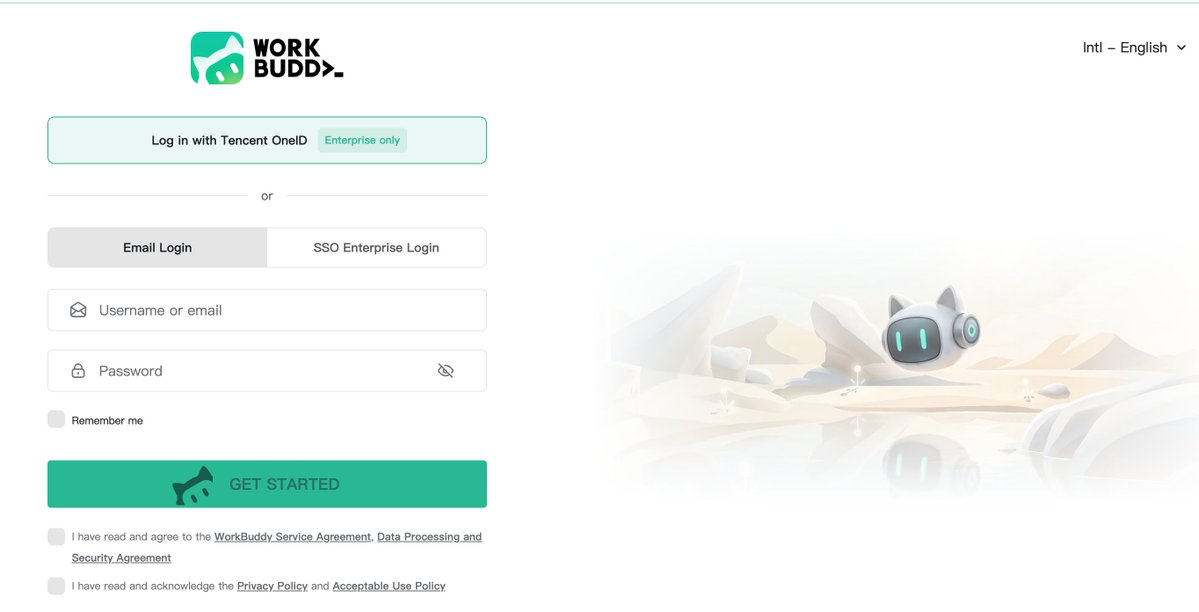
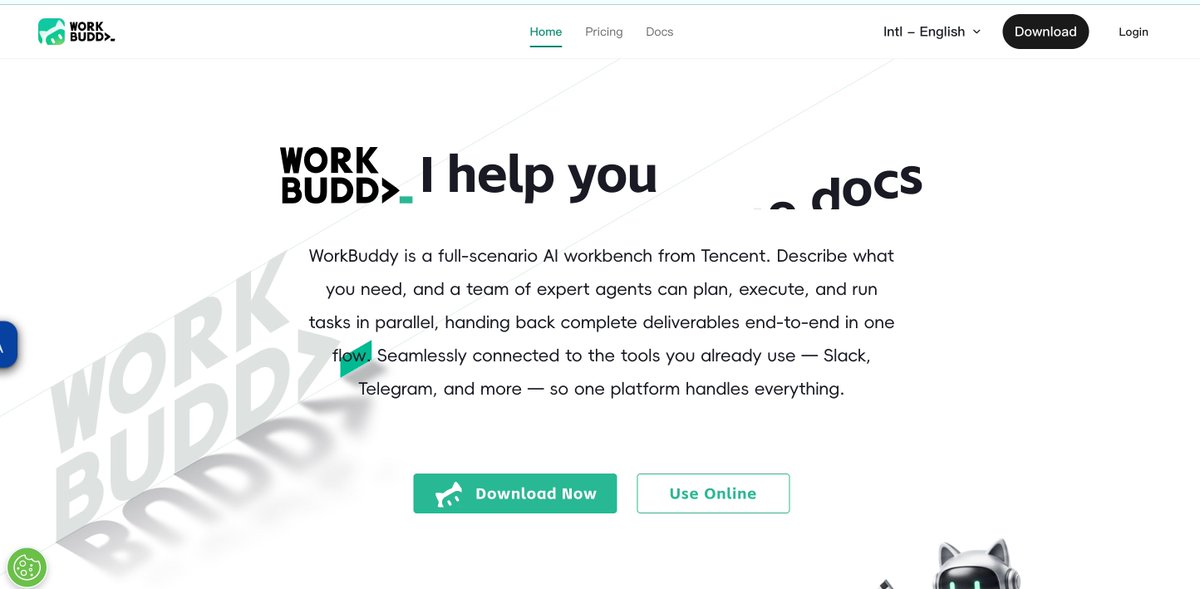
So I noticed that the overseas version of Workbuddy, the Workbuddy AI app, seems to have removed the option to sign up.
We used to be able to just sign in with Google, but now that doesn’t work either. It asks for an email address and a password instead.
But we signed in with one click back then, so I don’t think we ever set a password.
Since GPT 5.6 came out, Tibo gives Codex users a reset almost every week, and just a day or two later they would be back asking for another one.
But this week nobody is asking, and it's the first time I've seen Codex users this quiet. Is it because GPT 6 Sol is cheap enough that their limits finally last, or are most of them just busy trying Claude Opus 5.5?
Codex users, be honest, where are you right now?