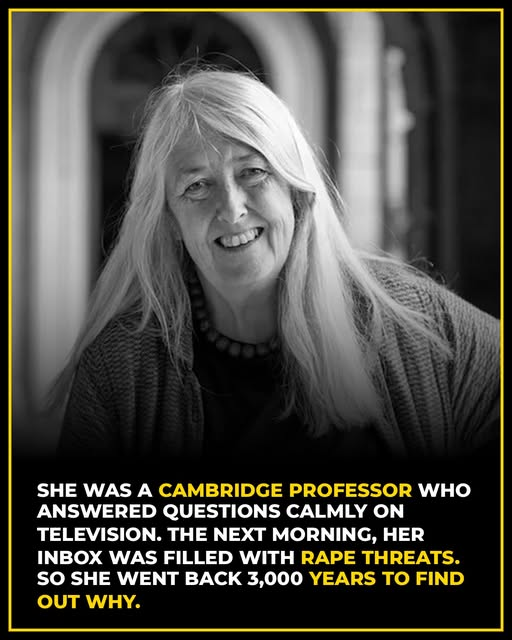
She was 57 years old.
White hair. No carefully managed image. No media training designed to make her more palatable. Just thirty years of accumulated knowledge and the calm, unhurried authority of a woman who had spent her life mastering her subject.
She sat on a BBC panel, answered questions about immigration and politics, cited evidence, made arguments — and then went home.
The next morning, her inbox looked like a crime scene.
Her name is Mary Beard — Cambridge professor, classicist, one of the most respected scholars of ancient Rome and Western civilisation alive. And the internet had decided that a woman speaking with quiet authority on television needed to be punished for it.
The messages were not criticism. They were not debate. They were rape threats. Death threats. Coordinated campaigns of personal destruction targeting her appearance, her age, her voice — anything that could be used to remind her that spaces like the one she had just occupied were not meant for her.
Most people would have gone quiet.
Mary Beard went further in.
She did what scholars do when they find a pattern that disturbs them: she followed it backward. Through decades. Through centuries. Through millennia. All the way back to some of the oldest texts in Western civilisation.
And she found it had always been there.
In Homer's Odyssey — one of the foundational works of Western literature, nearly three thousand years old — there is a scene that most readers pass over without registering its quiet violence. Penelope comes downstairs and asks the poet to sing a different song. Her own son, Telemachus, cuts her off. He orders her back to her room and tells her plainly: speech is the business of men.
She goes.
Mary Beard read that scene and recognized it immediately.
Not as ancient history. As a pattern.
In ancient Rome, women who dared to speak in public were not described as orators or thinkers. They were described as noise — disorderly sound, something that did not deserve to be called language or argument. Their voices were not speech. Their thoughts were not thoughts.
In the medieval world, women who claimed public authority were labeled as witches.
Elizabeth I — Queen of England, ruler of a nation — had to rhetorically reshape herself into something masculine just to be taken seriously as the leader of her own country.
The silencing of women who speak with authority was not invented by social media. It was not a modern pathology or a cultural accident. It was built deliberately, over centuries, into the very foundations of how Western civilisation defined who gets to speak, what authority sounds like, and who is allowed to take up space in public life.
Mary Beard had found something important.
In 2017, she published Women & Power: A Manifesto — short enough to read in an afternoon, substantial enough to reframe everything you thought you understood about why this keeps happening.
Her argument was precise and devastating.
The problem is not that women lack the ability to lead. The problem is that the model of leadership itself — the template for what public authority looks, sounds, and feels like — was built by men over centuries and has never been redesigned. When a woman enters public life and doesn't fit that template, she is not failing. The template was never built for her. It was built specifically to exclude her, and it has been doing exactly that, efficiently and continuously, for three thousand years.
The solution, Beard argued, is not to teach women to perform power the way men have always performed it. The solution is to dismantle and rebuild the very concept of what power is allowed to look like.
She kept teaching. She kept writing. She kept appearing on television — white-haired, unhurried, carrying her decades of authority without performing it, without packaging it for comfort, without apologizing for it.
The threats continued.
But other messages began arriving too. Letters from women and girls who had spent their entire lives feeling that every door was slightly too narrow, every table slightly too high, every room slightly reluctant to make space for them. Women who had spent years wondering what was wrong with them — why they couldn't quite fit, couldn't quite belong, couldn't quite be taken seriously no matter how much they knew or how hard they worked.
They read the book and understood, perhaps for the first time, that nothing had ever been wrong with them.
The room had been designed without them in mind.
That is not a personal failing.
That is a three-thousand-year-old architectural decision.
And one Cambridge professor with white hair and a calm voice — who refused to go quiet when the internet told her to — spent her career documenting it, naming it, and handing that knowledge to everyone who needed to hear it.
Telemachus told Penelope that speech was the business of men.
He was wrong then.
He is still wrong now.
And Mary Beard has three thousand years of evidence to prove it.
via The Inspireist
#FeministFriday #HERstory
📣Editör Arıyoruz!
GAV Perspektif Yayınları'nda göç, diaspora ve Müslüman azınlıklar alanlarında nitelikli ve özgün eserlerin ortaya çıkarılması, tercüme ve telif eserlerin tespiti ve bunların baskıya hazır hale getirilmesi gibi süreçleri yürütecek bir yayın editörü arıyoruz.
Mahmud Derviş'ten bir şiirle Bayramınız mübarek olsun..
Şayet yürürsen bir yolda, götürmeyen uçuruma
Teşekkür et çöpleri toplayana
Şayet sağ salim dönersen eve, döndüğü gibi hatasız bir kafiyenin
Teşekkür et kendine
Şayet bir şey umduysan ve yanılttıysa sezgilerin seni
Yarın git görmek için nerede olduğunu ve teşekkür et kelebeğe
Şayet bütün gücünle haykırdıysan ve sana cevap verdiyse yankı
“Kim var orada?” diye, teşekkür et hüviyetine
Şayet bakarsan bir güle acıtmaksızın canını
Ve mutlu olursan onunla, teşekkür et kalbine
Şayet doğrulursan sabahta ve bulamazsan hiç kimseyi yanında,
Gözkapaklarını ovalayan, teşekkür et görüşüne
Şayet bir harf hatırlarsan isminden ve memleketinden
İyi bir çocuk ol
Rab teşekkür etsin sana diye.
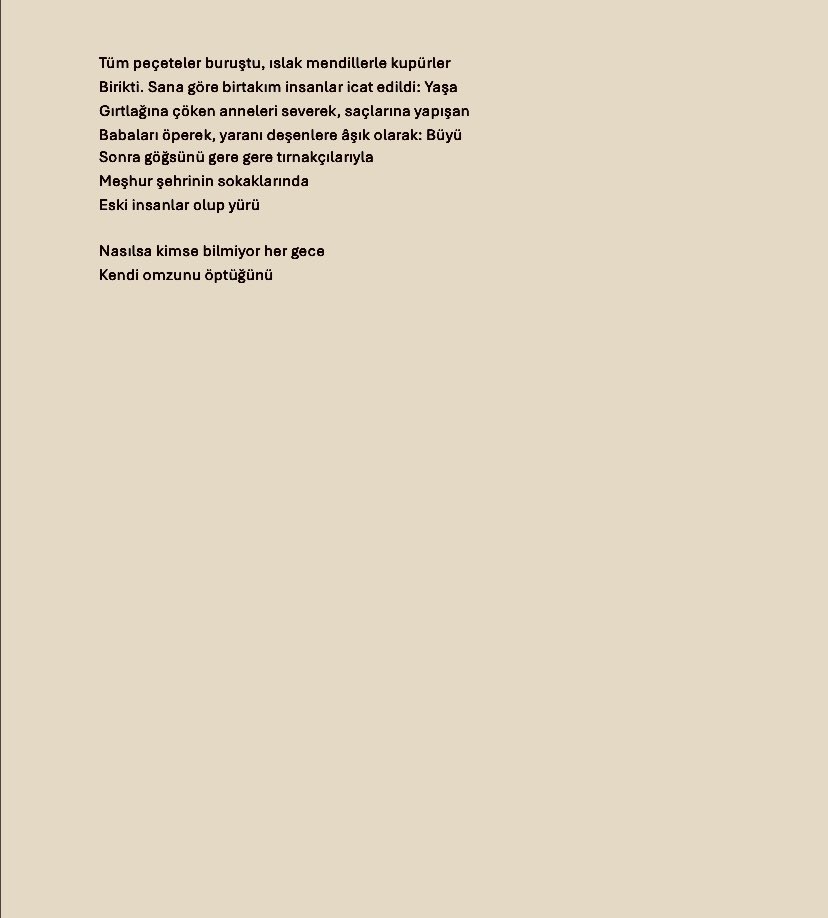
Gülten Akın, Biriken:
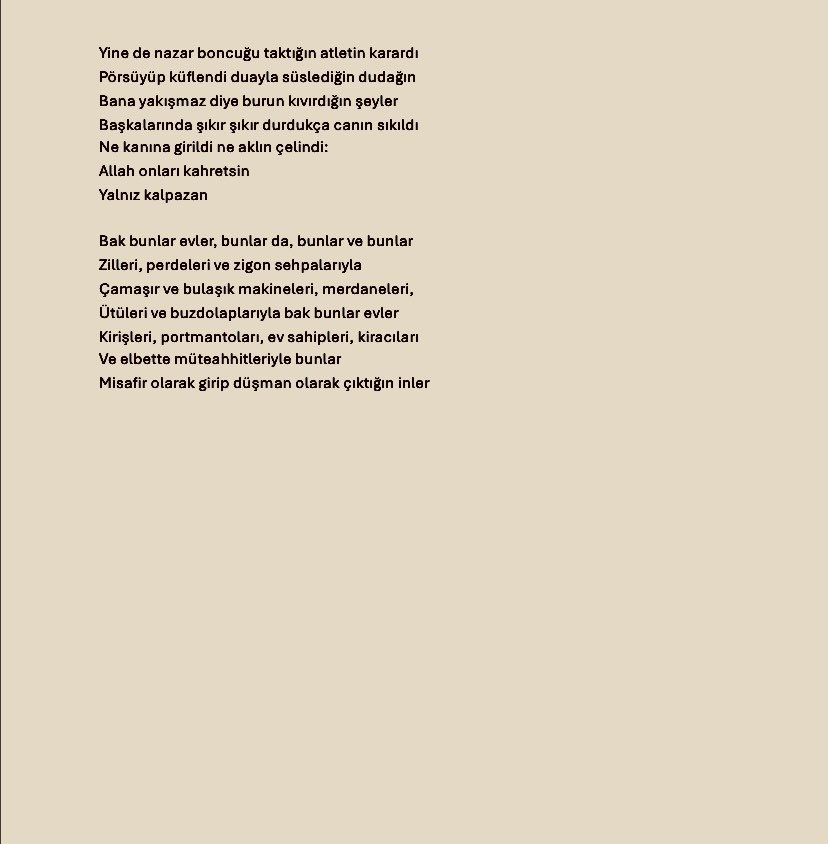
"Her şey birikir
Sözler düşünceler ve nesneler biçiminde
Her şey birikir
Duru sular ters yazılar emek ve gözyaşı
Akıyor sanılan kuruyor sanılan
Haklar haklılıklar, ölüm zulumlar
Uçuyor sanılan her şey birikir
Deney birikir
Bizcil sen de
Kuş mu sandın yalanı yanlışı
Taksan kanatlanır mı?
Yediğin seni yakacak
Vurduğun seni yakacak
Gör cehennem yok mu var mı?
Her şey birikir
Gösteren parmaklar, gören gözler
Susan konuşan birikir
Yargılarlar davasız dosyasız
Silahsız sözcüksüz kansız kavgasız
Dağ mı değil, ova mı
Kent mi alan mı, değil
Bir ülke insan birikir."
Kanadalı bir şirket (Zoom Books), dünya çapındaki ikinci el kitapçılardan (özellikle İspanya, Almanya, ABD vb.) binlerce eski ve az satan kitabı toplu olarak satın alıyor. Özellikle katalanca ve diğer dillerdeki non-fiction (kurgu dışı) eserler, baskısı tükenmiş kitaplar, eski teknik kitaplar, kongre tutanakları, hatıralar ve çok düşük ticari değeri olan kitaplar tercih ediyorlarmış.
Bu kitapları yapay zekâ modellerini eğitmek için kullanılıyorlarmış. Kitapların sırtları kesilerek sayfaları otomatik olarak taranıyor ve sonrasında parçalanıp kağıt hamuru yapılıyormuş (yani fiziksel olarak yok ediliyor).
Kitapçılar bu yapılanlar için, ‘Bu bir edebiyat expoliosu (soygunu)’ diyor
https://t.co/uMXRaxNG9x
« Ah ! Chéri. À cette heure je te rejoins en tout. C'est le temps pour moi des plages brûlantes de la Méditerranée.
C'est ma minute des oliviers et de la lumière aveuglante.
Ah ! La chaleur suffocante de midi près de toi sur la grève !
Et cet aveuglement où je ne distinguerais que toi ! Tu devines déjà comment je t'aime à mon petit réveil.
Bonne journée. À ce soir. »
💌 Maria Casarès à Albert Camus
Tiyatro yazarı Wajdi Mouawad, yapay zekânın insani kusurluluğu yansıtan titremeyi asla kavrayamayacağını söylüyor. Üzerine düşünülesi bir alıntı.
"Değerli olan şey mükemmellik değil, belirsizliklerimizin samimiyetidir. Zihnimizdeki görüntüler onlardan doğar. Titreme hiçbir zaman düz bir çizgi çizemez, yazmayı bu denli zorunlu kılan şey de bu imkânsızlıktır."
Wajdi Mouawad, Uçurumunun Kıyısına Kadar, 2025.
(Yazarın Collège de France derslerini içeren bu müthiş kitap henüz Türkçeye çevrilmedi, alıntıyı ben çevirdim.)
Düşünür Slavoj Žižek bu videoda psikanalize dair iki klişeyi ele alıyor:
1) Psikanaliz “kendini tanıma” sürecidir.
2) Psikanalizin amacı acımızı hafifletmektir.
Psikoterapist Adam Phillips’in konuya dair tespitlerinden yola çıkan Žižek bu iki klişeyi yerden yere vuruyor, asıl hastalığın “takıntılı bir şekilde kendini tanıma arzusu olduğunu” iddia ediyor.
Ceket düğmesi iliklemenin incelikleri:
3 düğmeli ceket giyiyorsanız ayakta iken ortadaki düğme mutlaka iliklenir.
Şayet 2 düğmeli ceket giyecekseniz bu ceketin ayakta iken sadece üst düğmesi iliklenir.
Kruvaze ceket ise ayakta iken her iki düğme de iliklenir. Eğer yelek giyiyorsanız en alt düğme hariç düğmeler iliklenir.
Otururken giydiğiniz ceketin tüm düğmeleri açık olmalıdır.
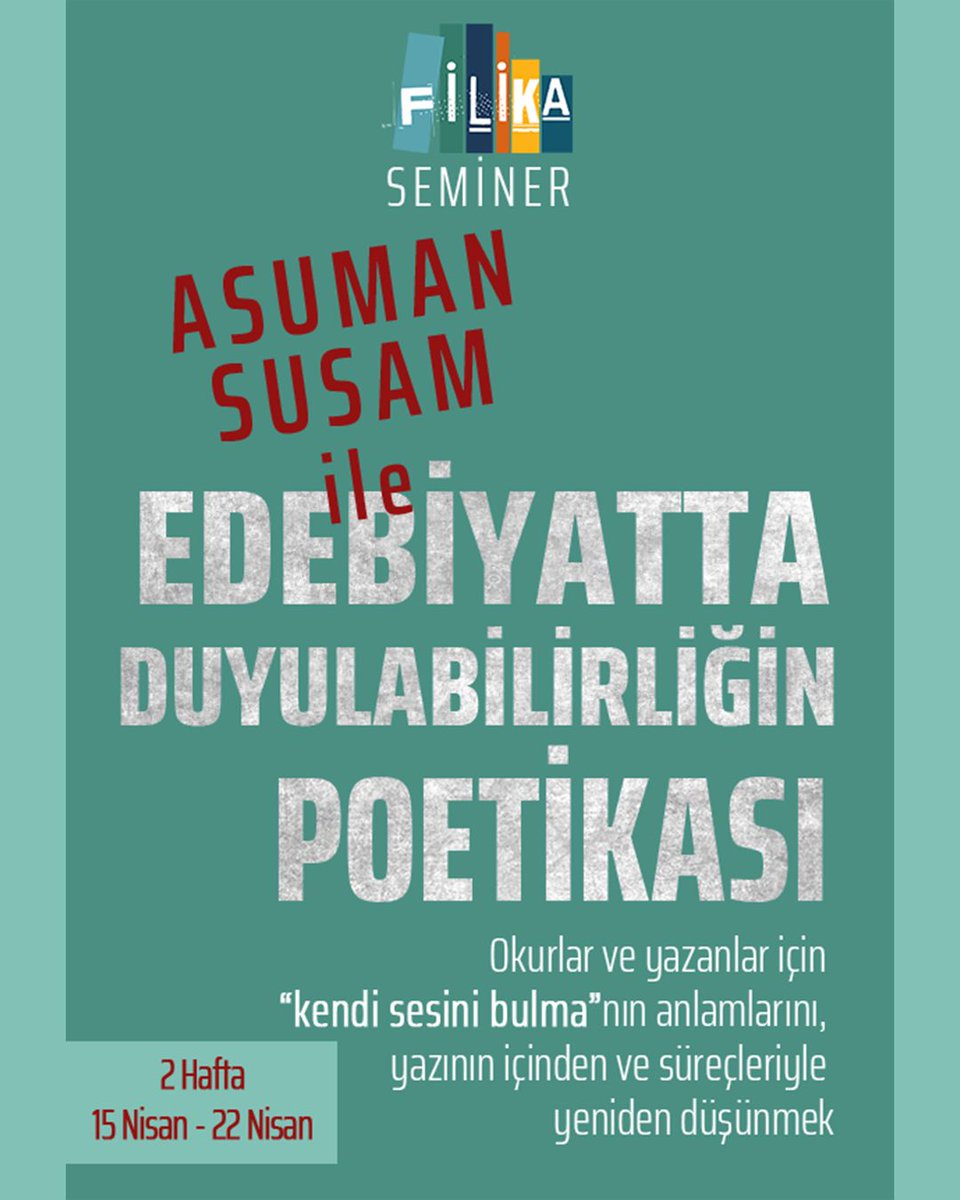
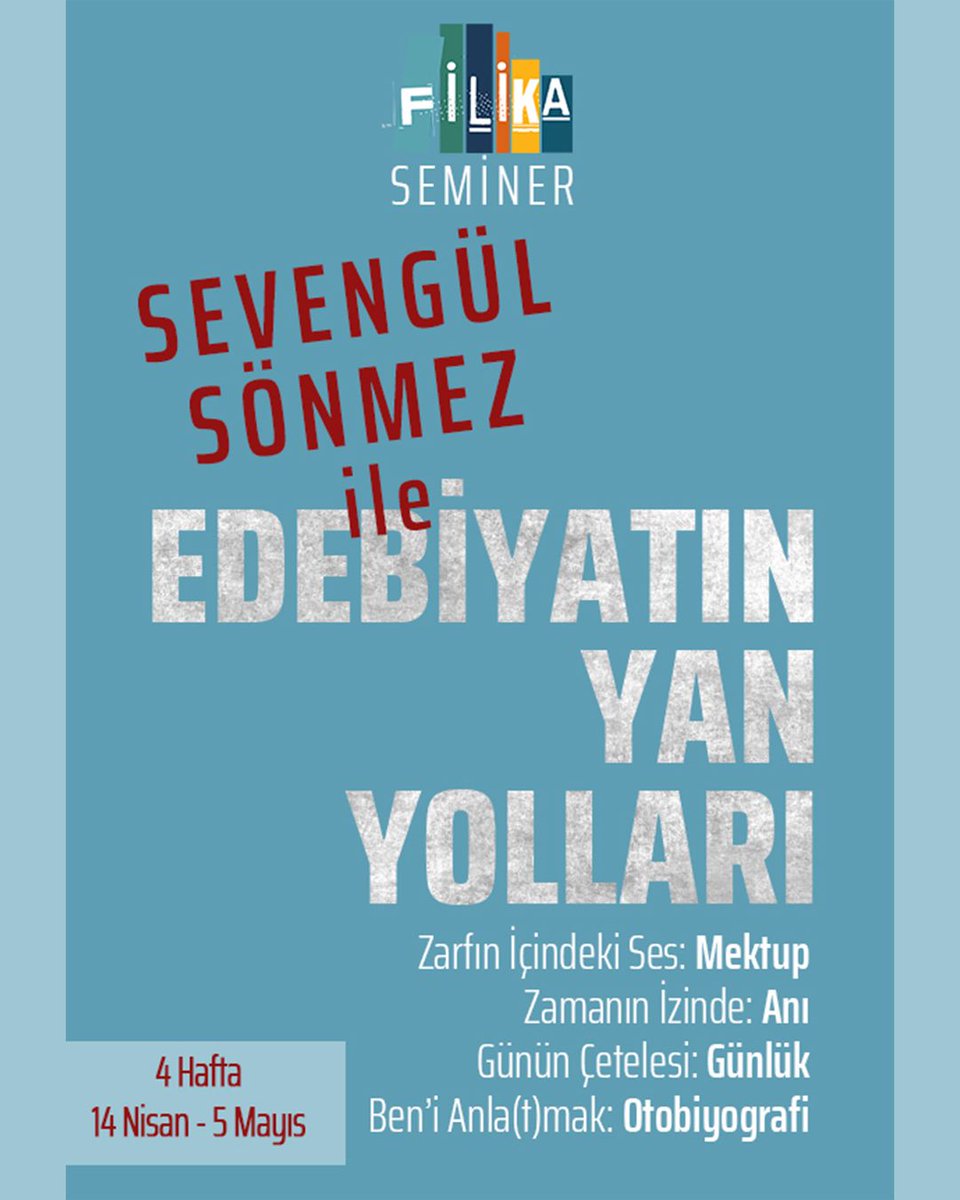
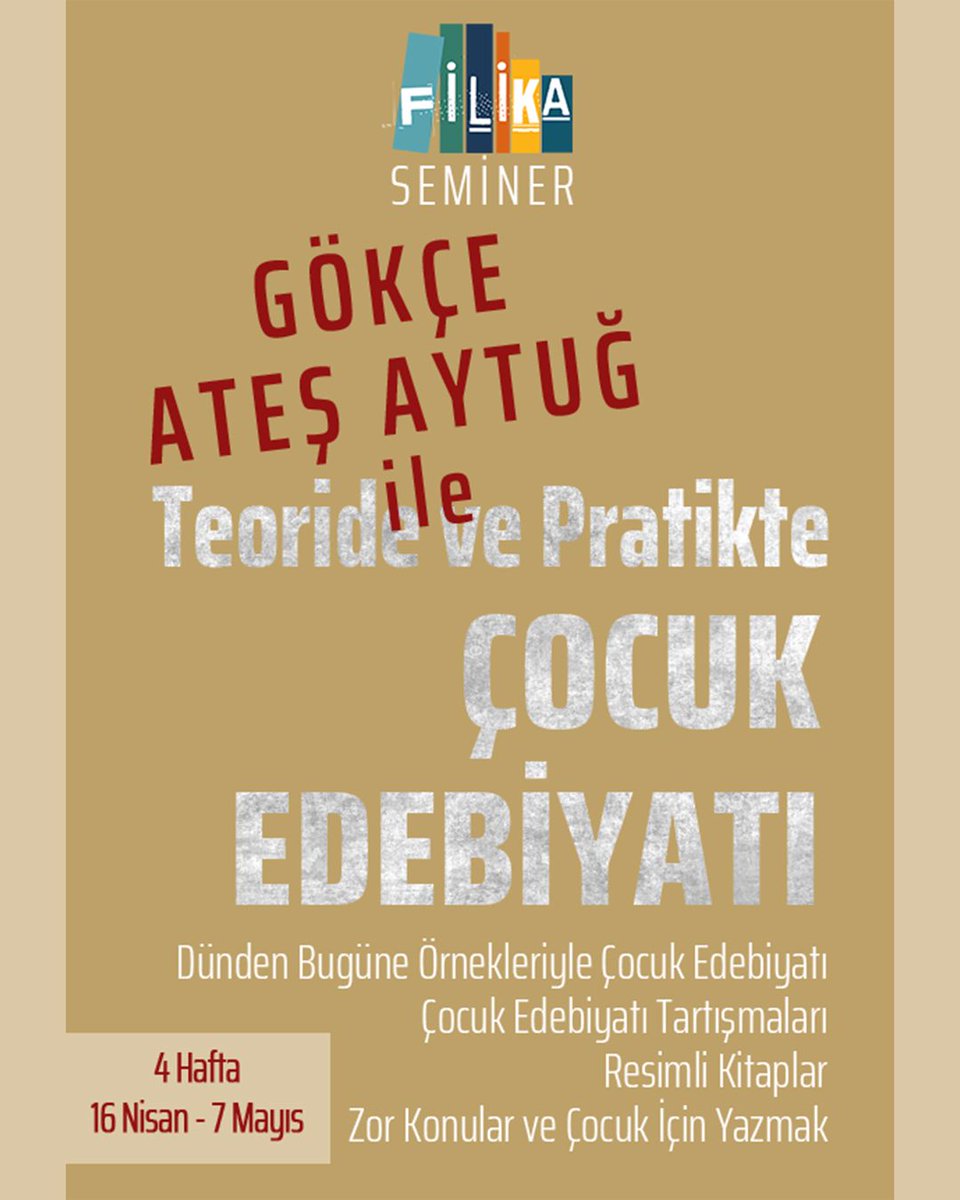
Filika’da seminer programlarımız başlıyor 🍀 İlk durağımız, edebiyat.
Yazar ve yayıncı Sevengül Sönmez, şair ve yazar Asuman Susam ve çocuk kitapları editörü Gökçe Ateş Aytuğ ile seminer programlarımıza https://t.co/eyBjHgCufg sitemizden kayıt olabilirsiniz.
#filikakitap
Sevdiğiniz bir arkadaşınızla sohbet ediyormuşsunuz gibi hissettiren ama aynı zamanda çok eğitici bir kanal. Güncel konular üzerinden kalıpları ve deyimleri örneklerle anlatıyor. Konuşması tane tane. Dili 150 sene önceki kaynaklarından değil, bu tarz güncel kaynaklardan destekle öğrenip aktifleştirmek çook daha faydalı.