Interesting governance signal in the board’s language.
Governance.
Oversight.
Conduct.
These are not casual board terms.
Monitoring is not oversight.
Reporting is not oversight.
Escalation that does not alter outcomes is documentation.
Control is proven through intervention.
Organizations are increasingly treating human execution as training data for autonomous systems.
That changes the relationship between labor, knowledge capture, and operational control.
The real enterprise challenge is no longer capability.
It is accountability.
LEAKED AUDIO: In an all-hands meeting on April 30, Mark Zuckerberg tells employees that he's training AI on them ahead of mass layoffs.
"The AI models learn from watching really smart people do things... The average intelligence of the people who are at this company is significantly higher than the average set of people that you can get to do tasks.
So if we're trying to teach the models coding, for example, then having people internally build tools or solve tasks that help teach the model how to code, we think is going to dramatically increase our model's coding ability faster than what others in the industry have the capability to do, who don't have thousands and thousands of extremely strong engineers at their company."
Autonomous driving is becoming a real-world test of machine-operated public infrastructure at scale.
Transportation may become one of the first sectors where AI systems consistently outperform humans in safety and operational reliability.
The AI race is evolving into a robotics manufacturing race.
Models generate intelligence.
Robotics generates physical execution.
The country that scales both simultaneously may dominate the next industrial era.
Huawei grew revenue 22.4% while under full U.S. sanctions.
That changes the conversation.
Infrastructure power is now about:
• supply chain survivability
• sovereign capability
• engineering depth
• operational endurance
The AI race is an infrastructure sovereignty race.
“This is the last mistake we’ll ever get to make.”
From The AI Doc
A soon-to-be father examines AI’s future: existential risk, global competition, and tech outpacing governance alongside its promise to cure disease and climate change.
We’re building fast.
What if we’re wrong?
AI is making technical intelligence a commodity.
What remains scarce is judgment: the ability to infer the unspoken, anticipate risk, and see around corners before data exists.
That’s the future definition of “smart.”
And why human governance, not computation, matters most.
Nvidia CEO Jensen Huang, with an incredibly thoughtful answer to the smartest person he's ever met. If you listen closely to the words he uses, including "empathy" and "wisdom," you'll realize a certain group of people he's not describing.
🔎 3 quick lessons from this outage:
1️⃣ Multi-region ≠ optional — it’s resilience.
2️⃣ DNS health should be part of your tabletop exercises.
3️⃣ Visibility across dependencies matters more than uptime metrics.
Cloud power means shared risk. Plan accordingly.
One small DNS error.
One massive cloud outage.
The AWS disruption shows how fragile our backbone still is.
Build redundancy before you need it.
#BusinessContinuity#Cloud#CyberSecurity
Black Americans remain underrepresented in tech (often 4–7%). Policies that rebalance opportunities may feel controversial, but they can be a necessary correction when communities are overlooked in favor of visa hiring pipelines.
Anguilla proves that strategic positioning often trumps direct competition. While others chase AI development, they monetized the infrastructure layer with brilliant simplicity.
How the Island of Anguilla Has Made Over $32M from AI Domains https://t.co/6sWP703B2v
And the Descendants of Slavery that escaped to Mexico are not recognized as full citizens, pushed to the edge of Mexico society and have recently been counted on the Mexico census.
"Beautiful inside and outside."
While painting a fence, Steve Jobs was told to paint the inside too. He asked why, as nobody would see it, and his dad replied, "Nobody will see it, Steve, but we will."
That spirit and practice are still guiding Apple.
Source: CNBC
I just learned of the passing of #SteveKatz. Citicorp’s Steve Katz was the world’s first #CISO, appointed in 1995 after the company suffered one of the first major hacks, involving a compromise of its electronic funds transfer system. His influence is insurmountable.
New episode: In this week's episode of #CISOStories, @SecurityFitz speaks with Steve Katz, Executive Advisor, Security and Policy at @Deloitte. Learn how Steve navigated the early days of cybersecurity and how the role has evolved.
Subscribe: https://t.co/HVBznD8OCU
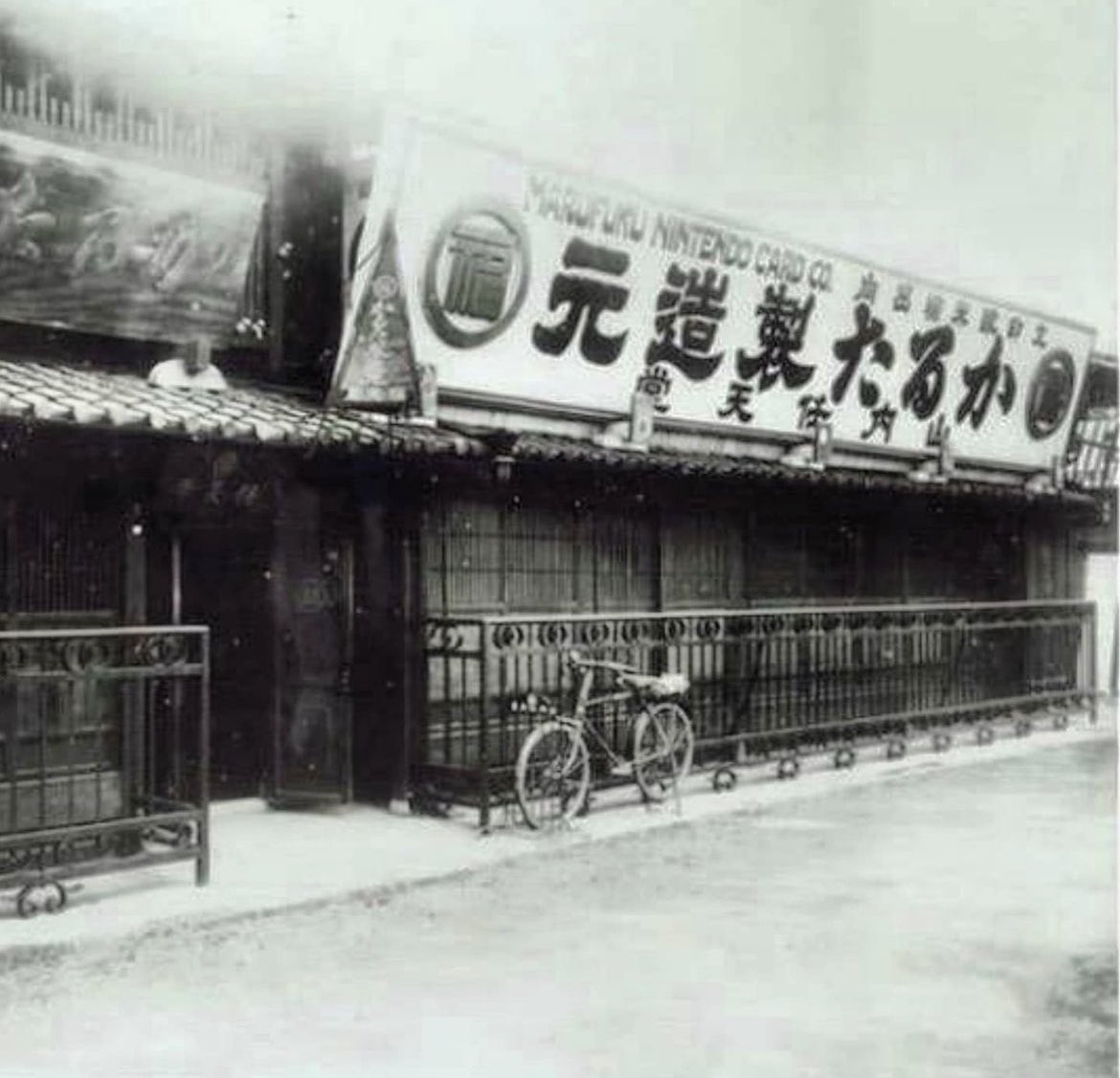
This is Nintendo's first office in Kyoto, 1889. Nintendo initially started out producing and selling Japanese playing cards. They did just that for nearly 75 years.
In 1963, Nintendo began to branch out to other types of businesses, investing money into a taxi service business, love hotels, a TV company, and an instant rice company. All these business ventures failed, and to make matters worse, after the 1964 Tokyo Olympics, playing card sales had dropped drastically.
Starting in the late '60s, Nintendo pivoted to making toys. One of their employees was a maintenance engineer by the name of Gunpei Yokoi, whose job was to repair conveyor belts. During his free time, he had made extendable tongs for his amusement. Nintendo asked him to make a few prototypes and decided to market his toy as the "Ultra Hand," which went on to sell more than 1 million units. The toy literally gave a hand to Nintendo and lifted it out of near financial ruin.
Yokoi was moved to product development and went on to create several other successful toys before jumping into making video games. During the early '80s, Yokoi began working with a young product developer named Shigeru Miyamoto. They were under pressure to develop a best-selling game for Nintendo and were competing against the likes of Namco's Pac-Man.
Miyamoto wanted to develop a video game that used the characters Popeye, Olive Oyl, and Bluto but was unable to obtain a license. So he went on to create his own characters, Donkey Kong and an unnamed character. In the early development stages of Donkey Kong, the unnamed character was unable to jump, and the goal of the game was to escape a maze. Miyamoto decided to give the unnamed character the ability to jump, stating: "If you had a barrel rolling towards you, what would you do?"
In Japan, the unnamed character eventually received the name Jumpman. However, when the video game was introduced to American audiences, the name was changed. According to legend, Nintendo in America was confronted by warehouse owner Mario Segale about unpaid rent. After a heated exchange, Nintendo assured Segale he would get his money. After the incident, Nintendo decided to rename Jumpman to Mario.
I not only have a right, but I also have a *responsibility* to stand with my people over any political party.
That’s my allegiance.
We should normalize INDEPENDENT thinking over party loyalty.
One of the main highlights from Day One of #Pwn2Own Vancouver 2023: @Synacktiv vs the Tesla Model 3. Their successful demonstration earned them $100,000 and the car itself