@BrianEngh_Art@Emily_Art It's hard to falsify older molecular clock estimates with fossils, because it can always be claimed that the record is incomplete. But we do know that molecular clock results can vary wildly depending on assumptions about evolutionary rates, even using the exact same dataset.
@Coolio_Art@SerpenIllus Oftedal 2002 hypothesized that hair first evolved alongside the mammary gland, and that it originally aided in applying mammary secretions to eggs. This may be in line with the finding that the gene Msx2 plays a role in both hair follicle and mammary gland development. (2/2)
@Coolio_Art@SerpenIllus A few coprolites containing some fibers roughly the same size and shape as hairs is pretty crappy evidence, so to speak, for the presence of fur. But it's possible that hair originated before either fur or whiskers... (1/2)
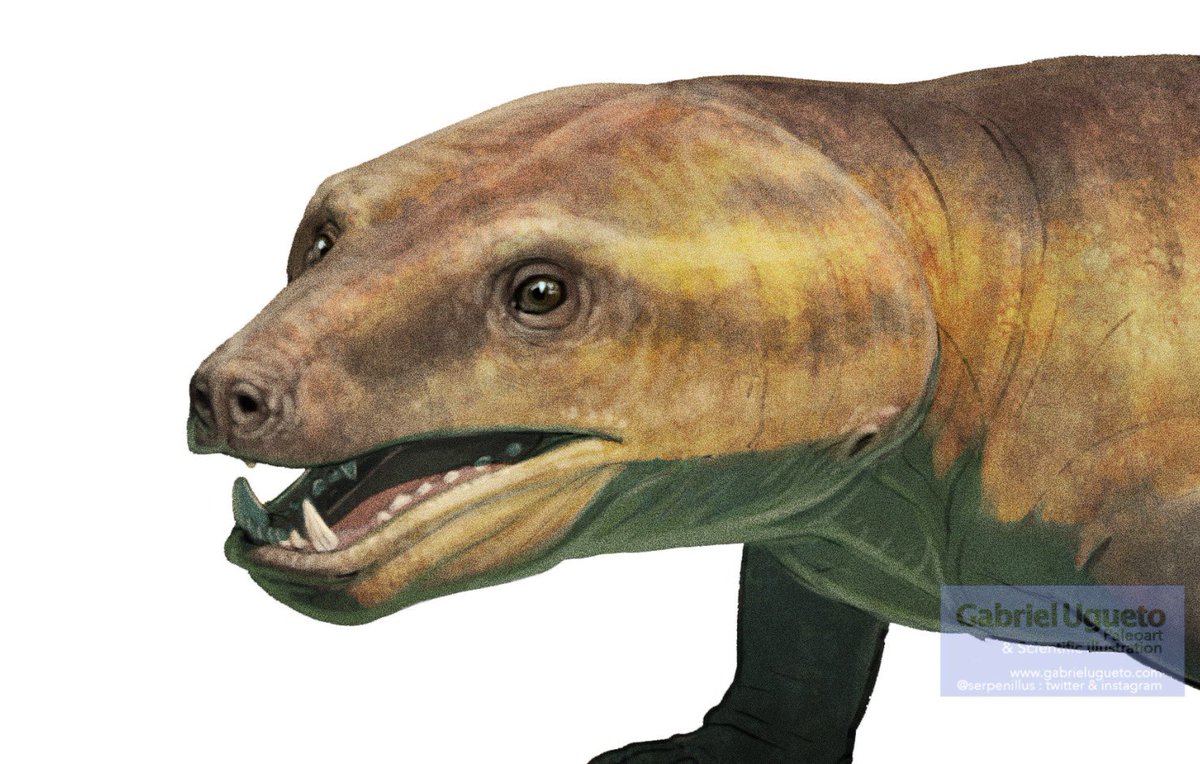
I am redoing a lot of the cynodonts I had done for my book to reconstruct them now as furless (following Araujo et al. 2022) and man they look even weirder! WIP
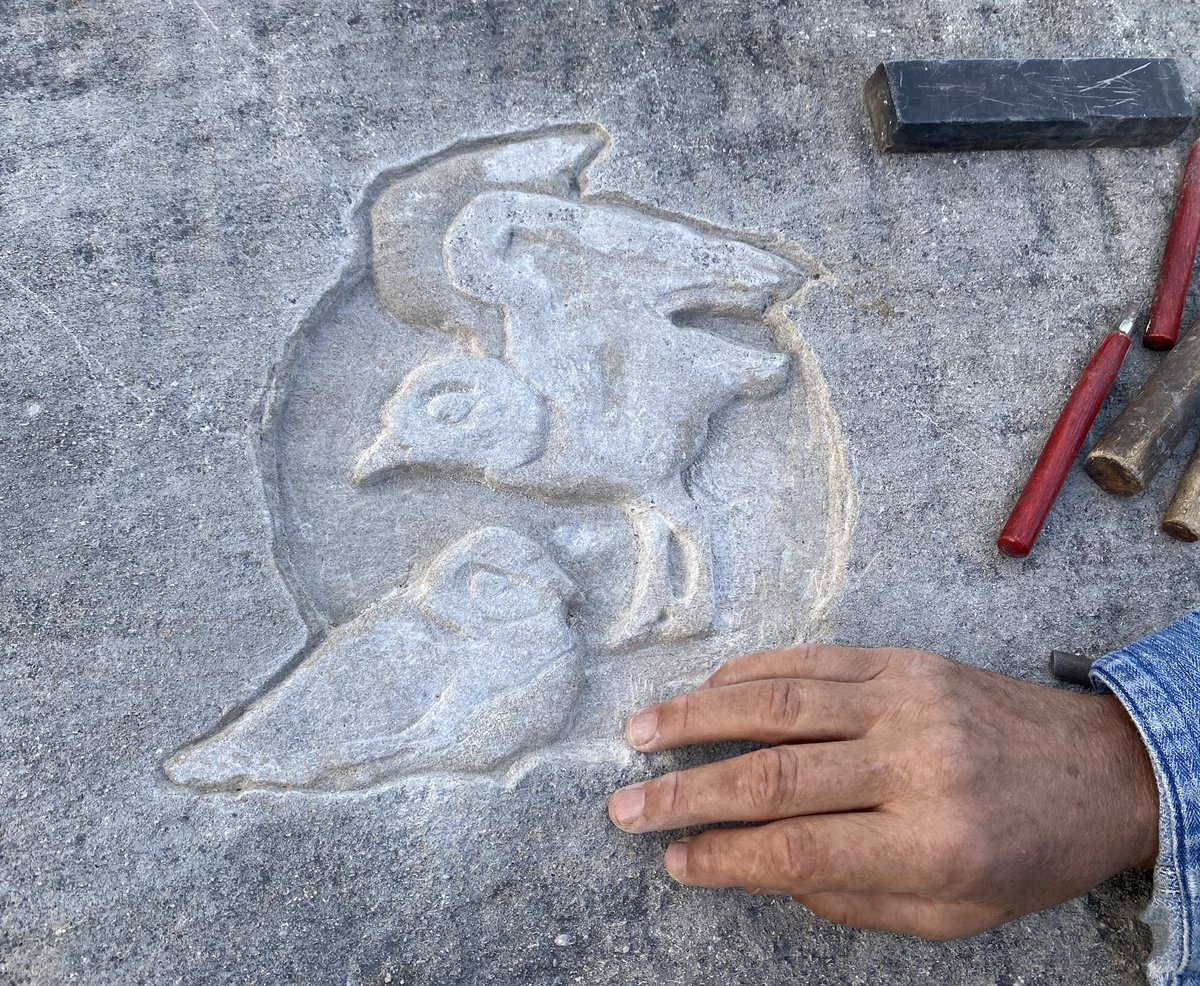
I ran into one of my Uptown neighbors, Don, as he completed a carving of the piping plovers Monty and Rose in one of the big rocks at the Montrose Beach Dunes.
There's a new paper redescribing the cynodont Lumkuia out! As one of the basalmost probainognathians, Lumkuia is an important taxon, as it comes right at the beginning of the phase in cynodont evolution where they start getting really mammaly. https://t.co/mAHxnOR8Dd
@Rendedeer The postcranial anatomy of Galeamopus hayi is almost entirely undescribed. There are some measurements of limb bones in McIntosh (2005)’s description of Barosaurus, and that’s about it.
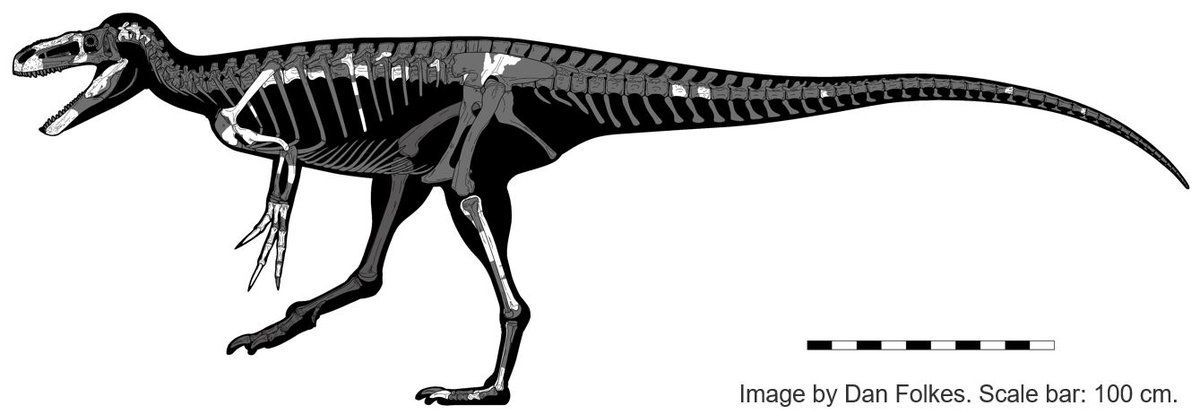
It's taken a few decades to get here but... FINALLY: the #Eotyrannus monograph (the bulk of my 2006 PhD thesis) is out and in print at @thePeerJ. I've published lengthy thoughts at #TetZoo (https://t.co/Jaa7ABXtvD) but here's a thread...
@Philoceratops It certainly would seem to be (but I'm pretty sure there's at least one other). I wonder if there's any evidence it's Quaesitosaurus and not Nemegtosaurus, though.
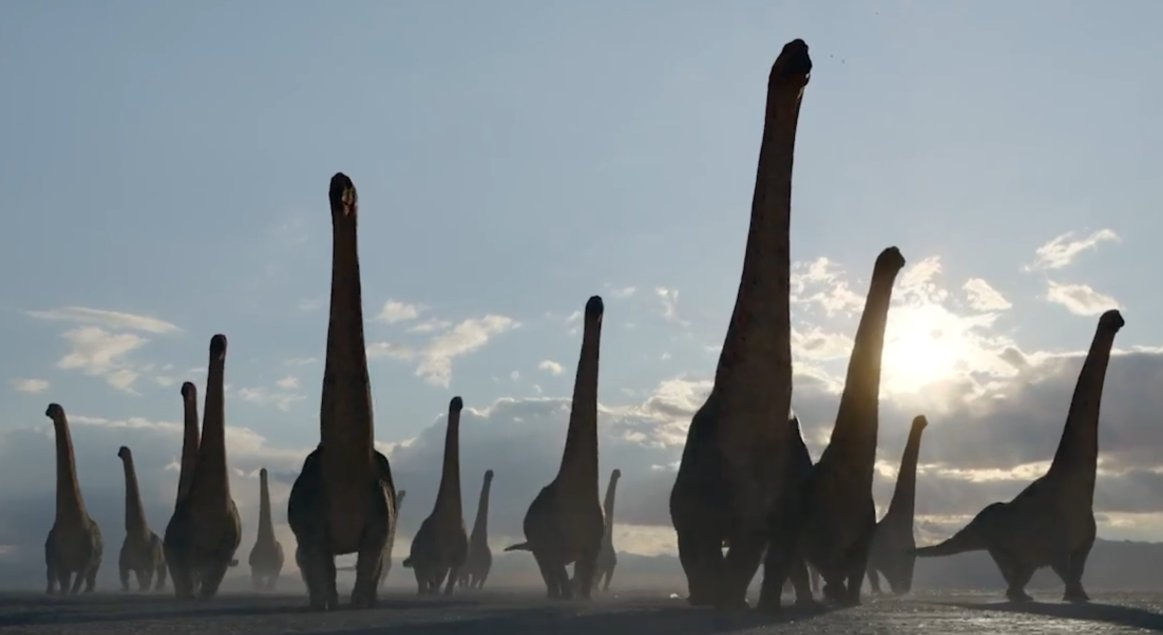
#Dinocember day 17: Quaesitosaurus. The first-ever non-avian dinosaur with a name beginning with Q. However, it might just be a specimen of Nemegtosaurus.
Diamantinasaurus continues its ascendancy towards becoming one of the most complete and best-studied titanosaurs, with a new juvenile specimen described by Rigby et al.: https://t.co/HC756Rmzza
@MetTiinA That probably depends on the rules of Finnish Wikipedia, which might not be exactly the same as English Wikipedia, but really, if it's already been reviewed once, it's probably fine to go ahead and add it elsewhere—the worst anyone could do is tell you it needs another review.
We're SO EXCITED to introduce you to our newest Zoo baby: a quickly growing giant elephant shrew! ❤️ Born to first time dad Niffler (left) and mom Drita (middle), the baby (in the back/right) is the first successful birth of this species in over a decade.
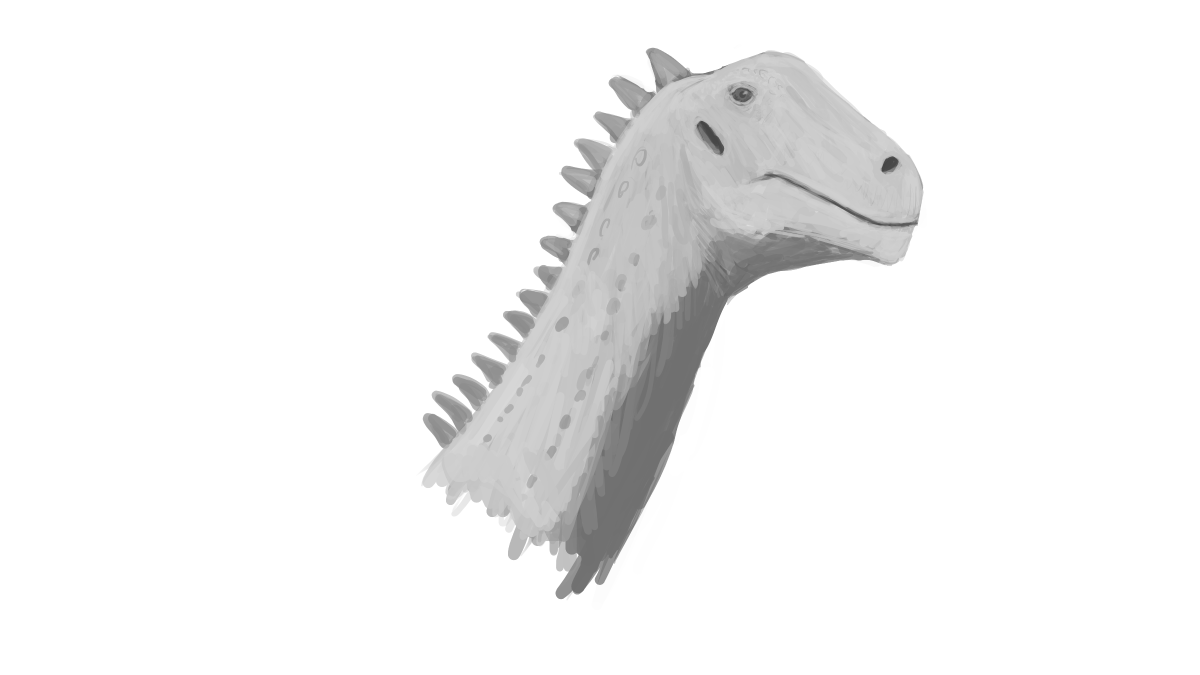
@MetTiinA @Neecowo They didn't histologically sample Bajadasaurus, but it seems that Bajadasaurus lacks osteological correlates for horn sheaths, and they suggest their conclusions would apply to it as well. It would be weird for them to be doing radically different things, in any case.
For #FossilFriday, I was a reviewer for this 🦕paper, & I am SO EXCITED that it is finally out! Amargasaurus is 1 of our classic "bizarre dinos" with those odd & iconic hyperelongate cervical neural spines. But there's been a bit of a debate on how these spines looked in life.
1/