“Je ne suis pas capable de faire 1% de ce qu’il fait”
Gilbert Dujardin-Delacour est le seul à sauter dans la catégorie des plus de 85 ans aux championnats de France. Pour l’émission Sport, etc, Mattéo Rolet s’est rendu à l’un de ses entraînements.
We lost a legend this week. Olympic Gold medalist Ron Delany passed away at 91.
The summer before the 1956 Olympics, Delany ran a 4:20 mile at a meet in Dublin. Then, he got spiked badly in Paris and could barely race the rest of the season.
The press said he was burnt out.
The Olympic Council only confirmed his selection at the last possible moment.
As he was struggling with his form, John Landy pulled him aside.
He told him he looked strained, that his shoulders were too tense and he needed to relax.
Landy was the Olympic favorite, the 2nd man under 4.
The man he'd have to beat in Melbourne gave him the technical cue that would help unlock the run of his life.
Arriving at the Melbourne Olympics as an afterthought, he meets the British trio of 1500m stars in the village.
They want to do a friendly breakdown of the field. Who's going to do well?
Delany: "I'm going to win."
They looked at him like he was out of his mind.
Why was he so sure?
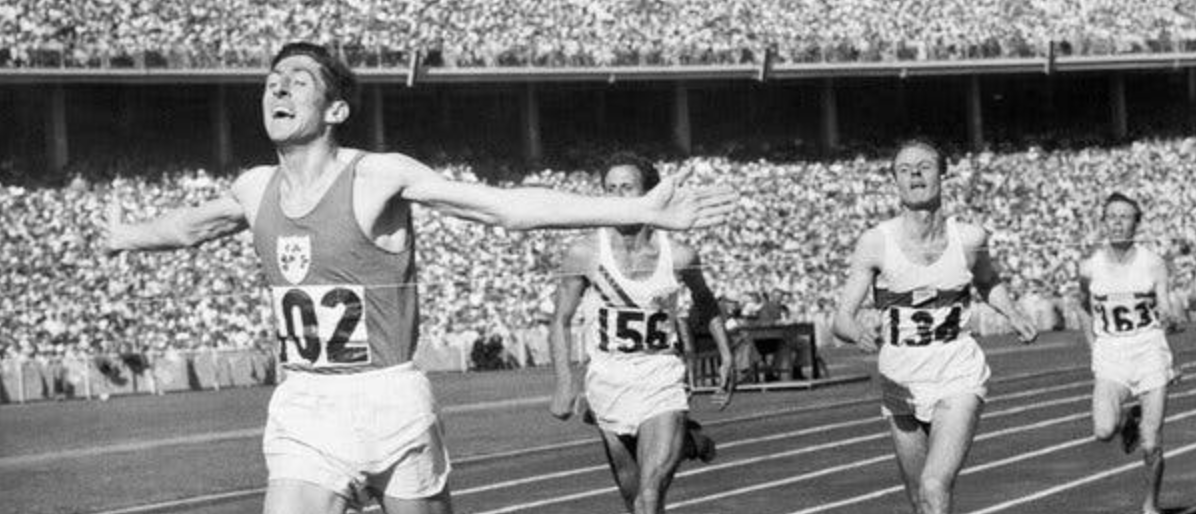
In his last training session before Melbourne, coach Brutus Hamilton pulled a piece of twine out of his pocket. Strung it across the track and had Delany run through it, arms spread wide, like a finish line celebration.
Then he said: "Now, son, we have practised everything."
They'd rehearsed winning, including winning.
In an era where there were no sports psychologist, Delany had a pre-race protocol.
Two hours out, he'd deliberately turn on the nerves. He'd let the anxiety build, get the adrenaline flowing.
Then an hour before, he flipped the switch.
Become what he called "the cold, calculated, tactician."
It was a threat-to-challenge conversion decades before we had a name for it.
On December 1st, 1956, there were 120,000 people at the Melbourne Cricket Ground with a field that was one of the best in history.
At the bell, Delany was tenth. Six meters off the lead.
Then he started to move. He passed Landy with 180 to go. And closed his final 200 in 25.6, to break the Olympic record by four seconds.
"There is no pain...Into the home stretch and I feel the strength, as if running on air... legs flowing so easily, breathing so consistent and effortless, my mind so relaxed and concentrated."
After he crossed the line, Delany dropped to his knees in prayer.
Landy, the favorite who'd helped fix his form months earlier and just lost, "was the first over me — which is a great tribute to the closeness of sportsmanship. He thought I'd collapsed, sees my face, and sees I'm not even winded."
After the race, Delany sent a telegram to his first coach, Jack Sweeney, back in Dublin.
Three words: "We did it Jack."
He was 21, 10,000 miles from home, had just won the Olympic gold medal.
And his first instinct was to credit the man who taught him to race.
RIP Ronnie.
@will_owen9 It's so good to see him getting a run and playing well. Someone needs to get Richie Murphy a contract extension/bonus/whatever he wants: big Stu, Baloucoune, Nick Timoney all playing so well this weather.
You got to give lots of credit to Eileen Gu for responding brilliantly back to the reporter with great confidence.
She looked him in the eye said that was a "ridiculous perspective" without any hesitation or fear. 😁
Para las interesadas, Gabriella Papadakis y Madison Hubbell (medallistas olímpicas en danza sobre hielo) llevaron a cabo este proyecto para promover la visibilidad e inclusión de parejas del mismo sexo en el patinaje artístico competitivo internacional 🤍
@Tsmith47@ajguckian Where does the OP mention starting at 14!? The whole point is to play lots of different sports, which will **include** the one the athlete may end up specialising in. Read the post before you jump in.
@ajguckian@Tsmith47 You clearly have very little knowledge of child movement skill acquisition, and hyperbole does not serve your arguement. As someone who works with teens (some who have gone on to be international superstars), I can tell you a broad base is key.
@pjvazel@education_gouv@Sports_gouv en moyenne?
Je teste des garçons de 12 à 14 ans et le meilleur temps que j'aie jamais vu au 40 m est de 5,16 secondes.