GitHub is probably the first example of widely used software that was originally built for humans while having all the right hooks in place to become AI-agent friendly quickly.
And it's now crumbling under the load of the AI agent swarm hitting it.
Both the infrastructure and the business model probably don't make sense for these new usage patterns. Expect both to undergo dramatic changes over the coming months.
JUST IN: Workday claims updates to their product have been “too powerful” to be released to the public, has not changed its software since 1986 to protect humanity.
The @narendramodi government has once again proven its might as the strongest voice of Independent India, the world has ever seen. While all other countries are running from pillar to post to secure a safe passage through Strait of Hormuz, all it takes for PM Modi's goodwill is a phone call. India has well and clearly reached the vishwaguru stage wherein all countries across the globe respect its interests
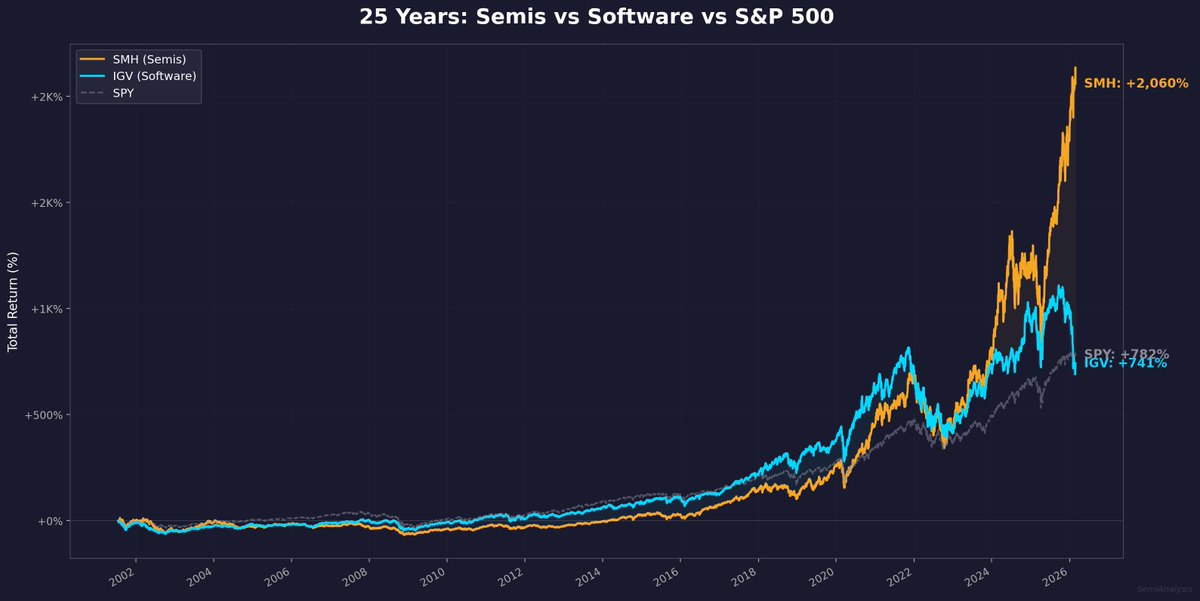
Silicon makers benefitted most on this AI hype, software trailed even the S&P500. Is that extreme gap unwinding now?
Big US capital flows (middle east crisis+ oil prices + dollar strength) could favor undervalued non-SaaS software?
Will software reemerge? Anyone else think the pendulum is shifting back?
NVDA had an amazing print and is down. CRM had a mediocre print and is up. What is really happening is a big unwind.
Semis versus software: 25 years of stock performance is interesting, and semis and software used to keep up together. In the last 2 years it's completely diverged, and now IGV has actually underperformed SPY. (1/3)🧵
Each game has produced its players. Scoring back to back 250+ in the business end of the World Cup tournament . Congratulations #india for winning 2 T20 WCs in row.
Adopting AI into your work makes everyone a CEO, and there's something about it that very few people understand (mostly because few people are CEOs):
When you have an front-line job, you spend maybe 1-5% of your brainpower of high-level, critical-thinking strategy. Most of your job is just running some SOP that's been given to you.
Move up a couple levels, maybe you're managing a little team, and you might spend 10-25% of your time making critical strategic decisions. The rest of the time, you're executing departmental strategy that was handed to you, and your time is spent making sure your team carries that out.
Once you're the CEO, you'll have (if you're good at your job) delegated all of the routine problems and issues that are straightforward to solve to capable executives.
What's left for you? Only the hardest and most critical decisions. The better and more capable your staff, the harder the questions will be that bubble up to you, because they take care of everything else. Those become the only duties you have left: thinking REALLY hard about very dfificult, ambiguous, strategic decisions. And now it's your entire job. Instead of 10-25% intensity (or less), it's 80-90% intensity.
Incidentally, this is why you hear about CEOs having these intensely regimented lives and health-oriented habits: it's all designed to biologically support the fact that their brains have to be operating at peak capacity nearly all the time.
So now everyone is starting to manage armies of agents doing the routine parts of their job. If you're good, you can distill your job into a clear SOP that the agents run, and now "all you have to do" is oversee them...
... and now lots of people are learning that being the boss isn't quite as easy as they thought.