Why are you really working or doing business? If you can’t answer that question, you may just be passing time. Employee or entrepreneur, there are 8 reasons that should make your work count.
Let me respond in a way that better educates you. By 1991, the banks outside Nigeria had reduced most cash operations to ATMs and POS devices. It was cutting-edge technology then. I asked that question because I found it ridiculous that university graduates were largely counting money at teller points.
It wasn't about eliminating bank tellers; it was about improving efficiency. I had already seen computers change the bank credit analysis process at IMB and Fidelity Bank at the time. GTBank then was huge on retail, and I didn't think the entire cash management process made sense.
By 2008, I met with the other side of GTBank as a consultant, and they desperately needed solutions to reduce staff in their banking halls. Their app was bloated, and they needed something easier to use. Again, I proposed cash back at merchant locations with POS and partnering with ATMC. We also had a smaller Android app at the time and were discussing it before they opted for USSD, which became widely successful.
In 2014, we started @MATSNigeria, which launched the POS agent model and has largely taken teller work out of bank halls. So yes, I was right to ask that question, and Dolapo at GTBank and later Access Bank became a champion of technology in banking. It wasn't a one-dimensional question.
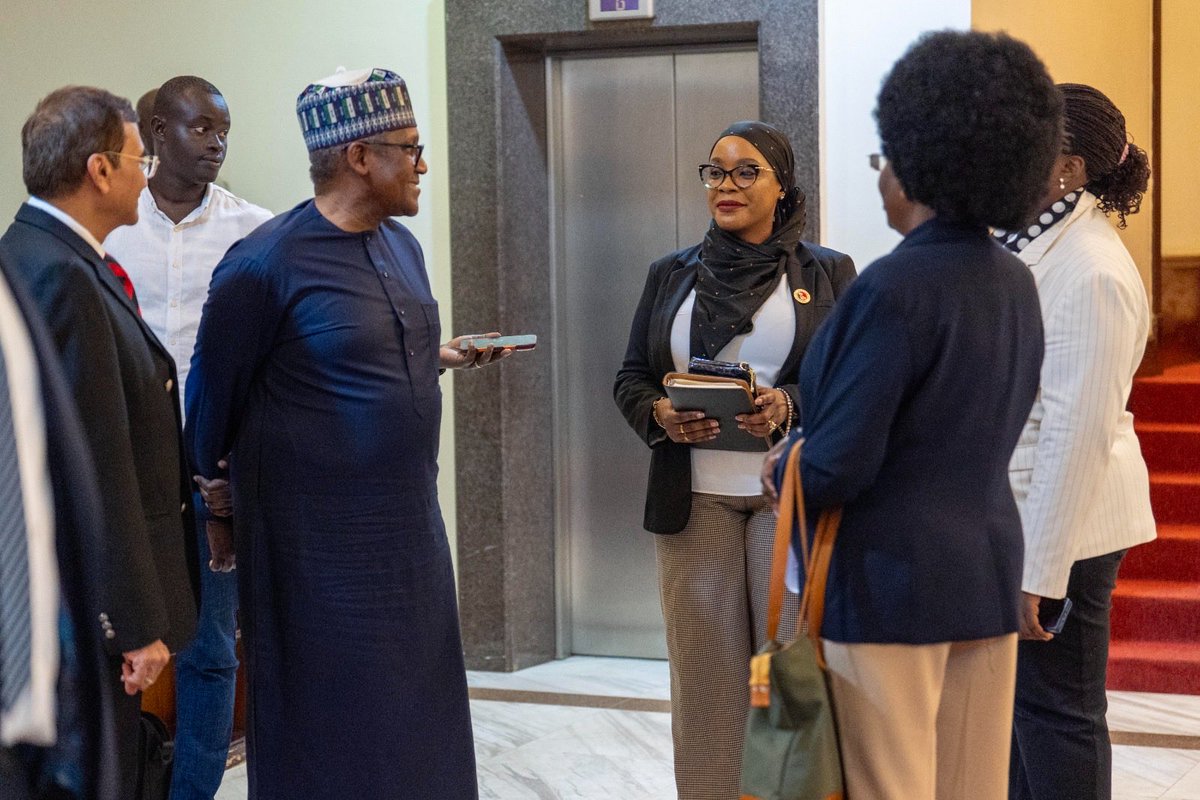
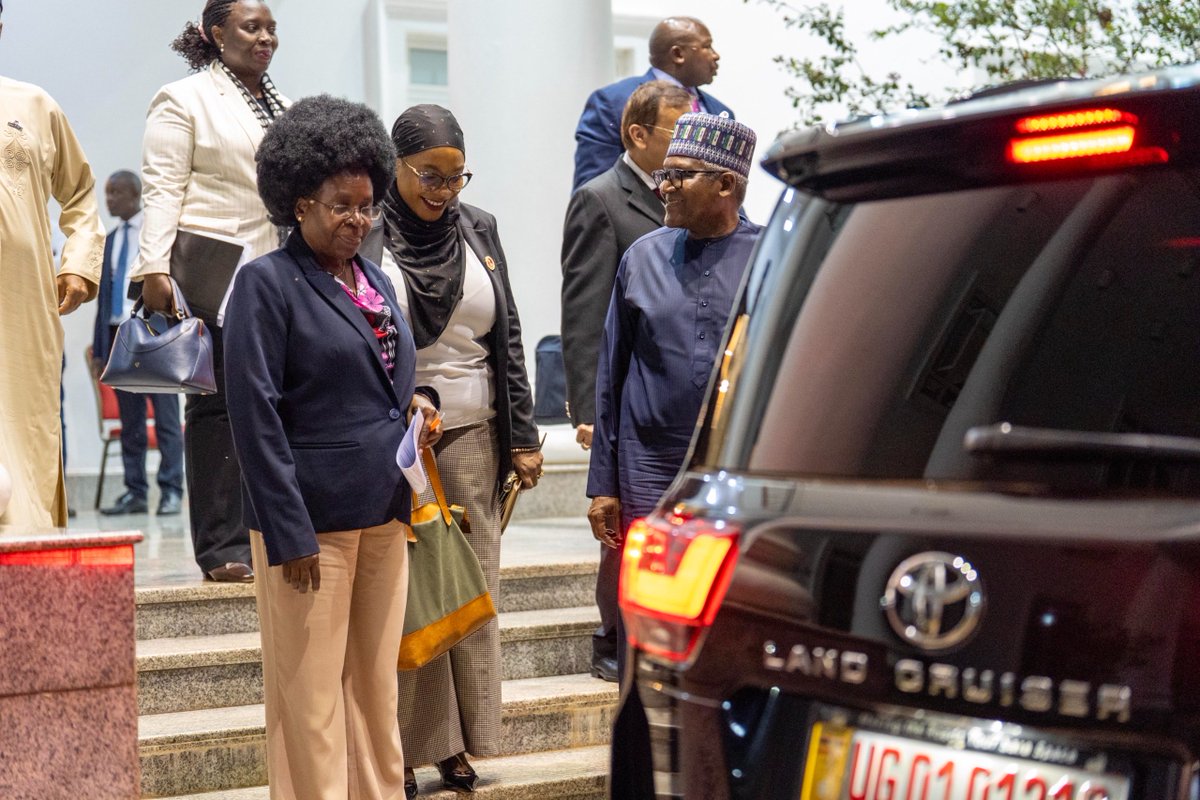
Yesterday, I held discussions with Alhaji Aliko Dangote on several investment opportunities across energy, petroleum, agriculture and mining. We also discussed possible investment in the fertiliser industry to ensure regional food security.
Furthermore, I highlighted the progress being made in developing the crude oil refinery, with an initial capacity of 60,000 barrels per day, in the country. The refinery is being developed as a joint venture between Uganda National Oil Company Limited and Alpha MBM from the United Arab Emirates.
“Mr. Macaroni told me my mum bought him his first GSM, so I learned to be generous from my parents. It has opened a lot of doors for me that the name Davido alone can't. When people sent me a lot of money on my birthday, I knew being generous was very important.”
— Davido
Many people see an African founder with a great idea and immediately jump to the investment conversation instead of the growth conversation. I try to do the opposite for many reasons.
1. I have lost too much money on people who know how to start but can't finish the job. Entrepreneurship is a journey and not a destination. Not many people are equipped for that journey, and these days I can easily tell who isn't, so I don't waste my time with them.
2. Investing in a startup venture is a relationship that takes years to perfect. It's much like any other long-term relationship. It is not a one-night stand where you come to collect the child after they have been raised. You build a life together. I learned a lot about this from my previous losses and wins. The difference was clear.
3. Growth comes from thinking through problems creatively instead of throwing money at them. I always ask founders what immediate problem they are raising money to solve. Most of the time, they can solve it without money, with the right relationships or partnerships.
This was my greatest unlock in African entrepreneurship. I once tried to raise money for an office, but eventually partnered with someone who gave me an office free of charge, and I paid him in services.
I learned from that, and now I always explore partnerships before anything else. If you look hard enough, someone needs what you offer and can provide what you need. Many founders are always too impatient and don't talk to enough people.
4. Vanity is the greatest sin in entrepreneurship. If you are simply raising money to look "cool," you will never make it. Sadly, the media circus around fundraising created a validation death spiral for many. Some of the best African entrepreneurs I know have raised millions of dollars from serious investors without a public announcement.
They stay quiet for a reason: they work amid uncertainty and try to create markets that didn't exist before. Drawing attention would invite needless competition before they have even figured out the market. This has been the curse of African fintech. Many are building, but very few understand the true economics. This is why exits are rare.
I am usually very blunt with entrepreneurs, and a few still dislike me for it after a decade. They went out to try to prove me wrong, and they succeeded in raising a lot of money. Years later, they faced the reality I told them on day one. Easy wins and constant growth are very different things.
Never envy those you think have succeeded and wear their proof openly. Many are good at the "Ponzi scheme" of raising money forever. People eventually catch on that creating markets in Africa is much harder than pretending they exist and convincing DFIs and others with no skin in the game to part with money.
At Alta, we prioritized local LPs for a reason; I now see the sense in that after almost a decade. Foreign funding without real local ties has created a false sense of entitlement and unmet expectations. I am not in that game. You shouldn't be either.
Again, venture investing, as it is currently done in Africa, needs an overhaul. We still have so much to learn about creating new markets that we don't understand yet. We shouldn't be distracted by "fundraising theater"; we should focus on learning more about growth.
I am doing my part to change it, one new interaction at a time, and creating better outcomes while learning more in the process. Prioritize learning over everything, and you will never lose.
GTA 6 drops tomorrow, and the cheapest way to play it in Nigeria will cost you about ₦1.2 million.
A 1TB PS5 Slim is ₦1,094,000 on Jumia right now.
The game is $79.99, about ₦108,600. The Ultimate Edition is $99.99, about ₦135,800.
₦1,094,000 + ₦108,600 = ₦1,202,600
Rockstar took 13 years between GTA 5 and GTA 6. GTA 5 has sold nearly 235 million copies since 2013, so one game kept paying them for over a decade.
If you're buying, GTA 6 launches only on PS5 and Xbox Series X|S. Your PS4 won't run it, and there's no PC date yet.
Americans reported losing $15.9B to fraud in 2025
And Fraud teams still work through reports one case at a time
So We built Rastro for the @openservai SERV Hackathon.
It links scam reports that share an account, phone or link into networks then ranks them so the team knows where to start.
For victims in a short chat, Rastro asks only for what’s missing (the amount, when they paid, how they were reached, the account) and hands back a PDF evidence packet for their bank.
For fraud teams a ranked list of networks.
Every claim in the brief links to the reports behind it.
Rastro never freezes money and never says anyone is guilty.
Github: https://t.co/mJWdF6Xbbg
Demo: https://t.co/Cmv5iKxadI
I received calls from two different Commissioners of Education in the South East, both commending the impact of the work we are doing in their respective states.
Children’s enthusiasm for learning is at an all-time high, and more children are returning to school.
This is the kind of encouraging news that strengthens our resolve and fuels our determination to do even more.
Every child deserves a chance to learn, and we will not relent.
It's been about a year 6 months since I took over management of the school (at the board level, not day to day). When I came in, we had about 440 students. Now we are at 770 students. We have one of the highest transfer rates to the school in the town - outside of a very high JSS1 enrollment, we have 20+ students joining into each of the higher classes. This is in spite of an 80% increase in school fees.
What was the strategy? Well, combining various things:
1. High standards for teachers and employing a lot of new, very good teachers
2. Constant staff salary increment
3. Big focus on extra-curricular activities and fun
4. Video strategy, what we do should be shown to the world
5. Open forums for parents to complain, and prompt reactions. The old methods of hiding complaints just makes schools bad
6. Constant infrastructure work and "getting better every day"
7. Discipline and no leniency on anything
8. Reducing all those massive enrollment fees to allow cheaper switching. A parent may be able to afford fees, but cannot bring out money for the enrollment fees
The goal is to hit 1000 students as quickly as possible, which we still push the standard up. A lot to do - we will have a world class computer + physics lab by next term (we are working on it now). Then we turn attention to the boarding houses and the sports hall, and do more solar (we already have 3 blocks on solar, but we are not done).
Also, we are doing a lot of works on academics now, the goal is that we should be in the top 5 in WAEC results nationally.
We did all this without layoffs or staff disruptions. And I only spend ~ 3 hours per week in active management. A strong team + ideas from the digital world are good enough.
1. Greet and thank the interviewer:
“Good morning, and thank you for the opportunity to be here.”
2. State your name and current role or status:
“My name is [Your Name], and I’m currently a [Your Current Job Title] at [Company Name]”
Or, “I recently graduated with a degree in [Your Major] from [University Name].”
3. Give a quick professional background:
“I have [X] years of experience in [Your Industry or Field], where I’ve focused on [Key Skills or Responsibilities].”
4. Highlight key achievements or strengths:
“In my previous role, I led a project that [Brief Achievement], which helped improve [Result].”
5. Explain your interest in the role:
“I’m really excited about this opportunity because it aligns with my passion for [Field/Skill] and I see it as a great chance to grow and contribute to your team.”
Your self-introduction should be clear, confident, and relevant to the position.
Over the last two days, my organisation, Educare, sponsored the APEN Conference at the Civic Centre in Lagos, where educators from across Africa came together to discuss the future of artificial intelligence in our classrooms.
Once we fix education, everything else begins to fall into place.
A few months ago, my grammar was not particularly great, especially here on X.
Then, one beautiful morning, I received a call from Dr. Oby Ezekwesili ( @obyezeks ) that changed that aspect of my life forever.
She advised me to go back to Primary 3 and rebuild my foundation in English.
She said something profound: Once you fix the foundation, everything else begins to fall into place.
I took her advice wholeheartedly. I went back to study Primary 3 Grammar and Comprehension, and that simple decision transformed my command of English.
I remain deeply grateful to @obyezeks for that invaluable piece of advice. Its impact on my life has been remarkable.
But this experience taught me something much bigger about education.
Many of us are struggling today, not because we lack intelligence, but because we are building on weak educational foundations.
We keep trying to fix problems at the top when the real problems are at the bottom.
Sometimes, the greatest form of progress is having the humility to go back to the basics and rebuild properly.
You cannot build excellence on a foundation you have refused to repair.
Nigerian-born Seun Rasheed was working for oil giant Shell in Qatar when a holiday to Rwanda set him on a different path. During the trip, the wide gap between the local price of passion fruit and what it sold for in Europe caught his attention. He realised there was an opportunity to build an export business around that price gap.
Seven years later, @SoukFarms supplies Rwandan-grown produce – including avocados, chillies and beans – to supermarkets in Europe and the Middle East.
Watch/read the full interview: https://t.co/aoiE3LPohc
--
Also check out our new book, 'How we made it in Africa II: Real stories of entrepreneurs turning opportunity into profit' https://t.co/mfIxl58i5N