@IvanDuque Ni siquiera @UNODC Colombia con toda la pesada estructura de costos administrativos y operativos que conllevan sus dichosos Memorandos de Acuerdo dejó construcciones tan caras x m2 allí en Providencia. ¿Cierto Viceministra @Lauraggils ? https://t.co/EW6434OrXx
🌎 Ya está disponible la guía de aprendizaje sobre las rutas de aves migratorias de las Américas, desarrollada por CAF, @BirdLife_News y @audubonsociety en el marco de la Iniciativa de Rutas Migratorias de las Américas (AFI).
📚 Este recorrido combina recursos audiovisuales, contenidos especializados y actividades interactivas para fortalecer capacidades en torno a la conservación de la biodiversidad y la restauración de ecosistemas clave para el continente.
Conoce más y accede aquí:
https://t.co/Jp5L1wIsG8
Rangelands and pastoralists are vital to resilient agrifood systems.
Here are only 5️⃣ of the many benefits they provide to people and the planet.
🔗 https://t.co/lOseKi29WD
#YearOfRangelandsAndPastoralists#IYRP2026
📥🌱 ¡Descargar los archivos de nuestra Biblioteca Digital Agropecuaria es más fácil de lo que imaginas! Accede a publicaciones, guías y documentos técnicos de manera rápida y sencilla para fortalecer tus procesos de investigación, consulta y aprendizaje 📚💻
✅ Solo debes dar clic en el enlace debajo de la imagen ✅ Podrás ver la publicación en la web o descargarla en tu computador
✅ Todo al alcance de un escaneo con el código QR 🚀 ¡Explora, consulta y descarga conocimiento especializado para el agro en pocos pasos!
📢 ¡Curso gratuito en @FAOCampus y FAO VLC!
🌎 Introducción a Una Sola Salud
Este curso busca sensibilizar sobre desafíos globales actuales como el cambio climático y la pérdida de biodiversidad, que afectan a animales y humanos.
Inscríbete aquí 👉 https://t.co/W1QSa8FeLF
🎓 Curso gratuito en @FAOCampus
🌱 Buenas prácticas de gestión del riesgo fitosanitario ⚠️
Aprende como reducir los riesgos en la sanidad vegetal y manejar adecuadamente las emergencias fitosanitarias y sus efectos
¡Matricúlate! ➡️ https://t.co/ldf9kF0SME
@FAO@FAOAmericas
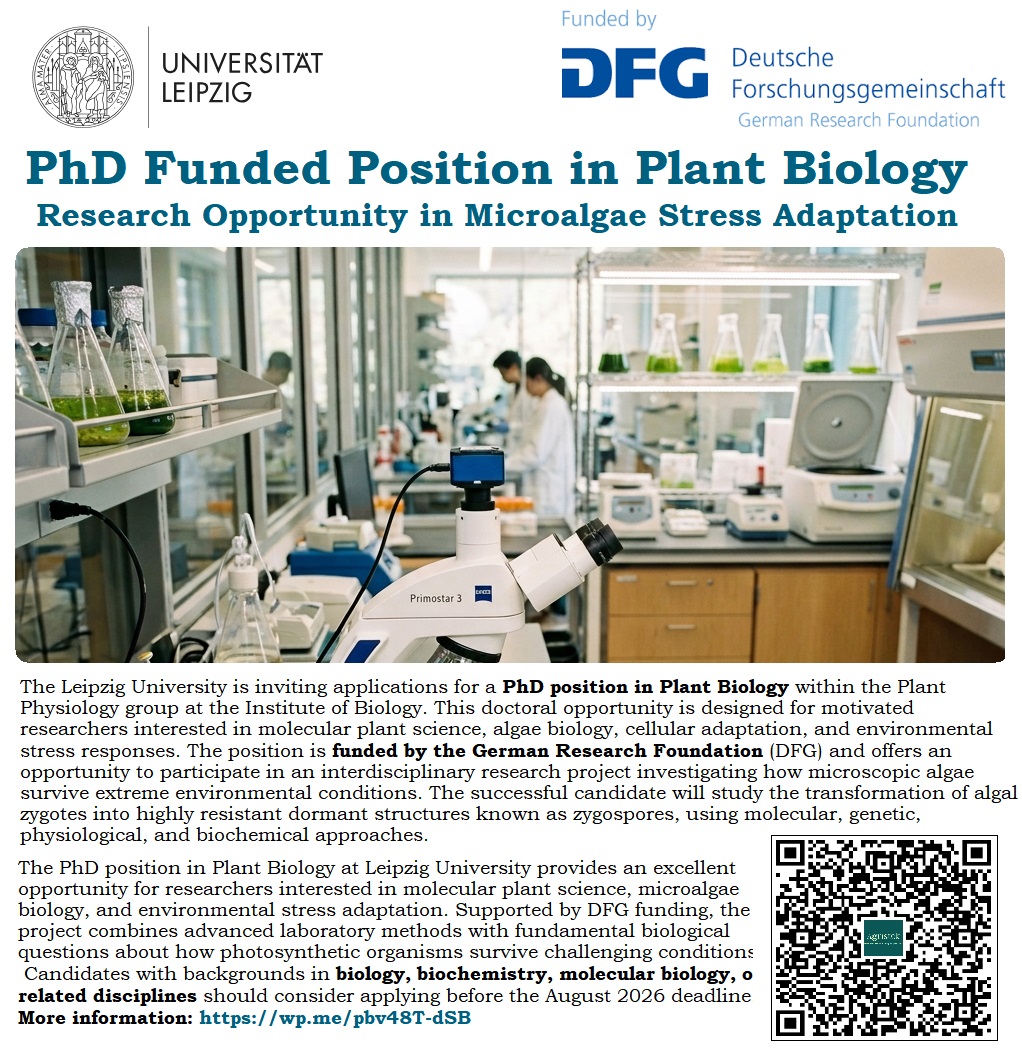
📌PhD Position in Plant Biology at Leipzig University Germany🇩🇪: Research Opportunity in Microalgae Stress Adaptation, See details at: https://t.co/EifTYJLZdf
We're hiring!
WMO is looking for professionals from diverse backgrounds and areas of expertise interested in a career in meteorology, hydrology, geophysical sciences, and international cooperation.
Check out all vacancies here 👉 https://t.co/WeDOpeSMEm
Libanothamnus: el único frailejón que se ramifica. 🌿⛰️
Mientras la mayoría de los frailejones crecen con un solo tallo, este sorprendente habitante de los páramos de Colombia y Venezuela desarrolla múltiples ramas, dándole una apariencia única entre sus parientes andinos 💥💥💥
GeoLibre v1.5.0 is here!
GeoLibre is a free and open-source, lightweight, cloud-native GIS platform for visualizing, exploring, and analyzing geospatial data. It runs everywhere you do, in the web browser, on the desktop, on mobile, and inside Jupyter notebooks, all while keeping your data local and private.
This release lands 90+ merged pull requests and resolves 90+ issues, adding a dashboard of chart widgets, customizable UI profiles, a saved library of web services, and an in-browser Whitebox raster engine.
What's new in v1.5.0
- Dashboard panel: Build a collapsible panel of chart widgets (histogram, scatter, bar, line, box) next to the map.
- Customizable UI profiles: Tailor the menus and filter the data sources you see, so the workspace matches your workflow.
- Saved service library: Save and reuse your favorite web-service layers (XYZ, WMS, WFS) instead of re-entering URLs.
- Whitebox in the browser: Run Whitebox raster tools fully client-side through a WASM runtime, no Python sidecar required.
- View menu and viewport history: Step backward and forward through your recent map views from a new View menu.
- A more beautiful globe: Add a spinning globe, customize the atmosphere halo and deep-space colors, and reset pitch and bearing with a rotation indicator.
- More basemaps: New Protomaps basemaps and support for stacking multiple raster basemaps.
Try it out
- Live demo: https://t.co/hOVekblXMc
- GitHub: https://t.co/VXq8c1o2Nd
- Documentation: https://t.co/7VA2AQoCUc
- Release notes: https://t.co/VhWQ4eUw3T
#GIS #GeospatialData #OpenSource #RemoteSensing #DataVisualization #MapLibre #Python
Organic vs. conventional farming, which builds soil better? A new study of 2,900+ real farms found NO difference in soil organic matter. Why? Because the label doesn't matter — plant biomass inputs, nitrogen, rotation & tillage do. Focus on dominant drivers.
https://t.co/k2NoOEaY76
🎓 ¡Curso GRATUITO de @FAOCampus!
🌍Planificación geoespacial en proyectos de desarrollo territorial.
Conoce la metodología Mano de la Mano, mejora tus proyectos y comunícalos con mapas.
¡Matricúlate! ➡️https://t.co/6PXSqqAni9
#HandInHand#FAO#SIG#DesarrolloTerritorial
El Carmen, una de las fincas vecinas del predio de Abelardo de la Espriella, fue una base paramilitar en donde se cometieron asesinatos y se ordenaron otros crímenes, según informes judiciales. https://t.co/G1aYSc1IoN
@ClaudiaLopez Tu doble moral, de pasar de aliada de petro M-19 a luego negarlo, de luchar por la corrupción y luego hacer tus negocios en la alcaldía?? Te paso la factura, quemada pero bien quemada, solo piensan en sus intereses NO en el país.
Colombia es el segundo país más biodiverso del mundo y la mitad de su territorio son bosques. Pero exporta materias primas sin transformarlas.
La pregunta no es si tiene el potencial para un modelo económico distinto. La pregunta es si el próximo gobierno tendrá la institucionalidad para construirlo.
Attila Lenti analiza qué es un Estado emprendedor basado en biodiversidad y por qué Colombia tiene - y desperdicia - las condiciones para serlo.
🔗 https://t.co/ztPijNWRB7
Most academic researchers are still living in 2023.
They use AI in their web browsers through a chat window. They open a browser tab, ask a question, and the AI gives them an answer to their question.
If they are smart, they use AI to brainstorm ideas or elicit critique on their work. If they are not smart, they copy the text AI gives them and paste it in their manuscripts.
Either way, this is NOT a smart use of AI for research purposes. Here’s why: our research processes are complex and involve various kinds of documents.
We have our primary and secondary sources in a folder on our computer. Then we have another folder for our drafts, which are mostly in MS Word. Datasets are in yet another format.
When we use AI in a web browser, it can only see one isolated part of our project at a time. For example, it can only look at your draft to give critical feedback, or it can only look at a given paper to summarize it for you.
Another problem with this kind of workflow is that every time you have to repeat your instructions and give the AI context about your project. If you use AI frequently, you will write a set of instructions and copy-paste them often.
The browser-based chat window has a huge limitation when it comes to serious academic research. If you add an article to chat to ask question, it can’t see any other related articles or your notes to give you a well-informed answer. In other words, the browser-based AI is blind to your project as a whole. It can only process an isolated part of your project at any given time.
Claude Code has completely changed the way we do academic research.
Instead of you bringing isolated pieces of your project to the AI, Claude Code puts the AI inside your project folder. You can ask Claude Code to read every single document, Excel sheet, interview transcripts, and dataset inside your project folder before it answers your questions.
Claude Code can also create new files in your folder and edit the existing ones. Furthermore, if you pause a conversation, it remembers the whole context, and you can pick up it later.
Let’s say, you have forty articles on a given topic (e.g. impact of social media on mental health) sitting in folder on your computer, and you want to find out which articles present evidence contrasting to a claim that posting actively on social media leads to a sense of better wellbeing.
You can, of course, do it manually. You read every single article and extract the relevant information and put in an Excel sheet or a Word file.
Or you can run all forty articles one-by-one in an app like ChatGPT and ask it to extract relevant information for you. Using ChatGPT is efficient than extracting information manually, but it’s still cumbersome.
Instead of ChatGPT, open the folder containing all your papers in Claude Code and ask it to extract relevant information. Claude Code will access all the papers in the folder.
It will then read the papers and extract required information and put it in a neatly organized table. You don’t need to run papers one by one in Claude Code. And if you need it to revise the table in any way, you can simply ask it to do so. Browser-based apps like ChatGPT were not built to do so.
The tricky part here is that you can’t really appreciate the kind of value Claude Code brings to your work unless you have tried it yourself.
But once you set it up with respect to your own research and the kind of standards you want it to meet, Claude Code become an incredibly powerful research assistant for you.
You must keep in mind that while Claude Code is an incredibly powerful tool, it can’t replace your expert judgement. It may overdo some aspects of a task while underperform on certain others.
You can delegate certain tasks to Claude Code, but you must keep in mind that it is your research assistant, and you must check its output just like you would check your human research assistant’s work.
You can outsource enormous amounts of academic labor to Claude Code while keeping the thinking process to yourself.
And now that you don’t have to spend your time and energies on laborious and cumbersome aspects of research, you will have much more time to do the actual thinking.
AI agents like Claude Code are on the verge of revolutionizing almost all aspects of knowledge work.
But many academics still feel intimidated to get started on a tool like Claude Code. They assume that they need advanced coding skill or computer programming knowledge to use Claude Code. That is simply not true.
You don’t any coding skills of programming knowledge to get started on Claude Code. If you can write sentences in English, you can use Claude Code.
That’s why I am running a webinar on 6 June to help academic colleagues get started on Claude Code.
I have designed it specifically for non-technical colleagues. You can find the registration details in the post below:
🌿🏙️ ¿Cómo integrar la biodiversidad en la planificación y gestión de nuestras ciudades?
Inscríbete en el MOOC gratuito “BiodiverCiudades: Herramientas prácticas para la planificación y el desarrollo” y fortalece tus capacidades para impulsar un desarrollo urbano más sostenible, resiliente y conectado con la naturaleza.
📚 Español, inglés y portugués
🎓 Certificado digital
💻 Modalidad virtual y a tu ritmo
👉 Inscríbete aquí:
https://t.co/5ewH5UEidm
📢 ¡Cupos limitados! Curso de #PLACA2026
🌎 Aprende los conceptos clave vinculados al #monitoreo y #evaluación de las medidas de adaptación al #CambioClimático
Inscríbete ahora ➡️ https://t.co/dqKFLX1KPJ
🌱 Lanzamiento de la publicación Perspectivas de la Agricultura y el Desarrollo Rural 2025-26
📅 2 junio
⏰ 11:00 UTC-4
🔗 https://t.co/fmzeK4AoSE
#PerspectivaAgricultura#DesarrolloRural