📍 Tokyo, Japan
🗓️ June 30 – July 4, 2027
Save the date for INRC 2027, the annual meeting of the International Narcotics Research Conference. More soon on abstracts and registration!
https://t.co/eaXPdCiGzi
#INRC2027#OpioidResearch#Neuroscience
A major milestone for Chemogenetics. DREADD technology demonstrates therapeutic efficacy in humans.
A new study published today in NEJM demonstrates preliminary safety and therapeutic benefit from DREADD-based chemogenetic treatment of refractory epilepsy, marking an extraordinary milestone for neuroscience and precision medicine.
https://t.co/TZOYgSY7dZ
The approach combines targeted AAV gene delivery at the epileptogenic locus with very low, subthreshold doses of clozapine to activate engineered DREADD receptors and modulate neuronal activity.
Congratulations to Bryan Roth, whose pioneering discovery of DREADDs made this field possible, and to the investigators of the NEJM study for bringing this technology to patients.
This achievement has a particularly meaningful connection to our work published in Science Magazine in 2017.
https://t.co/rWWUuY65Nr
We showed that clozapine, rather than CNO itself, is the active mediator of DREADD activation in vivo and proposed that subthreshold doses of clozapine could be used to activate DREADDs in humans, anticipating a practical path toward clinical translation.
At the time, many in the scientific community viewed these findings primarily as relevant to the design of preclinical DREADD experiments. We saw a much broader opportunity, translating Chemogenetics into human therapeutics. Nearly a decade later, that vision is now becoming a reality.
Our 2017 study was supported by the research funding through the National Institutes of Health (NIH) and The National Institute on Drug Abuse (NIDA), a prime example of how fundamental basic research can ultimately enable transformative clinical applications.
This is an exciting beginning, but larger, well-controlled studies are essential to establish the magnitude and durability of therapeutic benefit and long-term safety.
Chemogenetics is moving beyond an experimental neuroscience tool toward a potentially transformative neuroscience platform. We are only beginning to realize its potential.
The first major original work released "Thyrotropin-releasing hormone increases dorsal premammillary nucleus activity and darting behavior" from my laboratory is now available to read as open access in Neuropharmacology.
https://t.co/luZ4ojaVW3
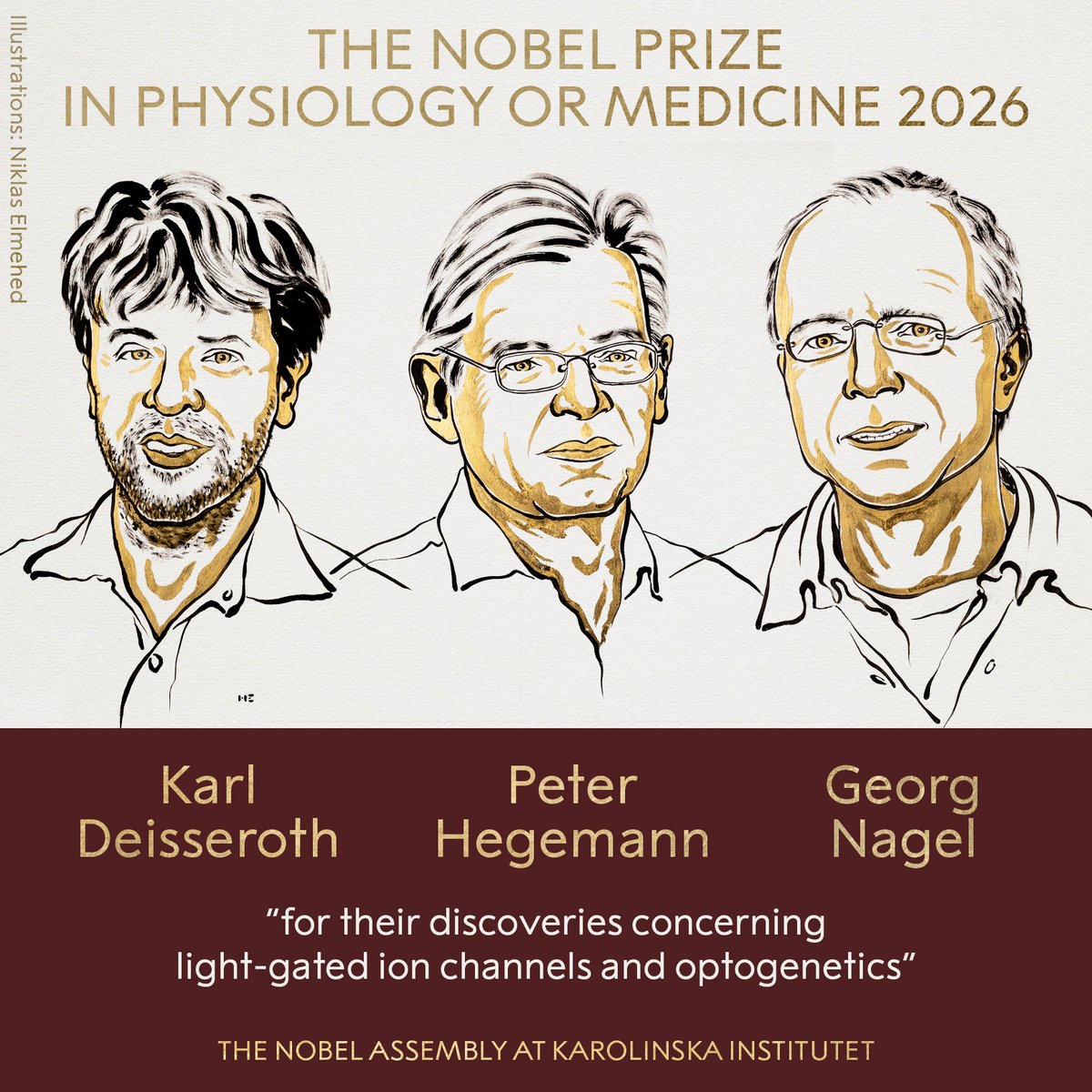
BREAKING NEWS
The 2026 #NobelPrize in Physiology or Medicine has been awarded to Karl Deisseroth, Peter Hegemann and Georg Nagel “for their discoveries concerning light-gated ion channels and optogenetics.”
👩Congratulations to two of our NIH Institute Directors—NIDCD Director Dr.Debara Tucci and NIDA Director Dr. Nora Volkow—on being named among 2026’s Most Powerful Women by @Washingtonian Magazine!
See the full list ➡️ https://t.co/eU7ithSLfj
The long-standing view that ketamine is simply an NMDA receptor antagonist has been progressively and fundamentally reshaped by a series of recent studies that have collectively redefined our understanding of how ketamine and its enantiomers act therapeutically but also why it produces reinforcement and has liability for misuse and addiction.
Excited to share this News & Views (https://t.co/kWN92izfyW) written with @jorgh82 and published yesterday in @NatureSMB on the recent work of Qianru Jiang, Tao Che and colleagues who showed that ketamine (as well as PCP) can bind directly within the orthosteric pockets of both mu and kappa opioid receptors.
The Jiang et al. findings, taken together with other recent studies support a bifunctional model in which NMDA and opioid receptor signaling may work together to shape ketamine's antidepressant, analgesic, dissociative, and reinforcing effects.
Understanding how these systems converge could inform the development of next-generation treatments that preserve therapeutic benefits while reducing the risks of misuse and adverse effects.
Not mentioned was the ongoing chemogenetic trial in North America! https://t.co/lbSjD27hJi
PSAM4-GlyR chemogenetic system in combination with varenicline for neuropathic facial pain
On October 15, 1986, the football teams of IBM Zurich Laboratory and Dow Chemical were due to play a game against each other. But it was almost derailed by a sudden announcement made just a few hours before kick-off.
The sudden announcement was that two of the IBM players – Gerd Binnig (right, holding flowers) and Heinrich Rohrer (left, holding flowers) had been awarded the Nobel Prize in Physics.
The two laureates were rushed off to a press conference, but they insisted the conference end on time because their football team needed them. Although IBM lost the match 2-4 they still had a reason to celebrate.
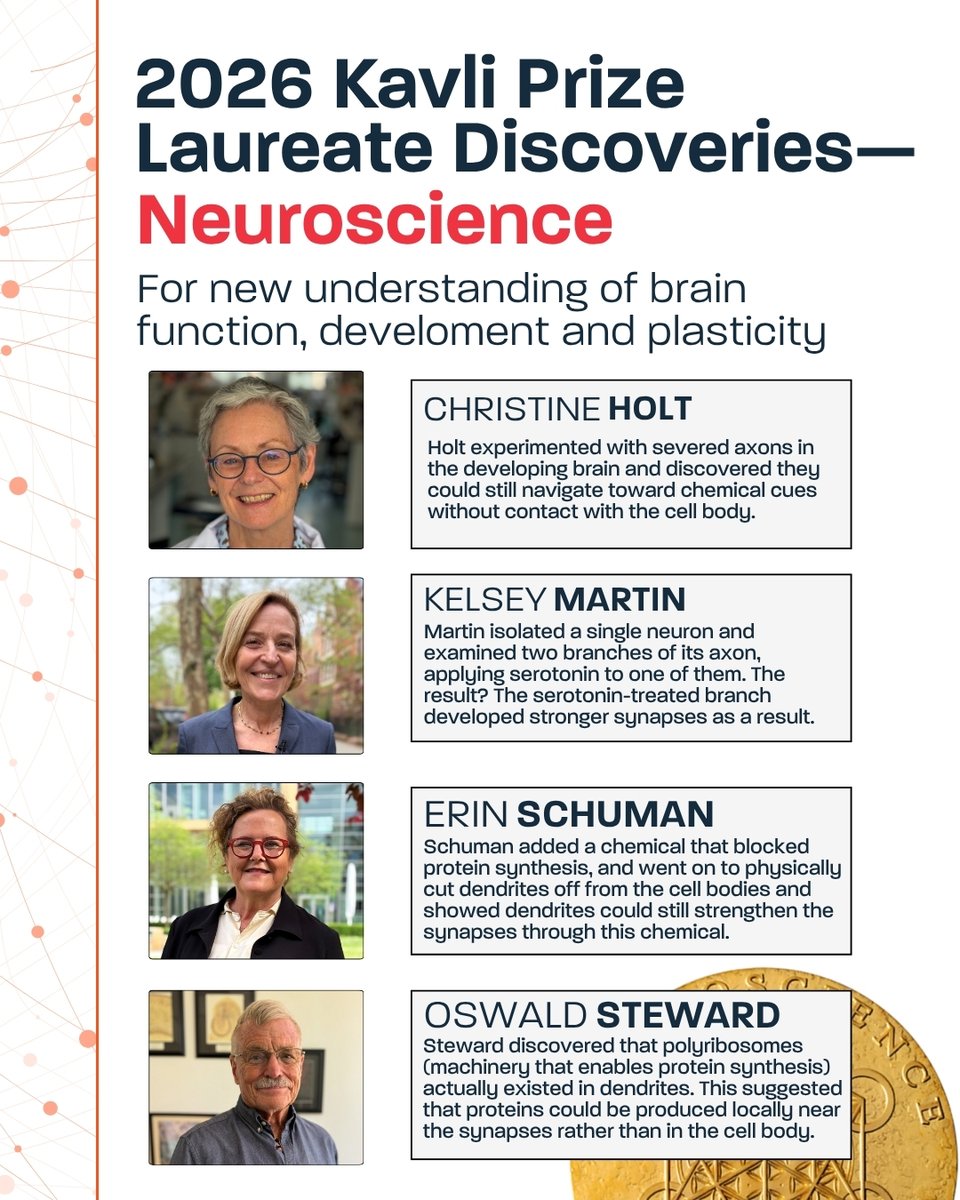
How can our brains be so efficient? The 2026 #KavliPrize#Neuroscience Laureates broke longstanding beliefs & revealed that proteins form locally at synapses, right where neurons transmit signals, not in the cell body like previously thought. Learn more at https://t.co/9YuWTUxwPO
I'm honored to be one of the first @sciam Young American Scientists!
Big thanks to Geoff Schoenbaum and other mentors, colleagues, and trainees. Science is a group effort and I'm lucky to have had great collaborators.
@UAB_CNC@UAB_CNBCI@UABNews@NIDAnews
https://t.co/EsaHSnLyUc
The #CPDD26 count down starts today! Our little Adventure Bear is making sure the OCC is ready for all the sessions and science we have in store. See you soon!
NPP in the News...Check out a recent @npp_journal paper on What you eat as a teenager may shape food choices later in life at https://t.co/ZmLqrL87xW. The full article on Adolescent obesity induces sex-specific alterations of action control can be found at https://t.co/cvKzC6sJ4L
Don’t miss this opportunity! ACNP Travel Award Applications are open for the ACNP 65th Annual Meeting: January 10-13, 2027, San Diego, California. Deadline to Submit is May 14, 2026, at 5:00 pm Central. https://t.co/tciCGq4ELQ #ACNP2027#travelawards
For those interested in the history of psychedelic research…
I wrote a narrative piece describing studies of psychedelic effects on serotonergic neurons in the dorsal raphe, from late 1960s to 1980s:
https://t.co/BsvBNAlBsD
Modified nitazenes, opioids 1,000 times stronger than morphine, show remarkably few adverse effects in rodents, renewing the potential of these drugs for pain relief
https://t.co/9W8J7Oex1h
#JNeurosci: Galvan et al. show that most GPe neurons exhibit substantial variability in firing over minutes, calling into question whether firing patterns alone can reliably define cell types.
https://t.co/pbvyVgoDp9
Huge congrats to Michael Michaelides and collaborators!
Modified nitazenes, show limited adverse effects in rodents, reopening discussions around their potential as analgesics:
https://t.co/MdLGKzvQ58
With @Victor_Mathis_ , we write a News & Views: https://t.co/75SHvTabaU
@Nature