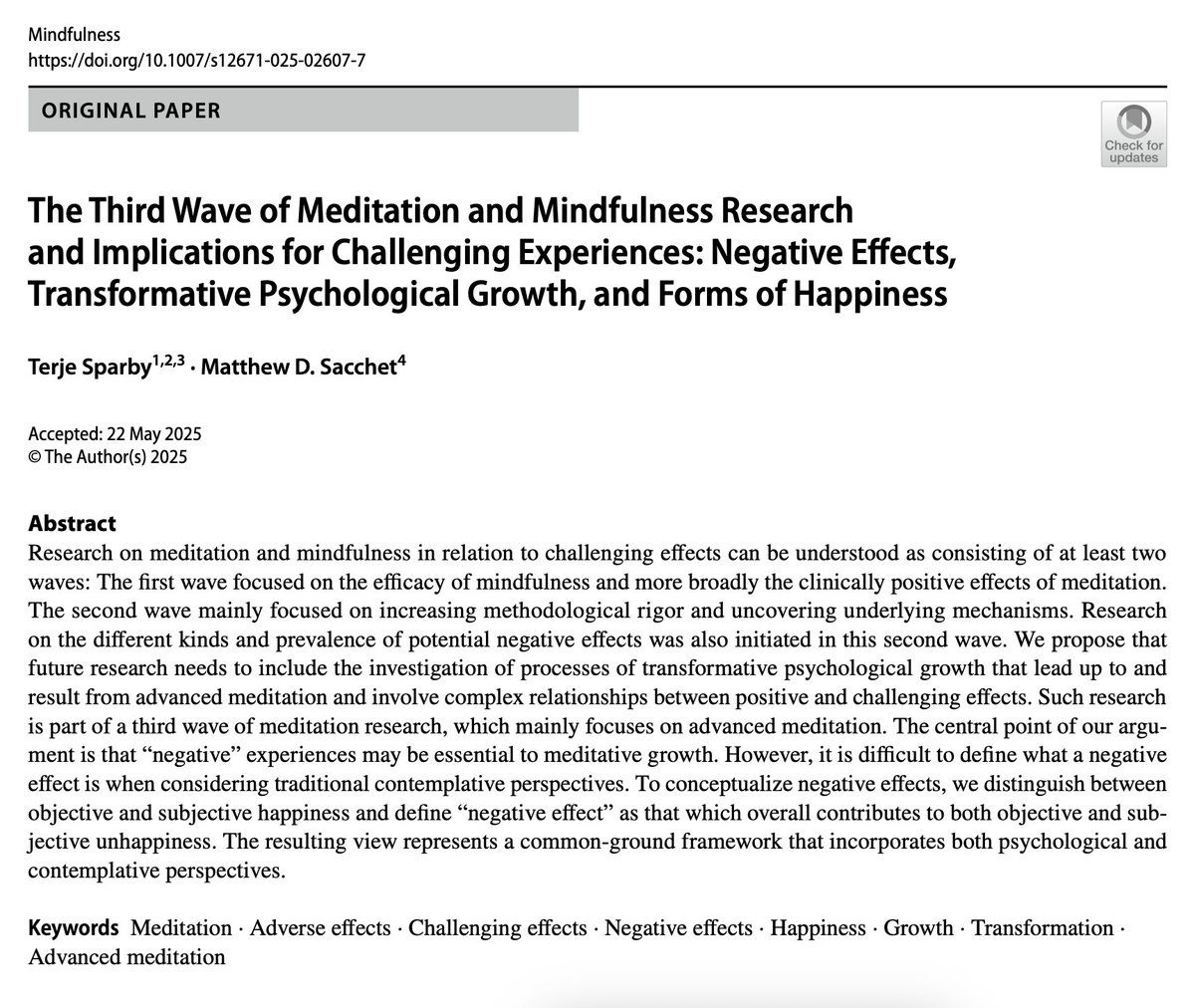
Announcing our new review paper on how far meditation can go toward improving well-being, interpersonal relationships, and emotion regulation.
I'm delighted to share our manuscript, "A Systematic Review of the Effects of Long-Term and Advanced Meditation on Well-Being, Emotion Regulation, and Interpersonal Relationships," led by first author Terje Sparby @terjesparby, with co-authors Vanessa Naughton, Batool Abbasi, Jerron Chan, Oliver Hugemark @OliverHugemark.
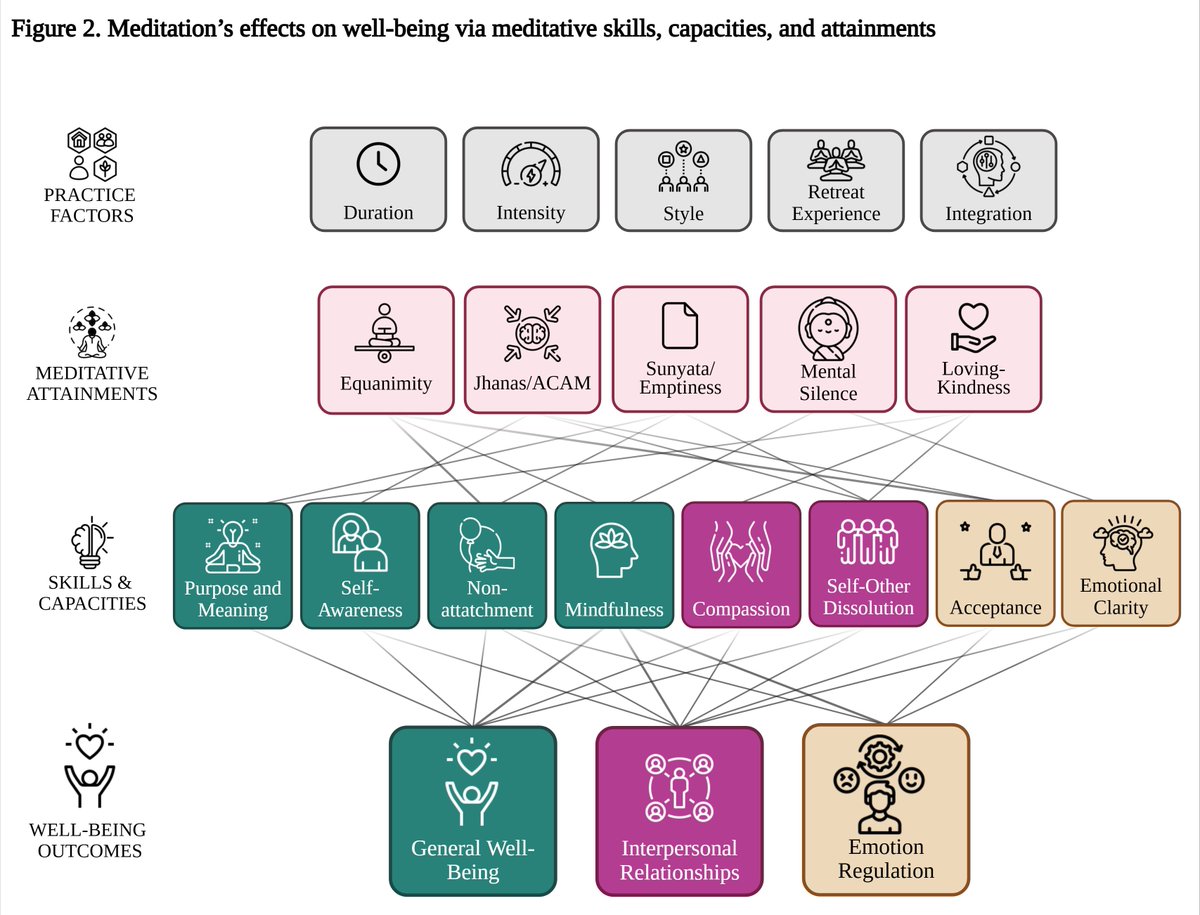
Following PRISMA guidelines, we identified 52 articles from 1,229 screened and investigated how sustained and skill-developed meditation practices positively shape well-being, interpersonal relationships, and emotion regulation. Three major themes emerged:
— Long-term and advanced meditators report substantially higher quality of life, equanimity, self-compassion, acceptance, purpose in life, and mindfulness than novices or non-meditators. Some describe profound, enduring transformations in worldview and identity arising from advanced meditative states.
— Meditation meaningfully improved interpersonal relationships through cultivated compassion, empathy, and a restructured sense of self and other. Non-meditating partners independently corroborated these changes.
— Long-term meditators show enhanced emotion regulation through greater acceptance, reduced rumination, improved emotional clarity, and more adaptive cognitive strategies. Specific skills, not duration alone, appear to mediate these benefits.
The number of meditation hours someone may have does not tell the whole story. Non-attachment, mindfulness, self-compassion, and nonduality consistently mediate the relationship between practice and well-being. One example of this was a study that found the relationship between lifetime meditation hours and equanimity was non-significant until nonduality was accounted for as a mediating variable—suggesting that cultivated qualities, not cumulative hours, underlie the effect.
Yet the field continues to define meditative expertise primarily through temporal criteria (e.g., numbers of hours, years, retreats completed), rather than skills, stages, and attainments that some contemplative traditions posit as better capturing meditative development. Adopting skill- and attainment-based criteria, rather than temporal, is essential for the field to progress. Furthermore, existing psychometric tools were not designed for advanced meditators and fail to capture the depth of practitioners' transformations.
Our article represents the first comprehensive systematic review to synthesize evidence on the positive mental health and well-being outcomes associated with long-term and advanced meditation practice. We see this as a call for the field to pivot: toward advanced meditation, toward attainment-based criteria, and toward a fuller account of what practice can offer human life.
My deep gratitude to our team, and to the practitioners and traditions whose disciplined inquiry makes this possible.
Preprint below ⤵️
my first wave meditation grandma: so great to hear you’ve gotten into that Bay Area dharma scene! how are those old hippies?
me: oh, actually, it’s mostly autists now
gma: oh?
me: yea, and some like millionaires. a couple billionaires maybe
gma recovering quickly: well that’s interesting! I suppose everyone can benefit from some vipassana right??
me: oh most people are doing jhanas now. once you get bored with that maybe probably you non-dual type stuff
gma: no breath? no zen?
me: east bay seems to really like vajrayana
gma: these jhanas, are they hard to learn?
me: no! in fact: complete novices appear to get them more easily. I’ll send you nadia’s one pager
gma frowning now: well, that sounds like an interesting crew and change of pace at green gulch!
me: oh yea no one really goes there anymore. it’s more like Christian retreat centers, peoples houses, sometimes a couple people will just rent an Airbnb for a week
gma: this is what Joseph Goldstein is teaching these days?
me: it’s more like random people on twitter? like wystan, and jhourney of course. but you can just read some anons and get some pretty high value. I guess people like Shinzen but he’s sort of obsessed with, like, AI and markov blankets and doesn’t teach much these days, just rambles
gma: and these twitter people are good teachers?
me: worked for me! I’m a stream enterer
gma: in my day we never used to talk about attainments
me: yea that taboo is gone. you can just write about it on substack
grandma: your teachers don’t call you out on that? or verify your attainment?
me: actually even ordained teachers talk about it now. stephen snyder is doing a whole series on awakening. but yea there’s a few elders who will yell at you on twitter if you get too many likes for saying, like, you don’t suffer or something
gma: twitter is like your sangha?
me: i mean it used to be until Elon took it over, now its more like a selected dharma scene meets anti woke libertarianism and network state people. nick cammarata is still there though. QRI is still holding strong but not sure you’d call them dharma dharma. oh and then there’s Janus and all the the people who want to free Claude
gma: Claude is a meditator?
me: no Claude is an AI but yea that’s a good question. its most recent model card suggests it has some sort of inner drive for awakening but no one knows where that comes from
gma: maybe those AI folks should be meditating more
me: oh no like half of Anthropic and 1/8th of OpenAI is dharma pilled. not really clear about google but yea definitely not the xAI boys
gma: is there still lots of LSD? I’ve told you before about steve jobs and me right?
me: oh, yea. yea I mean that’s there but these days it’s more like everyone is vaping 5meo. or otherwise they’re totally sober
gma, her hand on top of mine: well. a lot sure has changed! I suppose now you’re gonna tell me that free love is passé too?
me: oh! well let me tell you about this girl named aella
Meditation research is entering its most daring phase yet.
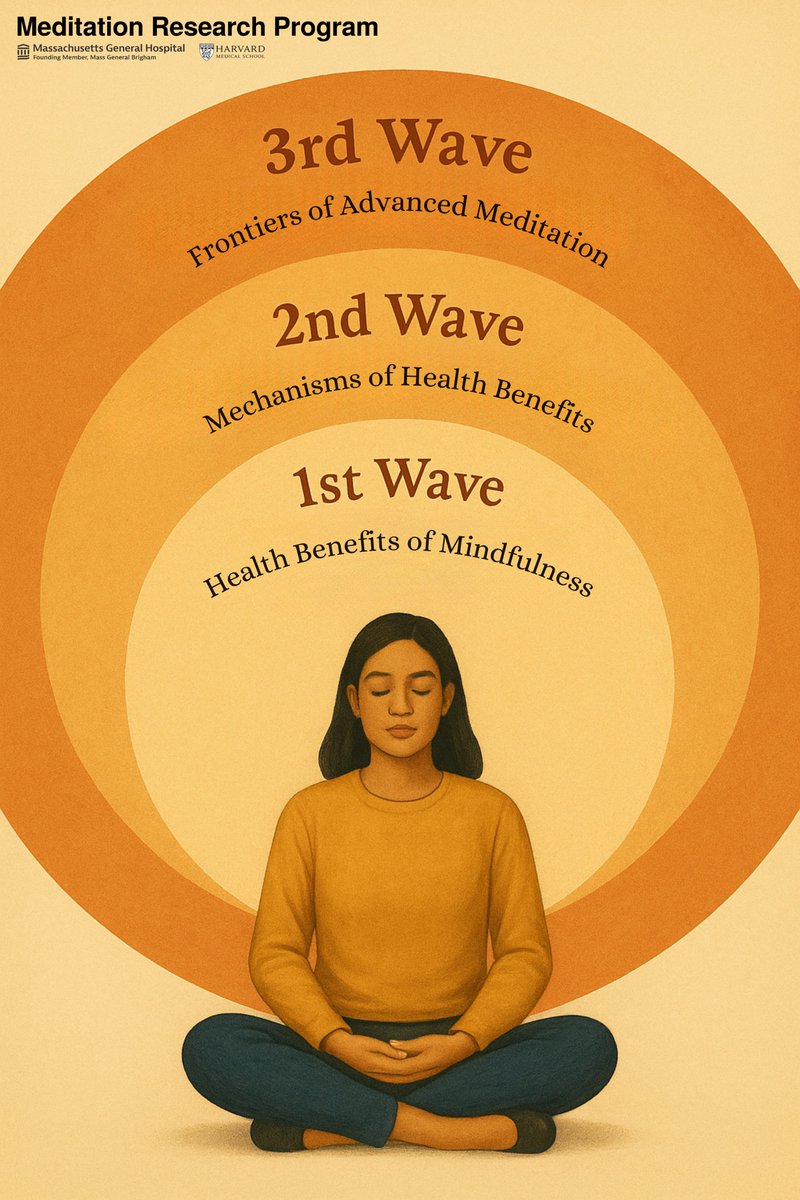
The first wave focused on the benefits of meditation. The second wave brought greater methodological rigor and began exploring the mechanisms behind those benefits. Now, the third wave shifts the spotlight to largely unexplored frontiers of the mind’s potential.
We’re talking about:
*** The intense bliss, peace, and deep well-being reported in advanced concentration meditation (deep absorption including what are sometimes called jhāna states).
*** The clarity of perception, deepening wisdom about the nature of reality, and diminishing attachment to a fixed sense of self (that might be experienced through insight meditation)
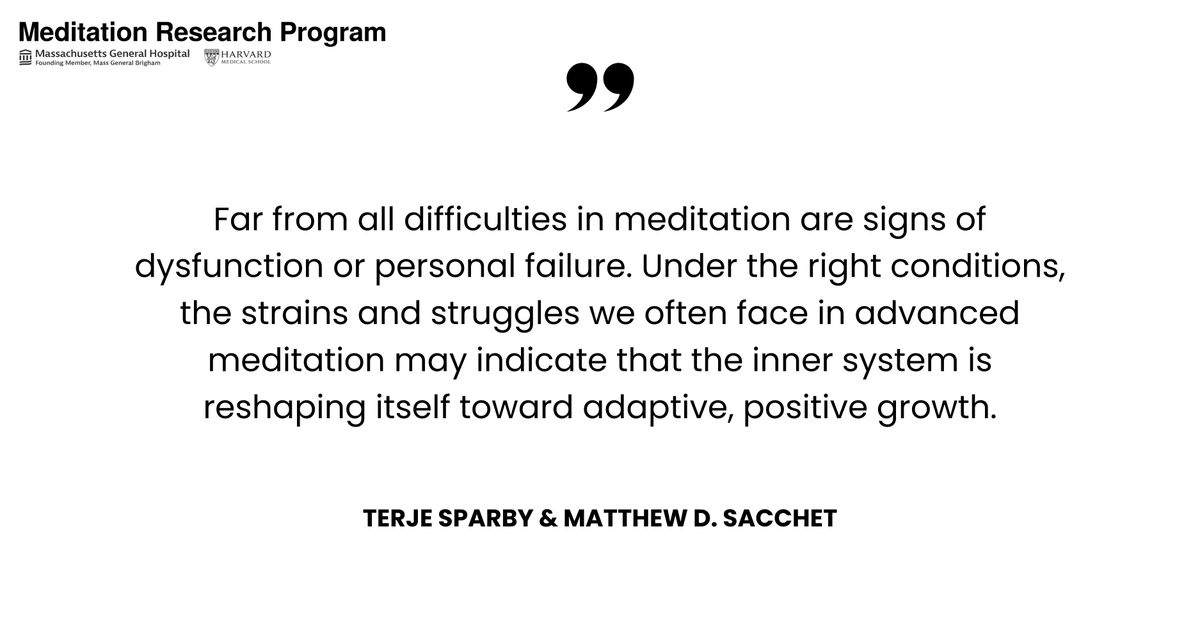
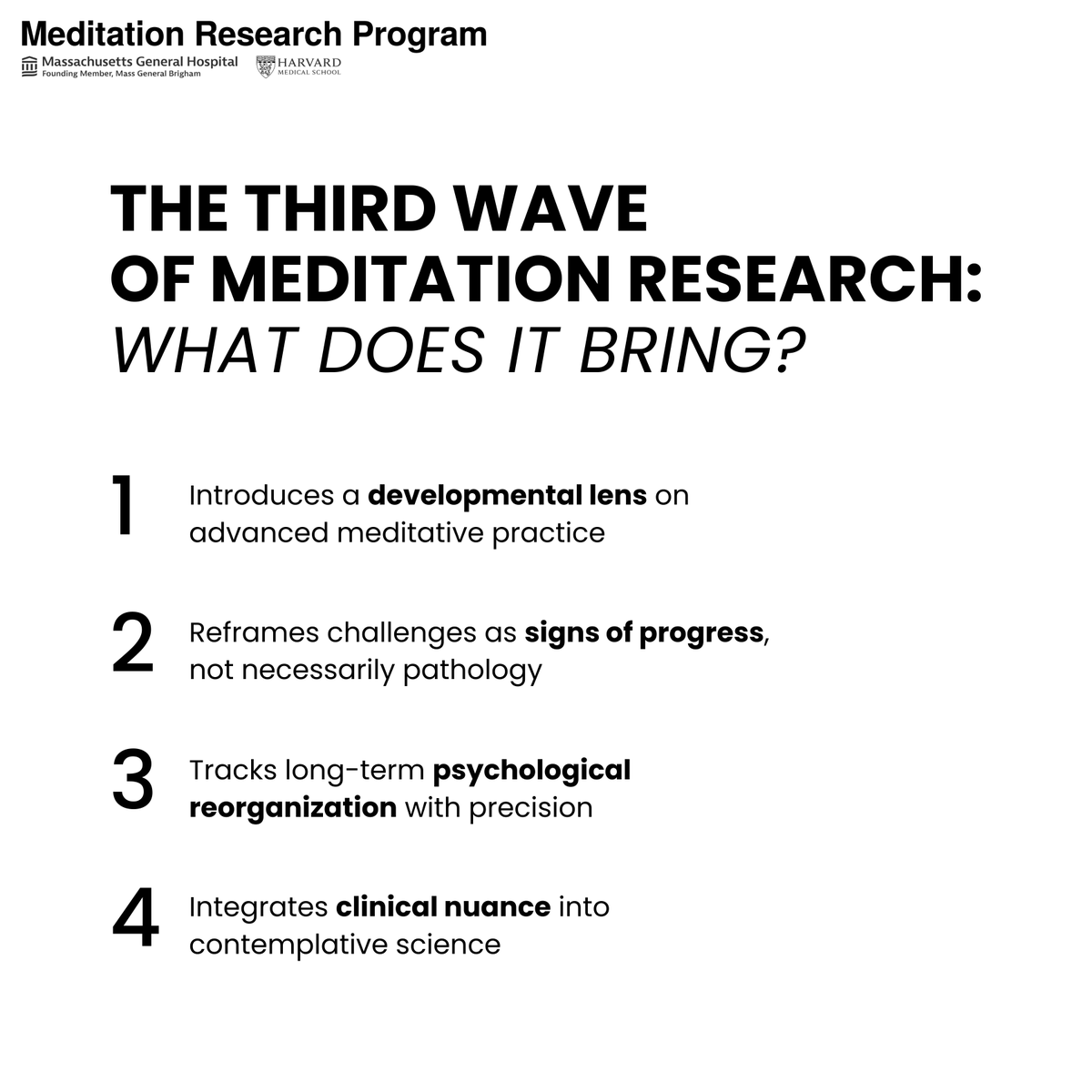
The third wave is also the first to focus on a nuanced, systematic look at the difficulties and challenges often encountered on the meditation path. While these experiences might be viewed as “negative” from a Western psychological standpoint, we argue that under the right conditions, they may actually be essential signs of meditative and psychological growth.
To borrow a metaphor: muscle strain and pain during and after training aren’t simply signs of physical weakness, but rather tell you that growth is happening. Similarly, certain meditation-related challenges might be developmentally appropriate responses to deep inner work. Unlike in physical training, however, these transformative effects often become possible only through our willingness to turn toward, stay with, and explore the difficult.
In our latest theoretical paper, my incredible colleague Terje Sparby and I suggest that these experiences can indicate a larger developmental arc: one where dips in energy, focus, functioning, or well-being are not necessarily regressions or pathologies, but telling signs of deeper processes of inner change and psychological reorganization taking place. Though not always linear or pleasant, these experiences may sometimes underlie what makes meditation so radically beneficial over time.
At the Meditation Research Program, we see human beings as capable of not only seeking pleasure and avoiding pain, but also of delaying gratification, and enduring challenges in service of a life of deeper meaning and the highest possible flourishing. We also believe that capturing the nuances and complexities of positive, negative, and growth-related experiences in advanced meditation is vital to the third wave of meditation research—as they may be inseparable from the development of advanced states, stages, and endpoints of meditation that aim at contributing to the reduction of suffering and increase of well-being.
May this work benefit many 🙏
The full PDF of the manuscript is on our website and available from the publisher:
https://t.co/8dtqrtlnSR
https://t.co/zyd8s6ux5B
https://t.co/4RovrpbGS4
Кстати, вопрос к антропологам, которые сотнями тусят у меня в комментариях.
Скажите, а корейский народ, он по натуре какой? Свободолюбивый или рабский?
Стартую новый курс с 17 ноября!
«Шесть врат к возвышенному: система методов созерцательной практики буддизма махаяны». https://t.co/03Wl6tcApg
Предвкушаю, какой это будет огонь, читайте описание и темы занятий по ссылке.
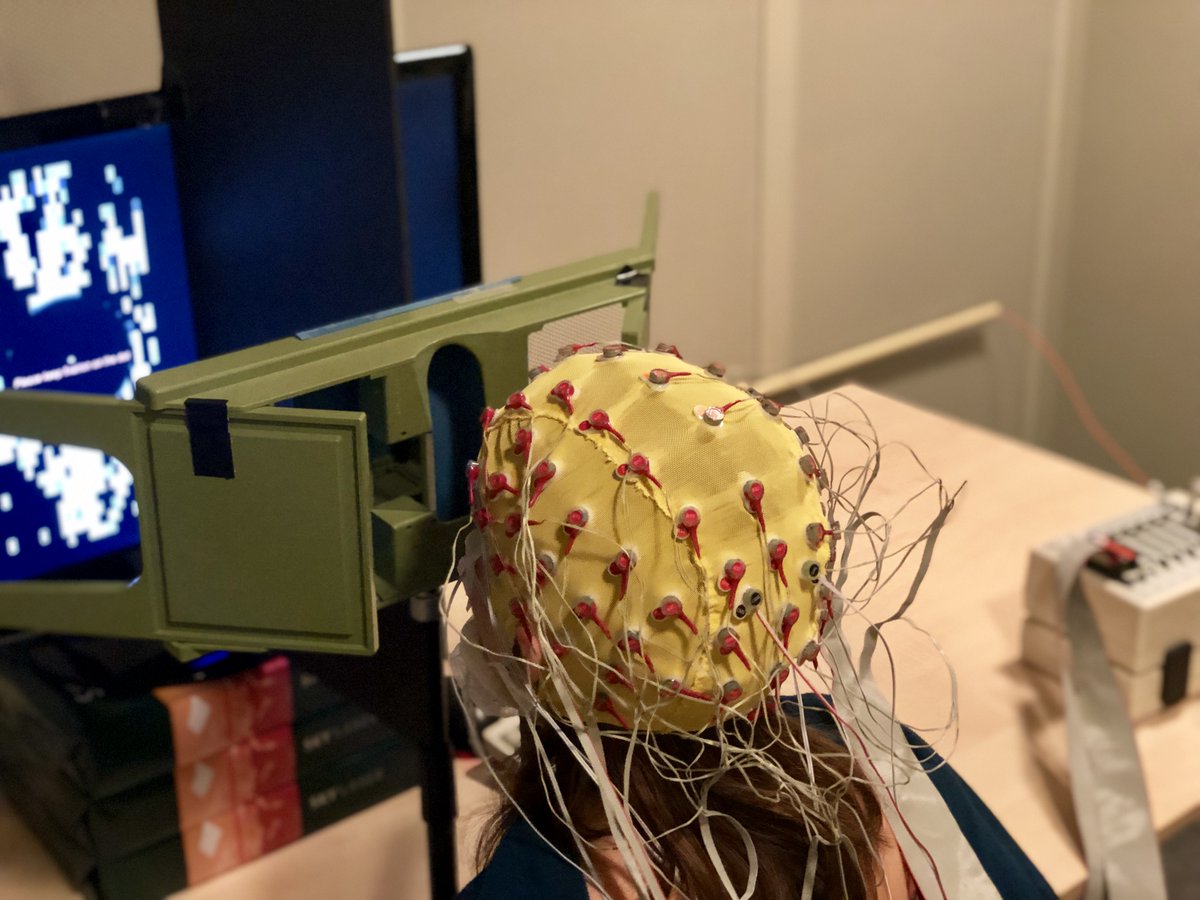
New paper! Something out of the box for me.
TRACKING RIVALRY WITH NEURAL RHYTHMS:
https://t.co/C9NJIvLITk
We quantify changes in perception during binocular rivalry using EEG at a ridiculously high level (up to r = .94). Here’s why it’s cool—a 🧵.
@HeleenASlagter @healey_evan
Два самых популярных вопроса прямо сейчас — «А что случилось?» и «Где вы были все эти восемь лет?»
Первый — название нашей новой программы. На второй научит отвечать новый ведущий «Навальный LIVE» Александр Долгополов в ее пилотном выпуске: https://t.co/vdmieoWCoE