Real-Time Egg Detection, Object Tracking & Counting with Computer Vision
The project uses a custom-trained YOLO26n model from @ultralytics combined with ByteTrack to detect and track individual eggs across video frames.
Dataset was collected from @roboflow universe
Small objects are harder to detect when high-resolution images are resized. 🔍
Ultralytics YOLO + SAHI uses sliced inference to detect objects in smaller image regions, helping identify details that might otherwise be missed.
Read more ➡️ https://t.co/GEXQYJeEUy
#Ultralytics #SmallObjects #VisionAI
Today we release Mirage: A 22 MB visual-language model that runs scene descriptions + object detection + OCR + segmentation + spatial relations analysis + extractions + decisions, in a single pass.
It can do all that in 74 ms on Samsung Galaxy S26 NPU or 107 ms on its CPU.
Mirage has a 7.8M encoder + a 40.8M decoder at 2bits, and describes images in English, German, French, Spanish, Italian, Dutch and Polish.
We trade general language capacity, to compete top small VLMs today (SmolVLM2-500M, LFM2.5-450M and Florence2-230m) on these tasks.
On 256 VQAv2 questions, feeding Mirage's structured output and full trace to text-only Qwen3-0.6B raised its score from 9.3 to 31.3 out of 100, without fine-tuning either model.
Read more and benchmark it yourself here:
https://t.co/QNlavPrHt2
Computer vision demo on warehouse footage to detect workers, PPE, and missing equipment across an entire video.
In this clip, the model processed 247 frames and flagged safety gear such as helmets, gloves, vests, boots, and goggles.
All this thanks to @ultralytics
@LudovicMamet@erik_kokalj@roboflow Train custom object detection model using RF-DETR to detect eggs,then combine OpenAI decision API to classfiy each detected eggs, That is it.
Maybe you can also connect it to a conveyor belt with diverter gate, this way any dirt or cracked egg gets send to different routes, etc
🚗 Turning satellite imagery into parking lot insights.
Draw an area → detect asphalt pavement → measure sq. ft. → detect parking stalls 🅿️
All in a few clicks with AI + computer vision.
#AI#ComputerVision#PropTech#GIS
You can search hundered of videos using by relying only on the vision aspect of it, no transcription & no metadata.
It is called mediasearch, we use open source CLIP from OpenAI to encode individual frames and store them as embeddings. That then used during the search phase by comparing them with the encoded query.
Mediasearch doesn't only return the video but also the actual scene and the timestamps.
Library https://t.co/1q2g4zDeD4
Api https://t.co/NyZEUi9YI8
dataset https://t.co/wyoXFcRxYX
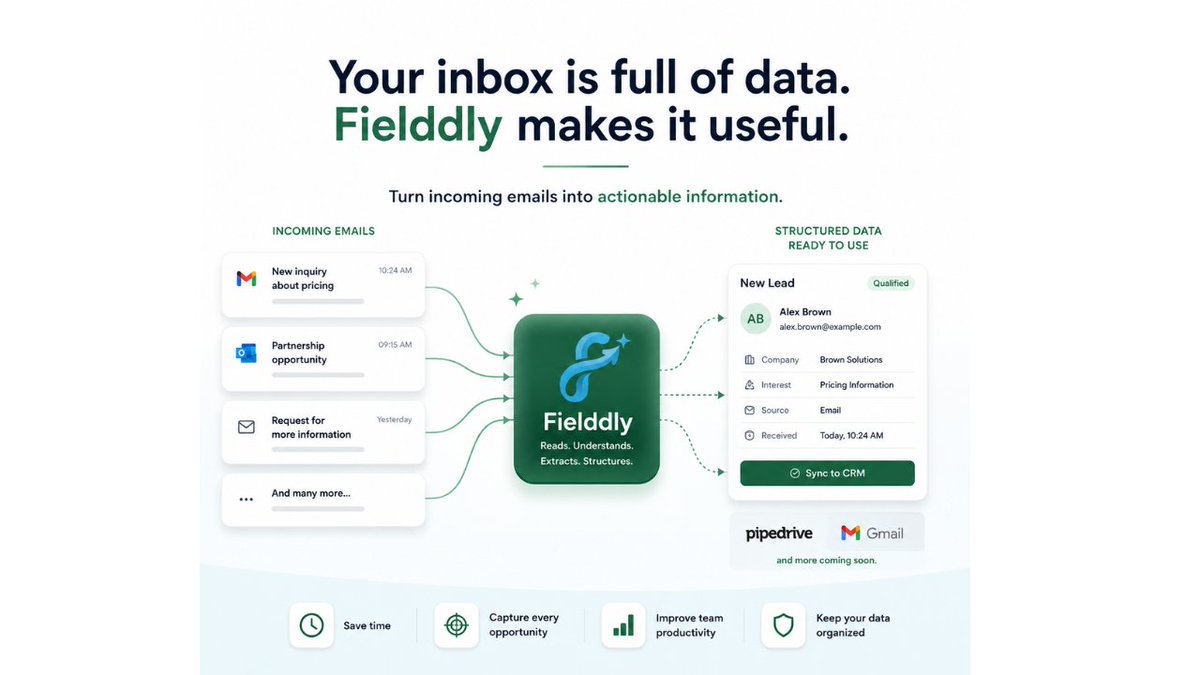
A lot of businesses have the same problem hiding in plain sight:
Their inbox is full of opportunities.
- Customer requests.
- Sales inquiries.
- Partnership opportunities.
- Support questions.
- People asking for more information.
And somewhere between the inbox and the CRM, things get lost.
Someone has to read the email, understand what it’s about, extract the important details, create a record, and make sure the right person follows up.
It’s repetitive work, but it matters.
That’s the problem we’ve been working on with Fielddly.
We’re building a platform that can understand incoming emails and turn the useful information inside them into structured data your team can actually work with.
Less copy-pasting.
Less manual data entry.
Fewer things falling through the cracks.
Still early days for us, but I’m excited about where this is going.
If your team still spends a lot of time moving information from emails into other tools, I’d love to hear how you deal with it today.
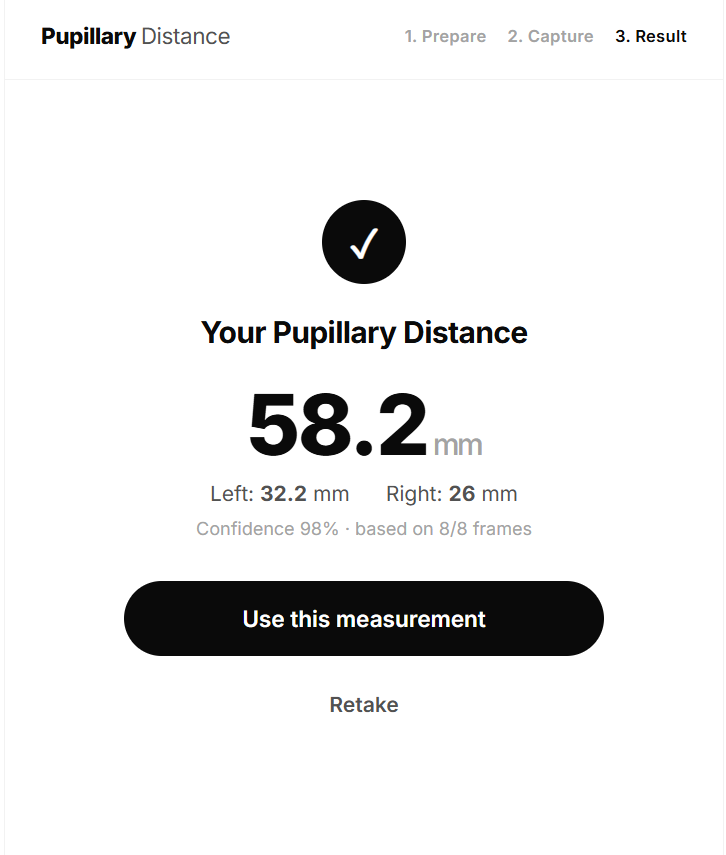
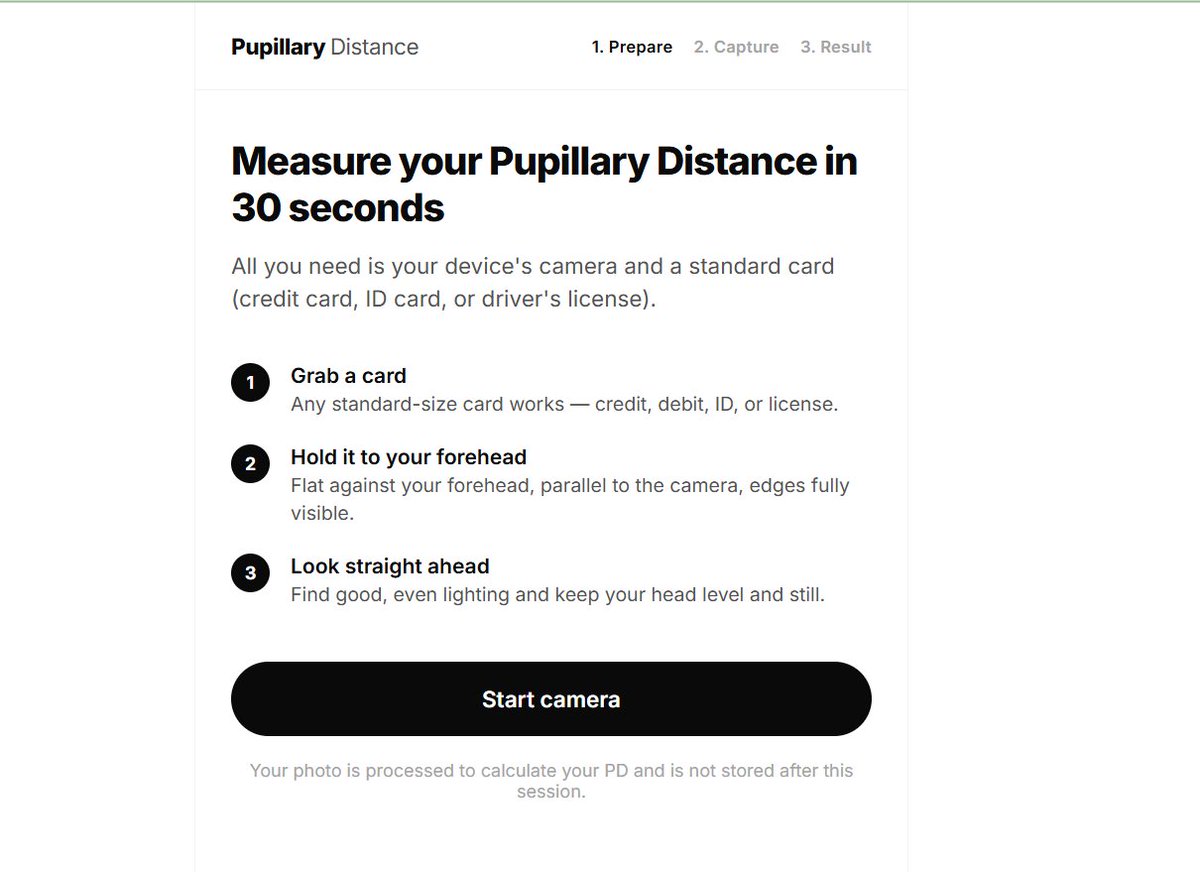
You know that eye measurement opticians take before you order glasses? I built a tool that does it with just your phone camera and a card( any with size of credit card).
Hold the card to your forehead, the camera does the rest ,a few seconds later you get your exact pupillary distance, no appointment needed.