Didn't end the season how we wanted, but I'm still so greatful we won a regional championship for the first time in 18 years! Thank you to @MWC_Baseball for an amazing 4-year journey that I wouldn't trade for the world!
Here are a couple milestones that I reached this season:
Our hearts are heavy today as we lost a member to our family! Cinco was one of the happiest young men you’d ever meet pure heart and soul ! Please take moment and say a prayer for his family and all effected
Rest in Love🕊️😔@GeorgeGouldsby
Just dropped a new podcast with @LattaDoug & @flowsdoc
This might be one of the most important conversations I’ve had on player development.
If you care about hitting, recruiting, or long-term development… read this ⬇️
Most players don’t fail because of mechanics.
They fail because of how they MOVE.
A few major takeaways:
• Movement patterns are developed VERY early
(We’re talking 4–8 years old… long before most people even think about “training”)
• By 12–15 years old, those patterns are often already set
Which is why it’s so hard to “fix” a 16–17 year old hitter later
• The biggest issue in youth baseball right now:
Kids aren’t moving enough
Less climbing
Less playing
Less problem-solving physically
More “instruction”
Less athletic development
• Why most hitters struggle in games (even if they look good in lessons):
Lessons = controlled
Games = chaotic
If you don’t have movement capacity…
you can’t solve problems in real time
It’s NOT about:
– Coiling the hip
– Scap loading
– Overthinking mechanics
Great hitters move naturally and efficiently
Not mechanically
• One of the most powerful concepts:
“Good movers go backside → land middle”
That’s it.
That’s the foundation of hitting AND throwing.
• Why so many kids lunge or “jump” at the ball:
They panic
They rush
They don’t trust their movement
Which leads to front-side dominance (and everything breaking down)
• The controversial one…
Doug would take the tee AWAY from most young hitters 😳
Because it often teaches bad movement patterns
(specifically front-side issues)
• Another big one:
More effort = worse swings
Most hitters are better at 50–70% effort
Why?
Because:
– They stay connected
– They sequence better
– They don’t muscle up
• Why strength training can actually hurt hitters:
Lifting = muscle-driven
Hitting = sequence-driven
If you train the wrong patterns…
your nervous system carries that into your swing
• The REAL separator in players:
Not strength
Not size
Movement efficiency + adaptability
• And maybe the most important part for parents:
Stop chasing quick fixes
There is no:
– Magic drill
– Perfect cue
– Instant solution
Development is LONG-TERM
If you’re a parent, coach, or player…
This episode will completely change how you think about development.
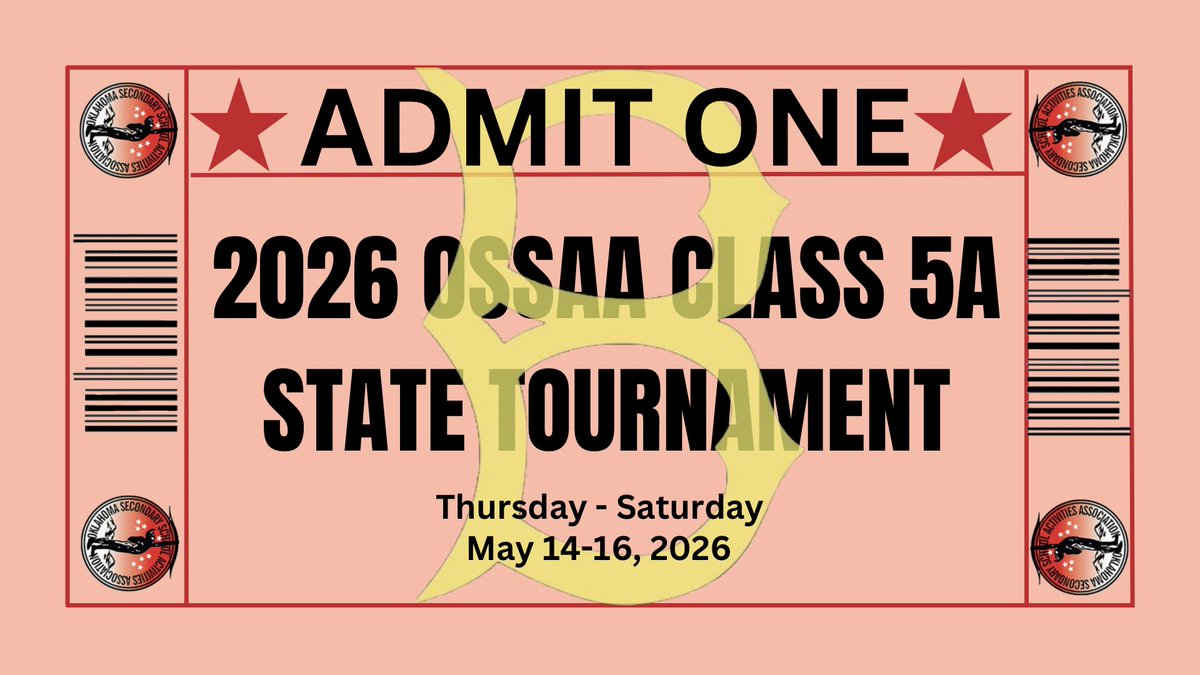
𝗢𝗦𝗦𝗔𝗔 𝗖𝗟𝗔𝗦𝗦 𝟱𝗔 𝗥𝗘𝗚𝗜𝗢𝗡𝗔𝗟𝗦
Midwest City wins the “if” game in the Duncan Regional and punches their ticket to the Class 5A State Tournament
#OKPreps | #TicketPunched🎟️
Mookie Betts has been working with Yada-Sensei and adopted Yoshinobu Yamamoto’s training strategy of throwing javelins:
“If Yoshi can do it, and you see what he’s doing, I figured I can be a Yoshi at shortstop.”
“I don’t throw it nearly as far as Yoshi, but from when I started to now, it’s like a night-and-day difference. Even me just throwing the ball across the diamond, it’s a lot different than last year in a very positive way.”
🎥: SportsNet LA
@redturn2 Adjustability - “riding” to the off speed part two. Maintaining front side in move to allow hitter to hit through spin, rather than open hips early forcing bat around ball and dramatically reducing possible contact points. Hitter can hold the line.
Good move down for the fastball-able to ride for the off speed holding the ground while maintaining front hip allows him to hit through spin. Timing, good move, and direct hand path create adjustability