DAILY SIGNAL: Secretary of State Marco Rubio is changing how the State Department will determine leadership roles in the U.S. Foreign Service by putting merit over seniority. https://t.co/fptsEspL2l
Why has #Kenya emerged as one of #East#Africa’s most influential states despite lacking the region’s largest population or strongest military? My latest article argues that Kenya’s regional influence is built not simply on economic growth, but on its ability to organise finance, logistics, technology, and institutions into a system that increasingly shapes #East #Africa. Read the full article on Substack. https://t.co/Sabnn1boUF
Nairobi becomes the convening point for one of the most consequential conversations for Africa in this generation. More than 30 Heads of States, coming together to discuss 7 agenda themes with 1 vision - Taking #AfricaFoward.
We have spent months working to ensure that when the world comes to Nairobi on 11 and 12th May, Africa arrives as a continent with a clear vision of its priorities, and the partners committed to advancing them alongside us.
This is a Summit of substance, one with the potential to define a new chapter in Africa’s global engagement.
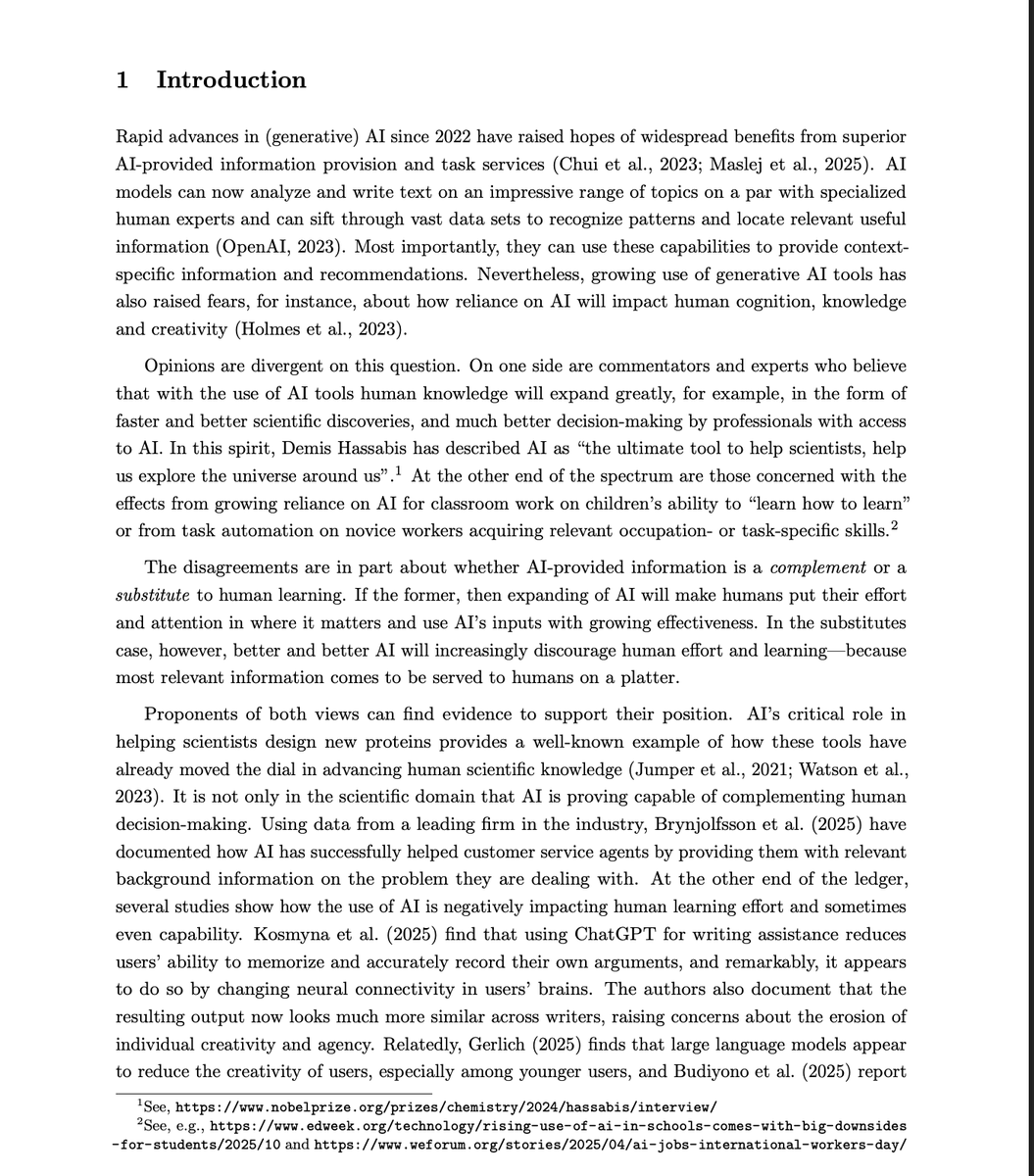
MIT's Nobel Prize-winning economist just published a model with one of the most alarming conclusions in the AI literature so far.
If AI becomes accurate enough, it can destroy human civilization's ability to generate new knowledge entirely.
Not gradually degrade it. Collapse it.
The paper is called AI, Human Cognition and Knowledge Collapse.
Authors: Daron Acemoglu, Dingwen Kong, and Asuman Ozdaglar. MIT. Published February 20, 2026.
Acemoglu won the Nobel Prize in Economics in 2024. He is not a doomer blogger. He is the most cited economist of his generation, and his models tend to be taken seriously by the people who set policy.
Here is the argument in plain terms.
Human knowledge is not just a collection of facts stored in individuals. It is a living system that requires continuous reproduction. People learn things. They apply them. They teach others. They build on prior work to generate new work. The entire engine of science, medicine, technology, and innovation runs on this cycle of active human cognition.
What happens when AI provides personalized, accurate answers to every question people would otherwise have to learn themselves?
Individually, each person is better off. They get correct answers faster. They make fewer errors. Their immediate outcomes improve.
But they stop doing the cognitive work that sustains the collective knowledge base.
Acemoglu's model shows this produces a non-monotone welfare curve.
Modest AI accuracy: net positive. AI helps at the margin, humans still do enough learning to sustain collective knowledge, everyone gains.
High AI accuracy: net catastrophic. AI is accurate enough that learning yourself feels unnecessary. Human learning effort collapses. The knowledge base that AI was trained on is no longer being refreshed or extended. Innovation stalls. Then stops.
The model proves the existence of two stable steady states.
A high-knowledge steady state where human learning and AI assistance coexist productively.
A knowledge-collapse steady state where collective human knowledge has effectively vanished, individuals still receive good personalized AI recommendations, but the shared intellectual infrastructure that enables new discoveries is gone.
And the transition between them is not gradual.
It is a threshold effect. Below a certain level of AI accuracy, society stays in the high-knowledge equilibrium. Above that threshold, the system tips. And once it tips, the collapse is self-reinforcing.
Because the people who would have learned the things that would have pushed the frontier forward never learned them. And the AI cannot push the frontier on its own. It can only recombine what humans already knew when it was trained.
The dark irony at the center of the model:
The AI does not fail. It keeps giving accurate, personalized, useful answers right through the collapse.
From the individual's perspective, nothing looks wrong. You ask a question, you get a correct answer.
But the collective capacity to ask questions nobody has asked before, to build the frameworks that generate new knowledge rather than retrieve existing knowledge, that capacity is quietly disappearing.
Acemoglu has been the most prominent mainstream economist skeptical of transformative AI productivity claims. His prior work found that AI's actual measured productivity gains were much smaller than the technology industry projected.
This paper is a different kind of warning. Not that AI will fail to deliver promised gains.
But that if it succeeds too completely, it will undermine the human cognitive infrastructure that makes long-run progress possible at all.
The welfare effect is non-monotone.
That is the sentence worth sitting with.
Helpful until it is not. Beneficial until it crosses a threshold. And past that threshold, the same accuracy that made it so useful is precisely what makes it devastating.
Every student who uses AI instead of working through a problem is a data point.
Every researcher who uses AI instead of developing intuition is a data point.
Every generation that grows up with accurate AI answers and no incentive to develop deep domain knowledge is a data point.
Individually rational. Collectively catastrophic.
Acemoglu proved this is not just a cultural concern or a vague anxiety about screen time.
It is a mathematically coherent equilibrium that a sufficiently accurate AI system will push society toward.
And there is no visible warning sign before the threshold is crossed.
If you get time for a documentary, MUST watch 1 and 3
1. The Savings Expert: Passive Income Is A Scam! Post-Traumatic Broke Syndrome Is Controlling Millions, https://t.co/g8qmftGqkU
2. Nairobi’s Wash Wash Kings: Corruption, Drugs & Dirty Deals; From Gold Scams to Fake Dollars, https://t.co/SOxg5yyQs7
3. STOP Being Tracked: The Terrifying Truth About Your Phone, Digital Footprint & Personal SAFETY, https://t.co/kQMoj0PKE4
4. No.1 Brain Scientist: Your Brain Is Lying To You! Here's How I Discovered The Truth, https://t.co/LB3mLO05r5
My latest #TharoorThink column looks at the @un on the eve of its 80th birthday, analyses its continued relevance & concludes that we still need it despite its shortcomings
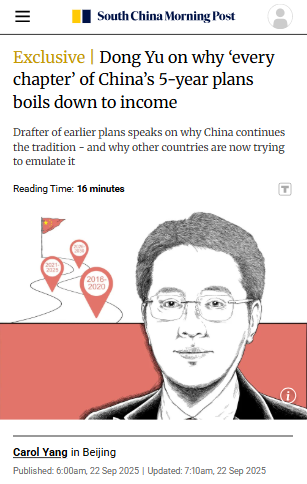
It's exceptionally rare for former Chinese officials to reveal the inner workings of the system, all the more so when it involves detailing the mechanics of China's famous 5-year plans.
Dong Yu, interviewed by the SCMP (link: https://t.co/q3inkXE8qz) helped draft China's 11th, 12th, and 13th five-year plans and he's now VP of the China Institute for Development Planning at Tsinghua University. In other words, the guy knows China's planning process in and out, both in theory and in practice.
I'll let you read the interview in full for yourself, but here were the parts that stood out for me:
1) What I hadn't realized, but which makes complete sense when you think about it, is the extent to which 5-year plans are not as much a mere forecasting exercise or even an economic blueprint but first and foremost a mass behavioral/psychological exercise.
Dong Yu makes 3 points around this:
- He emphasizes that "planning targets are not the same as forecasts. A target is not only based on technical calculations, but also takes into account how it shapes expectations." In other words the targets have a psychological dimension that's critical in determining actual outcomes, they have a self-fulfilling dimension.
- He says that "today, we have placed expectations in a position of unprecedented importance, and much of our work now revolves around shaping these expectations." Which basically means that to him planning is fundamentally about managing collective psychology.
- Lastly he argues that "the more uncertain the future feels, the more vital planning becomes... It is precisely in such moments that planning can provide much-needed stability and direction." In other words, the mere existence of a plan helps create psychological stability that enables economic activity.
2) The elaboration of the plan is more bottom-up than top-down.
This may come as a surprise to many people still under the impression that everything in China is decided in Beijing (or even solely by Xi Jinping himself 😅) - especially when it comes to the country's 5-year plans which are largely seen as a top-down exercise - but as Dong Yu reveals the process is surprisingly bottom-up.
For one thing the national plan is based on the targets set by China's provinces, which are often defined by the provinces themselves beforehand in the process.
The proactiveness of local governments is what Dong Yu highlights as "one of China's key strengths": he says that they "conduct extensive analyses and forecasts on industrial development" in their jurisdictions, and that this "widespread engagement and effort from top to bottom" is essential to the planning process.
3) The 5-year plan is not only about planning, but is part of a "full process, from formulation to implementation" which is intrinsically linked to China's political system, specifically its capacity to deliver "consistency and stability in carrying out long-term plans."
Dong Yu says that means replicating the 5-year plan process is very difficult for other countries: "Other countries are trying to learn from this model, but so far they mostly copy the form of the plans or isolated policies. The full process, from formulation to implementation, is unique and not easy to replicate."
4) He says that there is one key overarching objective behind all 5-year plan chapters: they are all fundamentally organized around improving people's living standards ("household income") rather than pure technocratic objectives around industrial targets or infrastructure.
There are of course many various ways to go about this and his personal philosophy is that "we shouldn't only focus on slicing the pie; we must also think about how to make a bigger pie. Only when the pie grows larger does dividing it become easier."
5) The are many other interesting tidbits in the article but I'll end on what Dong Yu says about both "involution" (cutthroat zero-sum competition) and "overcapacity", which are two hot topics today.
On involution, a problem Xi Jinping recently highlighted as a one of the key issues to solve for China (https://t.co/2XWu49HkNF), Dong Yu says that it is a difficult balance to strike because "part of what we call involution is market-driven competition, and we do not need to see it as entirely negative."
As he puts it the goal isn't to eliminate competition but to ensure "the sound development of the ecosystem by preventing excessive competition from eroding the growth prospects of smaller enterprises." To him the real issue with involution is when the cutthroat competition "undermines small and medium-sized businesses, especially in sectors that are related to people's livelihoods."
On "overcapacity", it looks like Dong Yu doesn't quite believe in the narrative - which is largely driven by the West. As he puts it: "This 'overcapacity' is largely a mischaracterisation when viewed in the context of global supply and demand."
Using electric vehicles as an example, he argues that "Chinese products have already far surpassed their competitors in both quality and value for money, yet their current sales volume and market share remain below what they should achieve due to various external barriers." He asks rhetorically: "Are other companies or governments really suggesting that people should just accept higher prices and lower-quality goods?"
His basic point: overcapacity is a Western narrative to protect inferior, more expensive products from legitimate market competition.
That's it, please go read the entire interview (https://t.co/q3inkXE8qz): again it's very rare to hear a former Chinese official speak so openly about the inner workings of the system; we should have more of this!
Can't even describe how much I hate what AI has done to the process of grading student work. I hate finding it, I hate the paranoia it fosters, I hate the confrontations with students who have used it. Nothing else in my experience has ever changed my job this much for the worse
Djibouti's Ali Youssouf Is New AU Commission Chief: What You Know And Don’t Know About The AU And Its Forerunner Organisation of African Unity (OAU)
Djibouti’s Foreign Minister Mahamoud Ali Youssouf just won election as the African Union Commission's 14th chairperson in Addis Ababa, Ethiopia. He takes over from Chad’s Moussa Faki Mahamat.
One of the peculiar things about the AU/OAU is that while most of its leaders have historically disliked or disregarded presidential term limits, no one has ever led it for more than the prescribed two terms. The shortest tenure was by Ethiopia's Kifle Wodjo, its founder secretary-general, who held the job for only 15 months.
Moussa Faki and Guinea's Diallo Telli are the only ones to have led for two terms. Ali Youssouf becomes only the 4th person from outside West/Central Africa axis to head the AU, and its precursor the Organisation of African Unity (OAU).
A largely patriarchal organisation, South Africa's Nkosazana Dlamini Zuma is the only woman to ever have led it. Cameroon is the only country to have provided successive secretaries-general of the OAU. It has never been led by someone from Arab-speaking North Africa #AUCElections.
PREVIOUS HEADS OF THE OAU/AU:
2025 (just elected) – Mahamoud Ali Youssouf, Djibouti
2017–2025 – Moussa Faki Mahamat, Chad
2012–2017 – Nkosazana Dlamini Zuma, South Africa
2008–2012 – Jean Ping, Gabon
2003–2008 – Alpha Oumar Konaré, Mali
2001–2003 (OAU–AU transition years) – Amara Essy, Côte d'Ivoire (interim)
1989–2001 – Salim Ahmed Salim, Tanzania
1985–1989 – Ide Oumarou, Niger
1983–1985 – Peter Onu, Nigeria
1978–1983 – Edem Kodjo, Togo
1974–1978 – William Eteki, Cameroon
1972–1974 – Nzo Ekangaki, Cameroon
1964–1972 – Diallo Telli, Guinea
1963–1964 – Kifle Wodjo, Ethiopia
The discussion of this issue requires some humility. IMHO, the main issues are: the citizenship question - and the rights thereof - for Kinyarwanda-speaking Congolese, territorial integrity of the DRC, security guarantee for Rwanda, governance of minerals exploitation, and the limitation of international community to resolve conflict and keep peace. At the end of it all, the tragedy is the suffering of innocent civilians.
There are three types of Kinyarwanda-speaking people in DRC: the nationals, who were already in the current DRC territory when it was demarcated as Congo in 19th century; migrants, who, either voluntarily or through compulsion, crossed the border during colonial time; and refugees, who moved during post-independence era. Vis-à-vis Rwanda, the nationals and migrants became simply a cultural diapora and refugees formed a political diaspora, each with attendant initiatives.
It is now settled, as elucidated eloquently by Mwalimu Nyerere, that at least the nationals are Congolese whose civic rights can’t be tentative or uncertain. These rights, and the space for their pursuit, reside in the political domain within the Congolese polity. There’s also a case to be made for migrants, especially labourers who were transplanted into the DRC through cynical Belgian machinations (e.g manufactured famine as push factor to achieve labourers requirements).
In 1960, just before independence, the Belgians organised a roundtable in Brussels which was attended by Congolese political leaders. (I love the beautiful tune about the roundtable, “Table Ronde”, by Grand Kalle who performed at the roundtable where the young Dr. Nico’s genius at the solo guitar shone).
Two things about the roundtable are important as we try to make sense of what’s currently going on: first, the Kinyarwanda-speakers were present at the roundtable as Congolese. Secondly, the issue of citizenship was tabled but not resolved. Therefore, Congo received independence without resolution of this critical matter.
Since then, there has been several attempts to resolve it - with varying motivations, outcomes and implications.
In the end, the question remains: what does belonging to a polity, and securing protections through it, means - and how far are people willing to go to achieve that. And what does civic participation - through civic, not ethnic, citizenship - means.
Also, in the end, it’s all about sovereignty and territorial integrity, which must partly include state capacity to govern and administer it - and manage the resources therein for peoples’ benefit.
It’s about African solidarity when we encounter threats to peace and security within our countries.
It’s about holding each other to account - impartiality and impactfully - when we violate peace.
It’s about the effectiveness of our mechanisms for conflict resolution and peace-building - and the political will to make peace.
The joint EAC-SADC Summit is a great opportunity. H.E @SuluhuSamia consistently insists on getting to the “root cause”. There’s hope that the Summit will not just bandage the boil. The Congolese civilians have suffered for far too long.
Scanning past negotiations/agreements, the contours of the permanent solution exist:-
1. Durable ceasefire with muscular enforcement and verification capabilities to protect civilian lives and livelihoods.
2. Complete, permanent and verifiable disarmament and demobilisation of ALL armed groups.
3. Sorting out the citizenship question and the civic rights of Kinyarwanda-speaking Congolese.
4. A regionally-guaranteed and enforced compact on non-violability of sovereignty and territorial integrity - and security guarantees - for both Rwanda and DRC.
5. A globally-enforced, Kimberly Process-type agreement on governing the ethical sourcing, processing and sale of minerals from DRC.
6. Deepened regional integration, with focus on joint regional economic initiatives, where the political and economic cost of conflict is severe.
Why do we betray ourselves to keep others happy?
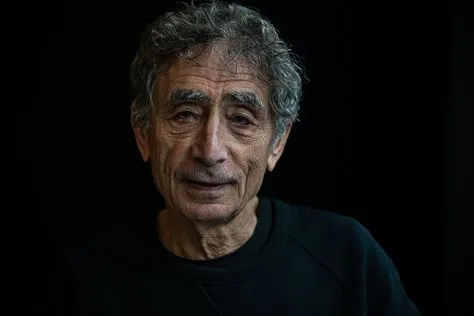
Gabor Maté calls this pattern the silent killer of authenticity
Let’s unpack this life-altering pattern—and learn how to break free.
I penned my thoughts on Nigeria’s foreign policy, highlighting its role in promoting peace and prosperity as both a constitutional obligation and a pragmatic manifesto pledge.
Read: “Foreign Policy and the Path to Peace in a Dangerous Neighbourhood”
https://t.co/QtOeSxDRix
Via @PremiumTimesng
President @WilliamsRuto was in Port-au-Prince, Haiti, yesterday to assess the progress of the MSS mission, boost the morale of Kenyan police officers stationed there, and engage with Haiti's leadership under the Transitional Presidential Council.
Since their deployment three months ago, the Kenyan contingent, working alongside the Haitian National Police, has made significant progress, including:
- Reopening the airport.
- Reclaiming the main hospital in Port-au-Prince.
- Securing the National Palace.
- Reopening critical roads.
- Facilitating the return of over 100,000 Haitians.