#MoneyIsMoving
The Municipal Employee Pension Fund bought this Nicholway asset for R1.1 billion in 2022 and renamed it Winifred Mandela Precinct
Which tenant do you love visiting here ?
Press Council Appeals Panel dismisses Mr Collins Letsoalo’s application for leave to appeal against the Sunday Times.
The Ombud’s ruling stands. No prospects of success shown.
To read detailed ruling, click https://t.co/b82Yd65Of3
#MediaFreedom#PressCode#PressCouncilSA
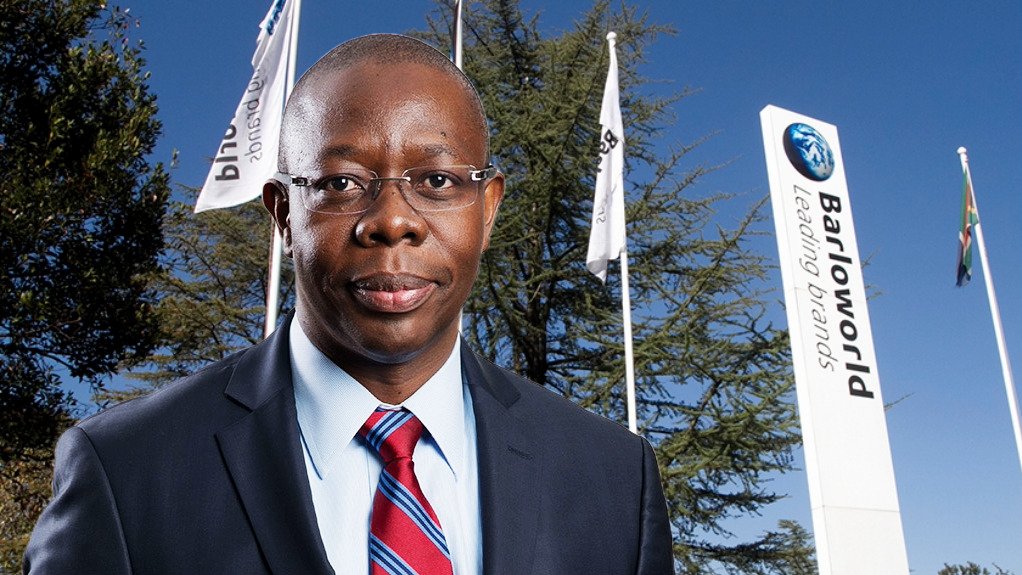
Barloworld’s Buyout: A Case Study in Leadership, Ownership, and Economic Transformation
Dominic Sewela, the Group CEO of Barloworld Limited, is at the center of one of South Africa’s most high-profile corporate transactions. Leading a R23 billion buyout of the very company he helms, Sewela has drawn both praise and scrutiny—a testament to the scale and significance of this deal.
A Chemical Engineer by training, Sewela is far from an ordinary corporate executive. He is a seasoned business leader with over 30 years of experience spanning the energy, petroleum, oil & gas, and agricultural sectors. His track record includes:
Co-founding Exel Petroleum, South Africa’s first wholly black-owned fuel retail company.
Playing a key role in establishing the African Mineral and Energy Forum (AMEF), advocating for black participation in the industry.
Now, in 2025, he is leading an ambitious buyout that will transition Barloworld from a publicly traded company to a private, Black-owned industrial giant.
From Executive to Ownership: Sewela’s Journey to the Buyout
Sewela’s rise to the top of Barloworld Limited was no accident. His leadership journey is marked by progressive responsibility and deep operational expertise:
-2007-2011 – CEO of Barloworld Equipment
-2011-2012 – Promoted to Chief Operating Officer (COO) of Barloworld Equipment
-2012-2016 – Appointed CEO of Barloworld Equipment
-2016 – Became Deputy CEO of Barloworld Limited
-2017-Present – Appointed Group CEO of Barloworld Limited
Sewela’s remarkable leadership is no coincidence. Born in Soshanguve, a diverse community near Pretoria, his entrepreneurial journey began early. Confronted by challenging family circumstances, he launched his first business—selling peanuts at school. This early foray into entrepreneurship, coupled with the powerful influence of the women in his family influenced his approach to diversity.
Who Is Buying Barloworld?
The entity leading this transaction, Newco, is a newly formed company set up to acquire 100% of Barloworld. The key players in the buyout are:
-Dominic Sewela, who has spent nearly two decades shaping Barloworld’s success.
-The Zahid Group, a Saudi-based industrial giant that already owns 18.9% of Barloworld and brings long-term strategic backing.
What we can conclude so far is that this is a fully funded, commercially driven transaction that aligns with global best practices, even those typically seen in management buyouts (MBOs).
Breaking Down the Deal Structure
This transaction is being executed through a structured, legally compliant process:
a) Scheme of Arrangement – If 75% of shareholders approve, all must sell their shares at R120 each, and Barloworld will be delisted from the JSE and A2X stock exchanges
b) Standby Offer – If the Scheme fails, individual shareholders can still sell their shares at R120, but Newco only has to complete the purchase if at least 90% accept.
If neither condition is met, Barloworld remains a listed company, ensuring that minority shareholders retain their stakes.
Is the R120 Share Offer Fair?
Some investors argue that the R120 per share offer undervalues Barloworld, but independent financial analysis suggests otherwise:
💰 66% premium over Barloworld’s share price before the deal was announced.
💰 83% premium over the 30-day average share price before the buyout offer.
💰 Rothschild & Co SA, an independent financial advisor, valued Barloworld between R105.50 and R119.40 per share—meaning the R120 offer exceeds the highest valuation range.
It is worth noting that Newco has already secured R17.2 billion in bank guarantees, confirming the financial viability of the transaction.
Who Opposes the Deal, and Why?
One of the biggest critics of the transaction is Silchester International Investors, a UK-based firm that holds a 17.7% stake in Barloworld.
Silchester’s main concerns:
🔹 The offer price should be at least R130 per share.
🔹 Sewela’s dual role as CEO and buyer raises governance questions.
🔹 The 90% acceptance threshold for the standby offer creates uncertainty.
While these concerns are valid from a shareholder activism perspective, it is important to view them in context:
🔹 Foreign investors have historically controlled South Africa’s industrial giants, reaping financial benefits while contributing little to local economic transformation.
🔹 Silchester’s opposition appears financially motivated, with a focus on extracting a higher payout rather than prioritizing Barloworld’s long-term strategic future.
Ultimately, South African shareholders must decide whether they prioritize short-term returns or long-term transformation.
Governance, Conflict of Interest, and the Role of Independent Oversight
Given Sewela’s involvement as both CEO of Barloworld and leader of the acquiring consortium, concerns about corporate governance and conflicts of interest have emerged.
However, safeguards are in place:
✔️ Barloworld’s independent board, separate from Sewela, reviewed and approved the deal.
✔️ Rothschild & Co SA, an independent advisor, confirmed that the offer is fair.
✔️ JSE and regulatory authorities are overseeing the transaction for compliance and transparency.
This ensures that the deal is conducted ethically and in line with global corporate governance standards.
Why This Deal Matters for South Africa’s Economic Transformation Agenda
For decades, Black executives have led South African companies but rarely owned them. This deal changes that.
🔹 The Barloworld Foundation remains a shareholder, reinforcing broad-based empowerment.
🔹 The transaction aligns with South Africa’s transformation agenda, ensuring that Black leadership is not just symbolic, but structural.
🔹 The Competition Commission is reviewing the transaction’s impact on Black Economic Empowerment (BEE), ensuring that it contributes to broader economic inclusion.
This buyout is not about political rhetoric—it is a market-driven, financially viable, and globally relevant transaction that sets a precedent for inclusive industrial ownership.
The Bigger Picture: A Blueprint for Industrial Transformation
This deal marks a pivotal moment in South Africa’s economic evolution.
🔹 It proves that Black executives can transition from management to ownership.
🔹 It signals to global markets that transformation and financial performance can co-exist.
🔹 It challenges the status quo, where foreign shareholders dominate South Africa’s industrial giants.
What we can conclude so far is that this is a fully funded, commercially driven transaction that aligns with global best practices, even those typically seen in management buyouts (MBOs). Why? Because someone with Sewela’s depth of experience is well-positioned to ensure a smooth transition with minimal disruption to employees and stakeholders. This is not a risky startover led by outsiders with no industry expertise—it is a strategic evolution under a leader who knows the business inside out.
The real question is: Do we want to keep business as usual, or do we embrace a future where South Africa’s economy reflects its people?
#AskAsanteOnBoards
23 year career ends in questions? Will these questions ever be answered? NOMBASA TSENGWA was the former President of the Minerals Council, past CEO Exxaro Resources. She spoke EXCLUSIVELY to IWA.
Read interview
https://t.co/MXn3xlvwZR
Download Magazine
https://t.co/gMDN2bbt9Y
ON BOARD APPOINTMENTS : WHILE YOU WAIT TO BE FOUND, SOMEONE LESS EXPERIENCED IS GETTING APPOINTED
Nominating committees and governance advisors operate with an implicit framework that is rarely made explicit to candidates.
In the years since introducing placement as part of our board director offering, and as our placement partner network has grown, one of the strongest pieces of feedback we consistently receive is that our ability to train, profile, vet, position and recommend candidates for the evolving requirements of boards today is increasingly recognised as one of the strongest areas of value we bring to the market.
That work has taught us something important:
The gap between board training and board appointment is not always competence.
Very often, it is visibility.
Many professionals are trained but not yet positioned. That distinction is where appointments are lost.
FULL ARTICLE : https://t.co/FurBzAPFOX
Standard Bank’s focus is on serving our customers in line with the laws and regulations that govern South Africa’s financial sector.
All our decisions and actions are guided by our risk governance framework, internal policies and procedures, and compliance with legislation. These decisions are not guided by any other external influences or events but on the merits of each individual circumstance. If there is evidence of any of our processes not being followed, this will be dealt with immediately.
Standard Bank is committed to protecting client information and will not divulge any customer’s personal or account details in line with the provisions of the Protection of Personal Information Act (POPIA).
Any legal proceedings that are before the courts are generally a matter of public record.
If any customer believes we have not met these standards, they may escalate the matter to the independent Banking Ombud for review.
South African authorities said in November that they had received "distress calls" from 17 men who were trapped on the front line in Ukraine's Donbas region after being tricked into joining mercenary forces.
https://t.co/t2u7FZXFy6
[BREAKING] Public Protector finds the appointment of the head of Sanparks communication Johannes Louw was irregular. He did not meet the minimum requirements. Recommends judicial review of his appointment within 90 days.
#eNCA


![Sli_Masikane's tweet photo. [BREAKING] Public Protector finds the appointment of the head of Sanparks communication Johannes Louw was irregular. He did not meet the minimum requirements. Recommends judicial review of his appointment within 90 days.
#eNCA https://t.co/OsusNWQe9t](https://pbs.twimg.com/media/HA9GjSMWsAAAnTC.jpg)
![Sli_Masikane's tweet photo. [BREAKING] Public Protector finds the appointment of the head of Sanparks communication Johannes Louw was irregular. He did not meet the minimum requirements. Recommends judicial review of his appointment within 90 days.
#eNCA https://t.co/OsusNWQe9t](https://pbs.twimg.com/media/HA9Gi8hbsAQ0ewn.jpg)
![Sli_Masikane's tweet photo. [BREAKING] Public Protector finds the appointment of the head of Sanparks communication Johannes Louw was irregular. He did not meet the minimum requirements. Recommends judicial review of his appointment within 90 days.
#eNCA https://t.co/OsusNWQe9t](https://pbs.twimg.com/media/HA9GihLWsAAqaTz.jpg)








![Sli_Masikane's tweet photo. [BREAKING] Public Protector finds the appointment of the head of Sanparks communication Johannes Louw was irregular. He did not meet the minimum requirements. Recommends judicial review of his appointment within 90 days.
#eNCA https://t.co/OsusNWQe9t](https://pbs.twimg.com/media/HA9GjkCWsAAeq-O.jpg)


