Dairy sheep become part of the circular bio-economy, converting bio-ethanol by-products into high quality nutrition #jdairyres#openaccess#healthydairy https://t.co/cXv6PpTA4H
Julie Johnsen and colleagues report on cow/calf management systems in the latest #jdairyres and it's Open Access #AnimalWelfare#openaccess https://t.co/DRxyi5jEEN
@FIL_IDF Global dairy production is crucial if we are to feed our growing population. Submit your developing country dairy research to our #jdairyres Research Cluster issue to be published this Autumn
@FIL_IDF@ufvbr We are very happy that much of the research published in Journal of Dairy Research is first authored by women (57% in 2020), and we look forward to a day when the same is true for corresponding author (it was 45% in 2020)
The carbon footprint of milk compared to plant-emulsions is relatively low if you consider the nutrients.
Figure: CO2-footprint per nutrient density score of 11 nutrients.
Fig: Milk - Soy emulsion drink - almond drink - oat water - pea emulsion drink https://t.co/Hr72Insnfe
Calling all PhD students in dairy research: we can help your career development by publishing your Thesis Abstract on our Community Site: https://t.co/mIO5r2hWep #PhD#jdairyres
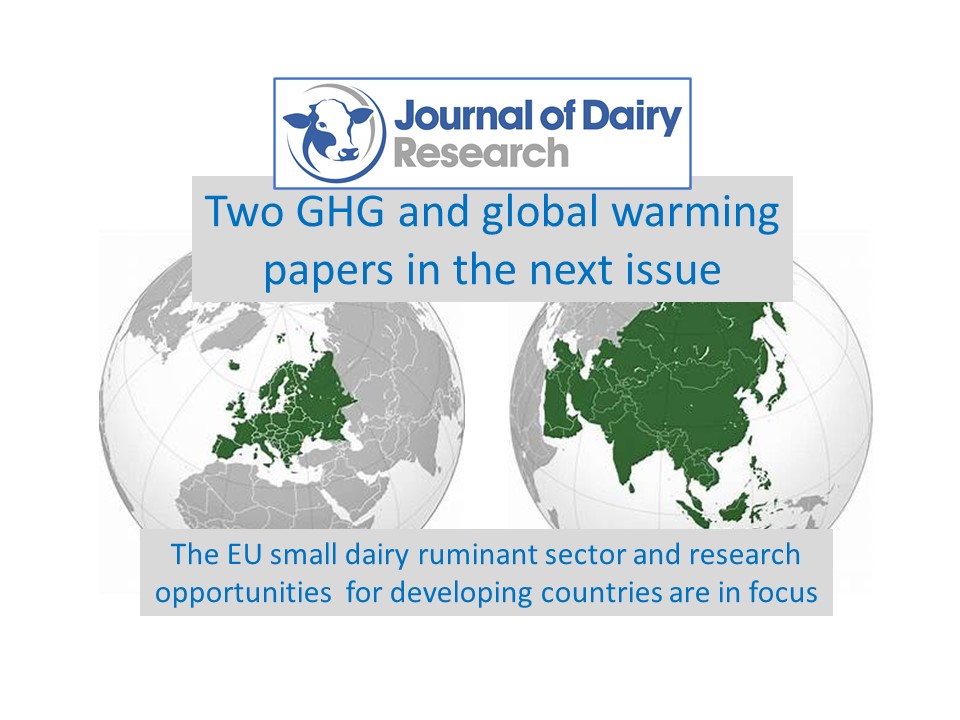
The next issue of JDR includes two studies related to dairying's impact on global warming. Read these and all the other abstracts Open Access at https://t.co/DRxyi5jEEN
Our latest #jdairyres Editorial introduces the "Impact Beyond Data" theme for 2021. Read this and all of our Editorials at https://t.co/fGb27Y3Zcz #dairyresearch