Some basic covid science🧵
- you can be infected without showing symptoms
- you can pass on infection without showing symptoms
- you can pass on infection before you start showing symptoms
- a negative lateral flow doesn’t mean you aren’t infected (lots of ‘false negative’ tests)
🧠 What if #LongCovid is, in part, a disorder of dopamine?
Our new commentary explores how disrupted dopamine signaling may help explain fatigue, brain fog, and autonomic dysfunction, and what this could mean for future therapies.
Open access link: https://t.co/jVBWg5CCi3
Our PBS has for decades done a great job in securing affordable medicines for Australians, but it's no longer working as it should. We wait an average of 3.6 years for new drugs to be listed. Only 26% of new medicines available in comparable countries are currently funded in Australia. Because of delays and failure to list drugs, nearly one in two Australians has to pay out of pocket for the 43% of prescribed medicines not listed on the PBS. Now, breast cancer survivors and women with endometriosis are unable to access an important treatment because of commercial considerations for the supplier, although the same medication is still available for men with prostate cancer.
The government has been working through the recommendations of the Health Technology Assessment Review for more than two years. It's acting too slowly, while Australians struggle to access and afford the health care they deserve. We need urgent PBS reform.
https://t.co/FUB1qNORUl
@RealCheckMarker I will never forget when we began hearing Covid causes more T cell death & loss of naive T cells than HIV.
Then The Establishment came for AJ & the people who were saying this, & everyone was silenced until a billionaire began saying it last year.
Surface cues shape procoagulant properties of amyloidogenic microclots
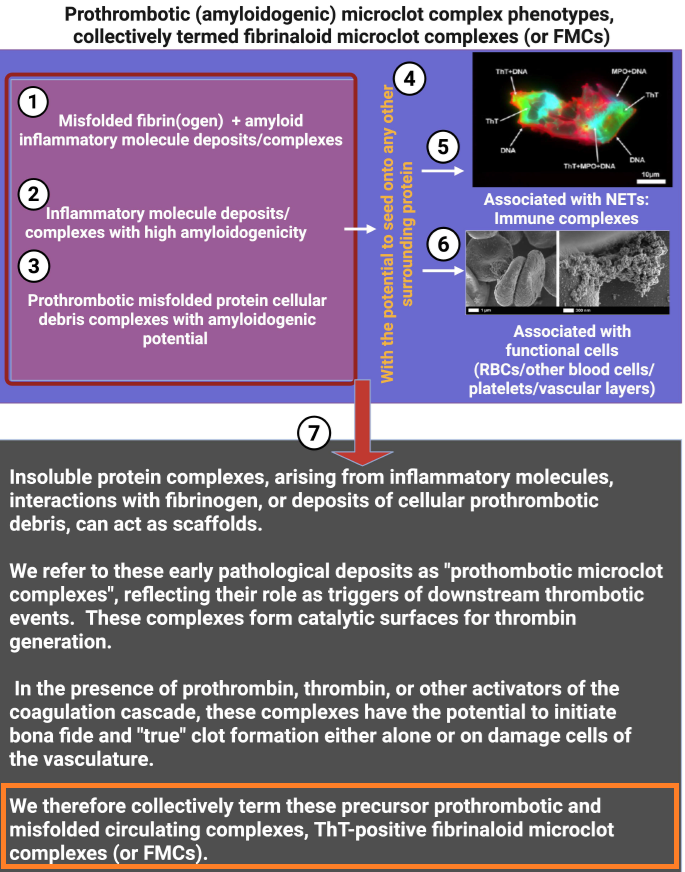
🚨YOUR ATTENTION: FMCs!
➡️This EVOLUTIONARY review synthesizes how cell-membrane surface changes during inflammation and cell death drive the formation of procoagulant, amyloidogenic microclots termed fibrinaloid microclot complexes (FMCs).
➡️FMCs are heterogeneous (1–200 μm), Thioflavin T (ThT)-positive complexes of fibrinogen, serum amyloid A (SAA), von Willebrand factor, neutrophil extracellular traps (NETs), and cellular debris/microparticles.
➡️The exceptional article introduces FMCs as a unifying conceptual framework that elegantly integrates membrane biophysics, protein misfolding, and coagulation, previously viewed in isolation, into a single membrane-centric model of thrombo-inflammation. Science, step by step!
➡️Its novelty lies in distinguishing these amyloidogenic, fibrinolysis-resistant complexes from both microparticles and canonical clots, while providing mechanistic evidence (PS exposure, SAA/fibrinogen cross-seeding, ThT positivity) for their role across inflammatory and post-infectious diseases.
➡️🤔By positioning FMCs as both pathological drivers and potential biomarkers/therapeutic targets (e.g, via anti-misfolding or NET-clearing strategies), the work offers a transformative lens for understanding and treating hypercoagulability in Long COVID and related syndromes, with broad implications for vascular medicine.
‼️In conclusion, this exceptional review offers a simple new way to understand how damaged cell surfaces during inflammation create tough, sticky microclots that clog blood vessels and drive long-lasting problems like those seen in Long COVID, opening the door to better tests and treatments that could help millions.
GREAT WORK, Thank you @resiapretorius https://t.co/ZHWPHNagnC and your additional explanation fig’s are really excellent!
https://t.co/meEfHpVcrS
Do you wonder why there are so few *serious* studies on COVID interventions?
The answer lies in how studies are reviewed.
1) Crony Studies. Sometimes a big monopoly is in charge of a lot of the funding. The people in charge of it are at "elite" universities and either have an impressive scientific history, or are small-p politically connected (mentees, collaborators) of those who do, sometimes almost no accomplishments to date. They may have had little to no vested interest in COVID as a grand-scale public health problem at any point, and often rarely after March 2022. They don't mask because they don't care about COVID much at all, and much less than other health issues. They have very little interest in what pwLC have to say. Since they don't view COVID as a serious problem, they devote little effort into trial design or even understanding basic issues like biomarkers, plausible mechanisms, or how to diagnose Long COVID in any reasonable way. There is very little oversight and no meaningful external review of said studies to determine whether they are worthwhile or how they should be improved to use funds responsibly. The studies inevitably fail. These studies should be high-risk, high-reward, so it's not all on them, but it seems like they are disproportionately set to fail.
2) Rigorous Science. Often, people submit rigorous studies to standard funders, where they undergo rigorous external review. What that looks like is that 2-5 reviewers read, score, and critique each application in detail, and then a larger group (who reviewed various other application on all sorts of topics) discuss each application, everyone scores them, and the top apps are funded. The problem is that just about any one of the 5 main reviewers can tank an application by giving it a bad score. Moreover, to get funded, an application needs a pretty good score from basically all 5 reviewers. If one reviewer is delusional (COVID is "over," etc.), the application will tank, and it's very rare to get 5 reviewers enthusiastic about COVID research. To be enthusiastic would mean admitting the scope of the problem, that they have made serious personal mistakes, that family members or co-workers or people in the community are dead or disabled because of their behavior, etc. Keep in mind, lots of lower-impact rare disease research with minimal quality-of-life impact commonly gets funded (good, fund it all!), so funding rigorous COVID research should not be a big deal, except people struggle to acknowledge it is even a small problem in 2026. Nobody can acknowledge COVID as a small problem, because it's a gigantic problem, and saying it's a gigantic problem mean people acknowledging many mistakes with mortal consequences.
3) Chuckle Studies. Often, people have no theoretical framework, no understanding of mechanisms, apathy toward scientific training. They submit "chuckle studies" testing whether random intervention X has any benefit in random population A. It could be a random supplement, nasal sprays, neti pots, magnet hats, yoga cures, whatever. These studies will often get rejected. BUT the interventions are arbitrary, so the scientists can submit a LOT of these types of applications. Often, there will be industry funding to prop these up to get them going, running pilots and paying for scientists' time so they can submit lots of funding apps. Just replace intervention X with intervention Y, population A with population B, and keep throwing spaghetti at the wall. There's no theoretical framework (sometimes celebrated as "it's a mystery"), no real supporting literature (maybe 1-3 deeply flawed studies), so easy to update the application. Do this enough, and it will get favorable peer review. The delusional peer reviewers will love it, because it poses no threat to their delusion (COVID as a non-issue). It lets the reviewer keep the mindset that COVID is a joke and warrants a joke solution. Everybody chuckles while they keep getting reinfected.
The end consequence is a lot of crony and chuckle studies, and various little rigorous research. A lot of us are fighting to push through rigorous studies, but it's an extremely uphill battle, and too few of us. Most of us who take COVID seriously are not in pharma. Lots of engineers, behavioral scientists, epidemiologists, etc. It's more of the prevention and population science lens. We can do helpful things to push forward the research agenda, but even that's against all these obstacles. The obstacles apply to manuscript reviews too, so often the rigorous pilot behavior, engineering, or epi work can't get published, and so the grant apps are weaker for that too. There are very few people doing pharma research from a serious COVID aware perspective. Sisyphus backed out, more content with his day job.
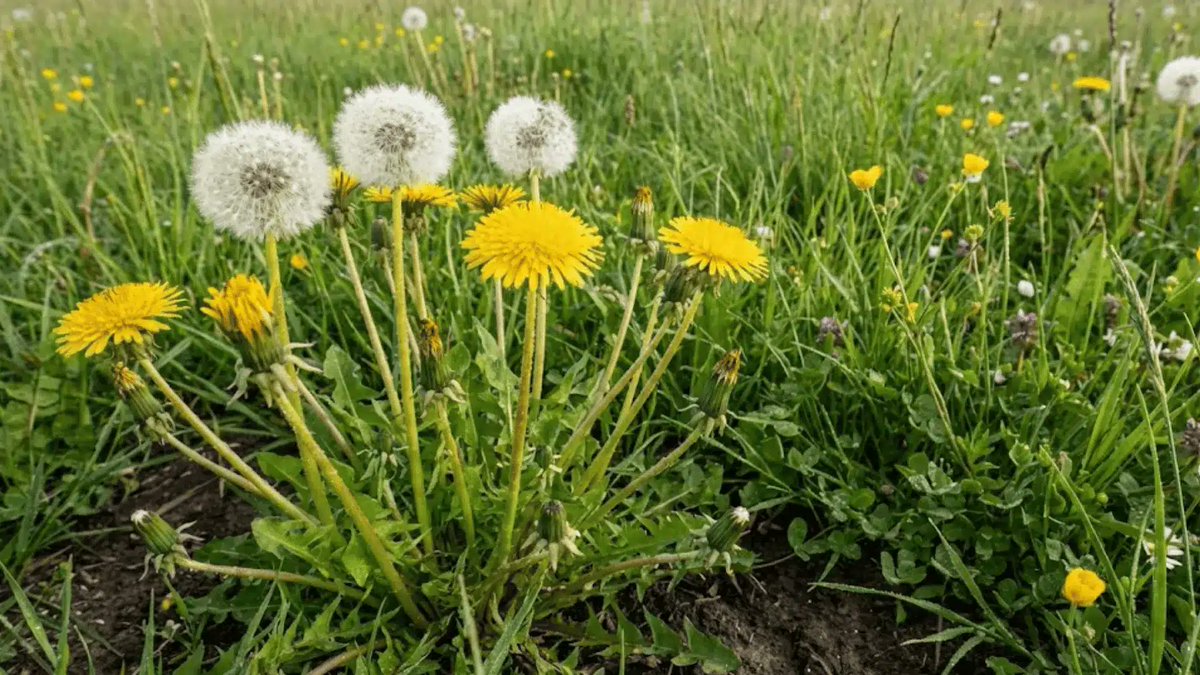
The reason we think dandelions are weeds is because of a 1950s marketing campaign.
Dandelions, native to Europe and Asia, were brought to North America in the 1600s by European colonists who grew them deliberately.
Every part is edible. The leaves are a salad green, the flowers were made into wine, and the roots were roasted as a coffee substitute and used medicinally for liver and kidney conditions for thousands of years. They were a kitchen-garden staple well into the 1800s.
The shift happened after World War II, when 2,4-D (originally developed for chemical warfare research) was approved as a residential herbicide. Companies like Scotts built the modern lawn-care industry around the idea that a perfect green lawn meant zero broadleaf plants.
Dandelions, being bright yellow and resistant to mowing, became a visible enemy, and the campaign worked. By the 1970s, "dandelion-free" was synonymous with "well-kept."
They aren't native, but they aren't doing significant ecological harm either. The herbicides used to kill them, on the other hand, kill bees, contaminate groundwater, and have been linked to non-Hodgkin lymphoma in humans.
If you hate dandelions, it's most likely due to a marketing campaign that ran before you were born.
Let's say you're a dairy farmer. You have 100 cows. Each year, about 5 cows die, and another 5 cows are born. Then, along comes a virus. Let's call it "cowvid"...
1/
We are in capitalism’s final stage, where global capital can’t expand or sustain past profits. It now consumes public institutions and key systems, sacrificing democracy, welfare, infrastructure, education, healthcare, and ecosystems for short-term gain.
👀 Yet more confirmation of what has been obvious for years.
📈 Covid infection raises risk of:
🚨 Shingles
🚨 Bell's palsy
🚨 Guillain Barré
🚨 Myasthenia Gravis
Neurological vulnerability lasts for at least 3 years.
Vaccination doesn't prevent it.
Neither does reinfection.
Mark Zuckerberg built a MASSIVE data center in Georgia
Just hundreds of yards from people’s homes.
Water pressure collapsed. Sinks don’t run. Toilets won’t refill. Homes shake nonstop. Power outages are common
A billionaire gets his servers — working families get steamrolled.
Massive bombshell. Anthropic co-founder Chris Olah warns that AI will displace human labor on a catastrophic global scale. He confirms tech elites have absolutely no mechanism to share the wealth, leaving the global poor completely abandoned to suffer. He is 100% accurate.
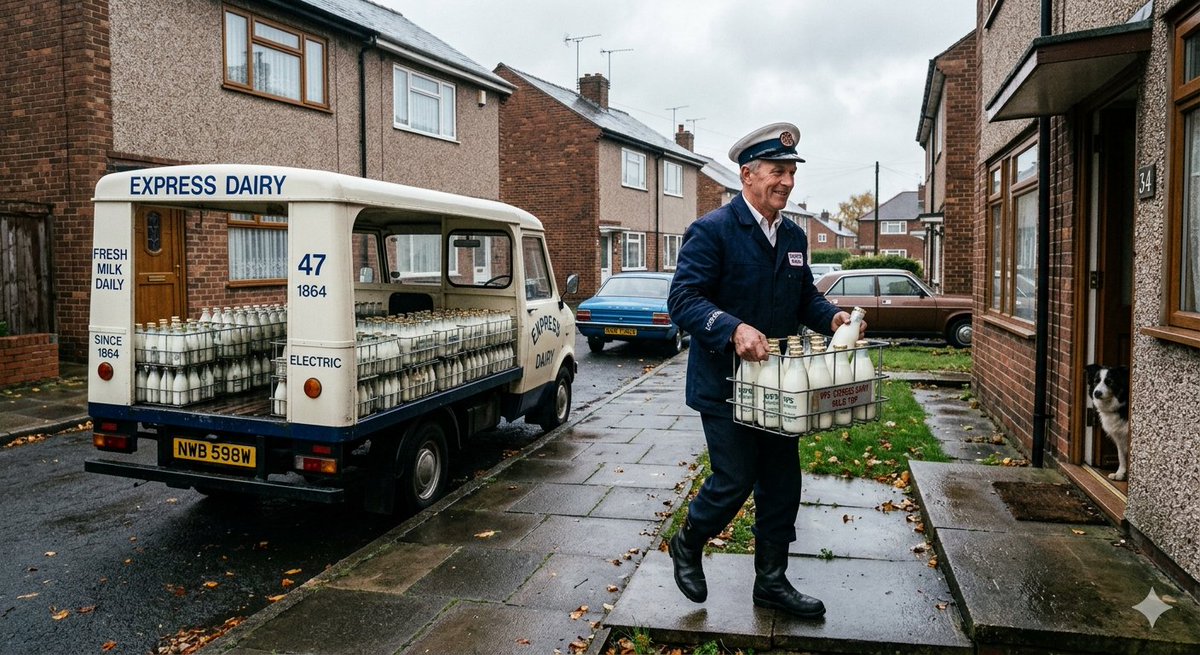
In 1975, more than 90% of milk in Britain was delivered to the doorstep by a milkman before seven in the morning. The float was electric. The bottles were glass. The pint left on the step was waiting for the kettle to go on.
By 2025, doorstep delivery had collapsed to under 3%.
The British milkman, at his peak, was one of the most visible faces of national life. He knew every customer on his round by name. He left bottles in the porch, on the wall, in the rack by the gate. He picked up the empties. The bottles made, on average, more than twenty round trips before being retired.
The milk came from a local dairy. The dairy was supplied by farms within a few miles. The milkman, the dairyman, the farmer, and the customer were, very often, on first-name terms.
Several things broke this between 1980 and 2000.
The fridge had arrived in nearly every British home by the late 1970s. Daily delivery became unnecessary.
The supermarkets moved into milk. Tesco, Asda, and Sainsbury's began undercutting the doorstep on price. The local dairy was bought out, consolidated, or closed.
The glass bottle was replaced by the plastic jug. Plastic doesn't get washed and reused. Each plastic container of milk now generates a piece of single-use waste that takes hundreds of years to break down.
What disappeared, with the milkman, was a piece of daily British life. The same person at your door every morning for twenty years. The clink of bottles at half past five while the rest of the street slept. The conversation when you were in. The note left under the bottle on the day of the funeral.
The milk is still being produced. It is just being produced further away, by fewer and larger farms, shipped further, sold in plastic, by people you will never meet.
A small British revival has been quietly building since around 2015. Milk & More now serves around half a million doorsteps. Independent dairies in Devon, Somerset, Yorkshire, and the Scottish Borders are running their own glass-bottle rounds. Slightly more expensive. Whole milk. Washed bottles. A man at the door who knows the dog's name.
If there is one in your area, sign up.
The system died because nobody fought for it.
It's coming back, in the same way, by the same people.
For years this meadow was cut back every fortnight until there was nothing but green silence 🌱
Now, after just two years without the constant mowing, it has become a living sea of Buttercups, Dandelions, Cuckoo Flowers, Thistles and Dock 🌼✨
The difference is astonishing....bees drift between flowers, butterflies rise from the grasses and every inch is filled with life that simply was not there before 🐝🦋
“Untidy” land is not neglect at all...it is recovery 💛
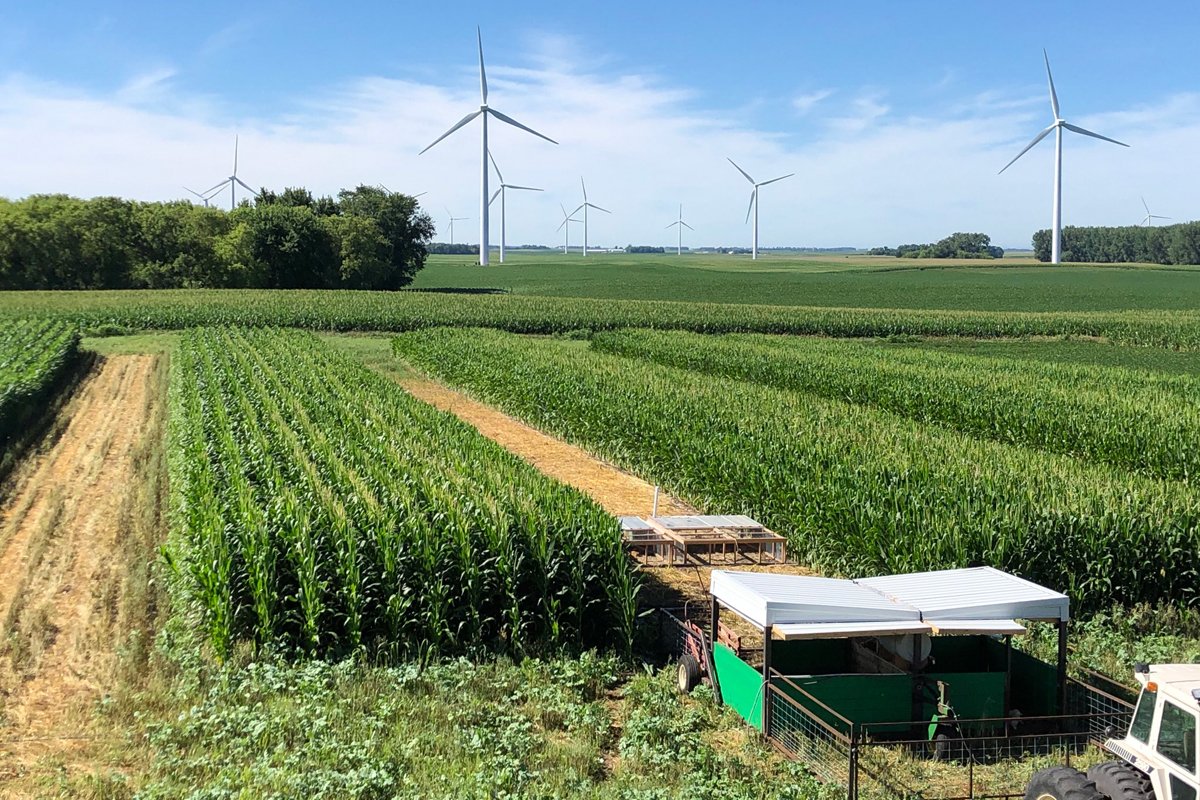
Approximately 85% of Iowa was once tallgrass prairie. Big bluestem, switchgrass, Indian grass, compass plant. Root systems that went down ten to fifteen feet and built some of the deepest, richest topsoil on the planet. Grazed by tens of millions of bison, two million elk, and uncountable smaller herbivores, all ruminants, all cycling nutrients back into the ground every time they ate, walked, slept, or died.
Today, 99.9% of Iowa's original prairie is gone. Less than 0.1% remains as intact ecosystem. By landscape transformation, Iowa is the most ecologically rewritten state in the United States.
Approximately 74% of its land area is now row crop. 86% of that row crop is corn or soybeans. Mile after mile of two species, planted in straight lines, harvested with combines that cost more than the farmhouse, fed synthetic nitrogen, phosphorus, and potassium, sprayed with glyphosate, atrazine, and dicamba, drained through buried plastic tile to remove the water the prairie used to hold for free.
The Iowan does not eat the corn. 40% of US corn becomes ethanol fuel. 36% becomes livestock feed. A further chunk becomes high-fructose corn syrup, which becomes Coca-Cola and Twinkies. A small fraction reaches a human plate as actual corn.
The Iowan does not eat the soybean either. The soybean is crushed for oil, which becomes the cooking fat in almost every fast-food restaurant in America. The leftover meal feeds chickens and pigs.
In 1950, Iowa had 206,000 farmers. In 2026, it has 85,000. The land has consolidated into the hands of fewer, larger operations. The small towns have hollowed out. Iowa, which sits on some of the finest soil ever inventoried by humans, now imports more than 90% of the food its residents actually eat.
In March 2024, a valve at NEW Cooperative in Red Oak was left open over a weekend. 265,000 gallons of liquid nitrogen fertiliser drained into the East Nishnabotna River. The spill killed approximately 750,000 fish across 50 miles of river, all the way to the Missouri border. It is the fifth-largest fish kill in Iowa's recorded history. The valve was open for 48 hours.
This is the system we have been told is feeding the world.
What it is feeding, primarily, is itself. The corn feeds the ethanol plant and the feedlot. The soybean feeds the chicken house and the fryer. The system grows because it needs its own outputs to keep going.
The bison would have done all of this for free. The bison would not have killed 750,000 fish. The bison would not have required a single bag of synthetic nitrogen. The bison would not have hollowed out a single town. The bison did this job for ten thousand years, on the same land, with no inputs, and produced, as a byproduct, the deepest topsoil on the continent.
We replaced the bison with the spreadsheet.
The spreadsheet, on its own, is starting to look like a poor trade.