🇺🇸 Exploring America's story—one state at a time. OUSOA celebrates the history, geography, landmarks, culture, people, and hidden treasures of all 50 states.
As we near our 250th birthday, I wish each and every American an incredible, safe and Happy New Year. Each of our states are unique—from the people, places, history, facts and products produced. God Bless You and America for the next 250.
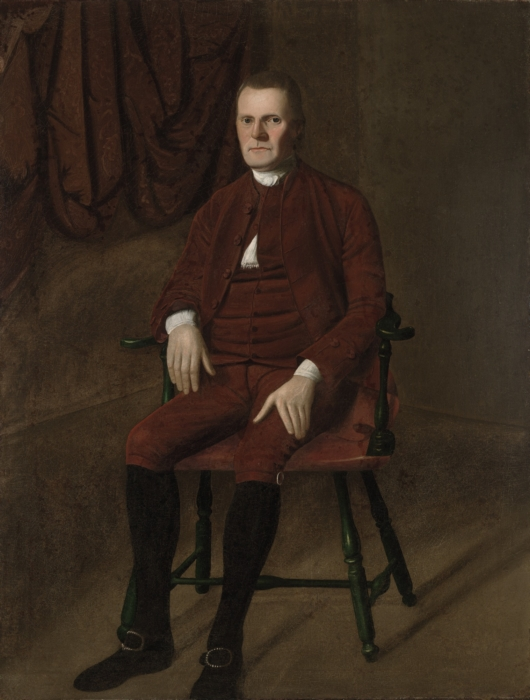
A shoemaker with no formal education became the only person in history to sign all four founding documents of the United States. And the structure of Congress you live under today? He's the reason it exists. Meet Roger Sherman, the most important Founder almost nobody talks about.
Sherman's start could not have been humbler. Born in 1721, he grew up working with his hands. He was a cordwainer, a shoemaker, cutting and stitching leather for a living. There's a story of him working at his cobbler's bench with a book propped open in front of him, reading while he worked. He had almost no schooling. What he had was his late father's books, a sharp mind, and a bottomless hunger to learn.
So he taught himself. Everything. He became a surveyor, then he taught himself law with no formal training at all and passed the bar in 1754. A self-made shoemaker turned lawyer.
Then he just kept showing up at every single hinge point of American history.
He was one of the Committee of Five, the small group chosen to draft the Declaration of Independence, sitting alongside Thomas Jefferson and Benjamin Franklin. And here's the record no one else can claim. Roger Sherman is the only person who signed all four of the great state papers of the founding: the Continental Association, the Declaration of Independence, the Articles of Confederation, and the Constitution. Nobody else signed all four. Just him.
But his single biggest contribution came at the Constitutional Convention in 1787, and you feel it every day whether you know it or not. The convention was about to collapse. Big states wanted representation based on population. Small states wanted every state equal. Neither side would budge, and the whole country nearly died in the crib right there.
Sherman proposed the fix. What if you did both? One chamber, the House, based on population. Another chamber, the Senate, where every state gets equal say. That idea, the Great Compromise, broke the deadlock and saved the Constitution. The two houses of Congress exist in that exact form today because a self-taught shoemaker talked everyone off the ledge.
Thomas Jefferson pointed him out to a visitor and said he was "a man who never said a foolish thing in his life." John Adams called him one of the strongest pillars of the whole Revolution.
He served his country right up until he died in 1793.
A poor shoemaker who read at his workbench, taught himself law, signed everything that mattered, and quietly designed the shape of American government itself.
Roger Sherman. The quiet genius who built the machine we still run on.
July is Picnic Month! 🧺
And we’ve got a fun picnic merch giveaway! Become a “Friend of the National Mall” by July 31 and you’ll be entered to win a summer picnic set…all while helping us care for America’s Front Yard! 🇺🇸🌳🏛️
VISIT: https://t.co/S60gx00RJh
You heard it here first: the Summer of America’s 250th anniversary has only JUST BEGUN!
We're creating a special Semiquincentennial album to show the future how we rang in the 250th. Send your photos to [email protected] for a chance to be featured!
Photo: Seth Hoffman
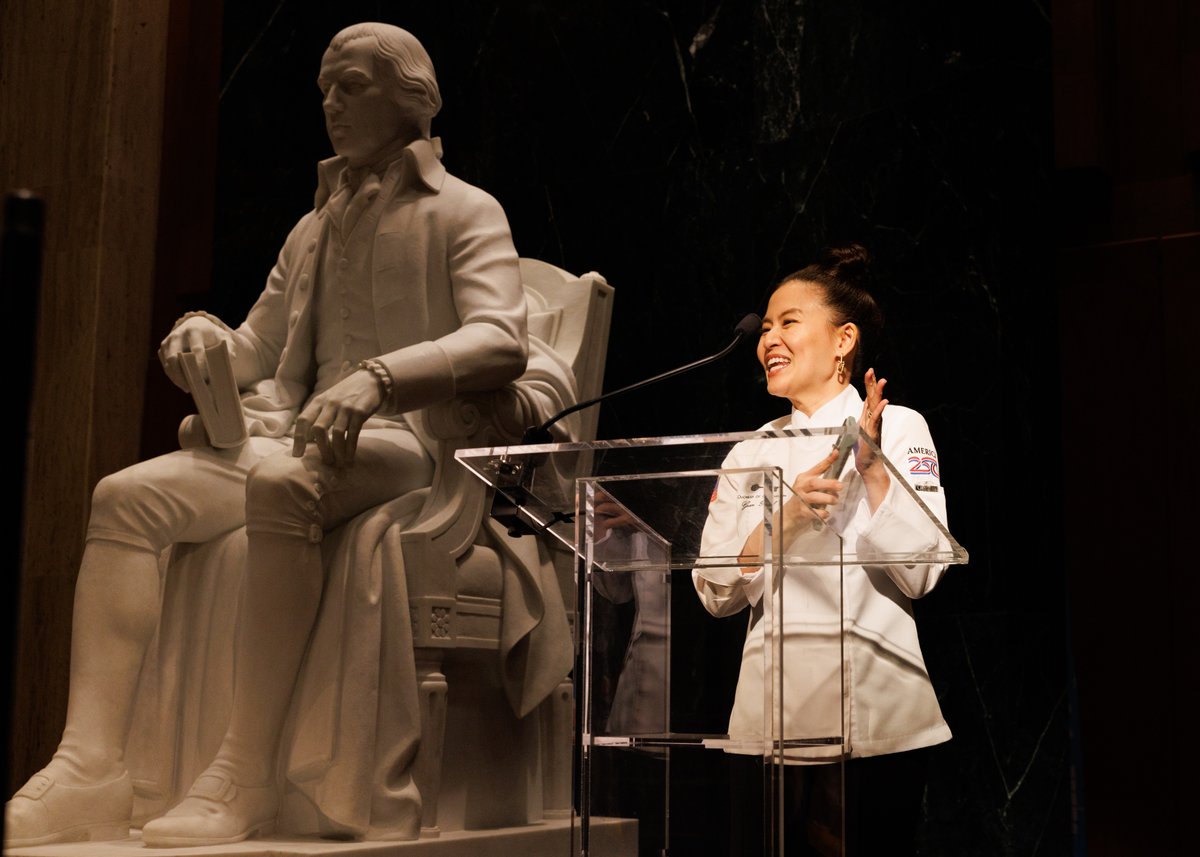
America's 250th deserved a cake to match. 🎂🇺🇸
This weekend at the @LibraryofCongress, America250 unveiled the National Birthday Cake Tribute: a monumental sculptural cake featuring contributions from all 50 states, Washington D.C. and U.S. territories, created by acclaimed cake artist Grace Pak.
Such a ‘sweet' way to honor our nation’s 250th anniversary.
I pledge allegiance to the flag of the United States of America, and to the republic for which it stands, one nation under God, indivisible, with liberty and justice for all.
250 years ago, a bold idea changed the course of history. Today we celebrate the people, principles, and enduring promise of the United States of America.
Happy 4th of July from the White House. 🇺🇸
👀 LOOK UP, DC!
If you’re at the Great American State Fair today, keep your eyes on the sky! The U.S. Air Force Thunderbirds will be overhead for a practice run beginning at 11:45 AM for approximately 15 minutes.
Don’t be alarmed by the sound, you might just catch an incredible glimpse of these iconic jets in action! 🇺🇸
On this day in 1776, the United States was actually born. Not July 4. July 2. That's the day the Continental Congress voted to break from Britain, and John Adams was so certain of it that he predicted July 2 would be the great American holiday forever. He nailed everything except the date.
The vote came down to the wire, and one man had to ride through the night to save it. Delaware's delegation was split, one for independence, one against, which meant the colony's vote canceled itself out. The tie-breaker, Caesar Rodney, was 80 miles away in Delaware. He got word that he was needed and rode all night through a summer thunderstorm, sick and in pain, boots and spurs still on, and made it into Philadelphia just in time to cast Delaware's vote for independence.
The other holdouts fell into place too. In Pennsylvania, the men most opposed, including John Dickinson, deliberately stayed away from the chamber so their colony could swing to yes. South Carolina came around for the sake of a united front. When the roll was called, twelve colonies voted for independence and not a single one voted against. New York simply abstained, waiting on permission from home.
And so, on July 2, 1776, it was done. The colonies had legally, officially declared themselves free. The next day Adams wrote to his wife Abigail that this day "will be celebrated by succeeding generations as the great anniversary festival," with "pomp and parade, with shows, games, sports, guns, bells, bonfires, and illuminations." Fireworks and all. He was describing the Fourth of July two days early.
So why do we celebrate the 4th? Because that's the day Congress approved the final wording of the document explaining the decision, the Declaration of Independence. The vote to be free happened on the 2nd. The paperwork got finished on the 4th, and history remembered the paperwork.
The country was actually born in a rainstorm and a roll call on July 2, thanks in part to one sick man who refused to let a tie decide the fate of a nation.
Everyone knows John Hancock for his giant signature. Almost nobody knows the actual man, and his real life was wilder than the legend.
He was an orphan. His father died when he was 7, and he was taken in by his uncle Thomas, the richest merchant in Boston. John was groomed to run the family shipping empire, inherited the whole thing in 1764, and became one of the wealthiest men in all of America before most people his age owned anything at all.
He was also, by the crown's definition, a criminal. In 1768 the British seized his ship Liberty for smuggling, and Boston rioted in his defense. The man we now put on patriotic posters was, to London, a wealthy smuggler dodging customs.
He didn't just resent the crown quietly. He bankrolled resistance and became such a thorn that the British wanted him gone. On the night of April 18, 1775, when Paul Revere made his famous ride, the warning was not vague. He rode to Lexington specifically to warn two men that the British were coming to arrest them: Samuel Adams and John Hancock. The opening night of the Revolutionary War was, in part, a manhunt for Hancock.
Weeks later, General Gage offered a pardon to every rebel in Massachusetts who would lay down arms, with exactly two exceptions: Samuel Adams and John Hancock. Being left off that list was essentially a public death warrant.
Here is the part nobody tells you. As president of the Continental Congress, Hancock actually wanted to be named commander of the army himself. He sat in the chair and watched as the Adams cousins instead rose to nominate George Washington. He was reportedly stung by it. Then he did the thing most people never manage. He swallowed his pride, signed Washington's commission, and spent the next eight years pouring his personal fortune into the war he could not lead.
So when Hancock signed the Declaration of Independence first, big and bold across the top, it was not a cute flourish. He was already a hunted man with a price on his head, putting his name, his fortune, and his neck on the line before anyone else dared lift a pen.
And that famous line about signing large "so King George can read it without his spectacles"? He almost certainly never said it. It is a myth stitched onto him generations later. The real story is better. He just signed first, as president, knowing exactly what it could cost him.
The flamboyance was real, though. He lived in princely splendor in a granite mansion on Beacon Hill overlooking the harbor, with imported mahogany furniture and apricot trees shipped from Spain. In 1775 he married Dorothy Quincy, and the two became one of Massachusetts' first political celebrity couples, famous for endless lavish dinners that slowly drained his fortune.
He went on to become the first Governor of Massachusetts, serving roughly eleven years, and died in office in 1793. His funeral was one of the grandest ever given to an American up to that point. Samuel Adams declared the day a state holiday.
The orphaned smuggler with a target on his back had become the face of American defiance.
That is why, 250 years later, we still say "put your John Hancock right here."
The USA crowd is absolutely cooking. Freedom 250’s FIFA World Cup Fan Zone totally understood the assignment. Let’s keep the energy coming throughout the rest of the series.
The Freedom 250 FIFA Fan Zone is open until July 19, 2026.
This Memorial Day, instead of saying “thank you for your service,” Karen Vaughn suggests saying:
“Thank you for my freedom. I know what it cost you, and I’m grateful.” 🇺🇸
Karen is a Gold Star mother and best-selling author of World Changer: A Mother’s Story. Her son, Navy SEAL Aaron Carson Vaughn of SEAL Team VI, was killed in action in Afghanistan on August 6, 2011, when his helicopter — call sign Extortion 17 — was shot down, claiming the lives of 30 Americans in the single greatest loss of Navy SEAL lives in history.
Since then, she has spent more than a decade traveling the country, sharing Aaron’s story and reminding Americans of the true cost of freedom.
This year, as America turns 250, let’s honor that cost. 🇺🇸