NIGERIA UPDATE - EVERY NIGERIAN SHOULD READ THIS INSIGHTFUL PIECE:
Think Naija: The Reform Notebook.
THE NARRATIVE BEFORE THE INTERVENTION: HOW WASHINGTON IS SHAPING NIGERIA’S STORY. - November 21, 2025 - Part 1
Foreign intervention never begins with airplanes, sanctions or soldiers. It begins with stories. It begins with how a country is described, framed, understood and judged by powerful nations.
Iraq did not begin with missiles. It began with a narrative about weapons of mass destruction. Libya did not begin with bombs. It began with a narrative about protecting civilians. Syria did not begin with airstrikes. It began with a narrative about humanitarian responsibility.
The same pattern is now forming around Nigeria, and the speed is alarming.
The life sentence delivered to Nnamdi Kanu on November 20, 2025 is a perfect example. A Nigerian court, after years of legal proceedings, found him guilty on seven terrorism related charges, including directing violence, issuing sit at home orders, caused hundreds of deaths, and guiding bomb making. The court described him as an international terrorist and chose life imprisonment instead of the death penalty.
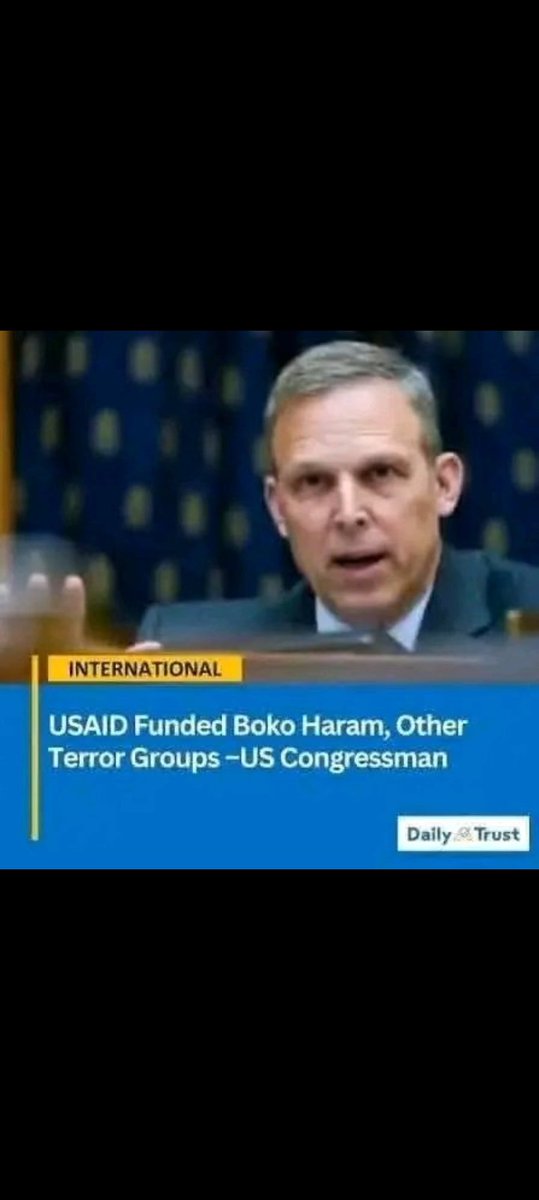
Within hours, a US lawmaker declared that the conviction was evidence of religious persecution.
A terrorism judgment became a faith narrative in a single step. This did not happen randomly, it is structural and it is how congressional narratives are built.
A legal event happens. American lawmakers interpret it through a moral lens that suits domestic politics. The narrative becomes a talking point. Talking points become resolutions. Resolutions become sanctions or conditions. And at the end of that chain lies the justification for foreign intervention.
This is the architecture we are watching being built around Nigeria.
What makes the situation even more concerning is that this narrative did not start yesterday. It has been shaped for years, intentionally and deliberately, through structured lobbying.
Foreign Agents Registration Act filings in Washington show that IPOB and its affiliates hired American lobbying firms to promote a narrative of Christian persecution in Nigeria. The message was clear: Nigeria is killing Christians, the Nigerian state is complicit, and the South East faces genocide. These claims were crafted to appeal to the American evangelical and conservative network that sees global Christian victimhood as a core political issue.
This lobbying created a permanent narrative frame. Even after contracts ended, the impression remained inside congressional offices, in briefing notes, in staff memory and in committee debates. Lobbying does not disappear when the cheque stops. It leaves a shadow.
This is why the same Congress that invokes Christian persecution rarely mentions certain facts.
It ignores that Boko Haram has killed more Muslims than Christians. It ignores that banditry in the North West is driven by economic motives, not religion. It ignores that many Christian communities in the Middle Belt are attacked, but Muslim communities across the North and Middle Belt also suffer the same fate in even larger numbers. It ignores that IPOB and ESN splinter groups killed over 700 Christians in the South East and enforced violent sit at home campaigns. It ignores that Finland, a Western nation, convicted a key Biafran agitator for terrorism in September 2025. It ignores that the Nigerian court conviction of Kanu was based on evidence, not on faith.
And it ignores the deaths of Muslims who are also victims of the same terror networks. Only days before some US lawmakers repeated the Christian genocide narrative, terrorists abducted and murdered the Ameer of the Muslim Students Society of Nigeria in Kebbi State, Alqasim Uthman Ibrahim. He was kidnapped and killed in captivity, without media attention, international outrage or congressional concern.
https://t.co/2Q8z3cwKHS
Question for Nicki Minaj on her UN speech on Nigeria & thanking Trump - how dare you center only Christians in Nigerian suffering? I’m all for celebrities using their voices for good but her positioning is at the least uninformed & uneducated and at most self-aggrandising. Thanking Trump added insult to injury.
Dear Muslim brothers and sisters!
Today, the biggest weapon our enemies are using against Islam is the media. And guess what? It’s free! We can use it the same way they’re using it, only that we won’t spread lies about anyone. But we will also NEVER allow anyone to spread lies about us!
So I urge you, my fellow Muslims, always be ready to stand for the truth and tell our own stories to the world. We can’t do it alone, that’s why we need one another. Let’s always make sure the real truth reaches the whole world!
Thank you, and may Allah bless you all!
@AustinINstate@NemeremNjoku WHY THE MOST BEAUTIFUL AND ALSO MOST UGLY OF ALL GOD'S CREATURES ARE HUMAN?
THEY WILL BE IN THE BEST PLACE PARADISE AND ALSO IN THE WORST HELL. AND YET FAVORED THAN ANY BY GOD. SO WE CANNOT JUSTIFY THEM AS ONE THING.
@yvonnebetek And yet they are the last religion, but take majority of worlds population religion. If there's true God that controls anything why would he let any religion surpass his?
If terrorism is Islamic teachings why most victims are Muslims and yet the fastest growing religion?
Think!
Leadership of the Common Good: An Environment for Growth
We like to say Nigeria is blessed, with people, with potential, with promise. But blessings without leadership rot into curses. For too long, this country has been a case study in wasted potential, a nation loud in rhetoric but hollow in purpose. We have leaders, yes, but not leadership. We have power, but not responsibility. We have ambition, but rarely vision, and this is the wound at the heart of our national story: the failure to lead for the common good.
In Nigeria, leadership has become a personal enterprise, a private business run on public pain. Too often, power is sought not to serve but to eat. It is treated as an inheritance, not a trust. We speak of “the masses” with pity while living off their poverty. We pledge allegiance to the flag but bow to our own stomachs. The result? A system that rewards mediocrity, punishes integrity, and glorifies survival over service.
The common good, that sacred idea that leadership should uplift all, not a few has been traded for the politics of tribe, religion, and greed. We no longer ask, “What benefits the people?” but, “What benefits my side?” Our obsession with self-interest has built a nation where brilliance is exiled, honesty is mocked, and youth are told to wait their turn while the system burns around them. And yet, somehow, we keep hoping. Despite everything, Nigeria refuses to die.
But hope alone is not enough. What we need is a new kind of leadership, one that is not afraid to confront the truth. A leadership of the common good. A leadership that builds an environment where people can grow, not merely survive.
To lead for the common good is to believe that your power means nothing if it doesn’t make life better for others. It means investing in education, not because it wins votes, but because ignorance is a slow death. It means fixing health care because human life is sacred, not negotiable. It means building roads and institutions that outlast you. It means leading with empathy, not ego; with accountability, not arrogance.
The leadership Nigeria needs must stop treating citizens as subjects. We are not pawns in political chess. We are the reason the board exists. The people are not an inconvenience to be managed; they are the nation itself. Leadership of the common good is about restoring that truth that government exists for the governed, not the other way around.
And yet, it’s not just those in office who must change. We, the people, have our share of guilt. We have glorified wealth without work, power without purpose, and loyalty without conscience. We have sold our votes for crumbs and then complained of hunger. We have chosen silence when we should have shouted. We have mistaken cynicism for wisdom and complacency for peace. But real peace can not exist in a society built on injustice and inequality.
If Nigeria is to grow, we must all be uncomfortable. Growth requires honesty. And honesty demands that we stop pretending. Our economy can not grow in a culture that rewards shortcuts. Our institutions can not thrive in a system allergic to accountability. Our children can not flourish in a nation that teaches them to cheat before it teaches them to dream.
An environment for growth begins with truth. It begins when leaders stop performing and start governing. It begins when we measure success, not by how much a man steals but by how much he builds. It begins when the public office becomes a public service again, not a prize for political thugs or a retirement plan for recycled elites.
Imagine a Nigeria where leadership is measured by how many lives are lifted out of poverty, how many minds are educated, and how many systems work without bribes. Imagine a nation where talent does not need a godfather to breathe. Imagine a generation that believes in this country because this country finally believes in them. That is the environment for growth we must build, not tomorrow, not someday, but now.