🧵 The story of Poker is older, stranger, and more controversial than most people think.
It didn't begin in Las Vegas.
It didn't even begin in America.
Here's how one of the world's greatest games was born... 👇
🃏 Before factories existed, every deck of cards was hand-painted.
Owning a deck wasn't entertainment—it was a luxury reserved for the wealthy.
Today, a deck costs less than a coffee.
If you owned a 300-year-old deck, would you play with it or preserve it? 👇
🎰 In 1931, Nevada legalized casinos to revive its struggling economy during the Great Depression.
A desperate decision transformed Las Vegas into the gambling capital of the world.
Sometimes the biggest gamble isn't at the table—it's made by governments.
Poker Probabilities Explained: What Hands You’re Really Dealt (Most Players Get This Wrong)
Most players know a few poker probabilities.
Very few understand what those numbers actually imply.
In this video, I break down how all 1,326 starting hand combinations in Texas Hold’em are structured—and how often you’re really dealt each type of hand.
We go beyond memorization and focus on what the distributions mean in practice:
• How often you’re dealt pocket pairs—and why most aren’t premium
• The true frequency of Ace-King (suited vs. offsuit)
• Why suited hands make up a minority of all combinations
• How often connected hands actually occur
• Why some hands show up far more often than others
The goal is simple: align your expectations with reality.
If you misunderstand how often certain hands occur, you’ll overvalue them, misjudge ranges, and make inconsistent decisions over time.
This gives you a clear, math-based framework for what you’re actually playing.
Watch here: https://t.co/HGEyEf9HEp
#PokerStrategy #PokerMath #PokerProbabilities #PokerTheory #TexasHoldem #StartingHands #LivePoker #CashGamePoker #PokerTips #PokerTraining #PokerEducation #Combinatorics #HandRanges #PokerStudy #PokerHands #ExploitativePlay #PokerMindset #PokerCommunity #CardPlayer #PokerContent
https://t.co/HGEyEf9HEp
A professional poker player found a manufacturing flaw on the back of a deck of casino playing cards. He used it to win $19 MILLION at two casinos on two continents. Courts on both continents ruled it was cheating and made him give almost all of it back.
– Phil Ivey is a ten-time World Series of Poker bracelet winner.
– Widely considered one of the best professional gamblers alive.
– In April 2012 he booked a private high-stakes baccarat session at the Borgata in Atlantic City.
– He wired a $1 MILLION deposit up front.
– He made specific requests. A private pit, a Mandarin-speaking dealer.
– His guest Kelly Sun seated beside him. One single deck of purple Gemaco cards for the entire session. An automatic shuffler.
– The Borgata agreed to all of it.
– Sun had spotted something. Certain decks had a tiny factory defect. A slightly uneven diamond pattern on the card backs.
– She asked the dealer to rotate specific high-value cards 180 degrees.
– Told him it was superstition. For luck.
– It wasn't luck.
– Once enough key cards were flipped, she and Ivey could read the edge of the next card in the shoe before it was dealt.
– Ivey bet accordingly.
– Four visits to the Borgata in 2012 and he won $9.6 MILLION.
– Same trick, different casino.
– Crockfords in London. Just under £8 MILLION was won playing punto banco.
– Crockfords caught the pattern and refused to pay.
– Ivey sued them, he argued it wasn't cheating, just exploiting how the casino chose to deal.
– The case reached the UK Supreme Court. All five judges ruled against him.
– They said he took deliberate steps to fix the deck.
– Meanwhile, the Borgata had already paid him his $9.6 MILLION back in 2012.
– Once they found out how, they sued to get it back.
– A US court ruled it wasn't technically fraud. But it broke New Jersey's Casino Control Act.
– Ivey was ordered to repay $10,130,000.
– He appealed. The Borgata spent years trying to actually collect, at one point seizing his winnings at the World Series of Poker.
– In July 2020, eight years after the first hand was dealt. Ivey and the Borgata settled. Terms never made public.
He never touched a card, never marked one. He just asked a dealer to turn a few of them around "for luck." Two countries' highest courts still called it a con.
💰 The House Always Has an Edge
Casinos don't need players to lose every game.
They simply rely on a small mathematical advantage called the house edge. Over millions of bets, that tiny edge becomes enormous.
Which casino game do you think has the lowest house edge? 👇
🎲 Why Casinos Have No Clocks
Ever noticed most casinos don't have clocks or windows?
The idea is simple: remove distractions so players stay immersed and lose track of time.
Have you ever noticed this in a casino? ⏰
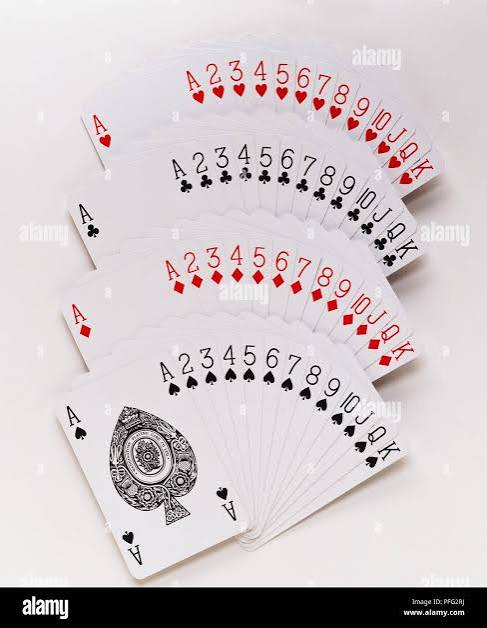
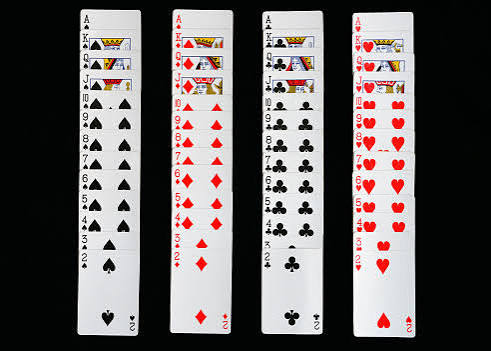
A standard deck has 52 cards, matching the 52 weeks in a year. The 4 suits are often linked to the 4 seasons, and each suit has 13 cards—similar to the 13 lunar cycles.
Coincidence or intentional design? 🤔
🎰 Casinos don't fear lucky players.
They fear disciplined ones.
The biggest edge in gambling isn't a secret strategy—it's knowing when not to play.
Sometimes the smartest bet is the one you never make.
"Blackjack" wasn't always called Blackjack.
The game was originally known as "21."
In the early 1900s, American casinos offered a bonus payout if your winning hand contained the Ace of Spades + a black Jack (♠️ or ♣️).
The bonus disappeared.
The name Blackjack didn't.
Think a shuffled deck is ordinary?
Think again. A 52-card deck has 52! possible orders (about 8×10⁶⁷).
Even if everyone who ever lived shuffled one every second since the dawn of humanity, we'd still never see them all. Your shuffle has almost certainly never existed before.