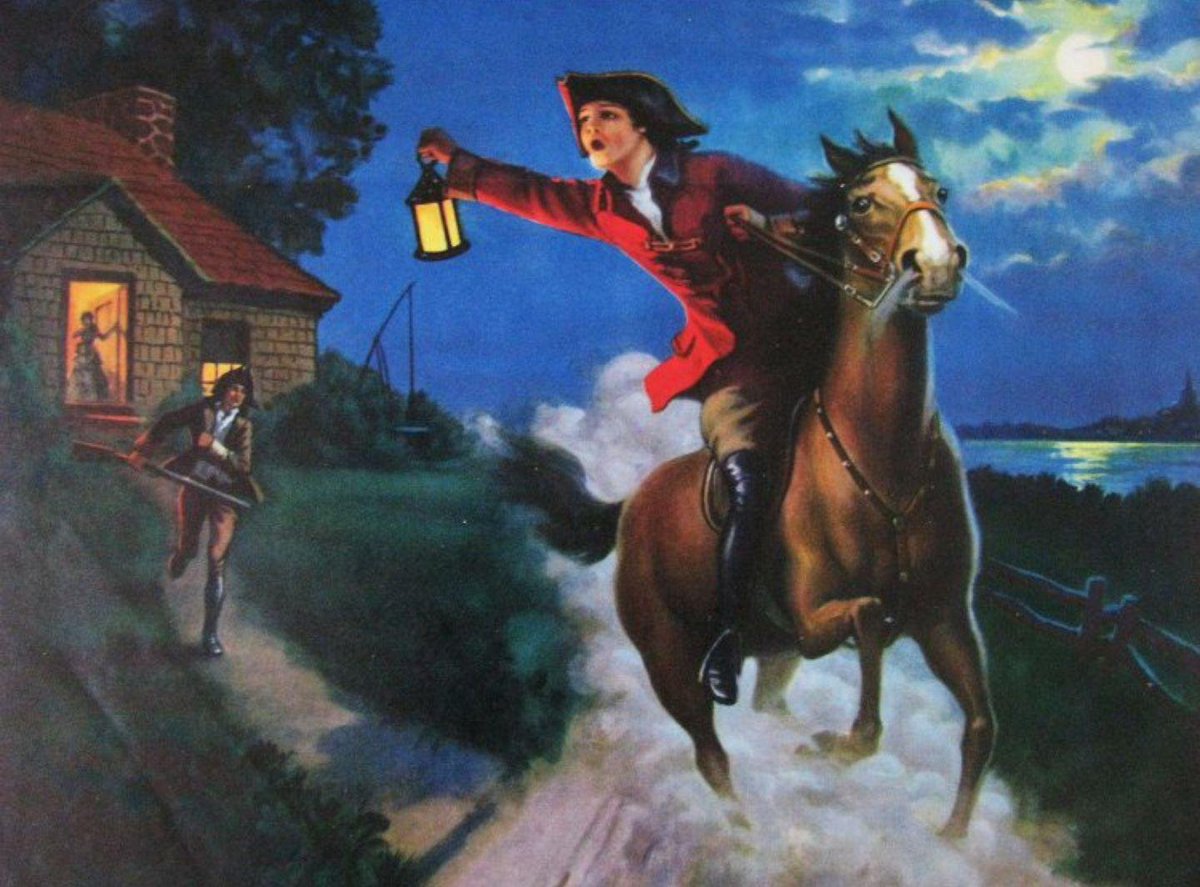
i’m against medieval fantasy where everybody’s 2026 woke but like in a left wing way. the kings are gay married? ridiculous. the material conditions wouldn’t allow that.
In 1960, a serious assault was 2-3x more likely to kill. It was even higher before antibiotics, blood transfusions, or EMS.
Today, 90-95% of gunshot victims survive in major cities thanks to advanced trauma care.
It can't be overstated how medicine suppresses homicide rates.
I love the Second Inquisition so much as an addition to new Vampire lore. I really, really like the comingling of the priestly, kinda-crazed hunters who fully believe they are hunting the undead children of Caine vs the CIA thinking "these 'blankbodies' and their secret societies
This is the thing; people will often suggest I haven’t read the books/essays when I claim that abolition, functionally, looks like “everyone becomes decentralized police,” but they literally say it all the time.
The communal and non-violent visions of abolition look like you, and everyone you know, needing to take on the work of constant surveillance, rehabilitation, etc, of a bunch of intransigent and dangerous people in your midst—you have to be detective, parole officer, and beat cop. Forever. This is one of your main jobs in this future—monitoring and managing your neighbors—because we will have made it so inefficient and decentralized that it now requires labor inputs from most people.
Well, what if you don’t want to be a cop? Then, by the admission of books like this, unmonitored pedophiles will roam around your community.
And of course this all assumes you’re actually any *good* at identifying who is harming people in your community—it doesn’t even remotely begin to address the question of *correctly adjudicating blame*, and I find this to be a consistent and alarming tendency in abolitionist work.
Typically this is handwaved away by either pointing out that formal justice institutions today often get guilt wrong, or by suggesting that because the consequences of guilt in the abolitionist future are non-carceral, it’s lowkey not a big deal if we get it wrong sometimes.
These are both answers I really dislike; where present institutions fail, they should be improved, because getting the empirical question of guilt right is very, very morally important. Our present inadequacies are not good justification to give up on trying!
And I do not actually want to be subject to interminable monitoring and “rehabilitation” or god knows what else, because my neighbors decided by some informal communal process that I’m guilty. Of what? Well, in these more anarchist visions of an abolitionist future, you typically don’t even have formal laws, so…good luck staying on “the community’s” good side!
It’s easy to see that in practice this *necessarily* devolves into the kind of enforcement mechanisms we used to see before contemporary formal institutions took over the monopoly on violence: the mafia, more or less. Maybe the mafiosos call themselves nobles or maybe they call themselves elders, but it’s mafia all the way down. It’s a world of shakedowns and protection rackets, of gossip and rumor and mutual distrust and a perpetual need to be on guard and ready to retaliate. It is, of course, a nightmare. One we’ve largely escaped! And it only appeals because many of us have forgotten what it was like.
I do not ASK THEM OUT. I do not SWIPE. I do not go to BARS. I do not PARTY. I do not COLD APPROACH… I YEARN. And if a woman doesn’t magically appear in my life, I DIE ALONE.
I hate stories where witches are real, but they make witch hunters the bad guys. Like witch hunting is bad because witches are fake. It would be fine to hunt witches of their real or at least keep an eye on them.
I love that every WoW Forever Developer podcast episode is just the dev team dunking on sweaty optimisers that have removed the joy from the game. You can tell they think you guys are boring and whiny.
I dig that he said the truth, which is “I don’t actually owe you accountability for being my audience, I owe that to the person I hurt and the people in my actual life”, kinda brave for a public figure. Mostly you get bullied into that concession anyway.
there are four types of prison abolitionists, depending on how they answer this question
1: "well, nothing, but they're not invited to fingerpainting class at the commune"
2: "kill them lmao"
3. "we put them inside a facility which is TOTALLY NOT A PRISON it just prevents them from leaving""
4. "uh once we abolish prisons no one will commit crimes anymore, chud"
“Exile” and “ostracism” as alternatives to prison are absurd, but illustrate much of what motivates prison abolition:
1) Vulgar primitivism.
Utopian, impossible fantasies of returning to the pre-modern village and its social technologies.
Where do you exile someone *to*, in modernity? If you banned someone from the tribe or the village, they had to go wander (and die) in the wilderness. If you exiled someone from Portland, Oregon today, they would simply move to Beaverton, or Salem. Maybe Eugene. And then go commit crimes there, if they wanted to. Do you exile people from the entire nation? Where do they go? Who takes them? El Salvador?
I say “vulgar” primitivism because this isn’t even consistent, intentional primitivism, which—while also totally impossible and wrongheaded—actually recognizes that if you want to recreate premodern social structures, you need a premodern material base. You need to blow up all the factories and roads and power plants and starve most of the world to death and become subsistence farmers or foragers again.
But this “we used to exile people and that was better” cliche is just the even-more-delusional desire to impose the socio-political superstructure of agrarian village life on post-industrial nation states and urban agglomerations of tens of millions of people. It cannot be done. You cannot turn back time, and even less than that, you can’t reach into the past and impose its social forms on the present.
2) Authoritarian aspirations.
Today, when someone is convicted of a crime, the process is bureaucratic, cold, rule-bound, and professionalized. Cops and DAs and judges and so on, are empowered to run this machinery of surveillance and punishment.
In the village, in the time of exile and ostracism, these were the distributed prerogative of all; everyone gets to participate if they want to. You, too, can be a detective, collecting evidence on your neighbors and bringing it before a tribunal. You too can be the judge. Of course, in reality this kind of system is rarely anything like a fair and dispassionate process that punishes actual wrongdoing—instead succumbing to gossip, rumor, mass hysteria, bigotry, etc—but even if we imagine it could go well (and, to be clear, it cannot), the revealed drive here is to *become police*. The abolitionist seeks to reclaim the powers of legitimate surveillance and punishment that used to the common patrimony of the village, and which today are unfairly hoarded by a professionalized bureaucracy.
3) Arbitrary retributive violence.
Of course, exile and ostracism in fact often meant death. You got exiled into the wilderness and died there, because humans depend on a social ecosystem to survive. And there was an implicit threat of violence if you refused exile, which was necessary to make the demand credible.
So, the whole framing of the premodern village as less violence and coercive than the present is nonsense, but in fact what’s revealed is a preference for “the community”—i.e., individuals with an interest in taking on the tasks of surveillance and punishment, and who have the social pull to secure legitimacy/consensus for their punitive efforts—to more swiftly carry out coercive violence with fewer rules.