“Practice any art… no matter how well or badly, not to get money and fame, but to experience becoming, to find out what's inside you, to make your soul grow.”
- McKellen reciting Vonnegut
The rehoming people ring once a year to see how the pair are getting on, and the first question is never about the horse.
They ask about the donkey.
There is a reason they ask in that order and it is not sentiment. Equine charities will not split a bonded pair and will not place a donkey on his own, because a donkey does not tell you it is going wrong until it has gone a long way wrong. One that has lost his companion does not shout the place down. He stands there. He goes off his food quietly over a couple of days, and then his own body starts pulling fat into the bloodstream faster than the liver can clear it, and by the time he looks ill to a person he is very ill indeed.
So the sanctuaries pair them, keep the pairs together, move them together, and when one of a pair dies they let the other stand with him a while, because the animals given that time do measurably better afterwards than the ones simply led out to a lorry and left to work it out.
The entire practice exists because donkeys are quiet about it.
The farmer knows all that now. He did not know it on the day the rehoming woman produced a small grey donkey from behind the trailer and explained that the big gelding did not settle without him. He thought, that afternoon, that he was doing a favour for the horse.
He has since worked out that the arrangement runs both ways, and that the least demonstrative animal on the place is the one with the most invested in it.
So he answers the question. The donkey is fine. The donkey is in the dry corner. The donkey has the hay and the shelter and first claim on both, and a seventeen hand Cavalry Black stood patiently four feet off, waiting to be allowed at the good end of it.
Then he goes out and leans on the gate for a bit, which he did not used to do, and watches two old animals doing nothing whatsoever in the rain.
One of them minds the rain. One of them does not.
Neither has the faintest idea that a charity rings up about them once a year, or that there is a man in a wet coat stood at a gate, quietly relieved.
"I like to think of play as 'trial and error without fear of failure'."
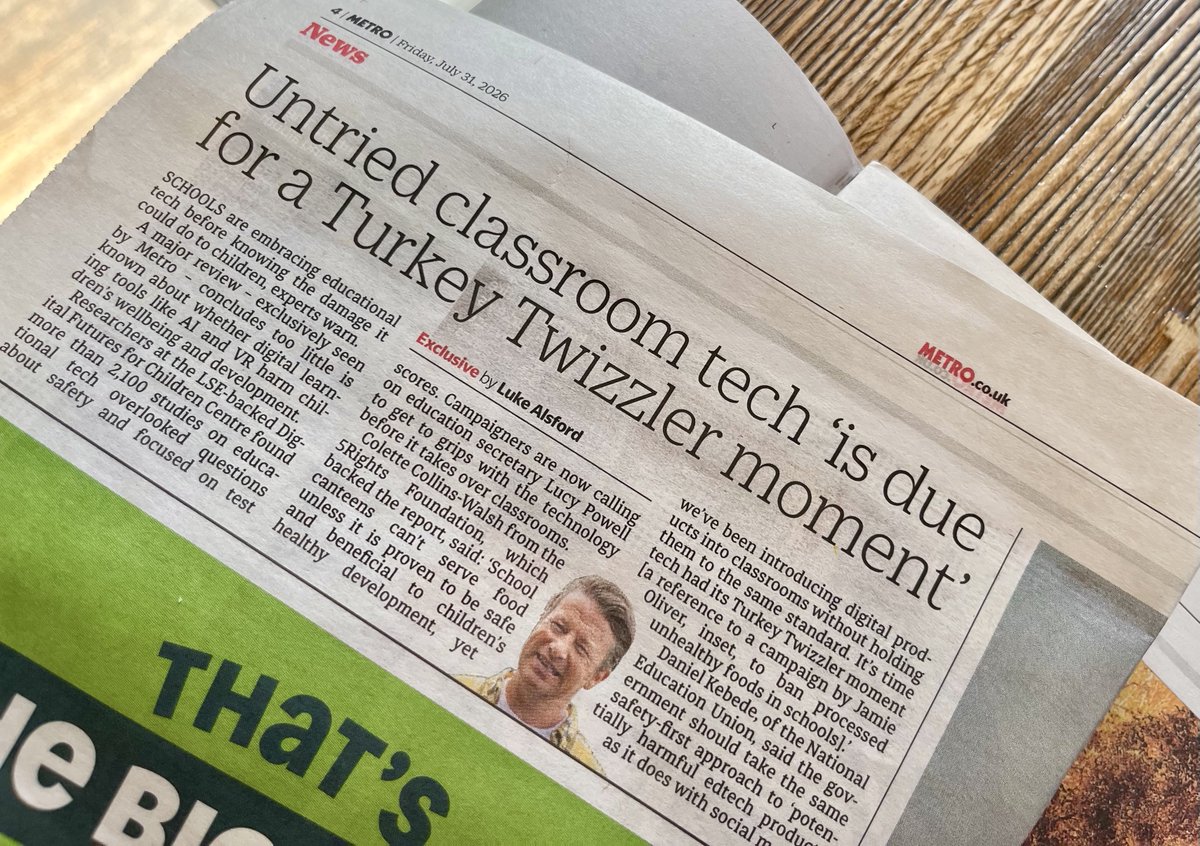
Former Children's Laureate Michael Rosen urges the government appoint a 'play tsar' to help parents get children off screens and outdoors.
BREAKING: Reform UK's deputy leader Richard Tice is being investigated by the parliamentary standards watchdog for failing to declare an interest.
https://t.co/PAiZ4D1jU3
📺 Sky 501, Virgin 602, Freeview 233 and YouTube
Big Oil raked in record-breaking profits. The companies that caused the climate crisis are getting rich as they fuel the fire.
@ExxonMobil: $55.7 billion
@Shell: $39.87 billion
@Chevron: $35.5 billion
@BP_plc: $27.7 billion
Time to make the pay for the damage they've caused.
In 1964, Anthony Hopkins composed a beautiful waltz called And the Waltz Goes On. It was never performed, and over time the sheet music was forgotten.
Nearly 50 years later, his wife found the music and sent it to conductor André Rieu, who arranged for it to be performed in Vienna in 2011.
Imagine spending decades believing something you created would never be heard... then sitting in the audience as it comes to life for the very first time.
It's a reminder that not every dream happens when we want it to. Sometimes life has its own timing.
What's a dream you've held onto, no matter how long it's taken?
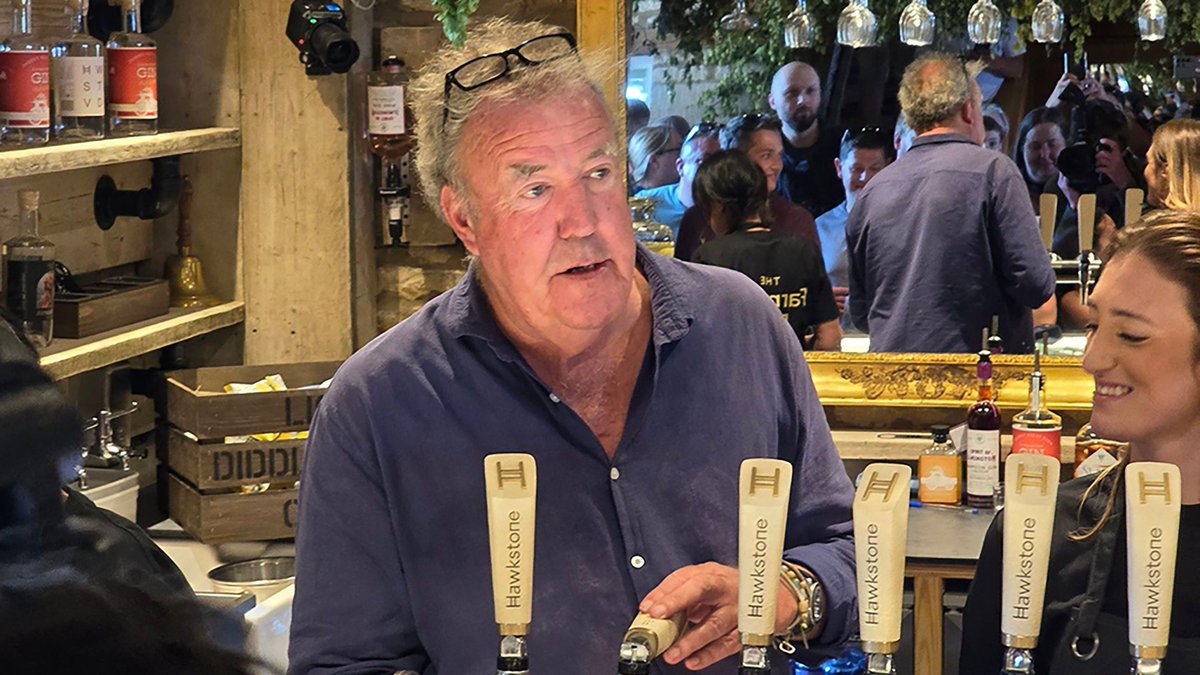
Jeremy Clarkson opened a pub in August 2024 with one rule: every single ingredient British. Here is what that rule immediately deleted from a perfectly ordinary pub.
- No coffee.
- No Coca-Cola.
- No gin and tonic. Quinine will not grow here.
- No lemons. No limes.
- No ketchup, for two years.
- No avocado. No pineapple.
His own line was that instead of a slice of lemon you would be offered a slice of turnip.
That list is not a gimmick. It is an audit of how much of a normal British menu now arrives by ship, and the answer turns out to be most of the small things nobody thinks about.
Then the figure underneath it all. A sausage made from his own pigs costs 74p. The same sausage made from imported pig meat costs 18p. He is absorbing that gap on every plate that leaves the kitchen, which is precisely the gap every British pig farmer is asked to compete across, without a television programme paying the difference.
And the ketchup has the best ending in the whole story. So many people asked for it that a sign went up telling them to stop. Then a producer in Chatham built one out of Isle of Wight passata, Hampshire cider vinegar and Essex salt, and it went on the menu.
The demand was always sat there. Nobody had bothered building the supply.
The BBC has had thirty eight years and £3.8 billion a year to explain British farming to the British public. The job was eventually done by an American shopping website, in eight episodes, fronted by the man the BBC itself dropped over a row about a steak.
Countryfile first went out on 24 July 1988, and its origin is the part nobody brings up. It replaced Farming, a programme that had spent thirty years making news for the people who actually did the work. The new show was deliberately widened to take in everybody who merely liked the countryside as well as those who lived off it. Widened meant softened. In 2009 it moved to Sunday evenings, where five to six million people still watch, and it has been settled ever since into an hour of scenery, a ramble, a calendar competition and the weather.
Then in June 2021 a company best known for selling doorbells put out a series about a man failing to farm a thousand acres, and within a week the British public understood the subsidy system.
Look at what an American retailer put on screen that thirty eight years of Sunday nights had not. A thousand acres, a full year of work, £144 profit. A crop drowning in the field with nobody coming to help. A farmer selling at a price he is not allowed to set. A council able to shut a restaurant standing on a man's own land. The accounts, open, with jokes over the top.
James Rebanks, who keeps sheep for a living rather than for a segment, reckoned Clarkson did more for farmers in one series than Countryfile had managed in thirty years. The NFU said the same thing in nicer words.
Now the funding, which is where it gets genuinely funny.
Countryfile is paid for by £180 a year, rising on 1 April, taken from every household in Britain that watches live television, on pain of prosecution. Twenty three million licences. Three point eight billion pounds. Guaranteed money, a captive audience, a national mandate and a prime Sunday slot.
Clarkson's Farm is paid for by people voluntarily pressing play, and it goes out in more than 240 countries.
The nation's farmers had one broadcaster legally funded by them, obliged to serve them, sitting on the biggest slot in British television. It gave them a weather forecast and a photography competition, and when a bloke with a Lamborghini tractor did the actual job for free, the same building's stars went on a sofa to complain about his opening credits.
The BBC had the money, the mandate, the Sunday night and thirty eight years.
It used them to film the view.
A powerful message from a powerful athlete, living with the unimaginable.
Archie Goodburn finished seventh in the Men’s 50m Breaststroke final at Glasgow 2026, two years after being told he has incurable brain cancer.
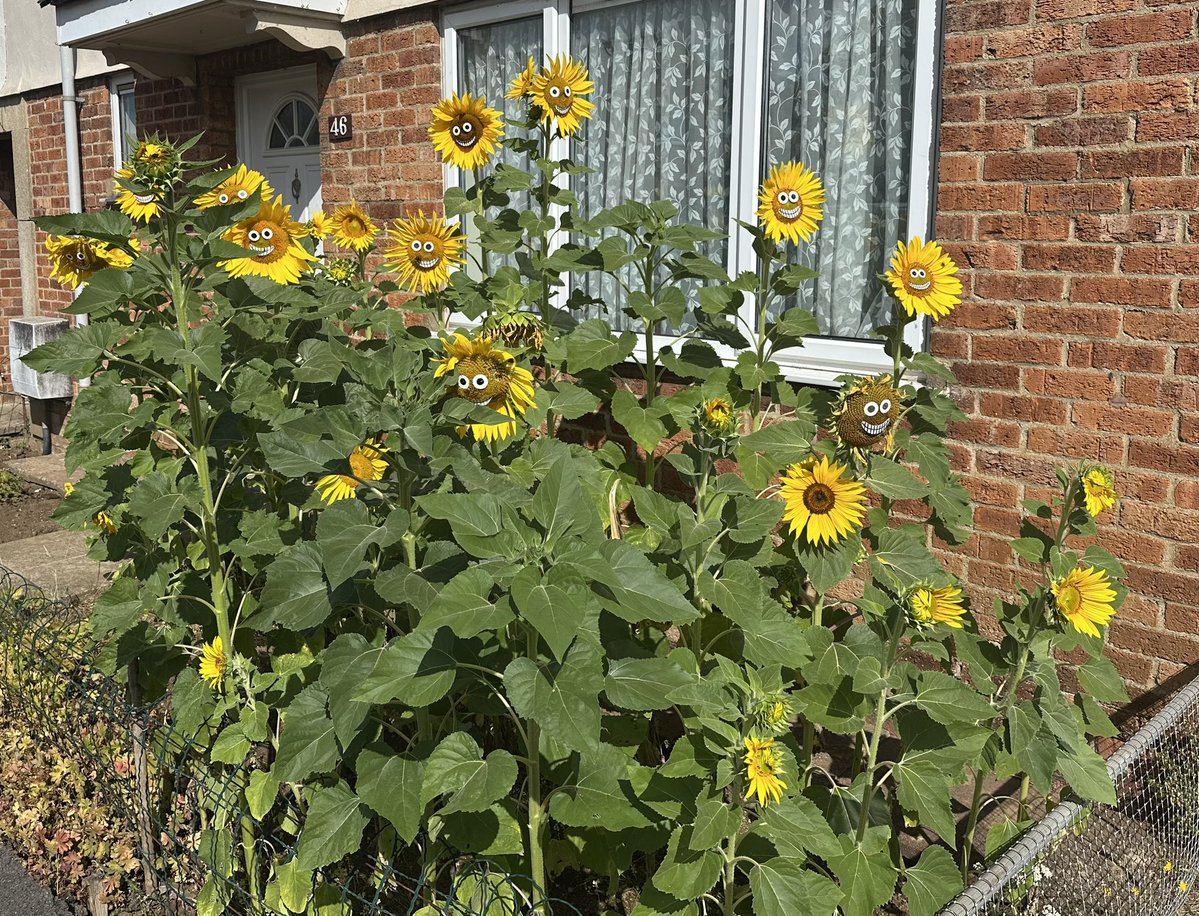
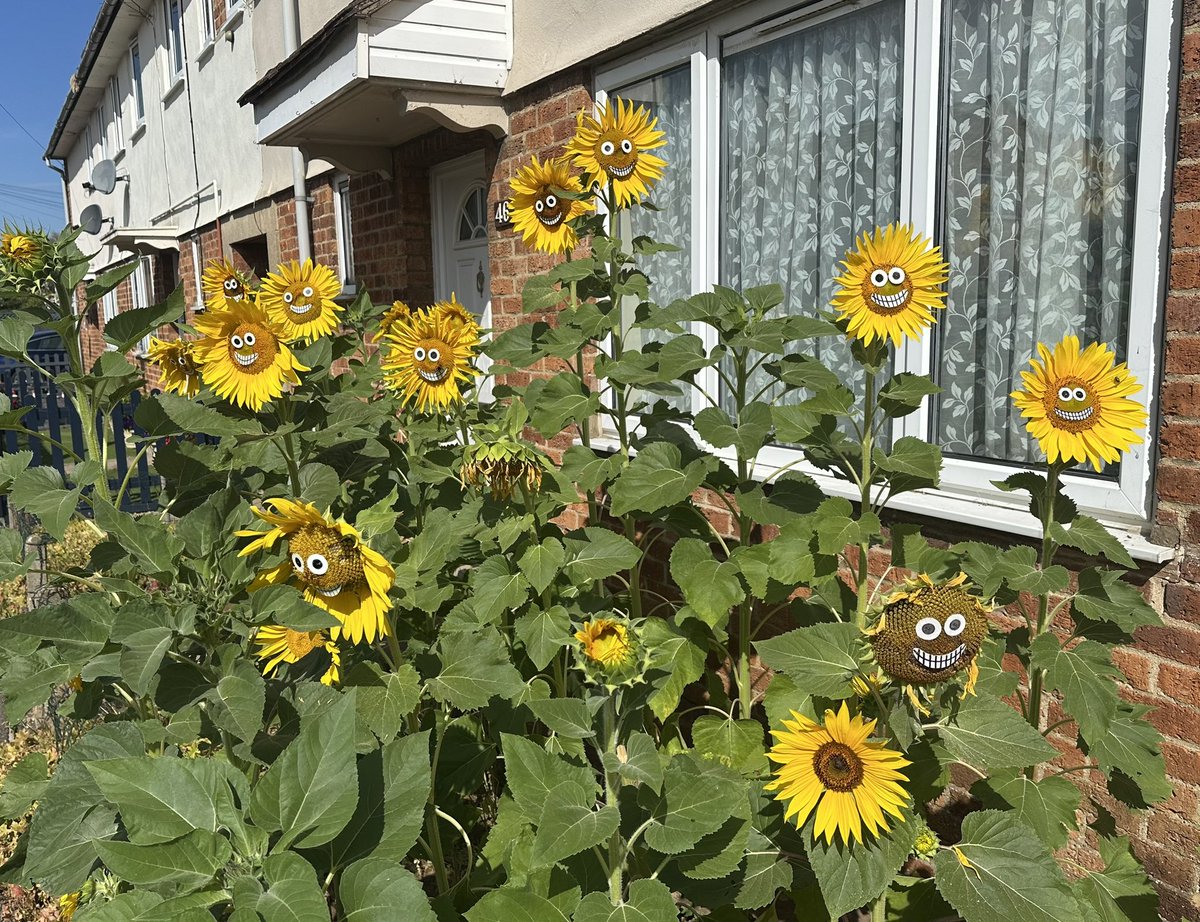
Every year, a neighbour in my street puts faces on the sunflowers that they grow out the front of their house. It’s been a good year for them so more faces this summer.
Always makes my laugh when I see them 😄
We need more people like this in our world!! 🤗