ownpath is a design and product company that partners with enterprises and startups to design and build great products.
We’re hiring for ownpath studios!
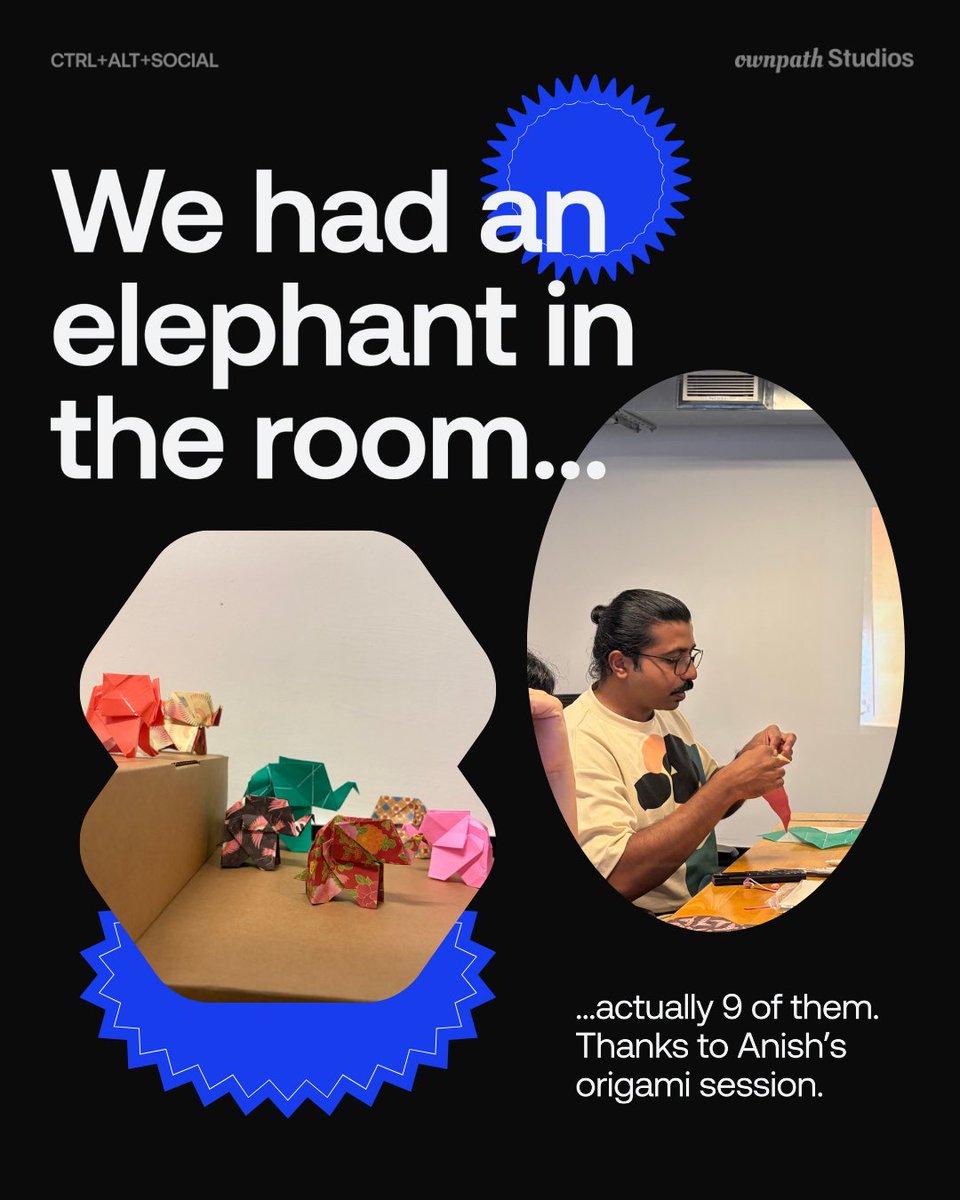
Last Friday, Anish, our Design Lead, traded pixels for paper and took us through an origami session. 🐘📄
Safe to say, we left with more patience, a little character development (and a cute little elephant, of course). 😅
Product teams spend a lot of time studying user behaviour.
But over time, those snapshots start to show their limitations, because behaviour shifts as products evolve.
Shreya Agarwal (Senior Design Manager, Grab) unpacked this idea in her session from the ownpath archives.
Shreya’s bigger point: behaviour and interfaces don’t move one way. They co-evolve.
Design shapes habits. Habits reshape design.
The real tension isn’t whether products shape behaviour, but whether we stay conscious of what we’re shaping as product builders.
Collaboration is moving from translation to shared understanding.
Designers are closer to execution intent when they set out to flesh out screens, and that changes everything downstream.
Read the full story on the ownpath Substack.
https://t.co/oz1kjbVO50
Design–dev collaboration has always been framed as a handoff problem.
Better specs. Cleaner files. More annotations.
But the real issue lay beyond those things.
Lately that distance has closed in meaningful ways.
Feedback loops are tighter. Context carries further.
This shift didn’t come from a new process or framework, but from tools that sit between design and code reducing friction and making intent easier to interpret.
When designers talk about inclusion, the conversation often starts at interfaces, components, or accessibility checklists.
But as @somyeah reminded us in her interview from the ownpath archives, exclusion usually begins much earlier. Long before a single screen is designed.
How do designers influence product teams to care about representing the right voices?
Somya outlines a few paths:
- Advocating in your individual capacity
- Questioning organizational values
- Using data and business insights to make the case for inclusion
As responsibility grows, something else can quietly erode: joy.
Many leaders respond by performing authority—changing their personality to match the role.
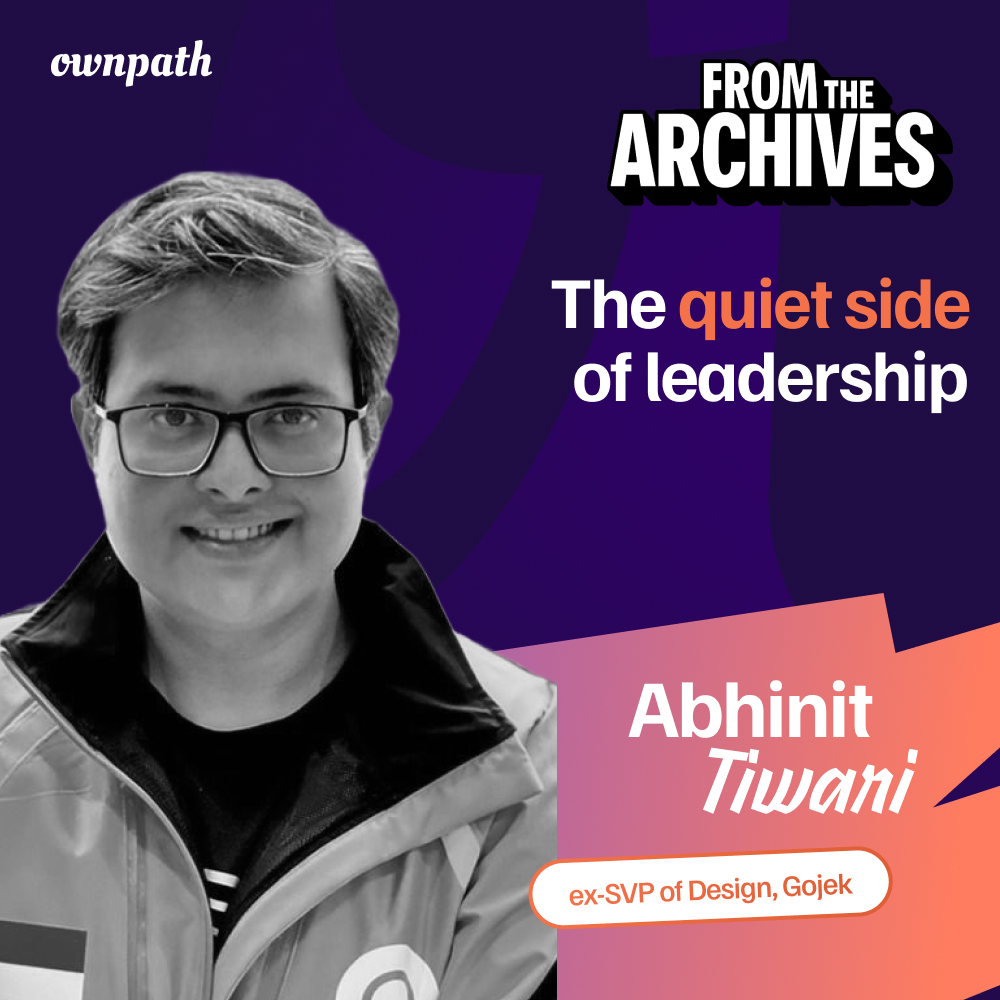
Abhinit’s advice is simple: Don’t become someone else.
Read the full post on the ownpath Substack: https://t.co/pgrj0m9w3j
Design leadership isn’t just about better products.
It’s about not losing yourself as responsibility grows.
In a session from the @ownpath_xyz archives, Abhinit Tiwari (ex-SVP of Design, Gojek) shared an inward look at what design leadership demands. (1/n)
So what actually holds a team together over time?
Not process. Not rituals.
Conviction.
“If you don’t fully believe in what the company stands for,” Abhinit says, “your team will feel it before you say it.”
Belief becomes the anchor. ↓