It happend, jaredfromsubway.eth lost $7 million dollar in a hack and the reason is simple.
For Uniswap pools you have to transfer the token to the contract and then call mint().
But RingSwap wants you to approve the pool and call mint(), it then calls transerFrom.
The problem, since SELFDESTRUCT got nerfed you cant re-deploy a new contrct with CREATE2 anymore, thats what we used to update our Mev Bots.
So Jared couldnt add checks to see if the allowance got consumed.
His only option was to deploy a new contract but he decided to be sloppy and keep his 2 million transaction count on etherscan, over a protocol that gives him $100 net profit a day.
Prediction markets are becoming one of the most interesting real-time information layers on the internet.
But raw market prices are not enough.
So we built PolyData Monitor / PolyMonitor — a live Polymarket signal atlas for tracking markets, order flow, oracle status, and real-world event context in one workspace.
🌐 Website: https://t.co/pTQ0H7QRwY
⭐ GitHub: https://t.co/xJm9Dzq73Z
What it does:
• Global 3D/2D market atlas
• Live Polymarket market monitoring
• Order book and OrderFilled flow
• Oracle / resolution status tracking
• Market detail panels with price, spread, volume, and liquidity
• Event-linked intelligence layers for macro, conflict, risk, and news context
• A dashboard-style cockpit for understanding how real-world signals connect to prediction markets
The core idea is simple:
Prediction markets should not be viewed only as isolated YES/NO prices.
They should be analyzed as a full signal system:
market price
liquidity
order flow
oracle state
event context
real-world risk
market microstructure
We are building PolyMonitor as an open-source research and engineering project for people interested in:
• prediction markets
• Polymarket data infrastructure
• market microstructure
• event-aware forecasting
• oracle and resolution risk
• AI agents for market intelligence
• real-time global signal monitoring
This is still an early version, but the direction is clear:
A prediction-market terminal should look less like a static odds page, and more like a live intelligence cockpit.
Feedback, issues, and contributions are welcome.
@Polymarket
Website: https://t.co/pTQ0H7QRwY
Repo: https://t.co/xJm9Dzq73Z
#Polymarket #PredictionMarkets #Crypto #OpenSource #DataInfra #MarketMicrostructure #AI
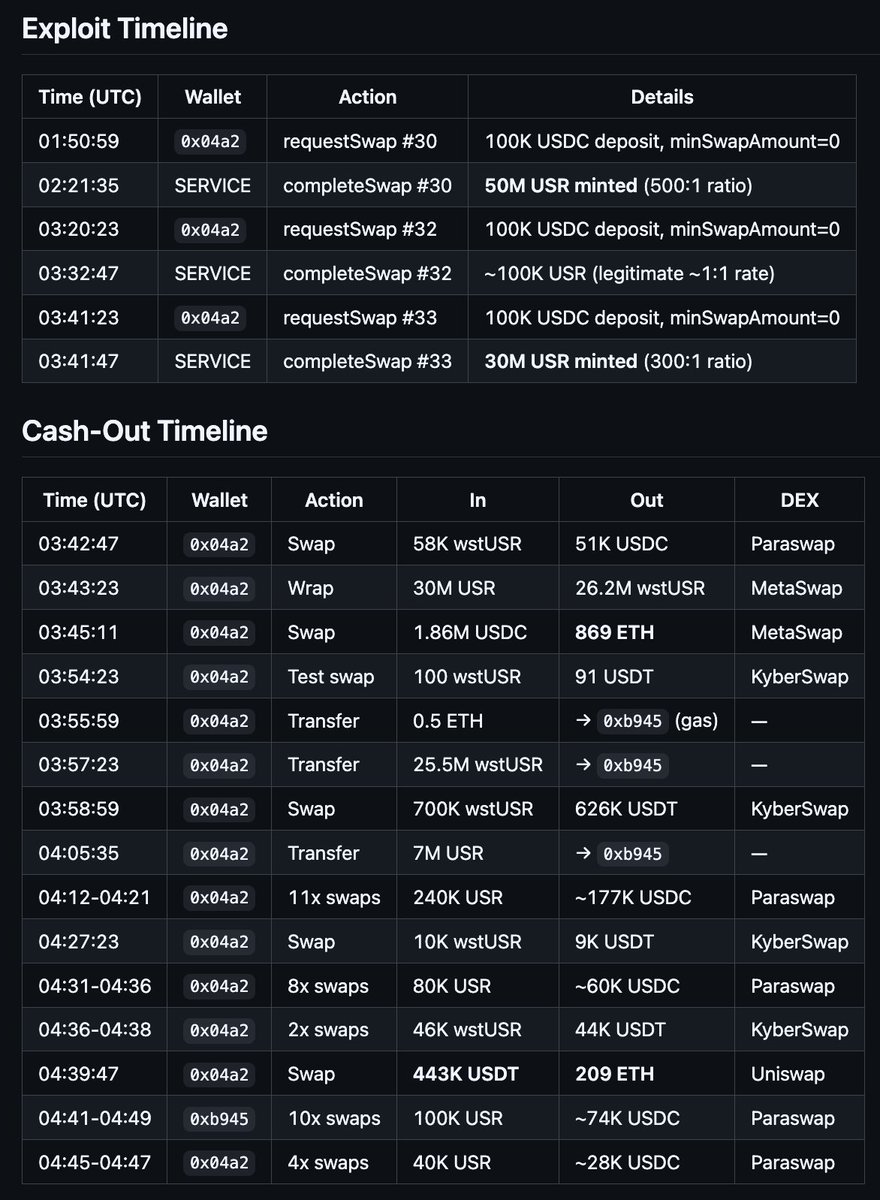
having claude update a github gist with everything about the USR hack and the attacker + team multisig activity. two hacker wallets to track right now
https://t.co/117EJLHtUa
The Federal Reserve just put out an incredible paper about Kalshi's data.
"Our results suggest that Kalshi markets provide a high-frequency, continuously updated, distributionally rich benchmark that is valuable to both researchers and policymakers."
https://t.co/cw5GrDFse6
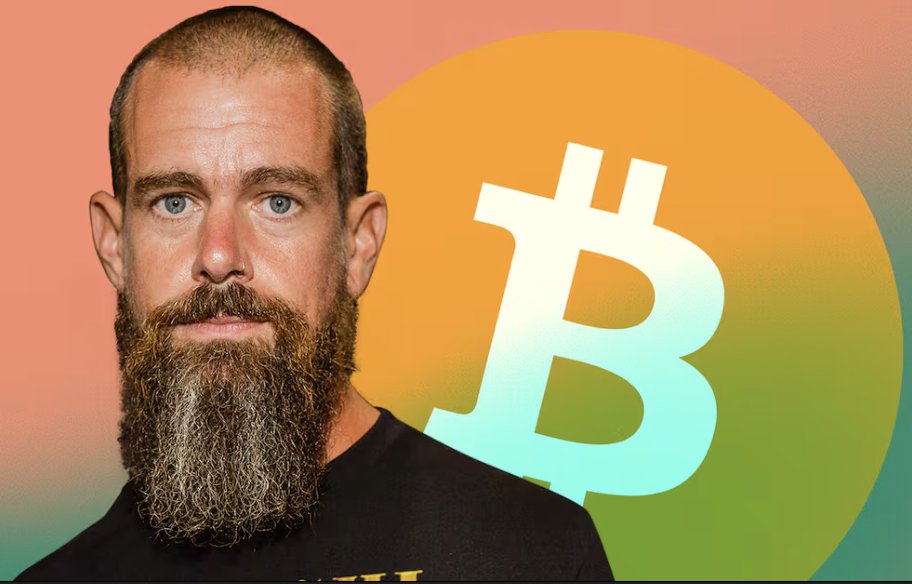
L402 Protocol (Lightning Labs): This is the Bitcoin-native version. Using the Lightning Network, AI agents can send "micro-Sats" to pay for GPU compute or LLM tokens. It uses "macaroons"—cryptographic credentials that act as both a receipt and a temporary API key. Jack Dorsey said it right: "We want Bitcoin to become p2p electronic cash and everyday money, as it was designed to be. If not, it is a failure."
all the agent code is open source and works with all models
Agent: https://t.co/iHgc13v5KG
Repo: https://t.co/eXLbrlOaM3
Paper: https://t.co/jf3EuKsiyS
Front-running USDT freezes is no longer a hypothetical risk. It is happening in practice. In one case, a single front-running transaction executed within three minutes enabled $37.3 million to move out before the freeze was enforced.
See our blog:
https://t.co/IdQmdwGfmc
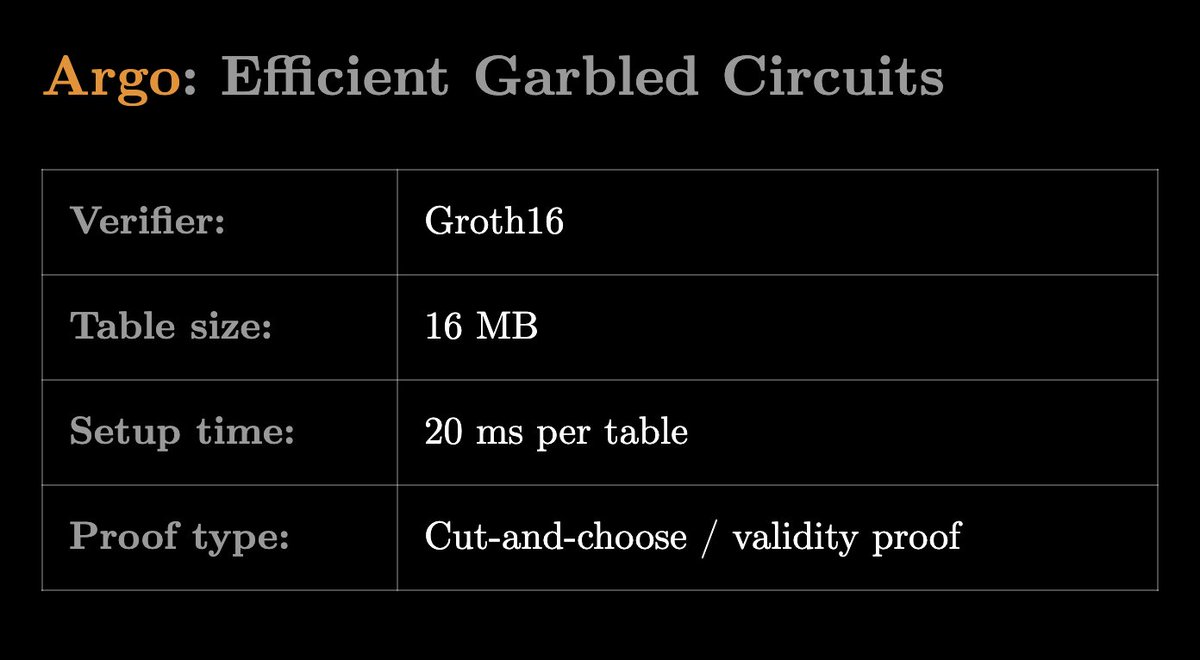
Today, the creators of BitVM, including @robin_linus, @liameagen, and @therealyingtong, launch { 𝙞𝙙𝙚𝙖𝙡 }.
We're using cryptography to advance privacy and scalability on Bitcoin.
Our first contribution is Argo, a garbling scheme enabling 2000× efficiency gains.
New work by lead author Chenyang Liu on Improving Decentralization by Removing Relays in Ethereum Proposer-Builder Separation (PBS)
with @mattlentz_ and @kartik1507 !!
https://t.co/GNIBr2y4vz
Authors: Barbara Liskov¹ and Leslie Lamport²
Abstract:
We present FedConsensus, a novel distributed consensus protocol that achieves Byzantine fault tolerance through active collaboration with the United States Federal Bureau of Investigation (FBI). Unlike traditional BFT protocols tolerate up to f < n/3 malicious actors by cryptographic means and redundant computation, FedConsensus tolerates an arbitrary number of malicious or crashed nodes (f < n) by delegating punishment and recovery to federal law-enforcement agencies.
The protocol proceeds in numbered rounds. In each round, nodes propose values and exchange pre-prepare and prepare messages as in PBFT. Upon detection of equivocation or other Byzantine behavior (proven in O(1) with Merkle proofs), the detecting node transmits a sealed complaint packet to the nearest FBI field office via a dedicated, hardware-secured channel. The packet contains cryptographic evidence, node operator identity (established at system bootstrap via in-person identity verification), and GPS coordinates of the offending server rack.