Exciting opportunity! The Policy Research Unit in Reproductive Health is seeking a Unit Manager to manage staffing, budget, reporting & coordinate programme implementation. Strong management skills? This could be for you! Learn more here: : Job Details - https://t.co/DEOyXGc1PA
Last 2 days to apply for either Unit Manager or Postdoc research fellow at the new NIHR Policy Research Unit in Reproductive Health (closes on 20th)
https://t.co/DFcXz2Wce0
and
https://t.co/ufjVt53GSY
@UCL_IfWH @Judith_SRH @juliavbailey@BeckTaylorPH@AbiAyorinde @fdelond
❗️Please vote ❗️
The @p3_study video 'What's your plan?' is one of 4 finalists in the UCL Faculty of Population Health Science's video competition.
You can watch all finalists and vote here
https://t.co/7iBchEy7XX by 9am on 25th Sept
❗️❗️ New jobs available at UCL ❗️❗️
Come and work with me at the new NIHR Policy Research Unit in Reproductive Health
We are looking for a Unit Manager and a post-doctoral research fellow
https://t.co/XqAq3D57wm
https://t.co/DFcXz2Wce0
It's out! New 'It all starts here' podcast hosted by Olivia Moir featuring @jennyhall33 talking about the gap between contraception and maternity services and covering many findings from the P3 study @UCL_IfWH @PreconceptionUK https://t.co/pegsRuLHIS
June was a month of conferences, with work from the P3 study being presented at three different international events @RCObsGyn @FSRH_UK @ESHRE read more in our blog here
https://t.co/PtfY2TDcSl @UCL_IfWH
Have you read our #openaccess paper from the @p3_study ⤵️
Clinical considerations and comparing questions about pregnancy preferences in women of reproductive age
👉 Click here to read: https://t.co/12I4gucdfT
@jennyhall33 @Judith_SRH @NatalieEdelman @UCL_IfWH#srh
Implementing and evaluating the LMUP in routine practice has been a major component of the P3 study. Check out our website for updates on findings https://t.co/24BmPUKqiv
The introduction of the london measure of unplanned pregnancy as a routine measure has been a significant piece of my work for a long time. It's great that it's finally getting traction as it will help us monitor reproductive health inequities and act on them @FSRH_UK @p3_study
Read a blog on @p3_study about @ThwaitesAnnette's research highlighting the need for #contraception after #IVF if people don't want another pregnancy: https://t.co/o4fySgOWLf
More @p3_study findings being presented at #rcog2023 - qualitative evaluation of the implementation of questions about pregnancy planning at booking; perspectives of women and midwives EP0183 @tamsin_bicknell@UCL_IfWH
Looking forward to a day of varied presentations at #RCOG2023@p3_study findings on using LMUP in antenatal care are being presented in posters - check them out!
There will be two videos; one on the impacts of unplanned pregnancy on maternal and child health to explain why it is important to ask; and the other showing how it could be done. Looking forward to sharing them with you!
Lights! Camera! Action! We were a bit out of our comfort zone recently, recording support materials for #midwives to talk to women about #unplanned#pregnancy during antenatal care
As funding for @p3_study is finishing, we are reflecting on some of the achievements so far. ✅1000 participants ✅90% follow up at 12 months ✅5 publications ✅multiple conference presentations and posters ✅media interest... thanks to all participants
https://t.co/C0rKQJ1K2M
It's been a busy few weeks for the @p3_study with 2 papers in @BMJ_SRH! Here's a link to our blog on measuring reproductive autonomy https://t.co/8sDfK3vCxx @jennyhall33@UCL_IfWH
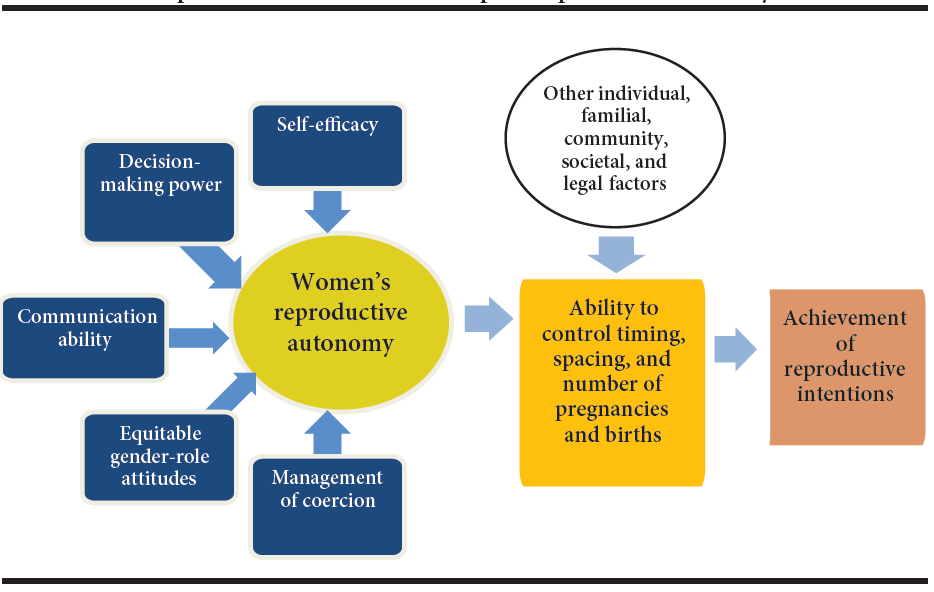
By identifying women at risk of low reproductive autonomy, the RAS can help support women’s empowerment and gender equity in reproductive contexts. This could be useful in SRH clinics and other settings, as well as as a research tool
New paper 🥳 on reproductive autonomy, providing a new tool for measuring it in the UK, - the Reproductive Autonomy Scale (RAS)- published in @BMJ_SRH https://t.co/yeCKWImepM @jennyhall33@UCL_IfWH
The RAS is made up of 14 questions divided into 3 sections: Decision Making, Freedom from Coercion, and Communication. These are the three factors most influential in shaping a woman’s reproductive autonomy.