Tinubu in Jos Confirms ‘Don't Vote for Me’ Prediction on Power Supply
During the 2023 campaign, President Tinubu made a clear electoral promise: “If I don’t give you constant electricity in four years, don’t vote for me for a second term.”
When he took office in 2023, Nigeria had a power supply of over 4,000 megawatts and lower tariffs. Today, the electricity power supply is less than 4,000 megawatts on the average, and Nigerians are paying higher tariffs. Nigeria currently has the lowest per capita electricity consumption in the world, with a rate below 30% of the African average. Africa’s average is 617kwh, Nigeria’s is 144 kWh. This means that Nigerians consume least electricity than other Africans.
In a glaring display of disregard for promises and a lack of trust, President Tinubu, during a brief airport stopover to visit grieving families of the Jos attack on Thursday, April 2, 2026, stated that one of the reasons for his 10-minute stay was that the airport had no electricity. “You have no light here I fly out in ten minutes” At a time when Nigerians are enduring days without power, our leaders cannot even stay a few minutes without it.
Now is the time to stop incompetent leaders—those lacking the capacity and compassion—who prioritise their own comfort over the well-being of the people and make empty promises.
A new Nigeria is POssible. -PO
The Etymology of Ịchàfụ or Ichàfò
The Claim: Ichafu is a corruption of the French word "Chiffon."
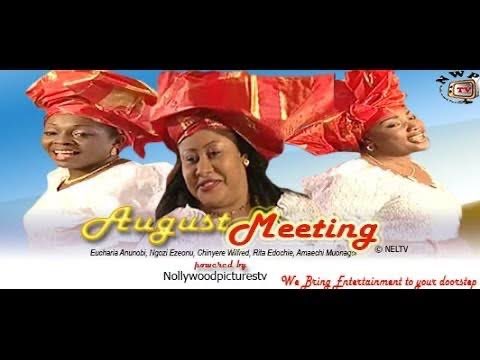
The Reality: Ichafu is a native Igbo compound noun derived from the active verbs Ịchị (to gather) and Ịfụ/Ịfọ (to wrap/bind).
1. The Verb Roots (The "Action")
Íchí (from Ịchị): To gather, bunch up, collect, or marshal. This describes the manual manipulation of the fabric into folds and pleats to create volume.
Áfụ́ / Áfọ́ (from Ịfụ/Ịfọ): To wrap, bind, envelope, or secure. This describes the structural act of winding the fabric around the head.
The Action Phrase: Íchí áfụ́ ísí — To gather and wrap the head. (The literal manual for creating a flamboyant head-dress).
2. The Noun Formation (The "Object")
In Igbo morphology, adding the prefix Ì- to a verb compound creates a noun.
Ìchàfụ̀ / Ìchàfọ̀: The sculptural result of the gathered wrap.
3. The 1904 "Receipt" (The Historical Proof)
The ancient English-Ibo-French Dictionary documents the word in its uncontracted, original form: Içi-ọfọ (Ichi-ofo) Içi-afo(ichi-afo), Içafo(Ichafo)
The Categorization: It is listed under "Kerchief" “head dress," with the French equivalent being Couvre-chef(Head-cover) and Coiffure (Elaborate Hairstyle/Head-dress).
4. In the same 1904 record, the French authors who were native speakers—defined Chiffon as Nkilika-akwa(Rags/Clouts).
There is zero linguistic connection. Igbos did not name their "Coiffure" after a French word for rags. They named it after the ART of the Ichi-afo (The Gathered Wrap).
My visit to Benin, Edo State.
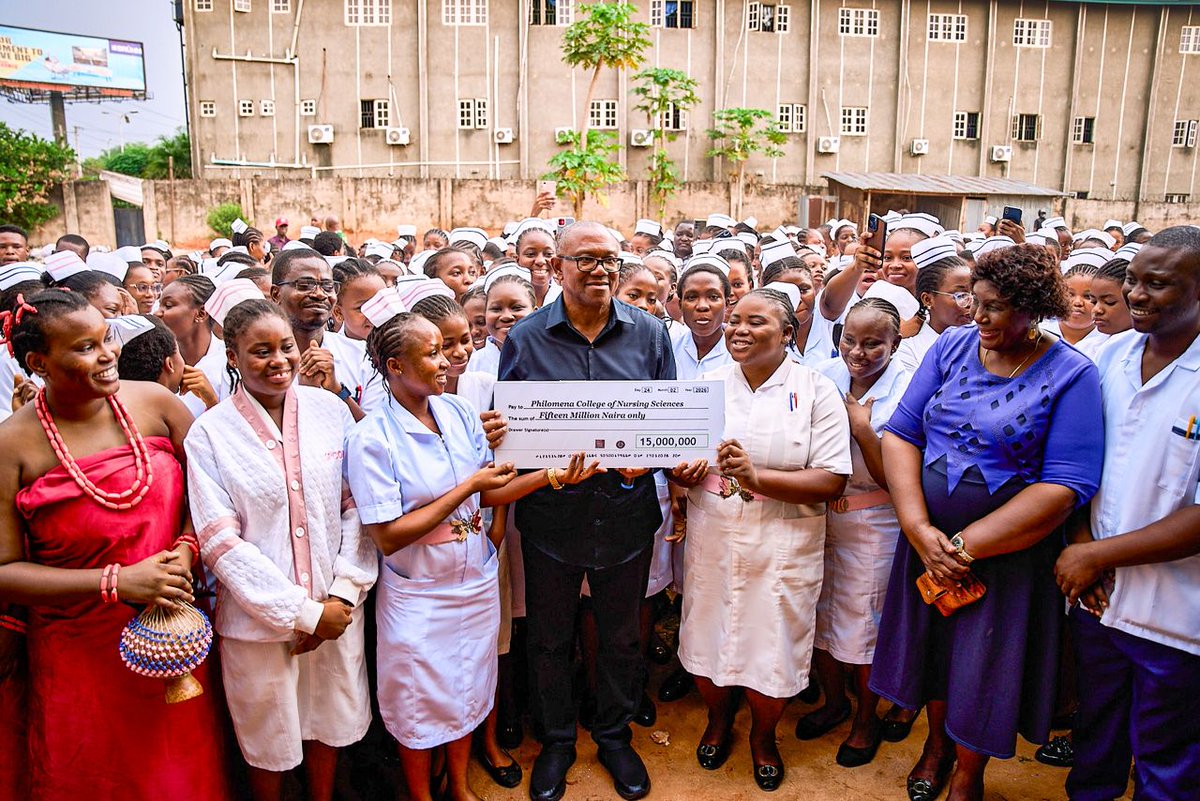
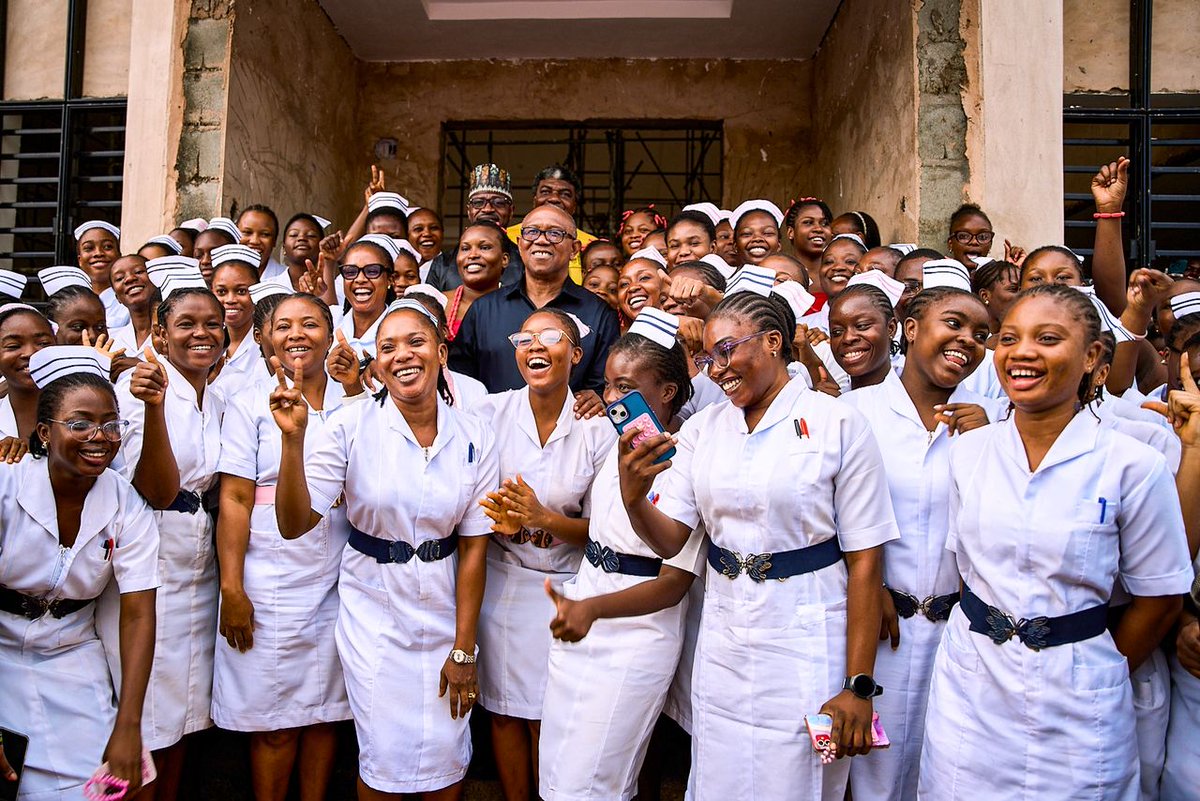
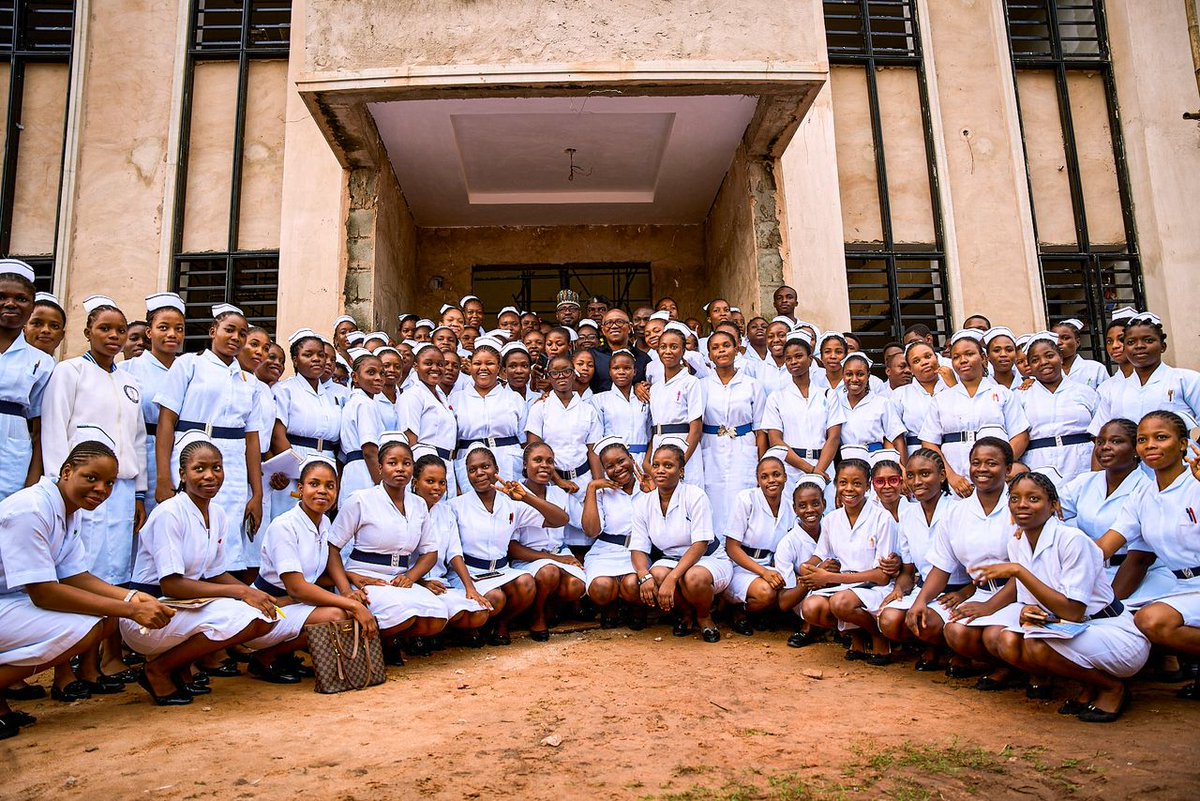
On Tuesday, 24 February, in continuation of my commitment to supporting critical sectors of development - healthcare, education, and poverty reduction - I visited Benin City. While there, I stopped at the Philomena School of Nursing Sciences, one of the largest nursing institutions in the region.
This was not my first visit. Over the years, I have made it a duty to encourage both staff and students of schools across the country as they pursue excellence in healthcare training. In further demonstration of this commitment to Philomena School of Nursing Sciences, and to support the school’s facilities as I have done previously, I donated the sum of fifteen million (=N=15M) naira.
I call on government at all levels, as well as wealthy Nigerians, to channel greater attention and resources toward the critical pillars of development - security, healthcare, education and poverty reduction.
These are the foundations upon which a just and prosperous society must stand.
A New Nigeria is POssible. -PO
Thank You, Nigerians
I am profoundly grateful to Nigerians from around the world for your prayers, calls, and solidarity following the incident at the ADC office in Benin yesterday. I especially appreciate your support during this difficult time for the family of the distinguished elder and former Governor of Edo State, Chief John Oyegun, who has served Nigeria honourably in various capacities, as well as for another former Governor, Professor Oserheimen Osunbor. Your support has strengthened my faith in our shared humanity and our collective hope for a better Nigeria. My deep gratitude is reflected in my renewed commitment to serve and build our nation.
Experiences of lawlessness are not new to me. Years ago, the violence and insecurity in Anambra shaped my determination to seek the governorship of the state, convinced that leadership must restore order, security, and public trust. Today, the growing lawlessness across our country calls upon all men and women of goodwill to step forward—not in fear but with a sense of responsibility. As Plato reminded us, the price good people pay for refusing to participate in government is to live under the rule of bad people.
This moment urges Nigerians to be even more resolute in electing leaders defined by competence, commitment, character, and compassion—leaders who prioritise the nation above self and service above power.
Together, with courage and unity, we can build the peaceful, secure, and prosperous Nigeria our people deserve.
A new Nigeria is POssible. -PO
Why the Controversial tax law should be paused?
It is now undeniable that the tax laws have been fundamentally altered, and even a firm as esteemed as KPMG has pinpointed 31 critical problem areas, from drafting errors to glaring policy contradictions and administrative gaps. This revelation should prompt every responsible government to take immediate action.
Even more alarming is the fact that it took private meetings between the National Revenue Service and KPMG for these serious issues to be acknowledged. If experts require closed-door discussions to navigate the complexities of our tax laws, what hope does the average Nigerian have of comprehending the obligations being imposed on them?
Taxation transcends mere fiscal policy; it represents a social contract between the government and its citizens. You cannot enforce a social contract that isn’t understood or trusted.
Globally, tax policies are justified by delivering tangible benefits to citizens: improved healthcare, better educational systems, job opportunities, infrastructure development, and social safety nets. This is what the social contract signifies. In Nigeria, the narrative is all about how much more the government seeks to extract, rather than what it is prepared to offer in return. A tax system devoid of clear public benefits isn’t reform; it is, quite frankly, extortion.
Typically, months, if not years, are dedicated to consulting with businesses, workers, and civil society before tax drafts are presented for public discussion, with the ramifications clearly explained. People must be informed not only about their financial contributions but also about the benefits that will ensue. This is how legitimacy is cultivated. Yet, in Nigeria, we have seen no such public consultations or discussions regarding the final tax laws, leaving ordinary citizens completely in the dark about both the regulations and the benefits of the taxes they’re expected to pay.
We have hastily pursued collection without securing a consensus and imposed enforcement without providing adequate explanations. Even after the removal of subsidies, Nigerians remain in limbo, waiting for tangible benefits or relief. Instead, they are grappling with skyrocketing food prices, exorbitant transport costs, dwindling purchasing power, and escalating poverty levels.
Before we have even begun to address these issues, we are being thrust into an expansive new tax regime, riddled with inconsistencies and producing 31 alarming red flags from a leading global accounting firm. This is not the hallmark of responsible governance.
Without trust, taxation feels like punishment. Without clarity, it breeds confusion. Without evident public value, it amounts to robbery.
Nigeria cannot afford to place further burdens on its already struggling citizens. What we need is a government that listens, communicates effectively, and prioritises building national consensus. This is the only viable path to genuine reform, unity, growth, and shared prosperity.
A New Nigeria is not just a possibility; it is an imperative. -PO
Where is the President of the Federal Republic of Nigeria?
This is not just a question; it’s a critical demand for accountability in a national emergency. As we approach the end of this year, Nigeria will be home to approximately 140 million people living in extreme poverty—the highest number in the world. We are grappling with one of the hungriest populations globally, staggering insecurity, an unemployment rate exceeding 80 million among our youth, and one of the worst places to be born, with infant mortality rates worse than those of a nation seven times our size.
In the midst of this chaos, where has our President been? Spending 196 days abroad in 2025 alone—more than he has spent within his own country, at a time when we face profound crises.
Since December 2025, Nigerians have not heard a word from their President. Reports indicate he opted for a holiday in Europe while the nation was plunged into a New Year marked by hunger, anxiety, and uncertainty. There was no New Year address, no national broadcast, no leadership voice to provide reassurance or guidance.
This lack of presence starkly contrasts with what we see in comparable developing nations where leaders step up in times of crisis. In Nigeria, following U.S. military strikes on our soil, our President remained silent. Instead of directly addressing the nation, Nigerians learned about these critical events from foreign media, American officials, and the vague communications from the Presidency’s aides known for their propaganda, rather than from their own leader.
This is not governance; it’s neglect. The President was seen abroad yet again for another summit while remaining absent from his own country when he is needed the most. Earlier this year, he even sent an AI-generated image to the nation instead of addressing his people face-to-face.
Are we to believe Nigeria is being governed, or is it merely being managed from elsewhere? Leadership is not simply issuing press releases; it’s about standing before the people, engaging with them, and offering clarity.
We are not asking for perfection; we demand presence. Nigerians are eager to hear from their President through direct media briefings. They deserve to understand the state of their country. You cannot run Nigeria like a personal business or a private club; it is imperative to rebuild and grow our economy through unity and clarity.
Progress is impossible without unity and consensus, and it begins with strong leadership that sets the tone. No policy, reform, economic plan, or security measure can thrive in a divided nation. When leadership withdraws, unity falters, and the fabric of our society unravels under the weight of mistrust and division.
In a time of crisis, the absence of leadership is not just troubling; it is perilous. Silence in the face of crisis is the loudest form of failure.
A New Nigeria is not just POssible; it is essential. -PO
A Young Nurse Encounters Nigeria
Sunday, January 4th, was an unusually demanding day for me. I had an event in Ughelli, Delta State, and had to drive from Onitsha to the city. From there, I proceeded to another event in Mgbidi, Imo State, and thereafter traveled from Owerri to Lagos.
On the Air Peace flight, I sat in 5A, beside me in 5B was a young woman of about 24 years, Chidera Ugwokeba, whose parents are from the South East, but who was born and raised in the USA. She had just graduated from nursing school and was visiting Nigeria with her parents for the first time. She had exchanged her seat with her sibling to enable her talk to me having been told who I am.
During the flight, she began to share her sadness and confusion about Nigeria. Her first question was simple but piercing: Why do basic things not work in Nigeria? She then recounted a painful experience. Her sister, also visiting Nigeria for the first time, had a domestic accident and was rushed to what they were told was the best government-owned hospital in the area.
On arrival, even though her sister’s hand was bleeding, the hospital staff insisted that payment must be made before any treatment could begin. Shocked, they asked the hospital attendant whether he truly did not see the urgency of the situation. In response, they were shown other patients with even worse conditions who were also being left unattended because they had not paid.
They eventually paid, and it was time for the blood test. Traumatised, they realised the hospital had only one blood-testing machine for all patients, and it was not being sterilised between uses. When she raised concerns that the equipment had not been properly sterilised, they were bluntly told to stop asking questions if they wanted her sister to be treated. Despite their payment, they had to buy all the items needed for her treatment.
She found it hard to believe because, according to her training and every hospital she had visited, treatment comes first - payment comes later. She told me they had considered organizing a GoFundMe to support healthcare back home, but relatives warned them that any money raised would likely be embezzled.
Then she said something that struck me deeply: “I now understand what happened to Boxer Joshua. This is why there was no ambulance to rush him to a nearby hospital.” She wondered aloud whether it was simply because the country is poor. Yet she added that she would willingly offer her skills and service for free and help raise money to make things better.
Listening to the lament of a young, patriotic Nigerian who is prepared to offer free service and raise money to help her country and its citizens, I painfully replied by encouraging her not to lose hope. The country is not poor, but it is poorly governed. Nigeria can afford basic necessities, especially critical and necessary ones, but they are often not considered priorities due to incompetent leadership.
A standard ambulance costs about ₦150 million ($100,000). Nigeria spent ���39 billion refurbishing the National Conference Centre in Abuja and ₦21 billion rebuilding the Vice President’s residence. Those two projects alone- ₦60 billion -could have provided about 400 brand-new ambulances, roughly 11 per state, including the FCT. Had 11 functional ambulances existed in Ogun State, one might have been available for Joshua.
Building a primary healthcare centre in a community costs about ₦75 million. Yet we spent about ₦300 billion ($200 million) on an additional presidential jet - money that could have built over 4,000 primary healthcare centres, about 110 per state. The only visible value the jet adds is the ability of the President to occasionally disappear without the public knowing where he is, as is the case now.
Lest we forget, If I Don't Give You Constant Electricity in The Next 4 Years, Don't Vote For Me For Second Term
The impact is too glaring for Nigerians to forget the promise of Mr. President while campaigning on 22nd December 2022 that: "If I Don't Give You Constant Electricity in The Next 4 Years, Don't Vote For Me For Second Term".
For a nation already stated to have more people living without electricity than anywhere in the world, there could not be any more firm comforting political promise than this.
Yet APC and its current Government have presided over more national grid failures and power outages than any government in our history. There are now repeated blackouts despite billions in power investments.
Over the years, billions of dollars have been spent on the power sector in Nigeria. In fact, Nigeria has spent more on power generation with little or no increase in supply, than countries like Vietnam, Egypt, Indonesia, and Bangladesh. Yet, while some of these nations have proudly doubled their electricity generation, and distribution by adding tens of thousands of megawatts to transform their economies and increase their GDP, Nigeria has barely crawled from 4,500MW to 5,000MW.
With a GDP of about $200 billion, Nigeria has the capacity to significantly boost its economy if it invests properly in electricity. Generating even a bare minimum of 10,000MW could raise our GDP by about 50%, which will unlock industrial growth, and create millions of jobs. But rather than focusing on this, which will improve our economy, we are focused on coastal roads that will contribute far less to our economic growth, while factories shut down, jobs disappear, businesses collapse, and ordinary Nigerians live in darkness.
Mr. President, it is time to prioritise generating and distributing more electricity to power businesses, especially NSME, which will create jobs and grow the economy.
A New Nigeria is POssible. -PO
The obsession of this administration with putting a burden on the populace is becoming legendary and continues to reveal its apparent disconnect with the people and the suffering.
The International Passport fees in Nigeria have now skyrocketed to ₦100,000 for a 32-page booklet and ₦200,000 for 64 pages. This is the third increase in just two years.
In a country where the new minimum wage is only ₦70,000, the cost of a single passport now exceeds a worker’s monthly salary, probably the only country in the world to achieve this feat.
Instead of making life easier, this government keeps shifting the burden onto ordinary Nigerians. It is alarming that the price of the international passport is higher than what workers earn in a month. -PO
On #PeterObiAt64
We, the Anonymous Investigators Community of Nigeria, have dug deep into Peter Obi’s past. Here are all the shocking facts we uncovered!
Born in Onitsha (1961), Obi earned a degree in Philosophy from the University of Nigeria, Nsukka.
Thread…
INT!M!DATING BIOGRAPHY OF PETER OBI
Name: Peter Gregory OBI, (CON)
EDUCATION:
· Christ the King College, Onitsha (W.A.S.C.)
. The University of Nigeria, Nsukka (B.A. Philosophy)
· Lagos Business School, Nigeria (Chief Executive Program)
· Harvard Business School, Boston, U.S.A. (Mid to Mid Marketing)
· Harvard Business School, Boston, U.S.A. (Changing the Game)
· London School of Economics (Financial Mgmt/Business Policy)
· Columbia Business School, New York, U.S.A. (Marketing Mgmt )
· Institute for Management Development, Switzerland (Senior Executive Program)
· Institute for Management Development, Switzerland (Break-Through Program for CEOs)
· Kellogg Graduate School of Management, U.S.A. (Advanced Executive Program)
· Kellogg School of Management U.S.A. (Global Advanced Mgmt Program)
. Oxford University: Said Business School, (Advanced Mgmt& Leadership Program)
. Cambridge University: George Business School (Advanced Leadership Program)
PREVIOUS POSITIONS
· Governor, Anambra State of Nigeria (2006-2014)
· Honorary Special Adviser to the President on Finance (till May 2015)
· Member, Presidential Economic Management Team (till May 2015)
· Vice-Chairman, Nigeria Governors’ Forum (2008-2014)
· Chairman, South-East Governors’ Forum (2006-2014)
. Former Chairman: Board of Securities and Exchange Commission (SEC)
· Former Chairman: Fidelity Bank Plc.
· Former Chairman: Guardian Express Mortgage Bank, Ltd.
· Former Chairman: Future Views Securities, Ltd.
· Former Chairman: Paymaster Nigeria Plc.
· Former Chairman: Next International (Nigeria) Ltd
· Former Director: Guardian Express Bank Plc.
· Former Director: Chams Nigeria Plc.
· Former Director: Emerging Capital Ltd
· Former Director: Card Centre Plc
MEMBERSHIP OF PROFESSIONAL ASSOCIATIONS/ORGANIZATIONS
· Member, Nigerian Economic Summit Group (NESG)
· Member, Nigerian Chartered Institute of Bankers
· Member, British Institute of Directors (IOD)
MEMBERSHIP OF FEDERAL GOVERNMENT COMMITTEES
In my capacity as the Governor of Anambra State, I served as a member of:
* Federal Government Committee on Minimum Wage
* Federal Government Committee on Negotiation with Labour on Subsidy
* Federal Government Committee on Mass Transit
* Federal Government Committee on Natural Resource
* National Economic Council Committee on Power Sector Reform
* National Economic Council Committee on Sharing of MDGs Funds
* National Economic Council Committee on Accurate Data on Nigeria’s Oil Import and Export
* Agricultural Transformation Implementation Council
* Sub-Committee on Needs Analysis of Public Universities in Nigeria
* National Economic Council Review Committee on the Power Sector.
AWARDS AND RECOGNITIONS
2015: Golden Jubilee Award from Catholic Archdiocese of Onitsha for outstanding contribution to quality healthcare delivery in St. Charles Borromeo Hospital in particular and Anambra State in general, on the occasion of the Golden Jubilee celebration of the hospital.
*2014: Nigerian Library Association Golden Merit Award for remarkable improvement of libraries in Anambra State, exemplified by our Government's construction of the Kenneth Dike Digital State Library, remarkable upgrade of the Onitsha Divisional Library, and provision of library facilities in secondary schools across the State.
*2014: Champion Newspaper Most Outstanding Igbo Man of the Decade.
* 2014 The Voice Newspaper (Holand) Achievers Award for Outstanding Example in Leadership and Governance.
*2013: Silver Bird Man of the Year (with Governor Babatunde Fashola of Lagos State).
*2012: Business Hallmark Newspaper Man of the Year.
*2012: The Golden Award on Prudence – by the Methodist Church of Nigeria as the Most
Financially Prudent Governor in Nigeria.
* 2012: Leadership and Good Governance Award by The Ezeife Leadership Foundation Award for restoring peace and harmony to Anambra State.
Extremely cruel to humiliate a mother in front of her daughter like this. Even worse that this was recorded and posted on social media.
My mother used to sweep people’s houses and gutters in 2016. It hurt too much that I could do nothing financially to stop her. I often insisted on going with her, just to help fetch the water she needed so we could finish quicker and get back home before daylight. I didn’t want anyone to see us. The poverty that pushes one to hide their labour in the dark is a painful one.
Yes, that child should not be working. But more than outrage, what she and her mother deserve is compassion. The only humane response is to help.
If no one has done this already, I would like to take full responsibility for the girl’s education through university. I hope this eases their burden in some way. These are incredibly hard times.
Our Privilege blinds us in ways we’ll never truly understand.