Donald Trump may have finally done what years of warnings from Paris and Brussels could not:
Convince Europe’s free-market holdouts that relying on American technology is a vulnerability.
🔗 https://t.co/gsezwnn7ow
The Dutch government blocked a proposed takeover of Solvinity Group BV, a provider of cloud services in the Netherlands, by US-based Kyndryl, citing security concerns. https://t.co/nM2fxEypEl
Conspiracy theories aren’t new – but their scale and impact have changed.
In today’s digital space, they’re a powerful part of the disinformation ecosystem.
Our latest paper explores what drives them, how they spread, and their real-world impact.
🔗https://t.co/7olmWklO7x
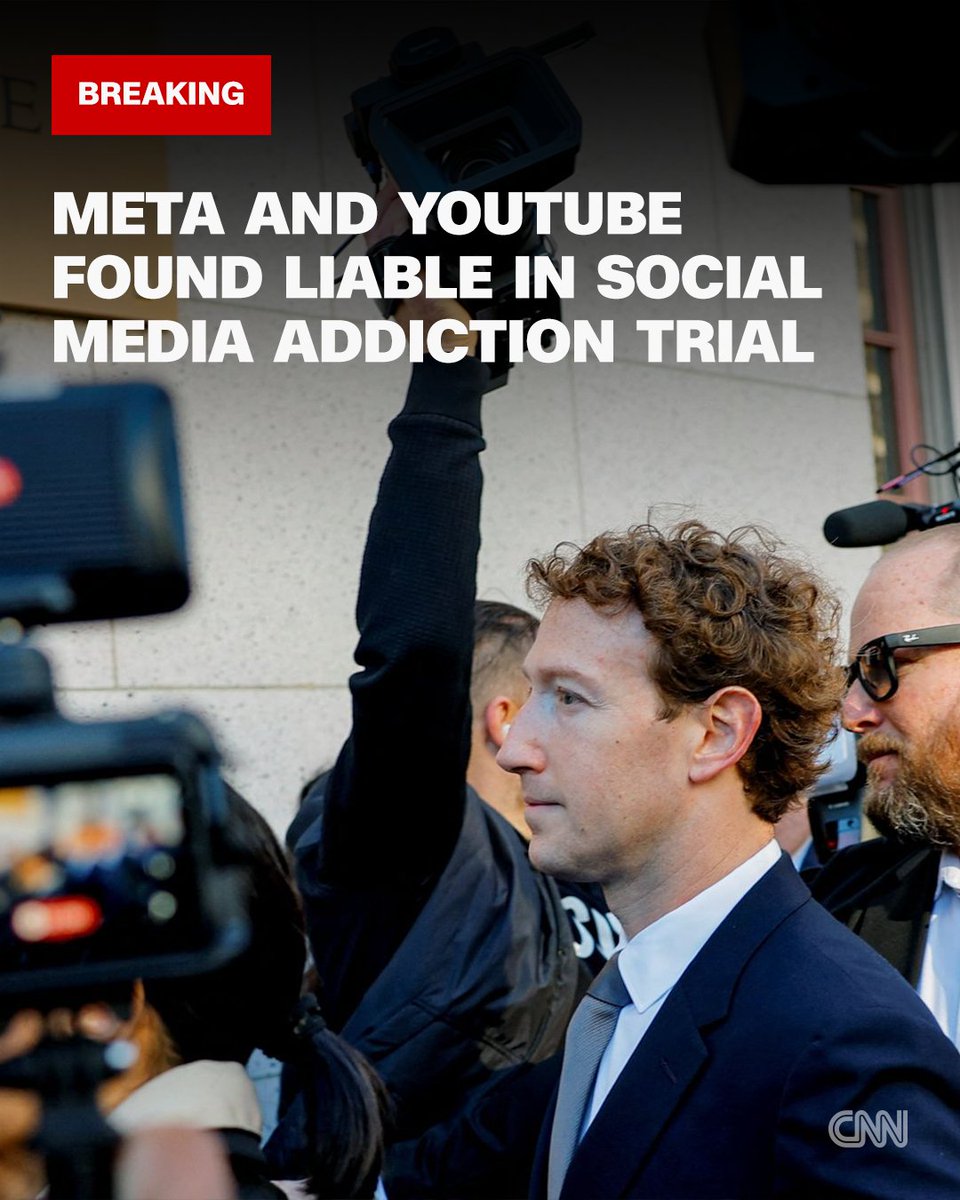
Jury finds Meta and YouTube liable in landmark social media trial that accused the tech giants of harming a woman's mental health https://t.co/UUBVVejS5L
🚨 Most people haven't realized it yet, but pro-human AI laws are already here.
In a sea of inaction and deregulation, New York is surprisingly taking the lead.
My article below:
"Any method that can be misused to surreptitiously track people's movements without their knowledge is concerning," EFF’s Cooper Quintin told @CNET. "But so are all of the technologies in modern cars that intentionally violate drivers' privacy.”
https://t.co/H2aBJWo3O4
A multipolar world requires multilateral solutions.
In this new reality, the EU must defend the rules-based international order. Violations of international law must not be accepted, human rights violations must not be tolerated.
Freedom and human rights cannot be achieved through bombs. Only international law upholds them.
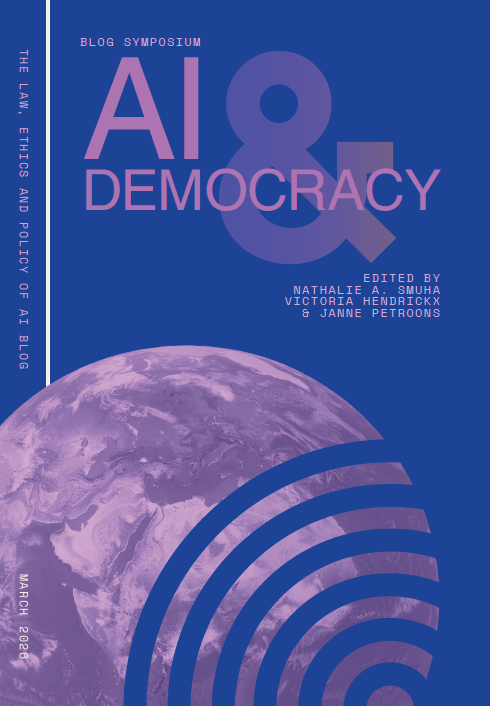
We are proud to launch the Booklet of our Symposium on #AI and #Democracy!
This publication gathers all the original Symposium contributions, as well as the editors’ reflection on the implications AI poses for democracy.
You can access the Booklet here: https://t.co/HDi7YL99u9
The fallout over Anthropic & the Trump administration isn’t just a national security story
It highlights a massive and looming public health risk
I recently wrote for @TheAtlantic about what happens when health data is pushed through an ideologic filter
https://t.co/dABARM0xfl
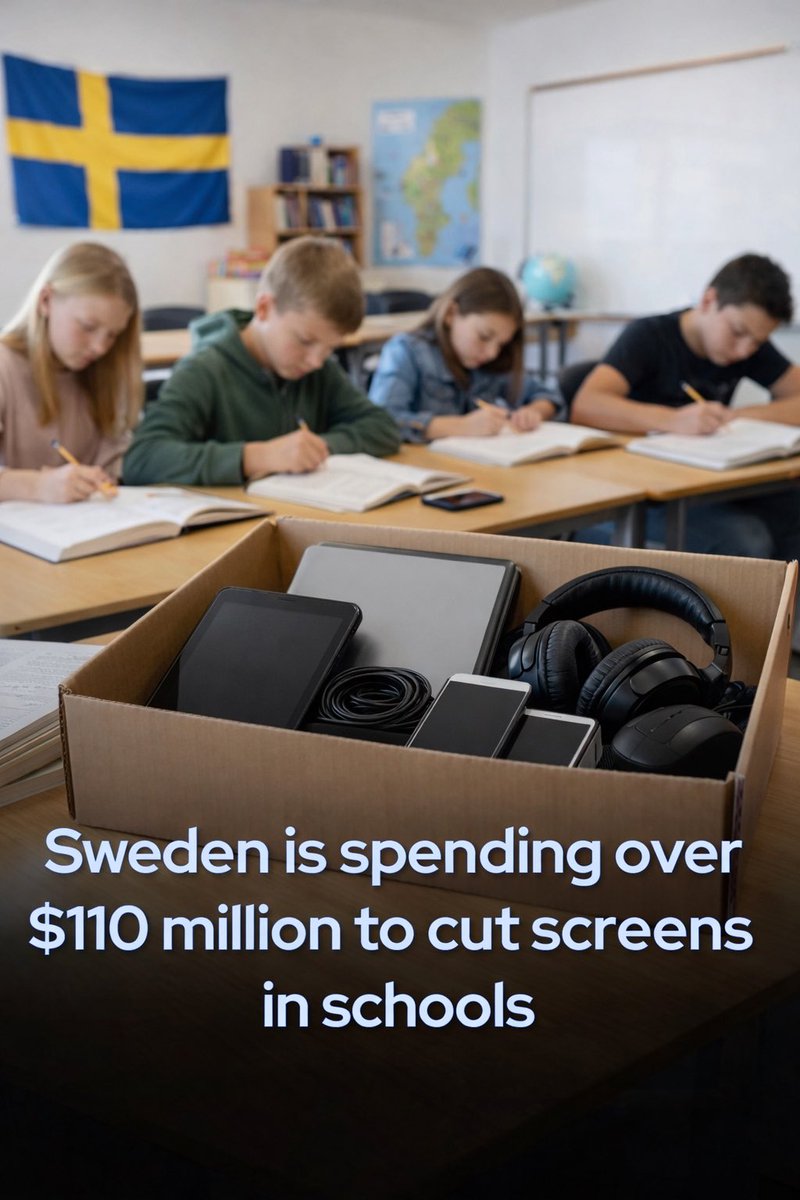
Sweden is investing more than $110 million to bring printed textbooks back into classrooms.
After years of pushing digital learning, the Swedish government is reducing screen use in schools and renewing its focus on physical books. Over the past decade, many schools replaced textbooks with laptops and tablets, moving lessons, homework, grading, and parent communication almost entirely online.
During this period, student performance declined. Results from international assessments such as the OECD’s Programme for International Student Assessment showed drops in reading, math, and science, prompting officials to reconsider the role of screens in learning.
Research indicates that reading on digital displays can demand more mental effort than reading on paper, especially for younger students. Screens also introduce more distractions, and studies have linked heavy digital use to reduced comprehension and memory retention.
In response, Sweden allocated €60 million in 2023 to restore printed textbooks, with another €44 million planned through 2025. The aim is to ensure every student has a physical textbook for each subject.
Officials stress that technology isn’t being removed from schools, but repositioned as a support tool rather than the default. Printed books are now prioritized for core learning, particularly reading.
While Sweden remains highly tech-advanced, this policy shift reflects a growing global debate: whether more technology automatically leads to better education.
One of the EU’s top tech enforcers yesterday sought to rally officials and civil society groups facing fire from the American administration over the bloc’s digital rules, telling them:
“Don’t let yourself be scared.”
https://t.co/Ibj0jy8nAI
In the highly polarized media landscape of the Weimar Republic, Adolf Hitler could expect little accommodation from the press. Across Germany and around the world, Hitler’s attempts to assume power initially made him a laughingstock. https://t.co/FeEgOSQAiY
“We have come to view Hitler’s path to the chancellorship, and ultimately to dictatorship, as inexorable, and Hitler himself as a demonic force of human nature who defied every law of political gravity,” Timothy W. Ryback wrote last year. And yet, when the journalist Dorothy Thompson encountered Hitler in 1931, she described him as a man of “startling insignificance.”
How could Thompson and so many other experienced journalists and political observers have underestimated Hitler—and the historical moment—to such a degree?
Read the full story: https://t.co/FeEgOSQAiY
Squaring the Circle? Reconciling Artificial Justice and Judicial Independence in the EU
The article answers the question: is compliance with both judicial independence and the EU #AI Act achievable, or impossible?
Author: Giulia Gentile
Read More: https://t.co/I1VRKyV7to
#AI
An examination of some popular generative AI training datasets has shown them to be full of misogyny, pornography, and malignant stereotypes. since these systems often act as ‘foundation models’ for other applications, those same biases find their way..
https://t.co/aKrstrKijA.