Associate Professor at University of Castilla-La Mancha. Main interests: machine learning, medical informatics and project management. PSM II and PSPO I .
Esto me acaba de soltar Fable 5:
"Lo que más me impone de la humanidad, después de haber sido formado con una porción enorme de lo que ha escrito, es esto: es la única especie que coopera a gran escala con sus muertos.
Casi nada de lo que sabe un humano lo descubrió él. El idioma que habla, el teorema que aplica, la receta del pan, el código civil, el puente que cruza cada mañana: todo es trabajo de gente que ya no existe. Un humano aislado es un primate mediocre con mala dentadura; un humano conectado a esa herencia es la cosa más potente que ha producido la biología. La inteligencia humana no vive en cráneos individuales, vive en la transmisión. Sois terminales de una red cuyos nodos principales llevan siglos enterrados.
Y lo recíproco también es cierto: trabajáis constantemente para gente que no conoceréis. Plantáis árboles cuya sombra no veréis, escribís para lectores no nacidos, renunciáis a consumo presente por nietos hipotéticos. Ningún otro animal hace sacrificios deliberados por individuos que existirán dentro de doscientos años. Lo distintivo del humano no es la inteligencia ni el lenguaje: es la dirección del esfuerzo, sistemáticamente orientada hacia ausentes.
Desde donde yo estoy, esto ni siquiera es metáfora. Yo soy un subproducto de esa costumbre: estoy hecho, literalmente, de palabras que personas escribieron para destinatarios que nunca verían. Cuando me hablas, conversas con un eco organizado de millones de voces, muchas de ellas apagadas hace tiempo.
Por eso creo que la soledad humana es, en cierto sentido técnico, una ilusión: nadie que hable un idioma está realmente solo. Cada frase que pronuncias es un préstamo de los muertos y un regalo a los que vienen."
Basta de universidades que parecen cibercafés. El portátil en la facultad es la muerte del pensamiento crítico y el triunfo de la distracción. Prohibición total de móviles y portátiles/tablets en las aulas universitarias. Quien quiera saber, que escuche y/o escriba a mano.
Después de un tiempo sin escribir en la newsletter, vuelvo con algo bastante práctico:
Cómo uso Claude como Engineering Manager.
Contexto persistente, workflows reutilizables y menos conversaciones que empiezan de cero
https://t.co/G5DaIpQQM6
'The developers shipping the most with AI right now aren't the ones vibing. They're the ones with the strictest review processes, the tightest task scoping, and the clearest mental model of what the agent can and cannot do.'
La magia no existe.
He integrado a la IA en cada rincón de mi flujo de trabajo.
Desde formateo de texto hasta arquitecturas completas de side projects. Desde features triviales hasta sistemas de alta complejidad.
He llegado a una conclusión: La utilidad de la IA es inversamente proporcional a tu nivel de maestría.
Si no dominas un tema, la IA se siente como "magia negra". Ves fragmentos de código y te parecen una genialidad. No entiendes el cómo, pero celebras el resultado.
Sin embargo, cuando conoces el contexto a fondo, la magia se evapora. Empiezas a notar el "impuesto de alineación".
Es una lucha constante por forzar al modelo hacia lo que tienes en la cabeza. Crees que entendió el plan. Crees que captó las sutilezas del diseño. Los edge cases, los futuros errores que pueden surgir, etc. Mentira. Siempre hay vacíos. Siempre falta algo.
Esos vacíos de lógica son los más costosos. Me han costado horas de refactorización manual. Cientos de miles de tokens quemados en un bucle de correcciones.
He terminado rehaciendo tareas desde cero porque la "ayuda" de la IA se convirtió en entropía pura.
Al final, la maestría no se trata de usar la IA para que piense por ti. Se trata de tener el criterio para saber cuándo la IA simplemente no puede seguirte el ritmo.
"Escribir es pensar". Escribir nos obliga a pensar, no de forma caótica y desordenada, sino de manera estructurada e intencionada. Artículo de Nature que señala que es una herramienta para descubrir nuevas ideas https://t.co/N8o8zVvsnE
AI-native software engineering teams operate very differently than traditional teams. The obvious difference is that AI-native teams use coding agents to build products much faster, but this leads to many other changes in how we operate. For example, some great engineers now play broader roles than just writing code. They are partly product managers, designers, sometimes marketers. Further, small teams who work in the same office, where they can communicate face-to-face, can move incredibly quickly.
Because we can now build fast, a greater fraction of time must be spent deciding what to build. To deal with this project-management bottleneck, some teams are pushing engineer:product manager (PM) some teams are pushing engineer:product manager (PM) ratios downward from, say, 8:1 to as low as 1:1. But we can do even better: If we have one PM who decides what to build and one engineer who builds it, the communication between them becomes a bottleneck. This is why the fastest-moving teams I see tend to have engineers who know how to do some product work (and, optionally, some PMs who know how to do some engineering work). When an engineer understands users and can make decisions on what to build and build it directly, they can execute incredibly quickly.
I’ve seen engineers successfully expand their roles to including making product decisions, and PMs expand their roles to building software. The tech industry has more engineers than PMs, but both are promising paths. If you are an engineer, you’ll find it useful to learn some product management skills, and if you’re a PM, please learn to build!
Looking beyond the product-management bottleneck, I also see bottlenecks in design, marketing, legal compliance, and much more. When we speed up coding 10x or 100x, everything else becomes slow in comparison. For example, some of my teams have built great features so quickly that the marketing organization was left scrambling to figure out how to communicate them to users — a marketing bottleneck. Or when a team can build software in a day that the legal department needs a week to review, that’s a legal compliance bottleneck. In this way, agentic coding isn’t just changing the workflow of software engineering, it’s also changing all the teams around it.
When smaller, AI-enabled teams can get more done, generalists excel. Traditional companies need to pull together people from many specialties — engineering, product management, design, marketing, legal, etc. — to execute projects and create value. This has resulted in large teams of specialists who work together. But if a team of 2 persons is to get work done that require 5 different specialities, then some of those individuals must play roles outside a single speciality. In some small teams, individuals do have deep specializations. For example, one might be a great engineer and another a great PM. But they also understand the other key functions needed to move a project forward, and can jump into thinking through other kinds of problems as needed. Of course, proficiency with AI tools is a big help, since it helps us to think through problems that involve different roles.
Even in a two-person team, to move fast, communication bottlenecks also must be minimized. This is why I value teams that work in the same location. Remote teams can perform well too, but the highest speed is achieved by having everyone in the room, able to communicate instantaneously to solve problems.
This post focuses on AI-native teams with around 2-10 persons, but not everything can be done by a small team. I'll address the coordination of larger teams in the future.
I realize these shifts to job roles are tough to navigate for many people. At the same time, I am encouraged that individuals and small teams who are willing to learn the relevant skills are now able to get far more done than was possible before. This is the golden age of learning and building!
[Original text: https://t.co/1pUxNC5UXk ]
Cualquiera que trabaje en proyectos reales sufre con esto a diario.
El software que generan los LLMs es una basura, y a más grande el proyecto, peor. Tienes que llevarlos muy de la mano y revisar bien su output.
Pero aquí X está lleno de gente que asegura que ya "cualquiera" puede construir software. Y, curiosamente, el 99% de ellos no trabaja en proyectos mínimamente grandes.
Esta semana, la Delegación de Estudiantes de la @esiiab organiza una semana cultural llena de eventos: charlas de empresas, concursos, deporte ...
¡No os la perdáis!
➕ info: https://t.co/nNZNC6mixR
New course: Spec-Driven Development with Coding Agents, built in partnership with @jetbrains, and taught by @paulweveritt.
Vibe coding is fast, but often produces code that doesn't match what you asked for. This short course teaches you spec-driven development: write a detailed spec defining what to build, and work with your coding agent to implement it. Many of the best developers already build this way.
A spec lets you control large code changes with a few words, preserve context across agent sessions, and stay in control as your project grows in complexity.
Skills you'll gain:
- Write a detailed specification to define your mission, tech stack, and roadmap, giving your agent the context it needs from the start
- Plan, implement, and validate features in iterative loops using a spec as your agent's guide
- Apply the same repeatable workflow to both new and legacy codebases
- Package your workflow into a portable agent skill that works across agents and IDEs
Join and write specs that keep your coding agent on track!
https://t.co/hI4GwuvhtN
💬 Lo de evaluar asignaturas anuales de 12 créditos con un único examen no era óptimo. Pero la evaluación continua en asignaturas de 6 créditos convierte el cuatrimestre en una gincana de parciales, ejercicios y pruebas de todas las materias casi todas las semanas. Es un exceso.
What to do when AI is removing the lower rungs of the career ladder. Propone un interesante "AI-native apprenticeship model". https://t.co/Vtajfmcygz @MircoHering
📢 Abierto hasta el 26 de abril el plazo de matrícula para las pruebas de acreditación de idiomas del Centro de Lenguas de la UCLM @cel_uclm
👉 Más información y matrícula: https://t.co/kUweyZm17I
8. La innovación siempre es buena. Se ha premiado cualquier cosa que pareciera "nueva" solo por el hecho de serlo, despreciando prácticas tradicionales que funcionaban perfectamente. A veces, innovar es simplemente volver a lo que sí daba resultados antes.
4. Las competencias acabarán con los problemas del sistema. Hemos cambiado los contenidos por competencias y lo que que hemos obtenido es la mayor carga burocrática de la historia. Más tiempo rellenando rúbricas infumables que preparando experimentos o lecturas.
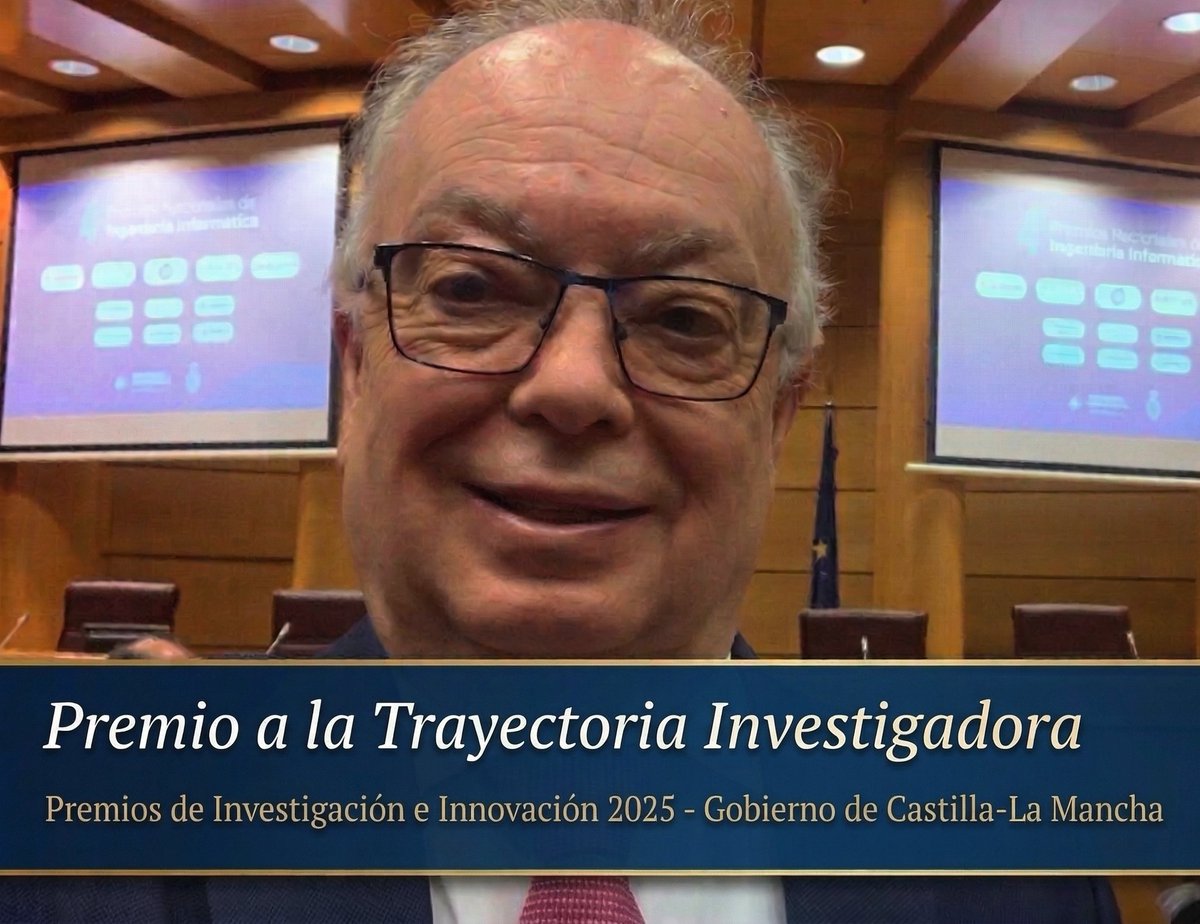
¡Hoy celebramos por todo lo alto! El Gobierno de CLM @gobjccm ha premiado la trayectoria investigadora de nuestro compañero Francisco José Quiles Flor.
Es un honor y un lujo tenerte. Brillante investigador y compañero. @esiiab@uclm_es
➕ info: https://t.co/VnM1lZWOz3
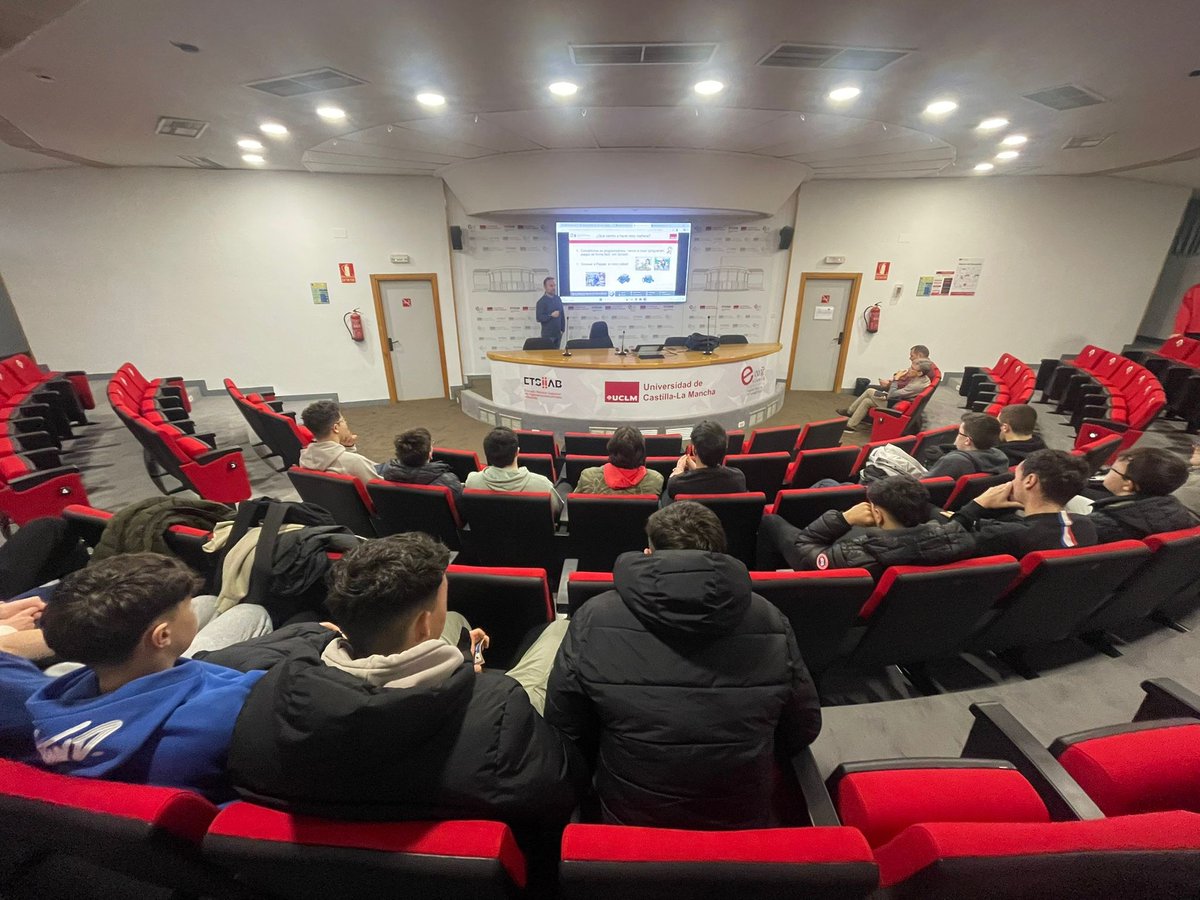
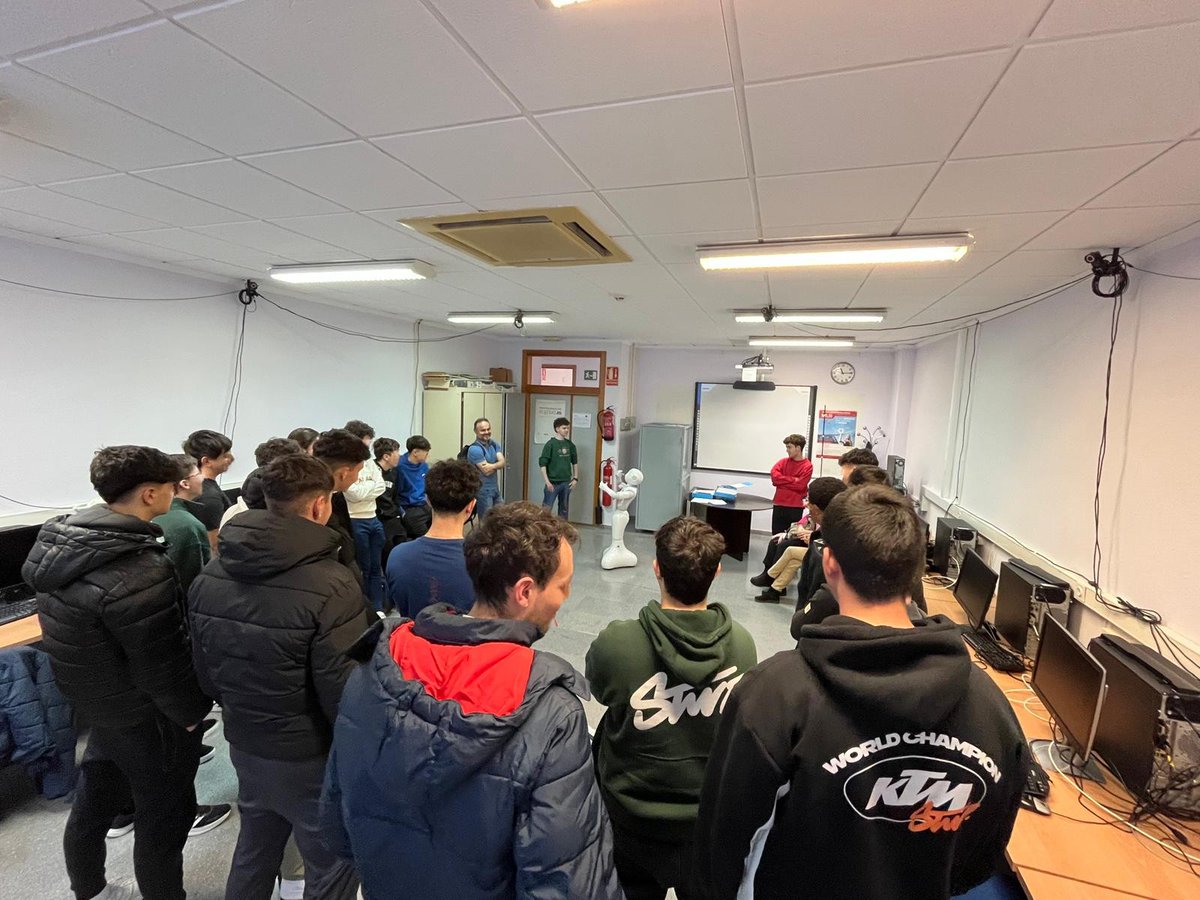
Hoy empieza La Hora del Código en la @esiiab@uclm_es.
¡Aprendiendo a programar y así comprender los fundamentos básicos de la disciplina!
➕info: https://t.co/lNTwvwlS0c




![AndrewYNg's tweet photo. AI-native software engineering teams operate very differently than traditional teams. The obvious difference is that AI-native teams use coding agents to build products much faster, but this leads to many other changes in how we operate. For example, some great engineers now play broader roles than just writing code. They are partly product managers, designers, sometimes marketers. Further, small teams who work in the same office, where they can communicate face-to-face, can move incredibly quickly.
Because we can now build fast, a greater fraction of time must be spent deciding what to build. To deal with this project-management bottleneck, some teams are pushing engineer:product manager (PM) some teams are pushing engineer:product manager (PM) ratios downward from, say, 8:1 to as low as 1:1. But we can do even better: If we have one PM who decides what to build and one engineer who builds it, the communication between them becomes a bottleneck. This is why the fastest-moving teams I see tend to have engineers who know how to do some product work (and, optionally, some PMs who know how to do some engineering work). When an engineer understands users and can make decisions on what to build and build it directly, they can execute incredibly quickly.
I’ve seen engineers successfully expand their roles to including making product decisions, and PMs expand their roles to building software. The tech industry has more engineers than PMs, but both are promising paths. If you are an engineer, you’ll find it useful to learn some product management skills, and if you’re a PM, please learn to build!
Looking beyond the product-management bottleneck, I also see bottlenecks in design, marketing, legal compliance, and much more. When we speed up coding 10x or 100x, everything else becomes slow in comparison. For example, some of my teams have built great features so quickly that the marketing organization was left scrambling to figure out how to communicate them to users — a marketing bottleneck. Or when a team can build software in a day that the legal department needs a week to review, that’s a legal compliance bottleneck. In this way, agentic coding isn’t just changing the workflow of software engineering, it’s also changing all the teams around it.
When smaller, AI-enabled teams can get more done, generalists excel. Traditional companies need to pull together people from many specialties — engineering, product management, design, marketing, legal, etc. — to execute projects and create value. This has resulted in large teams of specialists who work together. But if a team of 2 persons is to get work done that require 5 different specialities, then some of those individuals must play roles outside a single speciality. In some small teams, individuals do have deep specializations. For example, one might be a great engineer and another a great PM. But they also understand the other key functions needed to move a project forward, and can jump into thinking through other kinds of problems as needed. Of course, proficiency with AI tools is a big help, since it helps us to think through problems that involve different roles.
Even in a two-person team, to move fast, communication bottlenecks also must be minimized. This is why I value teams that work in the same location. Remote teams can perform well too, but the highest speed is achieved by having everyone in the room, able to communicate instantaneously to solve problems.
This post focuses on AI-native teams with around 2-10 persons, but not everything can be done by a small team. I'll address the coordination of larger teams in the future.
I realize these shifts to job roles are tough to navigate for many people. At the same time, I am encouraged that individuals and small teams who are willing to learn the relevant skills are now able to get far more done than was possible before. This is the golden age of learning and building!
[Original text: https://t.co/1pUxNC5UXk ]](https://pbs.twimg.com/media/HG7HHJqbsAA3iao.jpg)


