@inakiangulo Yo estoy alucinando. Para sacar votos mientes a los socios y a los aficionados con una oferta fake a sabiendas de que todo es una pantomima, y todavía ves a esos mismos que han sido timados hablando ahora de la supuesta genialidad de Florentino.........
@macroskivideo Tengo 43 años y a bote pronto, en el mundial de USA 94 que según lo que se indica ganamos 3 de 5, a mí se me ocurre que empatamos con Korea del Sur en el primer partido, empatamos también contra Alemania y palmamos contra Italia en cuartos, así que no me cuadra .........
@NolanChest@solofichajes123@elmundoes@realmadrid Me lo he leído 10 veces y da igual que me lo lea 10 mil veces más que es imposible escribirlo de forma más obstrusa....... Y soy Ingeniero Industrial, así que no creo que el problema sea mío y de mi capacidad de comprensión......
@mjss10 Si Floper nos da los 1000 millones a tocateja para pagar la cláusula, con un lazo y además en mi opinión habría que ponerle una estatua junto a la de Cruyff
@Ramon_AlvarezMM El padre y la agente están haciendo lo que deben hacer, desmentirlo todo por si sucede lo más probable que es q Florentino gane y Haaland se quede en el City. Pero claro que hay acuerdo con Riquelme. Es imposible que se comprometa ante notario a pagar las cuotas si fuera mentira
@Ramon_AlvarezMM Es algo parecido a lo que le ha pasado a Meta con el Metaverso. Como idea muy espectacular, pero nadie lo va a adoptar.
Algo como esto sería muchísimo más interesante. No sé si a través de locales directamente explotados por los clubes, a través de licencias a terceros o ambos:
@Ramon_AlvarezMM Seguro que es alucinante, pero no es algo de lo que se pueda obtener a gran escala un rendimiento económico grande, porque necesita que lo adopte un número de personas que, a día de hoy, e incluso a medio-largo plazo, no es en absoluto alcanzable
@EnriqueNDF Muchos militares del bando Nacional al comienzo de la Guerra Civil, por ejemplo el General Yagüe, arengaban a sus tropas y finalizaban sus discursos gritando ¡Viva la República!
@MMacroski Qué ilusión aquel gol, con 11 añitos viendo como en un Mundial le ganábamos a la todopoderosa Alemania ni más ni menos. Luego nos empató Klinsmann con Zubi como siempre a por uvas, y fue un poco chasco pero bueno, lo peleamos. Ese Mundial nos marcó mucho a los chavales de mi edad
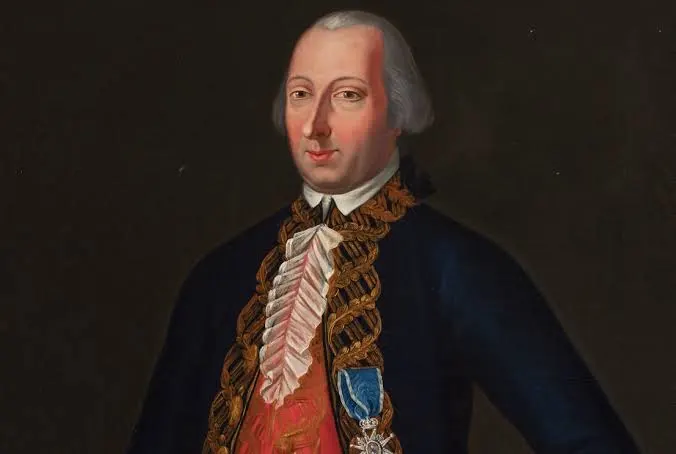
245 years ago today, a 35-year-old Spanish nobleman fired a single artillery shell that redrew the map of North America, broke British power in the Gulf of Mexico, and arguably saved the American Revolution. His name was Bernardo de Gálvez. He's not in your textbook. He should be.
When Spain entered the war against Britain in June 1779, the American cause was bleeding out. Washington's army was unpaid and shrinking. The Continental dollar was worth pennies. The British had taken Savannah and were preparing to take Charleston. France was helping, but France alone couldn't bankrupt the British Empire.
Spain could. And in New Orleans sat the man who would prove it.
Bernardo de Gálvez y Madrid was 33 years old, the governor of Spanish Louisiana, a battle-scarred career officer who had been wounded fighting Apaches in northern Mexico and Algerians in North Africa. The day he learned Spain had declared war, he didn't wait for orders from Madrid. He raised an army of Spanish regulars, Louisiana Creoles, free Black militia from New Orleans, Acadian refugees, German settlers, and Choctaw scouts, and he went on the attack.
In three months he took Manchac, Baton Rouge, and Natchez. The next year he took Mobile. The British presence on the Gulf shrank to one last fortress. Pensacola, the capital of British West Florida, defended by Major General John Campbell with 1,500 redcoats, the 3rd Waldeck Regiment of German mercenaries, loyalist battalions from Maryland and Pennsylvania, and a powerful alliance of Creek and Choctaw warriors led by the brilliant mixed-race chief Alexander McGillivray.
Gálvez arrived off Pensacola in March 1781 with 7,000 men and a fleet. The Spanish naval commander, Admiral Calbo de Irazábal, refused to enter Pensacola Bay. The entrance was narrow, raked by British guns at Fort Barrancas Coloradas, and treacherous with sandbars. So Gálvez did something insane. He boarded his own little brig, the Galveztown, hoisted his personal pennant, and sailed her into the bay alone, in full view of the British batteries, daring the Royal Navy to sink him. The British fired and missed. The Spanish fleet, shamed, followed him in. For this he was awarded the right to put the words "Yo Solo," meaning "I alone," on his coat of arms by the King of Spain.
The siege ground on for two months. Gálvez was shot in the abdomen and the finger directing artillery and refused to leave the field. The British defenses at the Queen's Redoubt, also called the Crescent, held against everything thrown at them. And then, on the morning of May 8, 1781, a Spanish howitzer crew lofted a shell over the parapet. It dropped, by pure luck or perfect skill, directly into the open powder magazine.
The explosion killed roughly 100 defenders in a single instant. Waldeck grenadiers, British regulars, loyalists, all gone. The blast tore the redoubt's wall open like paper. Spanish grenadiers and Louisiana militia poured through the breach within minutes and turned the captured British guns on the inner works. Campbell knew it was over.
The next morning, May 9, white flags went up. By May 10 the entire province of West Florida belonged to Spain. Over 1,100 British troops marched out as prisoners of war.
The strategic consequences were catastrophic for Britain. The Gulf Coast was lost. The Mississippi was a Spanish river from source to sea. Britain could no longer reinforce its southern armies by sea from the Caribbean, and the Royal Navy's Caribbean squadron had to be redeployed. Five months later, Cornwallis surrendered at Yorktown, in a siege funded in part by 500,000 silver pesos that Gálvez and the people of Havana raised in a matter of days to pay French Admiral de Grasse's fleet to come north.
Without that money, no French fleet. Without the French fleet, no Yorktown. Without Yorktown, no independence on those terms.
Gálvez was made Count of Gálvez and Viscount of Galveztown. The bay he charted in Texas still bears his name, Galveston. His portrait hangs in the United States Capitol by act of Congress. In 2014, he was made an honorary citizen of the United States, an honor given to only eight people in American history, including Lafayette, Churchill, and Mother Teresa.
He died of yellow fever in Mexico City at 40 years old, three years after the war ended.
Most Americans have never heard his name.