Gary Lineker fue un extraordinario goleador y es admirador de Maradona. En 2020 nos regaló este maravilloso retrato sobre Diego y el amor por el juego. Siempre vale la pena repasarlo. CRACK.
The body transfer illusion occurs when sight and touch are stimulated together, leading the brain to mistake a rubber hand for its own. The mind can be influenced more easily than expected 🧠
In 2002, a reclusive Russian mathematician named Grigori Perelman quietly uploaded a paper to an online academic archive. There was no fanfare, no public announcement—just a simple post before he returned to his private life.
What he had shared was nothing less than the complete solution to the Poincaré conjecture, a problem that had stumped the world's top mathematicians for a full century. It was one of the seven Millennium Prize Problems chosen by the Clay Mathematics Institute as the most significant unsolved challenges in the field, each carrying a $1 million reward. No one had come close to solving any of them.
Perelman had cracked it single-handedly, working in almost complete seclusion.
It took the global mathematics community three years to thoroughly verify his proof. Once confirmed, the response was unprecedented. In 2006, *Science* magazine named it the Breakthrough of the Year—the first time a mathematics achievement had ever received that distinction.
He was offered the Fields Medal, mathematics' most prestigious honor. He turned it down. The president of the International Mathematical Union traveled to Saint Petersburg and spent a full day pleading with him to accept it. Perelman politely refused and shut the door.
In 2010, the Clay Mathematics Institute formally awarded him the $1 million Millennium Prize. He declined that as well, arguing that the award unfairly overlooked the foundational contributions of mathematician Richard Hamilton, whose earlier work had paved the way for his own solution.
When asked why he would reject such a large sum of money, Perelman replied: “I know how to control the universe. Why would I need to chase a million dollars?”
By then, he had already left mathematics behind. In 2005, he resigned from his position at the Steklov Institute, withdrew from the field completely, and moved into a modest apartment in a Saint Petersburg suburb with his aging mother. He spends his time growing mushrooms, playing the violin, and has not given a single interview since 2006.
The $1 million prize he declined was later redirected to create scholarships supporting promising young mathematicians.
Global System Rupture: We Are Now at Day 65
The Global System Rupture is no longer a foresight. It is the operating environment. It represents the fourth systemic risk-driven global crisis of the 21st century.
1️⃣ The first was the Global Financial Crisis of 2008.
2️⃣ The second was the COVID-19 pandemic.
3️⃣ The third was the Russia–Ukraine war and the energy shock it unleashed.
4️⃣ The fourth is the current rupture triggered by the Hormuz Cascade and the simultaneous breakdown of energy, food, finance, logistics, institutional trust, and geopolitical order.
This is not a conventional crisis. It is a threshold event.
A Global System Rupture occurs when cumulative stress across interdependent systems exceeds the capacity for managed adjustment. At that point, shocks no longer remain contained within one domain. They multiply across the system.
➡️ Energy becomes food insecurity.
➡️ Food insecurity becomes political instability.
➡️ Logistics disruption becomes industrial scarcity.
➡️ Financial stress becomes sovereign vulnerability.
➡️ Proxy wars become bloc consolidation.
➡️ Price signals become allocation regimes.
At Day 65, the rupture sequence has moved beyond early warning.
The Strait of Hormuz is declared open, yet functionally closed. Global energy inventories are draining. Fertilizer and food cascades are accelerating. The agricultural calendar is locking in consequences for the 2027 harvest. Financial stress is spreading through emerging markets. The DragonBear axis is consolidating. The global system is bifurcating not by ideology, but by logistics, allocation capacity, and strategic depth.
The core issue is not whether the system can “return to normal.”
It cannot.
The relevant question is what kind of new equilibrium emerges from the rupture and who has the strategic robustness to navigate it.
This is where the simultaneity approach to global affairs becomes essential. We cannot understand the current environment by looking at isolated crises. The rupture is defined precisely by the fact that multiple systemic risks are activating at the same time, reinforcing each other, and overwhelming the stabilizing mechanisms that worked in previous crises.
The analytical task is therefore no longer foresight. It is navigation.
Physical systems do not negotiate. They function, or they collapse.
El 2 de mayo de 1945, el Ejército Rojo de obreros y campesinos liberaba Berlín y derrotaba al Tercer Reich, que según Hitler duraría mil años, haciendo que se rindiese a sus pies.
En un duro esfuerzo, 27 millones de soviéticos dieron su vida contra el nazismo, si hubiera un minuto de silencio por cada soviético que murió en la Segunda Guerra Mundial, el mundo permanecería en silencio durante más de 51 años.
El Ejército Rojo fue quién aniquiló al 93% de todos los soldados nazis en la Segunda Guerra Mundial y solo en el Frente Oriental, liquidó a 674 divisiones del ejército nazi; al 75% de la Werhmacht, el 70% de sus aviones, al 75% de sus tanques y al 74% de la artillería.... no, no fue el Soldado Ryan.
¡Gloria eterna a los héroes soviéticos que dieron su vida para salvar a la humanidad del horror nazi!
Todos los días, pero hoy 1 de mayo más que nunca, no olvidemos la gran lección de “Una historia del Bronx (1993)”:
“El obrero es el auténtico tipo duro✊🏼”
Feliz Día de los trabajadores, mi gente de CINE😎❤️
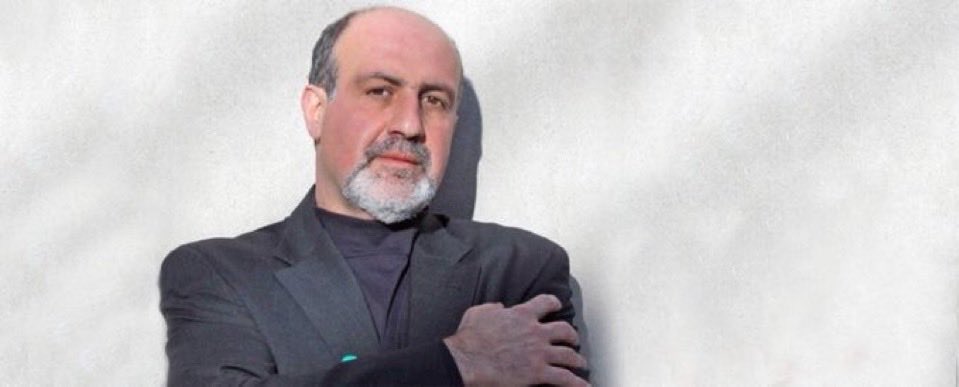
"Amateurs in any discipline are the best, if you can connect with them. Unlike dilettantes, career professionals are to knowledge what prostitutes are to love." - Nassim Nicholas Taleb in Antifragile
Un 29 de abril de 1945, el Tercer Ejército de Choque del Ejercito Rojo iniciaba su asalto final al Reichstag, el corazón simbólico de la Alemania nazi.
El Tercer Reich de Hitler, que había llegado a tener un tamaño de 600.000 kilómetros cuadrados, había sido acorralado y reducido por la Unión Soviética a apenas 3 kilómetros de ancho.
En los asaltos iniciales, los soviéticos tomaron edificios de gran simbolismo como el Ministerio del Interior y, después de una lucha feroz contra los nazis, lograron capturar el cuartel general de la Gestapo, empezaban las luchas a las puertas del Reichstag.
A órdenes de Stalin, los soldados soviéticos llevarían consigo banderas rojas masivamente como símbolo de la victoria del comunismo sobre el nazismo, una de ellas llegaría a ondear en lo alto más alto del Reichstag alemán y reinaría en Berlin días después.
En un sacrificio monumental, la Unión Soviética acabaría venciendo a Hitler, perdiendo a más de 27 millones de personas liberando a Europa, avanzando hasta Berlín y poniendo fin al régimen genocida de Hitler.
Solo un dato que muestra quién venció de verdad a los nazis: 3 de cada 4 soldados nazis muertos en la Segunda Guerra Mundial, murieron a manos del Ejército Rojo.
The American 🇺🇸 economy is a house of cards.
Paradoxically and perhaps surprisingly, the United States has not built anything in a generation.
What it has done is financialize the absence of building — replacing factories with financial instruments, replacing industrial wages with consumer credit, replacing productive capital with the continuous rollover of debt at every layer of the system.
Federal debt has crossed $36 trillion and accelerates with each spending cycle. Corporate debt was pumped to historic levels during a decade of near-zero interest rates, much of it used not to invest in productive capacity but to buy back shares and engineer earnings-per-share for the benefit of management compensation. Household debt — mortgages, auto loans, credit cards, student loans — sits at levels that require stable employment and stable prices to remain serviceable. None of those conditions are guaranteed. The entire architecture rests on the assumption that the obligations can always be rolled over, always be refinanced, always be deferred. That assumption is not an economic law. It is a bet.
The bet works as long as the dollar remains the world's reserve currency. The problem is that dollar primacy is not a geological feature of the planet. It is a political arrangement sustained by trust, by network effects, and by the absence of a credible alternative — all of which are slowly, structurally eroding as non-Western settlement infrastructure matures and as American foreign policy increasingly weaponizes the dollar through sanctions.
The industrial base that once gave the dollar its material backing has largely been offshored. The United States imports the goods it consumes and exports financial claims and digital services in return. This is sometimes described as a post-industrial transition to a higher value-added economy, which is a polite way of saying that the country decided manufacturing was for other people. The consequence is a structural trade deficit that requires the rest of the world to continuously recycle dollars back into American assets to remain in equilibrium. The United States builds financial products that reference factories built elsewhere.
What America does produce in abundance is software, platforms, and digital monopolies — and the strength of its tech sector is real but narrower than it appears. A handful of companies — Google, Meta, Amazon, Microsoft, Apple — account for a disproportionate share of S&P 500 market capitalization and an even more disproportionate share of the narrative about American economic dynamism. Strip those out and the picture changes considerably. The broader startup ecosystem, held up as evidence of irreplaceable American entrepreneurialism, was in large part a product of the free money era — zero interest rates that made any revenue-generating SaaS business worth twenty times ARR, that funded unprofitable growth at scale, that allowed the venture capital machine to raise fund after fund on the basis of paper returns from paper valuations. When rates rose, the correction was sharp and the pretense dropped. Many of those businesses were not engineering achievements. They were interest rate instruments wearing a hoodie.
Then there is energy. The shale revolution genuinely saved the American economy from the plateau it had reached by the mid-2000s. After the 2008 crisis, American GDP growth was tepid, productivity growth was structurally weak, and the economy was functionally stagnant for the better part of seven years. It was the shale boom that provided the capex cycle, the employment, the domestic energy price advantage, and the geopolitical re-rating that gave the United States a second act. But shale is a depleting asset extracted from wells that decline faster than conventional fields, requiring relentless drilling just to maintain production. The sweet spots of the Permian and the Eagle Ford are not infinite. The productivity gains from technical improvements have real limits. American energy dominance is a window, not a permanent condition, and the window's closure will remove one of the few sectors of genuine physical production still anchored onshore.
The honest description of this economy is not a growth story. It is a leverage story — an edifice of compounding obligations erected on a foundation of currency privilege, sustained by continuous debt issuance, and decorated with the genuine but concentrated achievements of a small number of technology companies that mask the hollowness of the underlying structure. Houses of cards can stand for a very long time, particularly when everyone in the room has a professional incentive not to breathe too hard near them. But they do not become stone simply because they have been standing. The wall is not a metaphor. It is a constraint — fiscal, energetic, industrial, monetary — that deferred reckoning has not eliminated but has made considerably more violent.
🚨🗣️ Didier Deschamps (France National Team Coach):
🎙️“The only controversial penalty Argentina were involved in came against Poland, and even that one wasn’t converted.
Argentina scored 15 goals at the World Cup, and only 4 came from penalties. They also had three goals disallowed in their opening match, and against the Netherlands there was what I felt was a questionable foul decision late on in a game that already had around 10 minutes of added time, which in my view was excessive.
I don’t really understand the narrative that Argentina were helped in the final, I don’t agree with that idea. My players and I we didn’t protest the penalty because we accepted it was the correct call. In the end, all I can do is congratulate Argentina and also my own team for being part of what was arguably the greatest World Cup final in history”
🧠 Smart Risk-Taking Principles for Traders according to N. N. Taleb:
Nassim Nicholas Taleb (former options trader & author of Antifragile, Skin in the Game, The Black Swan) doesn’t preach “risk management.” He teaches smart risk-taking: survive at all costs, love volatility, and stack asymmetry in your favor.
1. Never risk ruin First rule: probability of total wipeout must be exactly zero. One blow-up ends the game forever. Protect your core capital like your life depends on it (it does).
2. Use the Barbell Strategy 85-90% in ultra-safe assets (T-bills, cash equivalents). 10-15% in extreme high-convexity bets (small, asymmetric upside). Skip the “mediocre middle” entirely. This is how you stay antifragile.
3. Demand positive asymmetry (convexity) Only take positions where downside is capped and upside is unlimited. Think long options or tail-risk hedges—not symmetric bets or leveraged long/short where you can lose more than you risk.
4. Skin in the Game If you’re trading other people’s money without personal downside, you’re not a trader—you’re a risk-transfer artist. Real edges come from bearing your own losses.
5. Build antifragility, not just robustness Don’t just survive volatility—design your book so shocks make you stronger. Small, repeated stressors (hormesis) compound into edge. Fragile systems break; antifragile ones improve.
6. Seek optionality Pay small premiums for flexibility. Keep multiple paths open. Tinkering beats rigid plans. Every small convex bet you can afford to lose is a free lottery ticket for positive Black Swans.
7. Via Negativa > prediction Stop trying to forecast. Instead, subtract fragilities: cut leverage, kill complex models, avoid anything you don’t deeply understand. What you remove is more powerful than what you add.
8. Distrust models & “risk management” theater Fat tails dominate. Gaussian assumptions are intellectual fraud in trading. Study real risk-takers who’ve survived multiple cycles—not theorists with no skin in the game.
9. Tinker with many small convex risks Take lots of cheap, high-upside bets that can’t hurt you much individually. Most will lose small. The rare winners pay for everything + more. This is systematic “risk-loving.”
10. Precautionary principle on steroids When uncertainty is high (always), be hyper-conservative with size and leverage. The blow-up you fear won’t look like the last one. Prepare for what you can’t predict.
Bottom line (Taleb’s style): Smart risk isn’t about avoiding volatility—it’s about positioning so volatility becomes your edge. Survive long enough, stay convex, keep skin in the game, and the market eventually pays you for being antifragile.
Japanese diver Hiroyuki Arakawa still visits Yoriko, a fish he saved almost 30 years ago, and they share a rare and beautiful friendship in the ocean 🥹
Cuando ves a una gran ballena nadar, es muy fácil pensar que sus aletas son totalmente lisas.
Pero la biología revela algo increíble que permanece oculto bajo esa gruesa capa de tejido firme.
Si miras su esqueleto, encontrarás exactamente la misma estructura ósea que forma tu propio brazo.
Tienen húmero, radio, cúbito, huesos de muñeca y hasta cinco dedos completos, igual que nosotros.
Esto sucede porque, hace unos 50 millones de años, sus antiguos ancestros caminaban sobre la tierra.
Eran mamíferos con patas que, de manera gradual, empezaron a adaptarse a la vida en el agua. 🧵 👇