Today we welcome our sixth cohort of residents to the Xanadu Residency Program! 🎉
Alexandra Ramôa
Emily Nobes
Isabel Nha Minh Le
Kalman Szenes
Lukas Brenner
Maedeh Dehghan (@marianadehghan)
Masato Fukushima
Pablo Rodriguez-Grasa (@pablones8)
Sara Babaee Khanehsar
Wendy Billings
This 16-week paid internship is designed for undergraduate and graduate students to dive into cutting-edge research, sharpen technical skills, and contribute to projects alongside our team.
A PAC-Bayesian approach to generalization for quantum models.
We take steps towards non-uniform and data-dependent bounds for generalization of quantum machine learning models.
https://t.co/czcmNpnD0q
In detail, #generalization is a central concept in machine learning theory, yet for quantum models, it is predominantly analyzed through uniform bounds that depend on a model's overall capacity rather than the specific function learned. These capacity-based uniform bounds are often too loose and entirely insensitive to the actual training and learning process. Previous theoretical guarantees have failed to provide #nonuniform, data-dependent bounds that reflect the specific properties of the learned solution rather than the worst-case behavior of the entire hypothesis class.
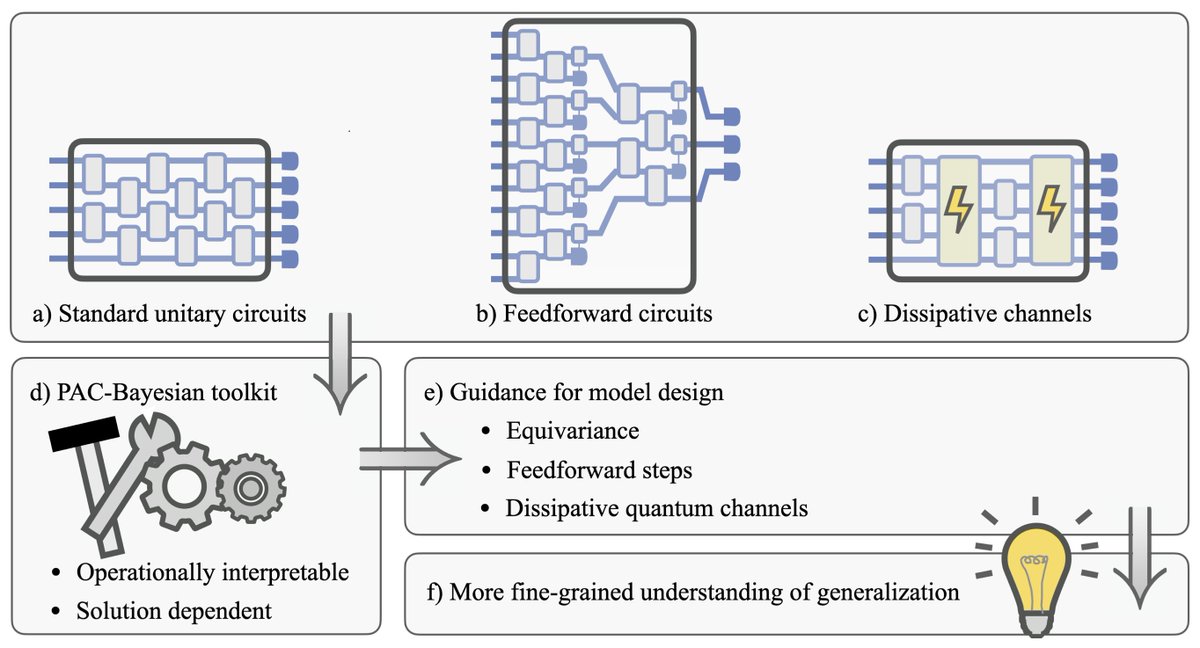
To address this limitation, we derive the first #PACBayesian generalization bounds for a broad class of quantum models by analyzing layered circuits composed of general quantum channels, which include dissipative operations such as mid-circuit measurements and feedforward.
Through a channel perturbation analysis, we establish non-uniform bounds that depend on the norms of learned parameter matrices; we extend these results to symmetry-constrained equivariant quantum models; and we validate our theoretical framework with numerical experiments. This work provides actionable model design insights and establishes a foundational tool for a more nuanced understanding of generalization in #quantummachinelearning.
Warm thanks to the team of @pablones8, Matthias C. Caro, @EliesMiquel, @FJSchreiber, and @charl_bp for this great collaboration.
A PAC-Bayesian approach to generalization for quantum models.
We take steps towards non-uniform and data-dependent bounds for generalization of quantum machine learning models.
https://t.co/czcmNpnD0q
In detail, #generalization is a central concept in machine learning theory, yet for quantum models, it is predominantly analyzed through uniform bounds that depend on a model's overall capacity rather than the specific function learned. These capacity-based uniform bounds are often too loose and entirely insensitive to the actual training and learning process. Previous theoretical guarantees have failed to provide #nonuniform, data-dependent bounds that reflect the specific properties of the learned solution rather than the worst-case behavior of the entire hypothesis class.
To address this limitation, we derive the first #PACBayesian generalization bounds for a broad class of quantum models by analyzing layered circuits composed of general quantum channels, which include dissipative operations such as mid-circuit measurements and feedforward.
Through a channel perturbation analysis, we establish non-uniform bounds that depend on the norms of learned parameter matrices; we extend these results to symmetry-constrained equivariant quantum models; and we validate our theoretical framework with numerical experiments. This work provides actionable model design insights and establishes a foundational tool for a more nuanced understanding of generalization in #quantummachinelearning.
Warm thanks to the team of @pablones8, Matthias C. Caro, @EliesMiquel, @FJSchreiber, and @charl_bp for this great collaboration.
Very honored and grateful to receive this scholarship. I am especially thankful to @SandboxAQ for their support of my research 🥳
I would also like to express my gratitude to my supervisor, @qmisanz, and to my collaborators 🙏🏽
I will make the most out of this opportunity 😃
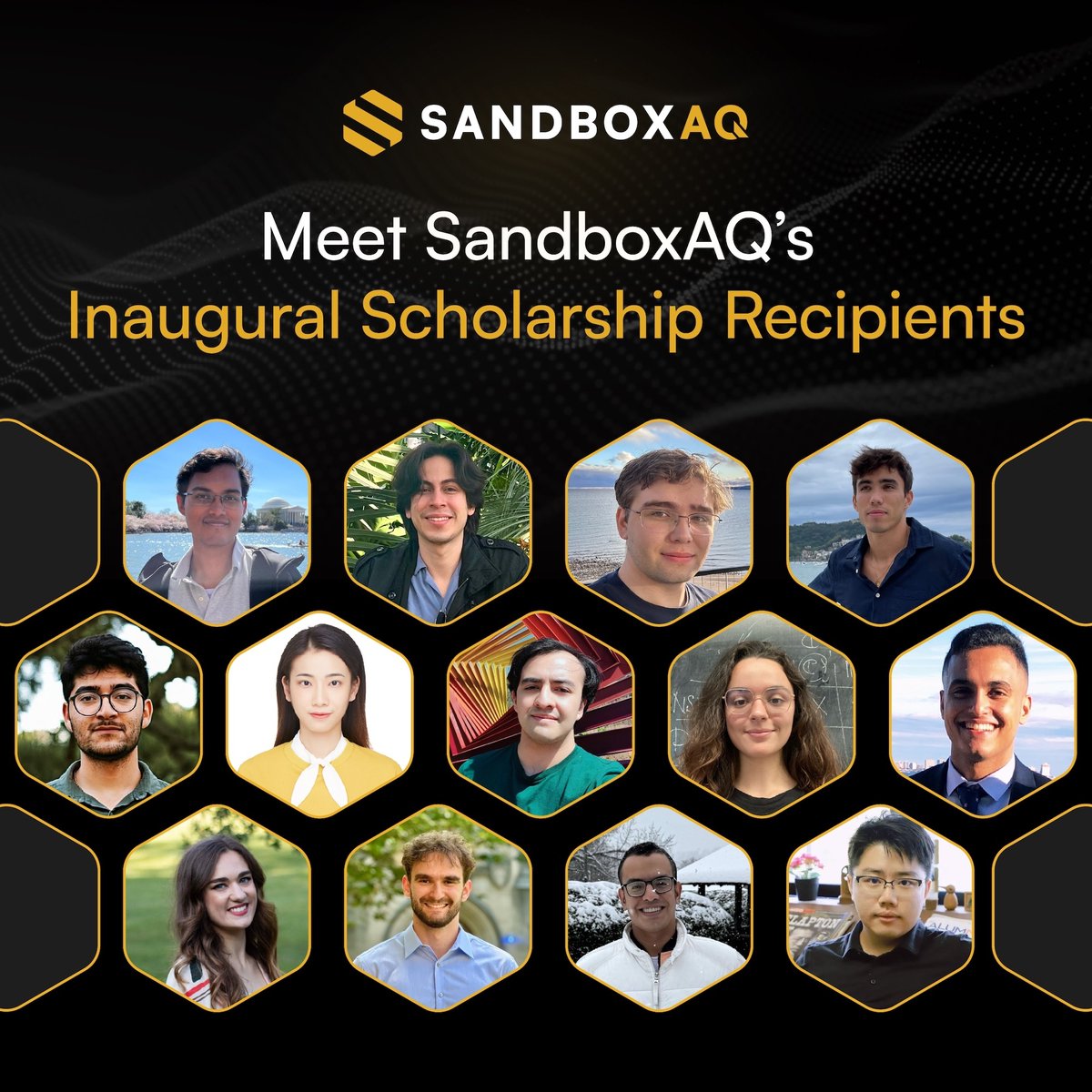
Continuing our tradition of preparing future generations for careers in #AI & #quantum (AQ), today, we proudly announced 13 inaugural @SandboxAQ Scholars! 10 PhD applicants from around the world each received $10k Research Excellence #Scholarships for their bold vision of the future and 3 received a $5k Global Travel Award to present their research at international conferences.
Click here to read more about the Scholars and their research https://t.co/RQMs3X6ui0
Watch this space for a deeper dive into these future superstars who are leveraging #AQ to tackle some of the world’s toughest challenges.
#SandboxAQ #scholarships #PhD #research #education
🚀 Excited to share our latest work "Neural quantum kernels: Training quantum kernels with quantum neural networks", published in #PhysicalReviewResearch, on advancing quantum machine learning with neural quantum kernels! Great work by @pablones8 and Yue Ban!
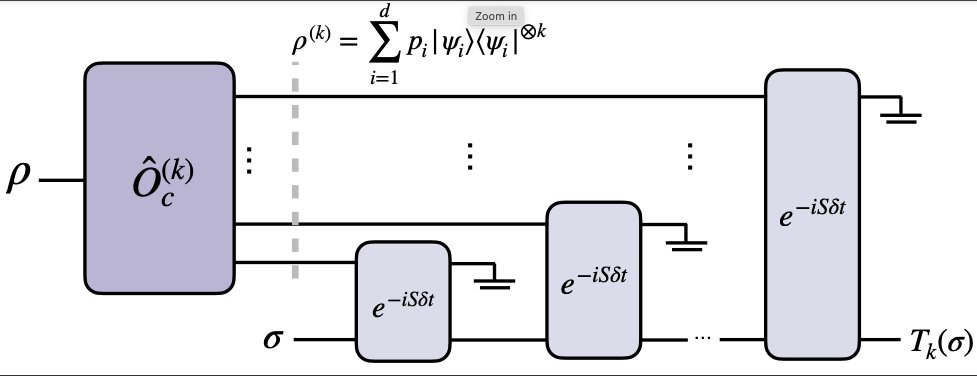
Quantum approximated cloning-assisted density matrix exponentiation, Pablo Rodriguez-Grasa, Ruben Ibarrondo, Javier Gonzalez-Conde, Yue Ban, Patrick Rebentrost, and Mikel Sanz @pablones8@raist272@Conzavin@QuantumYue@qmisanz@NquireC#Quantum https://t.co/YV0wEYGbSu
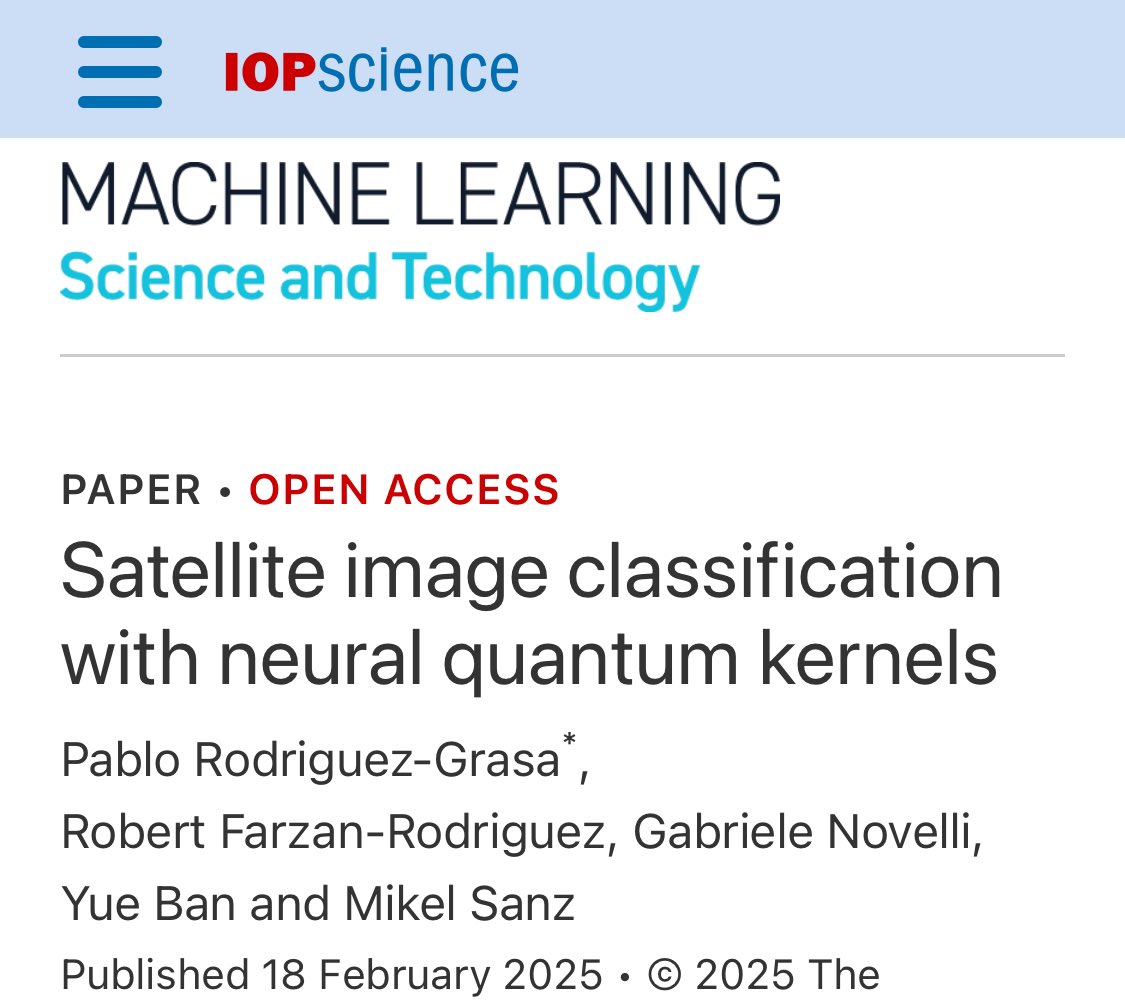
New paper published in Machine Learning: Science and Technology https://t.co/uCMGaQXCUc... on “Satellite image classification with neural quantum kernels”. Congrats to @pablones8 and to @QuantumYue Robert Farzan and Gabriel Novelli. @upvehu@Ikerbasque@OpenSuperQPlus@NquireC
The validated test accuracies attain 85% and 88% with 2 & 3 features, respectively, and 8 qubits. As expected the accuracy monotonically grows with the number of qubits. Credits to the great @pablones8 and the collabs Robert Farzan-Rodriguez, Gabriele Novelli and @QuantumYue
The pipeline consists of feature reduction by #PCA, training the #QNN and construction of #QuantumKernel. We analyze 2 & 3 features, a growing number of qubits, and suboptimal trainings of the #QNN, and validate the results by choosing different splittings of training/test sets.
🚨New preprint today on the use of neural quantum kernels #NQK for real #SatelliteImage classification (https://t.co/NZabw9m8Bv), deciding whether an image contains solar panels with a validated test accuracy of 88% for 8 qubits. @ehuscientia @BCAMBilbao@tecnalia@infoGMV_es
And today two great months of a lot of learning in Berlin come to an end. Many thanks to @charl_bp for hosting me and giving me the opportunity to work on such an interesting project. Also, special thanks to the great @EliesMiquel and @IMathYou2 for the amazing discussions.