Gartner analyst. Good engineer, bad entrepreneur. Once and future professor. But Twitter’s for the important stuff: literature, philosophy, college football.
@SiliconForested Yes, but RHCE was one of the only good ones. Most certs were just multiple choice exams on trivia questions. I always respected the practical aspect of the RHCE testing.
@garrettham_esq@OnceLost Yes, and He told the disciples they could pluck grain on the Sabbath in Matthew 12. And in the parable of the Good Samaritan, the villains are the Jewish priest who refuse to help the “half-dead” man because they’re afraid to violate the prohibition against touching a dead body.
@havoc_211@DustinAshWrites The Catholic position is “Read the words on the page.”
Yours is “Don’t read John 6 literally. The writings of John’s students who say it’s literal are forgeries. Ignore the other historical evidence plus the testimony of the martyrs who died rather than recant.”
Not convincing.
@havoc_211@DustinAshWrites If you like, you can check with another student of John’s, St. Polycarp, who also taught the same thing. Confirmed by Polycarp’s student St. Irenaeus. The historical evidence is overwhelming, and I don’t believe there was a vast, centuries-long conspiracy to manufacture it.
@havoc_211@DustinAshWrites You know who else accused Christians of being cannibals? Roman pagans. They believed Christians “ate their god”—because the Real Presence was the universal belief of the early Church. Read Athenagoras’ defense from 176 AD. He doesn’t say “It’s a symbol!” https://t.co/zHyC5l847u
@DustinAshWrites@havoc_211 Worth noting that St. Ignatius was a direct disciple of St. John’s. Ignatius heard John’s Gospel from John. So when one of John’s own students says John’s Gospel teaches the Real Presence of Jesus in the Eucharist, I believe him.
@Matthew56193629 It sounds like your problem is not with the doctrine of transubstantiation, but rather with the Real Presence itself. You would also disagree with Lutherans, Anglicans, Orthodox, etc., all of whom believe in the Real Presence but not in transubstantiation. Correct?
@EddieJamro84189 OK, ignore all Catholic arguments for perpetual virginity. Wesley, Luther, Bullinger and Zwingli all taught perpetual virginity. What were their arguments? Calvin said Scripture is ambiguous on this point, but acknowledged PV was the ancient belief of the Church. Why is he wrong?
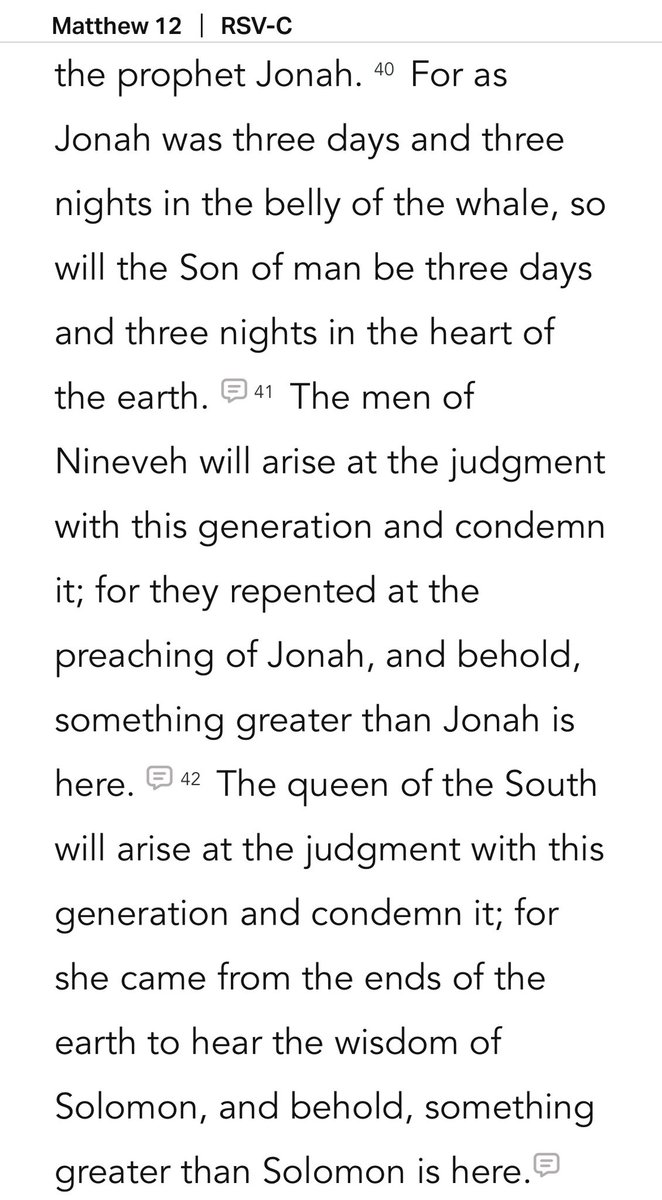
@ZeroSuitCamus Christ promised to descend into Hell for three days to rescue the righteous souls who died before the Incarnation (Matthew 12:40). St. Peter explains further (1 Peter 3:18-20, 1 Peter 4:6). The Harrowing of Hell is the ancient belief of the Church.
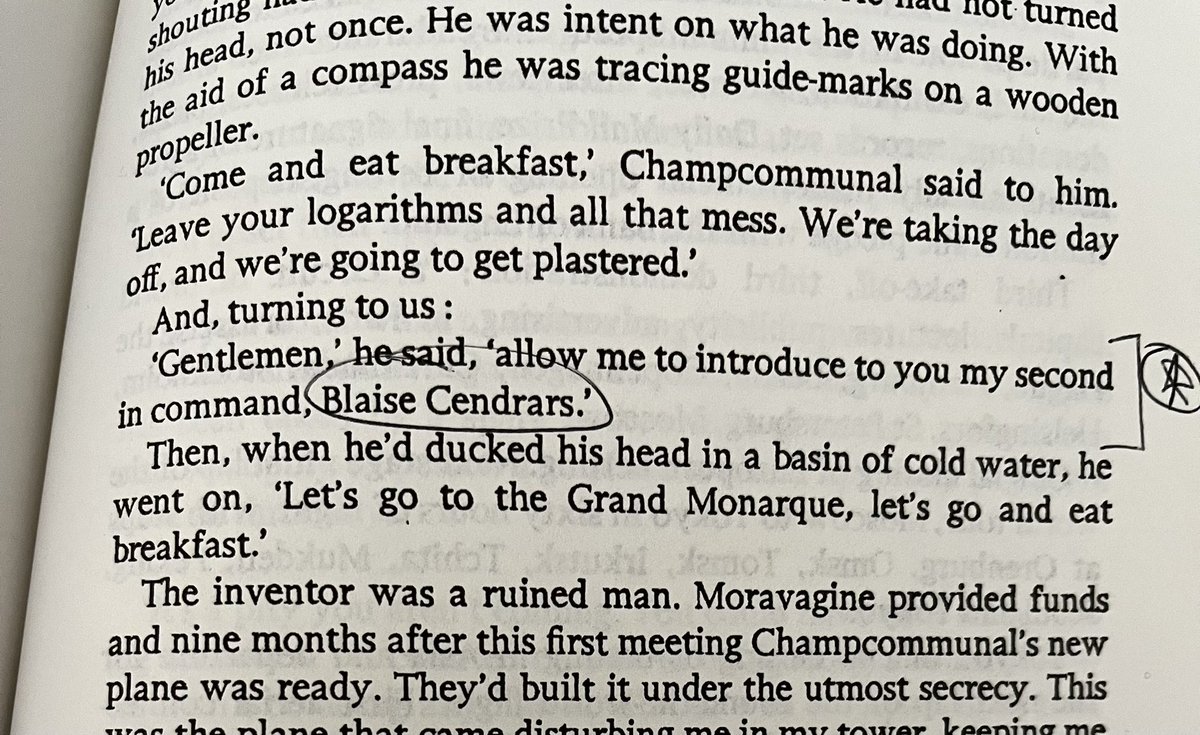
We finally get to the author self-insert. Well, there’s a fictional character named Blaise Cendrars, not to be confused with the author of the book Blaise Cendrars. Which is, in fact, a pseudonym. I forget what level of irony we’re on.
The weird vocabulary is integral to the vibe. The book is studded with (pseudo-)scientific terms because La Science is trying to interpret everything through the lens of scientific determinism, and Moravagine is trying to be obscure and oracular, which La Science eats up.
@MatthewTanous@organfactory For example: It pairs “This is the barrenness” with “harvest or pestilence.” Equal syllables, dactyls, stress patterns. That’s why the line break is where it is, to create that pairing. Again, not my style, but a good example of the style. It achieves what it set out to do.
@MatthewTanous@organfactory I’m a formalist, so I’m sympathetic to this position. But I do think “All Hallows” qualifies as a poem. It has striking, original imagery, and an attention to meter and prosody even in free verse. But the OP is not a poem, despite the author’s claims. Many such cases.
This is not a poem. It has no distinct form or meter, no alliteration, no conceit. It uses no figurative language, no novel phrases, no special diction, no other literary devices. I cannot articulate any definition of “poetry” broad enough to encompass this.