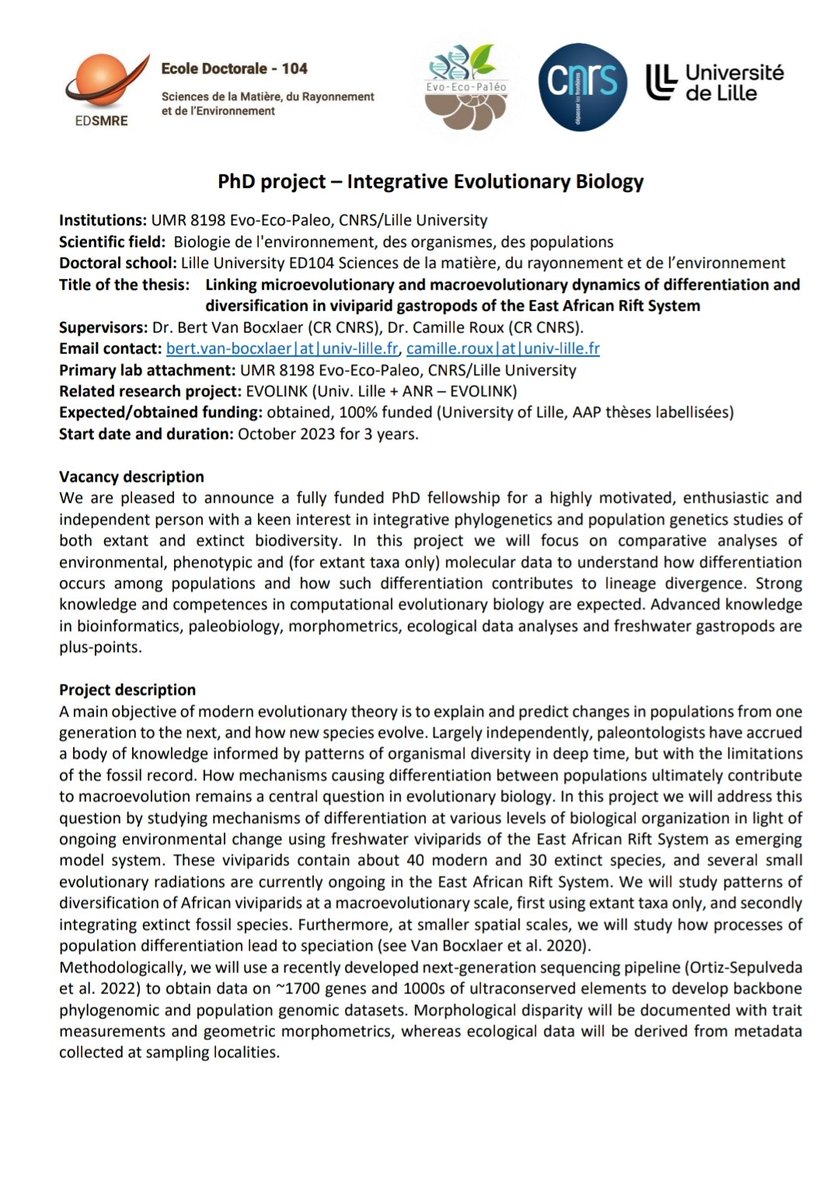
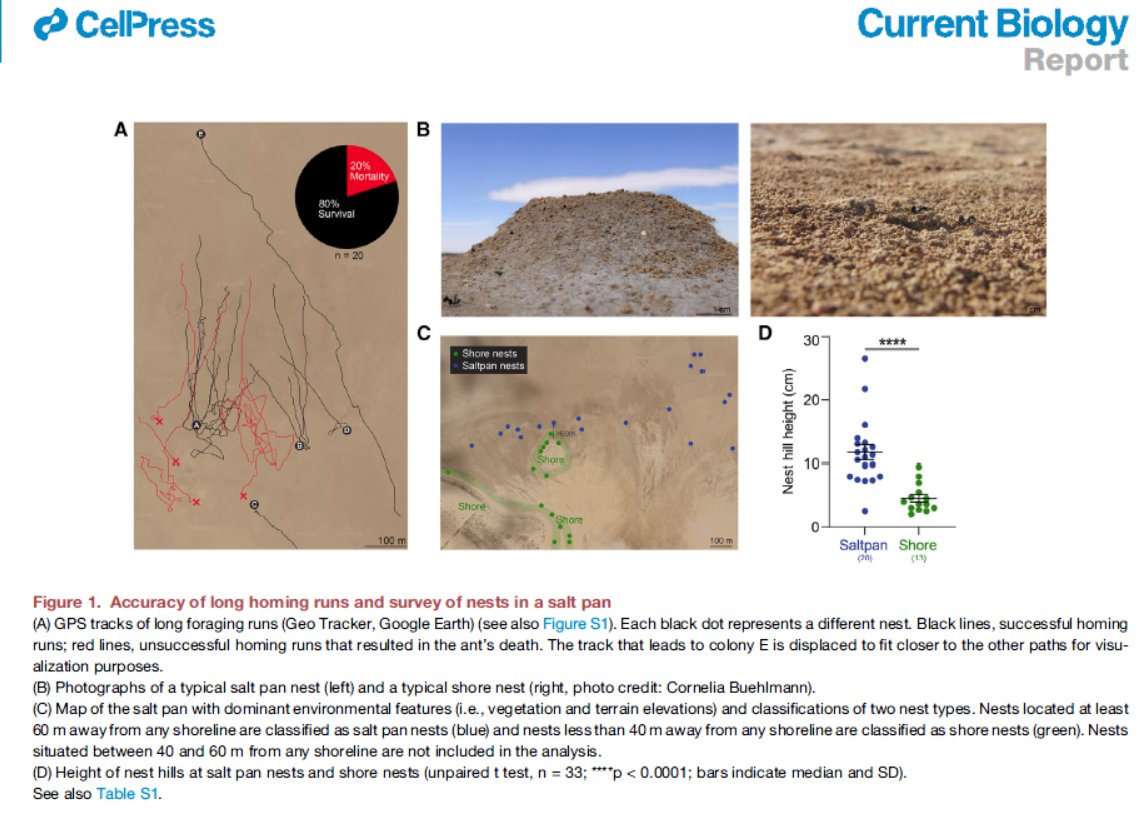
Absence of visual cues motivates desert ants to build their own landmarks #mademyday#biodiversity. After tens of years of fieldwork, still such fundamental discoveries in ant homing #cataglyphis@mknaden1 @Freirilia
https://t.co/diCTbHfEEY
A new paper published by @ntadrent, PhD student at @IRBI_Tours : "SnakeMAGs: a simple, efficient, flexible and scalable workflow to reconstruct prokaryotic genomes from metagenomes"
https://t.co/gDLaaFGVGK @UnivTours
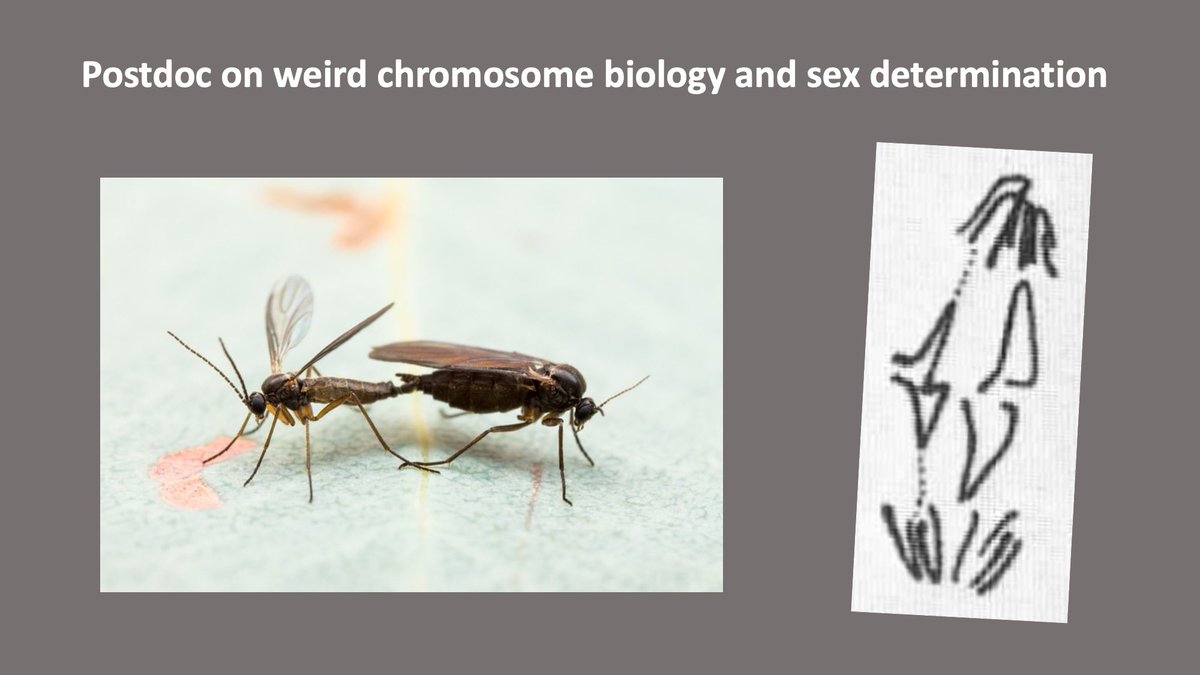
Will be advertising a 2yr ERC-funded postdoc on sex chromosomes and DNA elimination @SBSatEd soon. Please RT and get in touch if interested. More information coming soon!
Integrative taxonomic approach confirms the occurrence of two sibling species and identify putative new ones in an ant species complex with low dispersal abilities
@PaEyer
https://t.co/GTHt7gA8OE
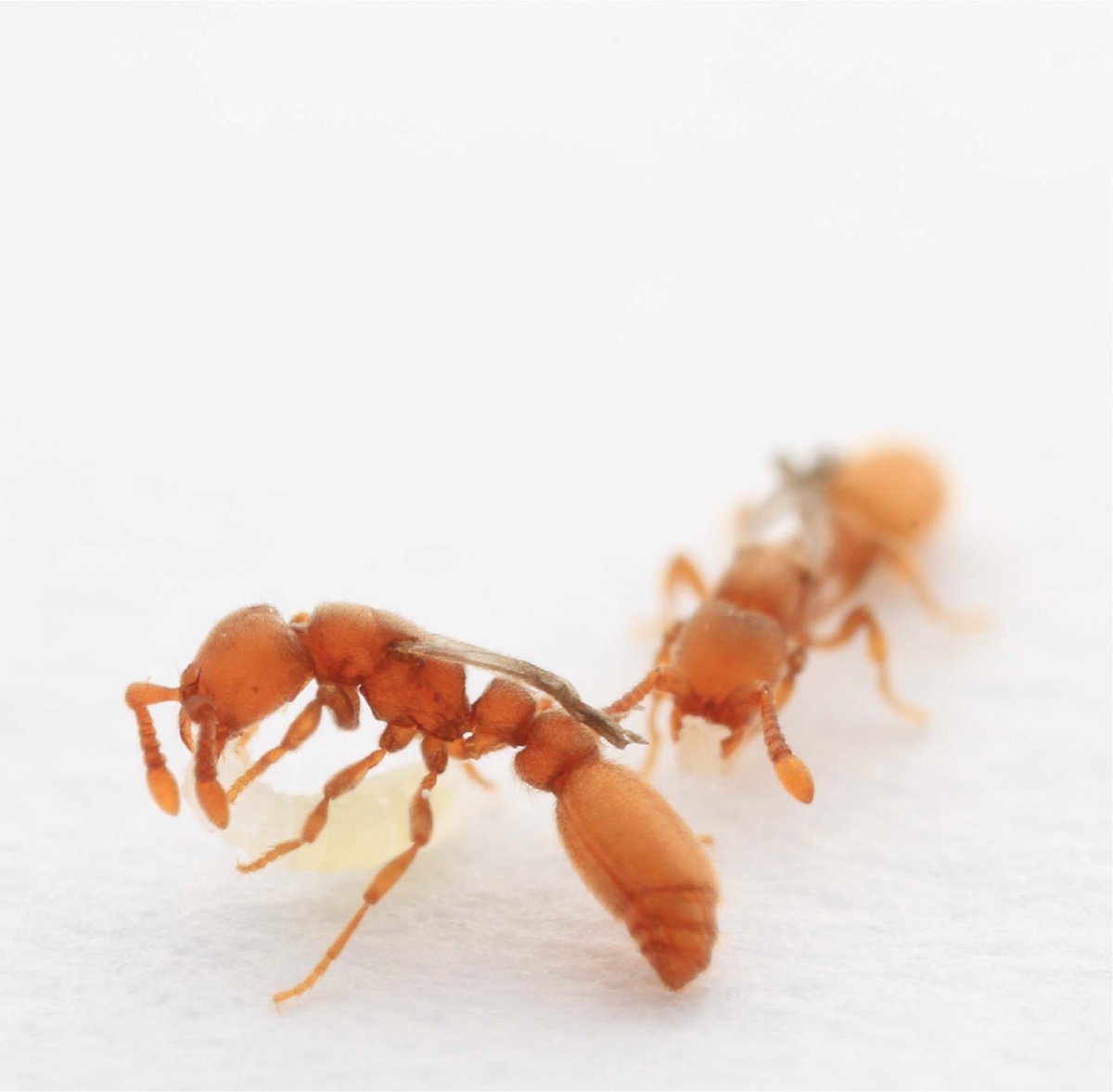
Hey friends, today our 7-year queen-like mutant project is out in Current Biology. These mutant raider ants show the core traits of parasitic ant species, but arose in a laboratory stock just a handful of generations before we discovered them -- probably due to a mutant supergene
I'm thrilled to advertise a postdoctoral position using advanced imaging approaches to explore how nutrients flow through of the symbiotic fungus of leafcutter ants. 🐜🍃🔬
Come join my group at #UCPH in #Copenhagen! #carlsbergfondet
https://t.co/S3IRhyNofV
It’s not exactly the T-1000—yet. But researchers have created a liquid metal robot that can mimic the shape-shifting abilities of the silvery, morphing killer robot in Terminator 2: Judgement Day. https://t.co/tyNW1CPLCy
New preprint out with @ptshults investigating the causes of high inbreeding in a Culicoides biting midge species with fluctuating population size.
https://t.co/8p3I00Xqme
Glad that this new year brings the publication of my first article in @HeredityJournal coming from my Master internship at @Le_Museum@EPHE_PSL with Claudie Doums! Thanks to the co-authors and especially @PaEyer for your collaboration.
Out on bioRxiv today: the first transgenic ants (in Christmas colors) provide some really cool insights into how the complex ant olfactory system works, and how general odorants and pheromones are represented in the ant brain. An absolute tour de force led by @teraxurato:
New paper out in Heredity. Using an ant species complex, we investigated how behavioral, chemical and morphometric analyses complement genetics to understand at which step of the species continuum two diverging populations are.
https://t.co/DKuHszEAG9
Study from the @ed_vargo lab determining colony structure and spatial distribution of an unstudied termite species, the higher termite Amitermes parvulus
Comparative genetic study of the colony structure and colony spatial distribution between the higher termite Amitermes parvulus and the lower, subterranean termite Reticulitermes flavipes in an urban environment https://t.co/dOkasR0c7i #bioRxiv
Our lab (https://t.co/dyW82uSRjs) is hiring multiple postdocs and a computing technician. Come join us and have some fun working on biodiversity in Okinawa!
Postdoc: https://t.co/SaStf2A5c9
Computing Technician: https://t.co/iNxA7tX9Sd
Monopolization at the cost of desiccation: Reduced waterproofing cuticular hydrocarbons impairs nestmate discrimination in an ant https://t.co/LeQ8tMZ3kf #bioRxiv
Dr. Ed Vargo’s lab was featured in a recent article in @FuturityNews about their research that discovered a common ant species underwent physiological and behavioral changes when faced with moving to unnatural settings, such as urbanization. #TAMUBugs
https://t.co/xSEFrQegyr