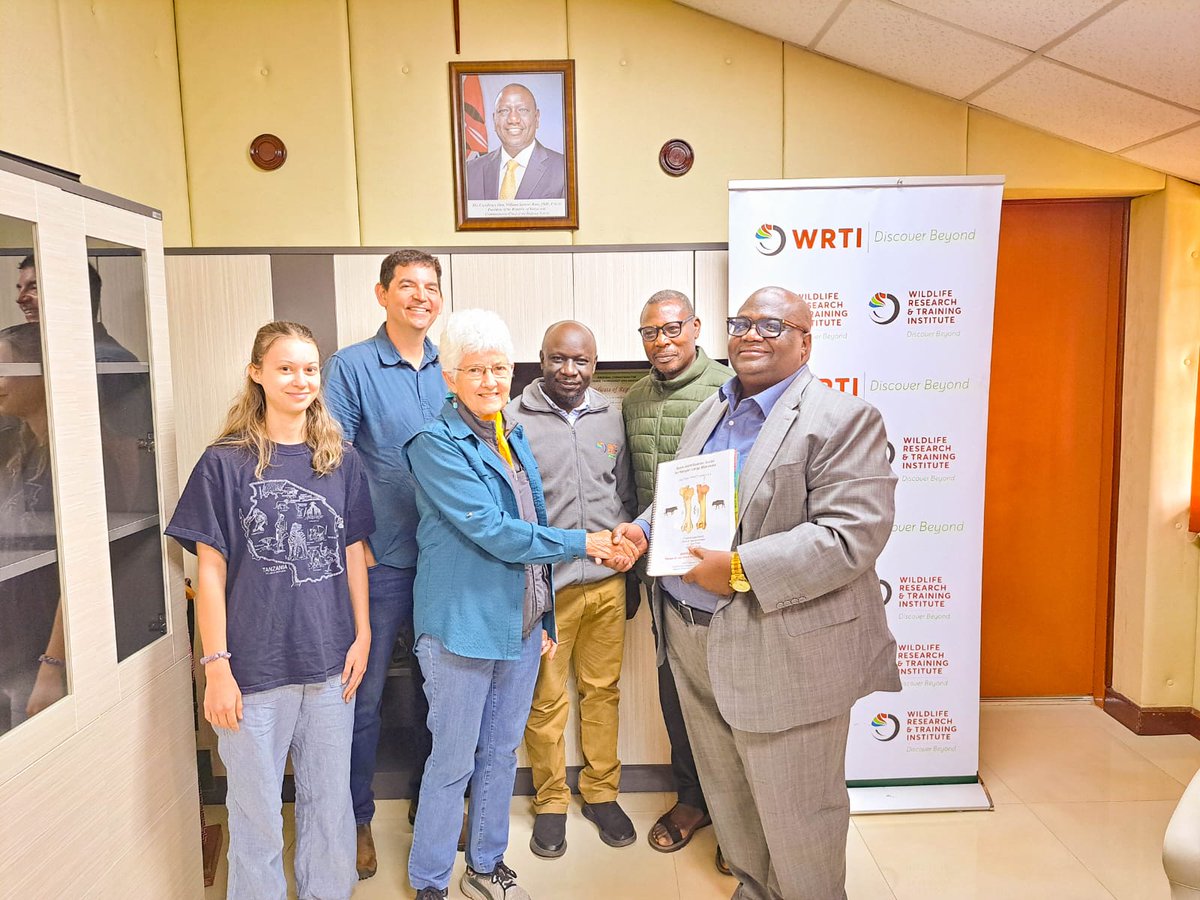
Earlier today, @WRTIKenya CEO/ Director @OmondiPomondi opened a three-day training on bone taphonomy and taphonomic survey in Kenya that is being held at the Institute’s headquarters in Naivasha.
The training is spearheaded by Dr Kay Behrensmeyer (Smithsonian Institution), Dr Ogeto Mwebi (@museumsofkenya), Dr Josh Miller (University of Cincinnati-US), Dr Fredrick Lala (@WRTIKenya Head of Savannah Arid & Semi-Arid Ecosystem) and Ms Clair (University of Texas).
The workshop will provide @WRTIKenya researchers with hands-on experience in taphonomic analysis, offering insights into how environmental factors influence the preservation of animal remains.
During his opening remarks, Dr. Omondi thanked the Smithsonian Institution team for their invaluable contribution to wildlife conservation.
“We appreciate the support provided by Dr. Kay Behrenmeyer and her team over the years, particularly in training our staff. This training is invaluable, and we are excited to have our scientists gain hands-on experience with specimens and methodologies from the International Taphonomy Reference,” he said.
Dr Omondi recognized Dr. Kay Behrenmeyer's outstanding contributions to wildlife research in Amboseli for the past 50 years, noting that understanding past ecosystems can inform future conservation strategies.
“This workshop is a testament to the power of collaboration in scientific research. By working together with esteemed institutions like the Smithsonian, we not only build our capacity but also ensure continuous and accurate data collection that is critical for the conservation of our wildlife,” Dr Omondi stated.
He shared his optimism for future collaborations with the Smithsonian Institution in areas of capacity building, enriching the Institute’s National Wildlife Database, joint fundraising activities and exchange of knowledge to further strengthen the Institute’s role as a leading centre for wildlife research and training.
Earlier today, @WRTIKenya CEO/ Director @OmondiPomondi opened a three-day training on bone taphonomy and taphonomic survey in Kenya that is being held at the Institute’s headquarters in Naivasha.
The training is spearheaded by Dr Kay Behrensmeyer (Smithsonian Institution), Dr Ogeto Mwebi (@museumsofkenya), Dr Josh Miller (University of Cincinnati-US), Dr Fredrick Lala (@WRTIKenya Head of Savannah Arid & Semi-Arid Ecosystem) and Ms Clair (University of Texas).
The workshop will provide @WRTIKenya researchers with hands-on experience in taphonomic analysis, offering insights into how environmental factors influence the preservation of animal remains.
During his opening remarks, Dr. Omondi thanked the Smithsonian Institution team for their invaluable contribution to wildlife conservation.
“We appreciate the support provided by Dr. Kay Behrenmeyer and her team over the years, particularly in training our staff. This training is invaluable, and we are excited to have our scientists gain hands-on experience with specimens and methodologies from the International Taphonomy Reference,” he said.
Dr Omondi recognized Dr. Kay Behrenmeyer's outstanding contributions to wildlife research in Amboseli for the past 50 years, noting that understanding past ecosystems can inform future conservation strategies.
“This workshop is a testament to the power of collaboration in scientific research. By working together with esteemed institutions like the Smithsonian, we not only build our capacity but also ensure continuous and accurate data collection that is critical for the conservation of our wildlife,” Dr Omondi stated.
He shared his optimism for future collaborations with the Smithsonian Institution in areas of capacity building, enriching the Institute’s National Wildlife Database, joint fundraising activities and exchange of knowledge to further strengthen the Institute’s role as a leading centre for wildlife research and training.
Great piece on conservation paleobiology by Bob Holmes appearing in the Atlantic. Shark denticles, caribou antlers, brachiopod shells, pollen, mollusk shells and more! https://t.co/J9WPPELs0p
New 'Fund for Taphonomy' at @NMNH! Proposals should support research, collections, or educational projects or programs related to taphonomy. Budgets from $2,000-$22,000. Applications due June 1. More details here: https://t.co/Zl0iDwG0Vl.
@Synapsida and it is COLD!... At least in terms of bone persistence on landscapes due to weathering, we can likely expect shorter durations of temporal mixing in warmer settings: https://t.co/lVqcLnwzST
Caribou have been giving birth in what is currently the Arctic National Wildlife Refuge (Alaska) for over 3,000 years - shed female antlers tell the tale!
https://t.co/iFw6HYxknG
A beautiful new African Reed Frog from Tanzania. Welcome to the known world, Hyperoliua ukaguruensis. Read all about this funny little frog here: https://t.co/OR5P5fvNH5
@DrPardi Wow - what kind words, @DrPardi! It’s certainly folks like you, @amjukar and others who help make paleo a better community and partnership. What a day!
DNA of mammoths are found in sediments far younger than their last fossils. First interpreted as signs of small persisting populations, this pattern is consistent with taphonomic expectations: bones in cold settings can shed DNA for millennia @simpson_carl https://t.co/UqEWBXi3zu
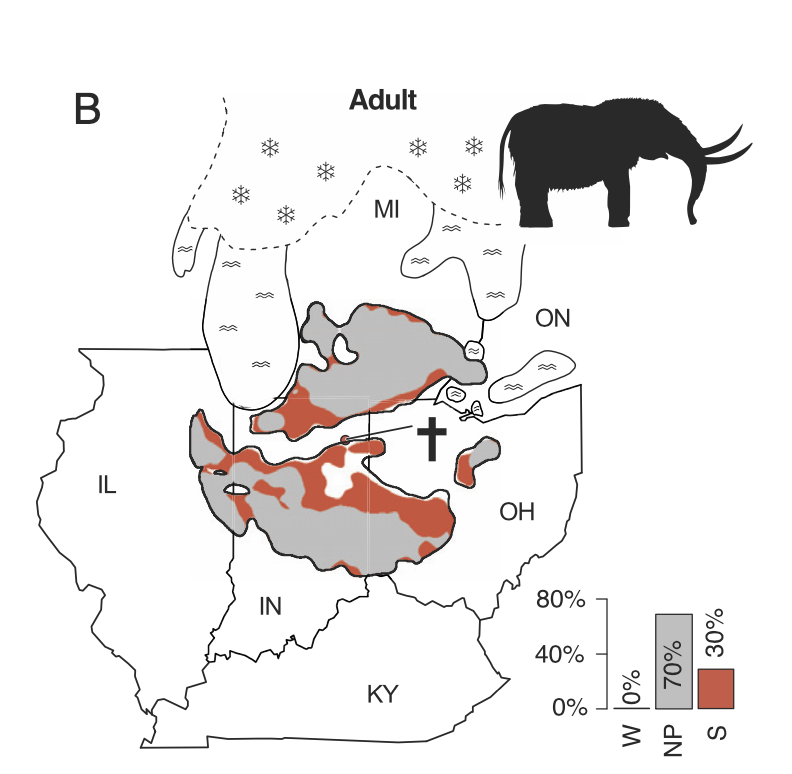
Wanted to write about this research since I saw @paleojosh give an amazing talk on it at @geosociety meeting. Fossils can seem timeless & static, but this one had a biography written in bone, one that illuminated midwest as home to migrations of megafauna https://t.co/IGpJzuQPXP