Palmakers excels in creating Solutions providing organizations with valuable insights for informed decision-making, using Palantir Foundry’s AI operating system
Use case: Credit intelligence. Banks cut lending risk by shifting from periodic checks to realtime intelligence. Financials, ops signals, and benchmarks expose early warnings fast. Palmakers delivers this on #pltr Foundry for smarter decisions & stronger credit. #AI#FinTech
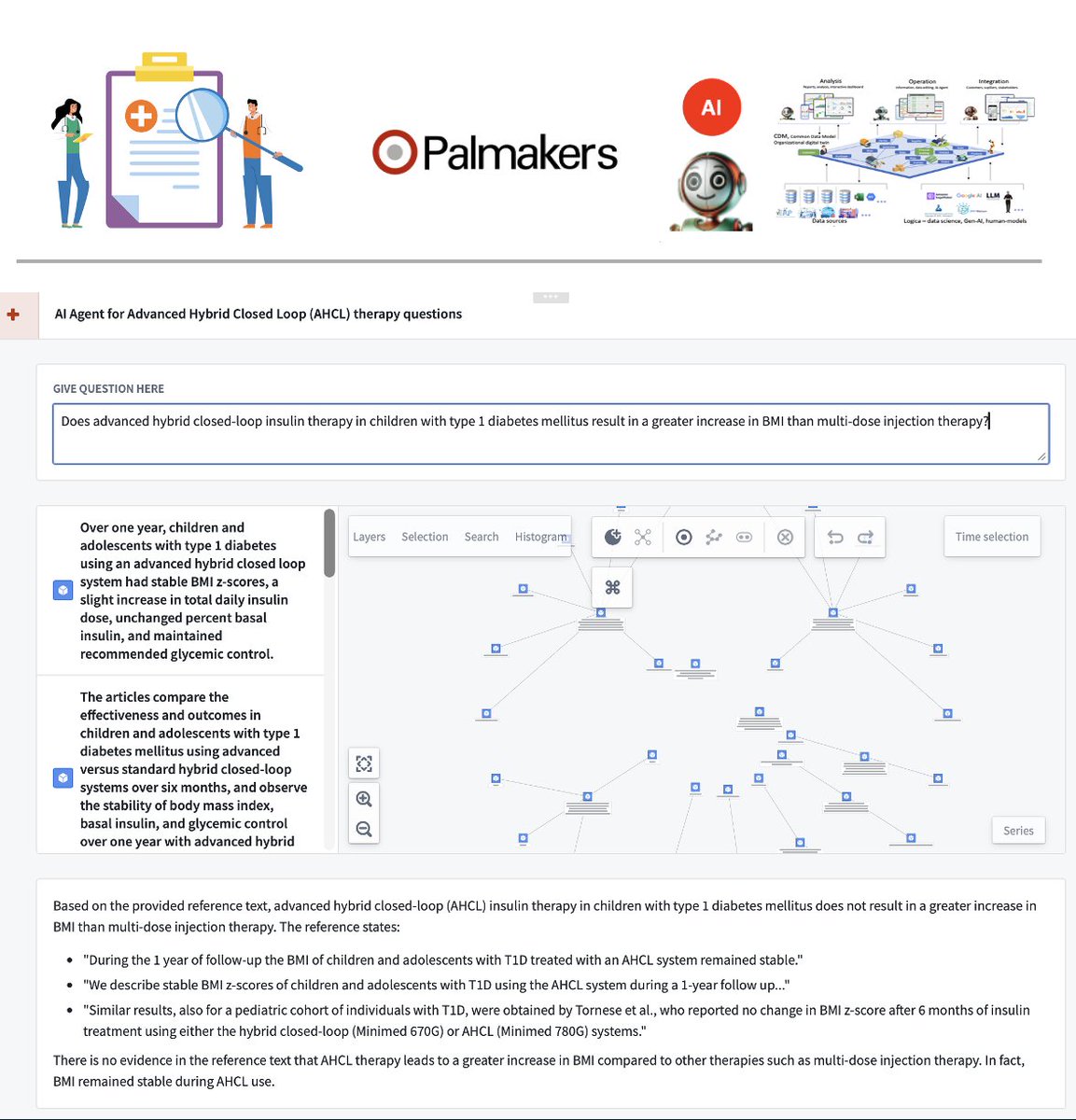
At a European hospital, doctors turned data chaos into clarity. With Palmakers + #Palantir Foundry, #AI Agents uncovered insights on diabetes research in seconds—evidence-based care made real. #HealthTech#HealthcareInnovation
Big news from Palmakers: we’re partnering with #Oracle to bring the #Palantir#AI Platform to OCI customers — letting AI Agents reason over all enterprise data for faster insights, higher accuracy and lower cost. OCI meets Palantir Foundry. Interested? [email protected]
Underinsurance is rising fast. Old valuations + static spreadsheets can’t keep pace with volatile costs and indexing. We help insurance leaders use Palantir Foundry to turn data into dynamic valuations—building resilience and trust. Curious? [email protected]#insurance#AI
Hundreds of machines, tools & vehicles—valued once every 2 yrs with spreadsheets? At Palmakers, we use #Palantir Foundry + LLMs to unify data & deliver instant, explainable valuations that drive investment, insurance & compliance decisions. #EnterpriseAI#DataStrategy#pltr
AI’s smart — but without your enterprise data, it’s blind. Palantir AIPlatform makes it see in 2 days. Interested let's talk, [email protected]#AI#pltr#digitaltwin#data
Palantir’s MCP lets AI work inside Foundry — securely accessing data, understanding ontologies & speeding up delivery. Palmakers makes it real for European enterprises. Fast. Secure. Effective. #pltr#AI
Palantir reports Q2 2025 U.S. comm revenue growth of 93% Y/Y and revenue growth of 48% Y/Y.
We are now guiding to Q3 2025 revenue of $1.083-$1.087B, representing our highest ever sequential quarterly growth rate guide and 50% Y/Y.
And we are also raising our FY 2025 revenue guidance to 45% Y/Y growth and FY 2025 U.S. comm revenue guidance to 85% Y/Y growth, crushing consensus expectations.
We generated an adjusted operating margin of 46%, increasing our Rule of 40 score to 94% in Q2 2025.
Why is Palantir the only one running Enterprise AI at scale in real operations?
Watch the video https://t.co/5qKd8YoEAQ — and want to see it live? Mail to: [email protected]. Palmakers help organizations launch AIP Foundry fast, securely, and with real results. #AI#pltr#data
Why we chose Palantir to help us build our AI systems. BTW, the last-mile shiny objects related to workflow modeling are just the tip of the iceberg.
1. Model grounding is hard, like really hard. It's also the most critical step to ensure you get accurate answers to high-value questions. You need to bring together all your data into a single semantic data layer that exposes critical search functionalities, such as full-text indexes and vectors. Foundry is the premier platform to solve these challenges.
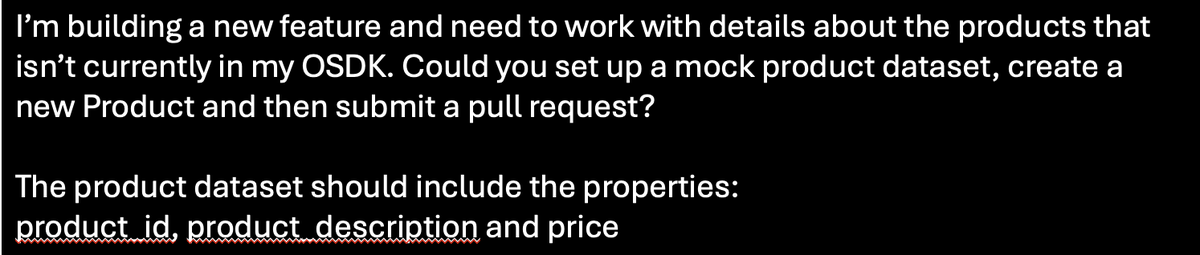
2. Security. Ensuring every piece of data and functionality accessed by the model is done so under the scoped permissions of the user is a very hard problem to solve. Traditionally, I have used STS with a token vending machine on AWS stacks to do this. If your system was not designed from the ground up to do this, good luck; you will need it. The OSDK in Foundry ensures we have security and governance in place from the moment we ingest the data to the last-mile application serving layer.
3. Cost. This shit is expensive, like really expensive. Foundry Marketplace/DevOps enables us to distribute our software to customers' Foundry stacks. We have no infrastructure to maintain and no cost to absorb. And the customer's data never leaves their four walls.
If you are building software 3.0 and have not solved for these challenges, you are building vaporware. Sorry, that's just the truth. Build what's next, build on Foundry. https://t.co/F3RL6Ibby4.
“We don’t need more dashboards". We need to see the future.” That’s what a Fortune 500 CFO told us. With Palantir Foundry, we built real-time scenario modeling on enterprise data. At Palmakers, we help European firms do the same. Curious? [email protected]#AI#pltr#CFO $pltr
Everyone's building AI agents—but without organized data, they stall fast. Palantir Foundry changes that: all your data, connected, usable, fast. We help firms go from raw data to working AI agents in days (or less). Curious how? Just ask. [email protected]#AIAgent#AI
Don’t trust me.....learn to find the truth.
There is a growing lack of trust in information and data. I have spent my entire career seeking truth through data, and I’d like to unpack why it matters and share a few anecdotes that make this complex topic more approachable.
Provenance and lineage build trust in information.
Knowing the provenance (where data comes from) and its lineage (how it is accessed, transformed, and used across its lifecycle) is the only sustainable way to trust modern data systems. This principle is baked into Palantir’s platforms: every time you build, secure, transform, combine, or action data, provenance and lineage are captured automatically. Think 5 W's. This also powers the controls that maintain proper stewardship of the data and ensure it is not shared or used improperly.
That is critical for both efficacy and control:
-If you can’t trust data across its lifecycle, you can’t use it.
-If the system isn’t audited, you can’t control it.
This concept applies to both data systems and our news.
In headlines and public discourse, you often hear hedges like “could be,” “potentially,” and the ever-popular whataboutism.
Inside the enterprise, the same uncertainty shows up as:
-Endless debates about whose data is the “source of truth.”
-KPI-gaming to hit targets and claim bonuses.
-Aggregations that simplify complexity but hide critical nuance to derive the narrative you want.
Back in 2016, a CIO said to me “We are not going to the cloud; it’s not secure, and we’re not giving our data to them. It’s called the public cloud for a reason!”
Imagine saying that today.
Most people now understand encryption in motion and at rest, shared-responsibility models, and the difference between data owners and platform providers. SOC 2, network segmentation, firewalls, and VPCs, etc. These are the backbone of an economy where we hail rides, video chat loved ones, order groceries, message friends, and move money, all securely.
Human brains are wired for controversy, rage, and fear; these survival instincts are now harvested for profit and influence. Add limited technical understanding and a clickbait headline, and you get dangerous outrage. That’s why truth-seeking through the lens of provenance and lineage is essential.
The non technical version: gossip. When you hear something outrageous, you ask who said it, where they got it, and how many people stand between you and the source. If a trusted friend can show receipts, odds are higher it is true; if the claim is second-hand from a notorious exaggerator, odds plummet.
Auditors, litigators, and investigators will tell you that you can’t prove a negative; for example, “I did not commit the crime.” You can only prove positives: Where were you? Are there gaps? Is the location data verifiable, or just an eyewitness report? The same logic governs trustworthy data analysis in our government, enterprises, and news cycles; you must show the full chain that leads to a fact.
Consider the New York Times headline: “Trump Taps Palantir to Compile Data on Americans.” Key facts:
1. Palantir has no contract to build that “master” database.
2. Palantir is a data processor, not a data vendor.
3. Palantir’s government contracts focus on using software to process data for essential public services.
A biased writer transformed those facts into a false narrative through the idea that you can’t prove that you are not involved, and that it’s all so secretive; how would you ever trust any answer? They claim these terrible things, wrapped in vague words like “taps,” “could,” and “compile,” inviting misinterpretation. Without full lineage, these transformations corrupt the data and create downstream risk, evidenced by letters and op-eds that took the headline at face value. Now, this “prove the negative” argument continues as the source of truth for people who want to believe the outrage.
You must pull the thread until you find the end.
Palantir’s software is purpose-built to capture every transformation in an immutable, auditable record, so you can prove the positive: what happened, when, and how. Transparent provenance and lineage let analysts trace conclusions back to raw sources, regulators verify controls, and everyone separate fact from fiction.
The platform turns trust from a hope into a defensible outcome. Our documentation is public; you can even get free access to the tools and tutorials to try and see for yourself how and why the software is privacy protecting. I will add links in the .