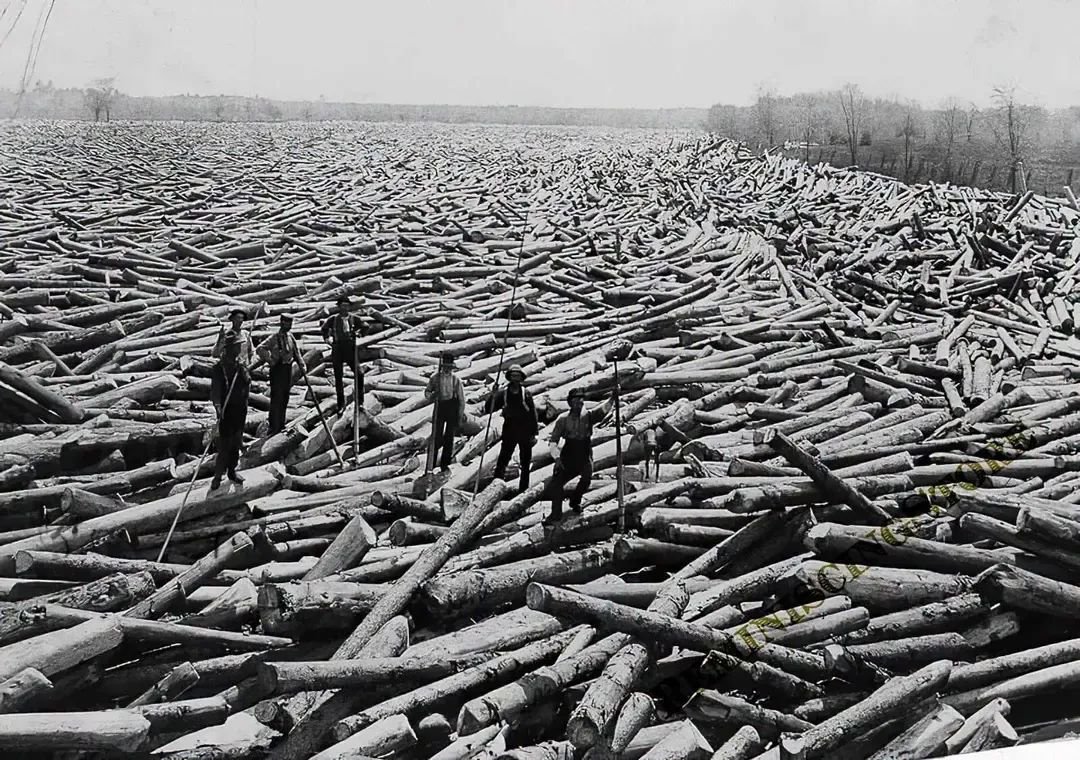
Logs headed down the Hudson from the Adirondacks, 1907....
Before railroads and modern trucking became widespread, America's rivers served as the highways of the timber industry. Each spring, thousands of freshly cut logs were floated downstream from the forests of the Adirondack Mountains to sawmills along the Hudson River. Known as a log drive, the annual operation relied on snowmelt and spring rains to raise water levels enough to carry enormous quantities of timber.
Workers called river drivers balanced atop the floating logs using long pike poles to guide the timber, break up dangerous logjams, and keep the massive rafts moving. It was among the most hazardous occupations of the era. Slippery logs, swift currents, and shifting piles of timber claimed many lives, yet the work remained essential to supplying lumber for the rapidly growing cities of the Northeast.
By the early 20th century, railroads and improved road transportation gradually replaced river log drives, bringing an end to a centuries-old practice that had helped build America.
New York's Adirondack Park, where many of these logs originated, was established in 1892 and today protects more than six million acres, making it larger than Yellowstone, Yosemite, Glacier, Grand Canyon, and Great Smoky Mountains National Parks combined.
#archaeohistories
Just bc Covid-19 said I can't have my wedding today doesn't mean I can't still wear my dress! Get ready to save another date! #BuschWeddingGift#Sweepstakes