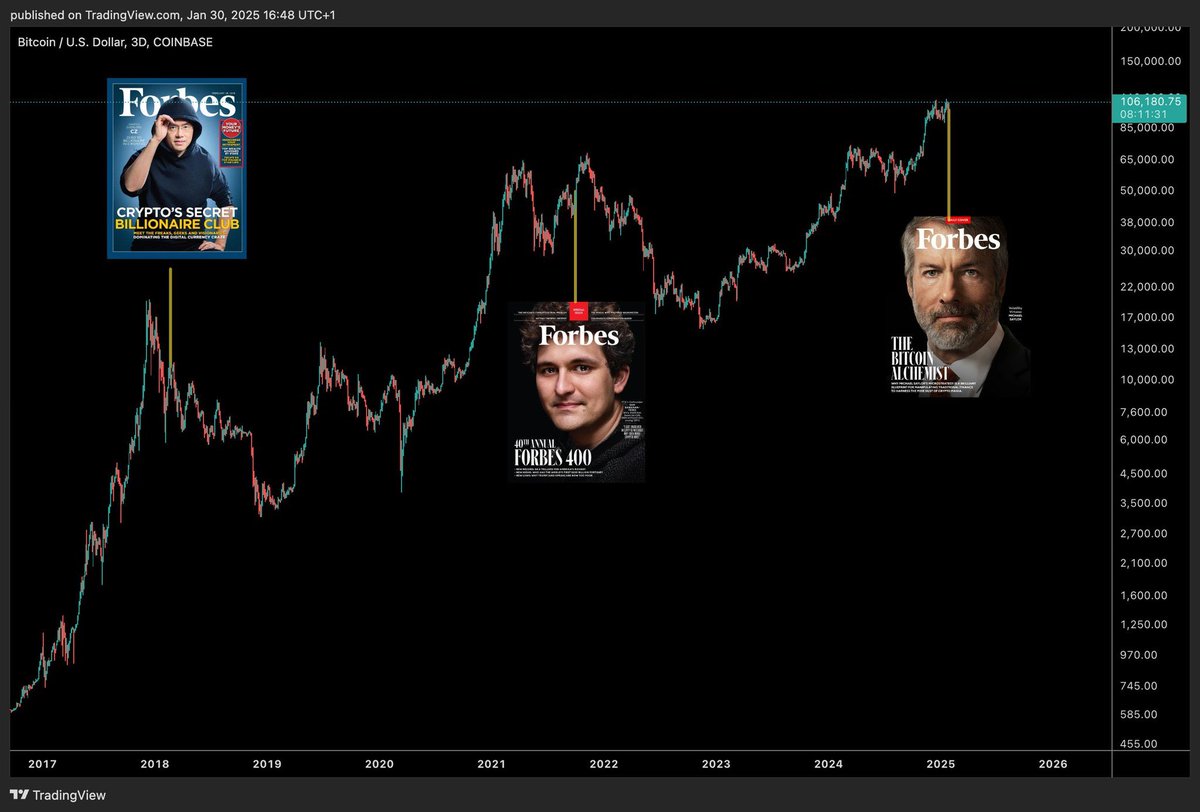
Can't believe ppl still trying to sell you on a glorious alt season lol
SBF isn't here. There are no infinite money printers handing out money. Billions in unlocks every month. Cabals extracting crazy money onchain.
Wake up.
Market Thesis: Mispriced Optimism Amid Tariff-Driven Supply Chain Disruption
Overview: The market is overvalued and mispositioned, failing to account for the profound disruptions caused by U.S. tariffs and the multi-year challenge of relocating global supply chains. With the S&P 500’s forward P/E ratio at ~19x, above the long-term trend of 15x, current valuations reflect unwarranted optimism driven by liquidity and AI/EV hype, not fundamentals. A market correction is likely as investors recognize the structural constraints on global growth, triggered by specific catalysts such as earnings downgrades, tariff escalations, or geopolitical tensions.
Core Argument: Tariffs, particularly those targeting China under the Trump administration in 2025, are forcing a historic reconfiguration of global supply chains. Relocating the world’s factories—critical for tech giants like Nvidia, Tesla, and Apple—requires 2-7 years due to logistical, regulatory, and infrastructure challenges. This process will pause corporate growth, disrupt earnings, and constrain global consumption, yet markets have not priced in these realities. Liquidity-driven rallies, fueled by potential quantitative easing (QE), may delay a reckoning, but fundamental bull markets are unlikely until supply chains stabilize or tariffs are reversed.
Key Catalysts for Market Realization:
Earnings Downgrades: Major companies (e.g., Nvidia, Apple, Tesla) announce reduced growth forecasts, layoffs, or capex pauses due to tariff-related cost increases or supply chain delays. For example, Nvidia may face pressure if hyperscalers optimize AI spending, while Apple’s China-dependent assembly faces risks.
Tariff Escalations: New U.S. tariff announcements or retaliatory measures from China (e.g., export bans on rare earths or semiconductors) highlight the cost and timeline of supply chain shifts.
Geopolitical Tensions: EU resistance to U.S. trade policies or heightened China-Taiwan tensions (e.g., military drills) raise fears of trade stagnation or conflict, shaking investor confidence.
Capex Cycle Peak: Evidence of slowing tech capex (e.g., hyperscalers cutting AI infrastructure budgets) signals a demand slowdown for chipmakers like Nvidia, amplifying market concerns.
--Base Case: Liquidity-Fueled Rallies Amid Growth Pauses--
Scenario: Major companies face 2-7 years of constrained growth as they relocate supply chains to the U.S., India, Vietnam, or Mexico. This involves cutting growth forecasts, reducing spending, implementing layoffs, pausing capex, and later raising cash to fund new factories. For instance, Apple’s shift from China to India is underway but faces labor and infrastructure hurdles, while Tesla’s Mexico plans are delayed by regulatory issues.
Market Impact: The market experiences volatile, liquidity-driven rallies, propped up by Federal Reserve rate cuts (~3.5-4% in 2025) or potential QE, but lacks fundamental support. A correction occurs as earnings disappointments and supply chain delays pile up, with the S&P 500 potentially reverting to its long-term P/E trend of 15x.
Supporting Factors: U.S. policies like the CHIPS Act ($50 billion in subsidies) accelerate domestic semiconductor production but cannot offset near-term disruptions. TSMC’s Arizona fab, for example, won’t reach full capacity until 2026-2027. China’s countermeasures, such as export controls on critical materials, further complicate the transition.
--Bull Case: Successful U.S.-China Decoupling--
Scenario: The U.S. successfully reduces reliance on Chinese manufacturing through tariffs, subsidies, and friend-shoring to allies. Companies like Nvidia and Apple adapt by 2030, building new supply chains in the U.S. or allied nations. Growth resumes after a 3-7-year transition, supported by domestic policy (e.g., CHIPS Act, tax incentives) and global cooperation.
Market Impact: Markets stabilize post-correction as investors embrace a new growth cycle, though valuations remain modest during the transition. The S&P 500 could trade at 16-17x P/E in the interim, reflecting cautious optimism.
Challenges: Decoupling requires sustained policy execution and EU/ally buy-in. China’s retaliatory measures (e.g., rare earth export bans) could extend timelines, and full decoupling may take a decade, as seen in historical manufacturing shifts (e.g., Japan in the 1980s).
Bear Case: Trade Stagnation or Geopolitical Escalation
Scenario 1: EU Resistance: The EU, prioritizing trade with China (e.g., Germany’s auto sector), resists U.S. tariff policies, leading to a transatlantic trade standoff. Global demand weakens, and growth halts without a clear resolution, dragging on markets.
Scenario 2: China Goes Kinetic: Heightened tensions, such as a Chinese military move on Taiwan, disrupt global supply chains (e.g., 50% of global chips come from Taiwan). Markets crash, and supply chain recovery is delayed indefinitely.
Market Impact: The S&P 500 could fall significantly (e.g., 20-30% correction), with P/E ratios dropping below 15x. Tech stocks, heavily exposed to Asia, lead the decline.
Likelihood: EU resistance is a near-term risk given 2025 trade talks, while a kinetic China scenario is less probable but catastrophic, aligning with low-probability tail risks underpriced by markets (e.g., VIX ~15-20).
Why Markets Are Mispriced:
Complacency: Low volatility (VIX ~15-20) and high valuations (19x P/E) reflect investor focus on AI/EV tailwinds and Fed support, ignoring tariff costs and supply chain timelines.
Structural Misunderstanding: Relocating factories involves not just capital but retraining workforces, securing raw materials, and navigating regulations—challenges markets underestimate. For example, lead times for chips remain elevated (~20-30 weeks), signaling persistent bottlenecks.
Liquidity Distortion: Expectations of a “Fed put” or QE ($7 trillion Fed balance sheet in 2025) fuel rallies, but inflation (3% CPI) and rising bond yields (~4.2% 10-year Treasury) limit central banks’ ability to offset structural issues.
--Counterargument: Extreme QE or Sector Resilience--
Massive QE could delay a correction by boosting asset prices, as seen in 2020-2021. AI and EV demand may also sustain companies like Nvidia or Tesla in the near term, delaying growth pauses. However, QE cannot resolve supply chain constraints, and sector resilience may wane as tariff costs mount (e.g., higher chip prices for Nvidia, battery costs for Tesla). Rising inflation or yields could further undermine QE’s effectiveness.
Conclusion: Global growth and consumption will remain constrained until supply chains stabilize (3-7 years) or tariffs are reversed (unlikely under current policy). The market’s failure to price in this reality—evident in elevated valuations and low volatility—sets the stage for a correction, triggered by earnings downgrades, tariff escalations, or geopolitical shocks. While liquidity may delay the inevitable, the structural challenges of relocating the world’s factories will dominate, making liquidity-fueled rallies unsustainable. Investors should prepare for volatility and position for a lower-valuation environment as markets adjust to a new economic reality.
Credit to Grok for doing all the lifting on making this coherent lol
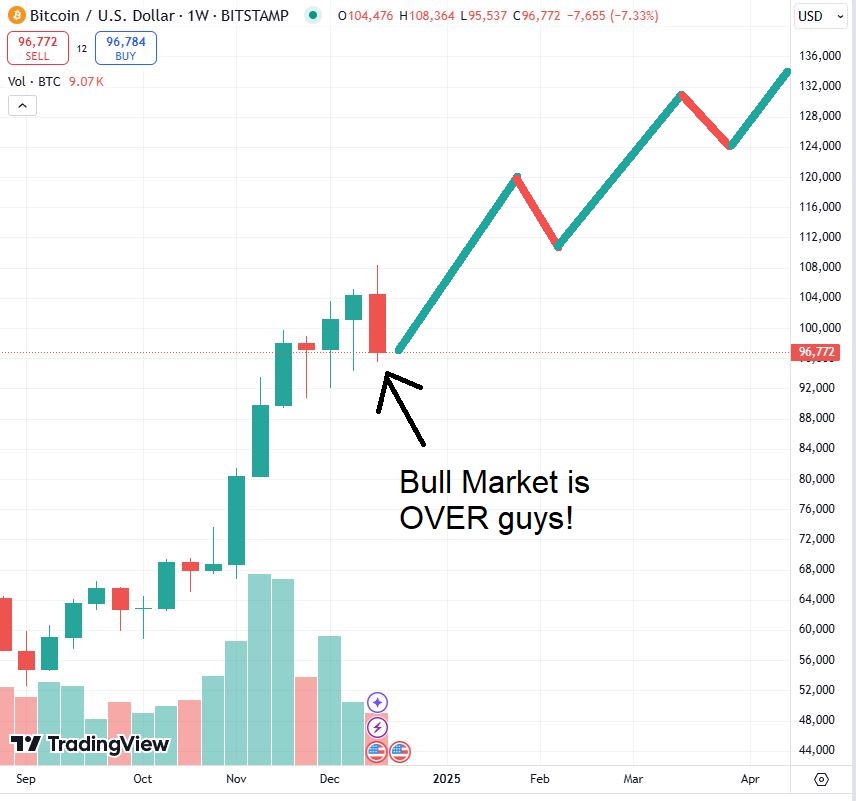
🚨 Bull Market is OVER guys! 🥴🤣
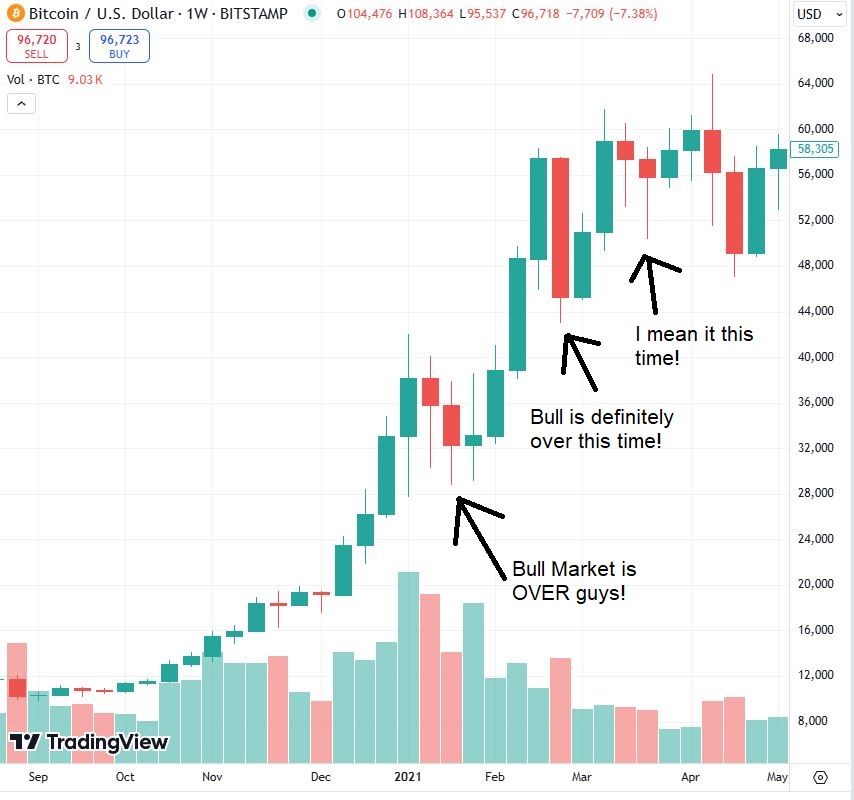
Yeah, the bull market is over. Just like it was over three times in Q1 2021 before reaching new highs. 🚀
Remember, the bloodiest red days always happen during bull markets, not bear markets. Use this as an opportunity to load up your bags. Bitcoin will resume its uptrend shortly.
We are really some of the most miserable mother fuckers on the planet I swear.
Biggest bull run ever.
Greatest macro backdrop for crypto ever.
The number is going up, $BTC almost at $100k.
And ppl are mad at other ppl for being happy about making money on an airdrop.