Woman of the Day Women’s Auxiliary Air Force Corporal Daphne Pearson (1911-2000) of Hampshire, the first woman awarded the George Cross after she dragged a pilot from a blazing aircraft loaded with unexploded bombs - in the nick of time. They went off.
Daphne wanted to join the Royal Navy but after leaving school, she worked as a photographer, eventually running her own studio at St Ives until ill-health persuaded her to sell. She held other jobs but much of her spare time was taken up with flying lessons and she was just a few flying hours away from gaining her pilot's certificate when WW2 broke out. Daphne immediately enlisted in the WAAF in 1939 as a medical orderly.
In the early hours of 31 May 1940, Daphne was woken up in WAAF quarters at RAF Detling by the noise of a plane engine cutting out, a plane heading directly towards the base. It was an RAF Avro Anson bomber that undershot the approach to the airstrip and crashed into a field nearby, triggering a bomb that killed the navigator and seriously injuring the pilot.
Daphne dressed quickly, put on gumboots and a tin hat, and ran outside just in time to see the plane crash: "A guard told me to stop but I said 'No'. I ran on, opening the gate for an ambulance to get through." She scrambled over a fence, fell down an incline, waded through a ditch full of nettles and ran towards the plane which was on fire and still carrying a full load of unexploded bombs.
Others reached the scene and started pulling the pilot clear but Daphne yelled: "Leave him to me. Go and get the fence down for the ambulance." She began to drag the pilot away from the blaze but had to stop and render first aid. His neck was injured and she feared he’d broken his back. He mumbled that there was a full load of bombs on board so she dragged him further away just before the petrol tanks blew up.
Daphne immediately threw herself over him to protect him from the blast and placed her helmet over his head. That’s when a 120 lb bomb went off and she had to support his head to prevent any further dislocation. Just as she was about to examine his ankle, there was a third explosion and they were showered with splinters and debris. Daphne ran back to the fence to help the medical officer with the stretcher and once the pilot was taken away by ambulance - and despite a final, even fiercer explosion - she returned to the wreckage to search for the wireless operator. He was dead.
So what did Daphne do immediately after her heroic actions? Exactly as you’d expect. She returned to base, assisted the doctor, and then reported for duty as usual at 8 am for her full shift.
She was awarded the Empire Gallantry Medal on 19 July 1940, the first woman to receive a gallantry award during WW2. This was converted into a George Cross by George VI in 1941 and she is one of just thirteen women GC holders.
I was especially pleased to learn that after she was demobbed in 1946, Daphne became an Assistant Governor for a time at a borstal for girls - possibly at what is now HMP East Sutton Park in Maidstone, Kent. I bet no messing about was allowed on her watch! She died in Melbourne, Australia, at the age of 89.
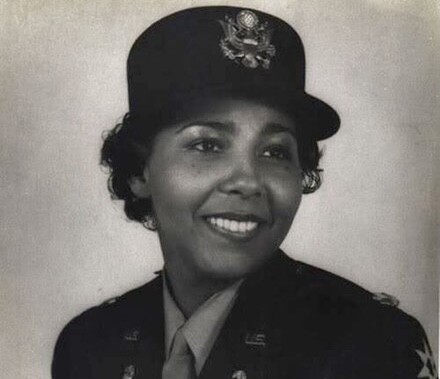
Woman of the Day Lieutenant-Colonel Charity Adams Earley born OTD in 1918 in North Carolina, who defied the constraints of a segregated United States to become the highest ranking African-American woman in the US Army by the end of WW2.
After graduating in 1938 with majors in physics, mathematics, and Latin from Wilberforce University, she taught in South Carolina. In 1942, the dean recommended her for the first officer intake of what became the Women’s Army Corps. She applied, heard nothing, forgot about it.
Charity set high standards for herself - valedictorian of her high school class even though she was two years younger than her classmates - but her early years were marked by racial discrimination. Her parents were educated and she recalled that her father cancelled a health insurance policy he took out for her because the insurance agent refused to call her “Miss”. On one occasion when she was denied a seat in a dining car because of her race, all of the black waiters put down their trays and refused to work. She was seated.
But back to that application. Charity was on a bus, on on her way to Ohio to continue her graduate studies, when she opened an invitation to apply for the Women’s Army Auxiliary Corps. “The letter…emphasized career and leadership opportunities…I began making a mental adjustment to an unknown future. When I realized I was accepting the idea, I realized that the only basis I had for my feeling was an optimistic hunch.”
President Franklin D. Roosevelt had signed Executive Order 8802 on 25 June 1941, prohibiting ethnic or racial discrimination in the US’s defence industry but what the law says and what people do are two different things.
In 20 July 1942, Charity arrived at the first WAAC Training Center, one of only 40 African-Americans out of 440 officer candidates selected to attend the WAAC Officer Candidate School run by previous WOTD Oveta Culp Hobby, who demanded high standards. 98.2% of those who began the training completed it successfully and their professionalism was praised by the Adjutant General of the US Army.
She recalled that she bonded with all of her sister recruits but “the Army soon shattered whatever closeness we had felt…When we left the mess hall, we were marched two-by-two’s to the reception center. A young, red-haired second lieutenant said, ‘Will all the colored girls move over on this side.’ He pointed to an isolated group of seats. There was a moment of stunned silence, for even in the United States of the 40’s it did not occur to us that this could happen. The integration of our trip did not prepare us for this.”
Charity was subsequently stationed at Fort Des Moines, one of its first black officers, and was often challenged by military police who refused to believe she was an officer. When a general told her “I’m going to send a white first lieutenant down here to show you how to run this unit,” she replied, “Over my dead body, sir.” He threatened to court martial her. She told him he was breaching an Allied directive by using segregationist language. Only one of them backed down. It wasn’t Charity.
By the end of 1944, Charity was commanding officer of the first and only battalion of black WACs overseas - the 6888th Battalion, 850-strong, in Birmingham, UK. The Six-Triple-Eight was responsible for sorting a veritable mountain of backlogged post for seven million American troops in stationed in the European theatre. Their lifeline to home.
It wasn’t just about sorting letters though. It was sensitive work. Those letters had to be censored in case they contained information useful to the enemy. Working 24/7, her personnel shifted 65,000 letters a day and cleared the lot in three months - less than half the estimated time. The 6888th was then deployed to Rouen to do the same.
Charity took the same care of the morale of her own staff as she did of American soldiers. She refused the use of segregated recreational facilities for her women - “The Six-Triple-Eight will only use them over my dead body”, and wrested funds from the US Army for beauty parlours for them. “Solving this problem, I learned that if you ask the same question of enough people enough times, you can get the necessary information.”
She stayed in the US Army after the end of WW2 but chose to leave soon after her promotion to Lieutenant-Colonel. Charity died in 2002, aged 83, having paved the way for other African-American women.
"You don't know you're making history when it's happening. I just wanted to do my job."
Male friend: why didn’t she just stand up and tell him to fuck off
Me: because she needs the work
Male friend: but why not just tell him she found it inappropriate
Me: because she needs the work
Male friend: but why not explain she’s uncomfortable
Me: because she needs the work
This is Senior Sister Julie Anne MacDonald receiving a beautiful guard of honour after 42 years of service to the NHS.
Thanks for everything, Julie Anne.
Please repost for her.
📺Tune in to @BBCBreakfast at 730am and 📻@bbc5live at 820am tomorrow morning to hear our Chair @AFrazerWicks talk about reforms to support adopted children to see their birth family. Angela's youngest children were adopted in 2004 and she recently reconnected with her eldest son
https://t.co/OK8DSx51ZE "The charity Family Rights Group warmly welcomes a major new publication by the President of the Family Division of the High Court’s Public Law Working Group on Adoption. "
Woman of the Day militant suffragette Jessie Kenney (1887-1985) of Oldham, younger sister of Annie Kenney and the first woman to qualify as a ship's Radio Officer. A born organiser, she was highly regarded by Christabel Pankhurst of the Women’s Social and Political Union.
Jessie started working in a cotton mill when she was 13 but managed to study at evening classes at the same time, learning new skills including typing. They stood her in good stead.
Soon after their mother died in 1905, Jessie and Annie attended a meeting organised by the Independent Labour Party at which Christabel and Teresa Billington-Greig spoke. They were inspired to join the WSPU but even though Annie made a name for herself in October of that year when she and Christabel confronted Foreign Secretary Sir Edward Grey at the Free Trade Hall and were imprisoned for their actions, Jessie was more cautious, taking her time.
In 1906, Annie asked her sister to become secretary to the WSPU’s new - and very effective - treasurer, Emmeline Pethick-Lawrence. Jessie got stuck in and quickly established herself as a born organiser, arranging meetings and eye-catching publicity stunts such as paying the threepence postage for Daisy Solomon and Elspeth McClelland to be delivered as Human Letters to No. 10 Downing Street. (Delivery was refused. “You must be returned. You are dead letters.”)
Jessie’s skills were so valuable - she organised interruptions of cabinet ministers' meetings as deftly as she did the pageants and processions that raised the WSPU’s profile - that Annie wrote, "Christabel insisted on Jessie's room being next to hers, as she looked upon her as absolutely indispensable for the carrying out of her London plans.”
The WSPU tried to keep Jessie out of prison but on 30 June 1908, she was arrested during a demonstration in Parliament Square and sent to HMP Holloway for a month. "At first, they were very strict; the prisoners were in their cells from 11.30 am to 8.30 next morning, with the exception of fetching water, etc. The second week, however, things were different. The wardresses were kinder, and there were many visits from doctors, magistrates, chief matrons, and others. Then two exercise times were instituted, and associated work."
The following year, Jessie and a team of suffragettes targeted the Prime Minister HH Asquith with the first incident taking place in August 1909. They broke the windows of the Cabinet meeting room and lobbed objects through.
In September, they disguised themselves and sailed a boat along the Military Canal mooring it next to the grounds of Lympne Castle in Kent where Asquith was staying with the Home Secretary, Herbert Gladstone. They accosted him outside church on Sunday morning, forcing open the church doors and knocking his hat off in the melee. “It was a real "Deeds not words" affair. Not a word was spoken on either side.”
However, the more serious incident took place the next day. Jessie and the other women confronted the Prime Minister and Home Secretary on the golf course. “He then said to Miss Howey, 'I shall have you locked up,' but she promptly returned, 'I don't care what you do, Mr. Asquith!' Vera Wentworth and I then followed, and his hat was thrown off again in the scrimmage. When we arrived on the scene, Mr Asquith was calling for help and trying to push Miss Howey out of the porch. At the call of Mr Asquith, Mr Gladstone came on the scene, and a real fight ensued. Mr Gladstone and Mr Asquith tried to push us down the steps, but we pushed back as hard as they pushed forward. Mr Gladstone fought like a prize fighter, and struck out left and right. I must say he is a better fighter than he is a politician!" Gladstone gave Jessie “a nasty blow in the chest”.
Jessie was imprisoned again at Holloway. It broke her health. She developed a "lung condition" and was later sent abroad to recuperate.
When the tactics of the WSPU turned to arson and bombings, Jessie was living in Paris with Christabel and made regular journeys to England, using a pseudonym, to ensure the WSPU newspaper The Suffragette was printed and distributed. The police raided the office on 30 April 1913 and arrested several women including Jessie’s sister Annie, who was later imprisoned for 18 months. Part of the incriminating evidence was a letter addressed to Jessie by the WSPU’s bomb maker. She’d concealed it in a book but the police discovered it. She never forgave herself for her sister’s incarceration.
Support for the WSPU declined when WW1 broke out. Jessie worked for the American Red Cross in Paris and earned a First Class certificate in wireless operating, making her the first woman to qualify as a ship's Radio Officer, but she was barred from applying for the post. You know the reason why.
She worked as a steward on cruise liners instead and later became a school administrator in London, keeping her WSPU past secret so that it wouldn’t be used to block her career (rather like gender critical women in some professions today).
Jessie died in 1985, aged about 97.
"I had to be shielded as Christabel wanted me to be kept as a dark horse".
Huge thanks to all the NHS staff who are doing their best to keep the health service going despite having far fewer staff than we need.
We see what you do, and couldn’t be more grateful 💙
Ahoo Daryaei (آهو_دریایی) was taken to a mental health facility. Universities in Iran are going on strike on Monday. Courage often stands alone. We all need to stand with her.
"According to student sources, the woman’s protest was sparked by harassment from university security over the hijab policy. Amir Kabir Newsletter, a prominent student publication on Telegram, reported that the student was transferred to a psychiatric hospital under orders from the IRGC intelligence organization.
This was confirmed by the newspaper Farhikhtegan, affiliated with Azad University, which stated that she had been admitted to a mental health facility.
On the same day, Amir Mahjoub, the Director of Public Relations at Islamic Azad University, issued a statement saying that the woman had been sent to a police station due to “severe psychological distress,” echoing statements from media accounts close to the IRGC that she had mental health issues.
State-affiliated outlets later circulated a video of a man identifying himself as her husband, who claimed she was the mother of two and claimed that she had mental health issues."
Whatever the morality police and IRGC did to her didn’t help. Maybe they should have their own mental health issues addressed.
She's more brave than every piece of shit in the 'morality' police combined. Iranian women have more balls than Russian men. She has ovaries of steel.
Her chances of not being raped or tortured are low.
She won't be murdered. If they murder her, there will be a bigger uproar about it than back in 2022.
What may happen? She'll be jailed for years, whipped or caned publicly, expelled from university, estranged from her family, persecuted, and unemployed.
I hope the UN immediately intervenes to indicate that no one should bring any harm to her. That's not a morality police they're immorality police!
I can´t imagine the hell she's put through after, and I hope some miracle happens, however realistically small a chance.
This is probably the bravest thing I’ve ever seen anyone do in a long while. Like the guy standing in front of a tank in Tiananmen Square kind of brave.
Islam is the garbage cult for weak minded fools.
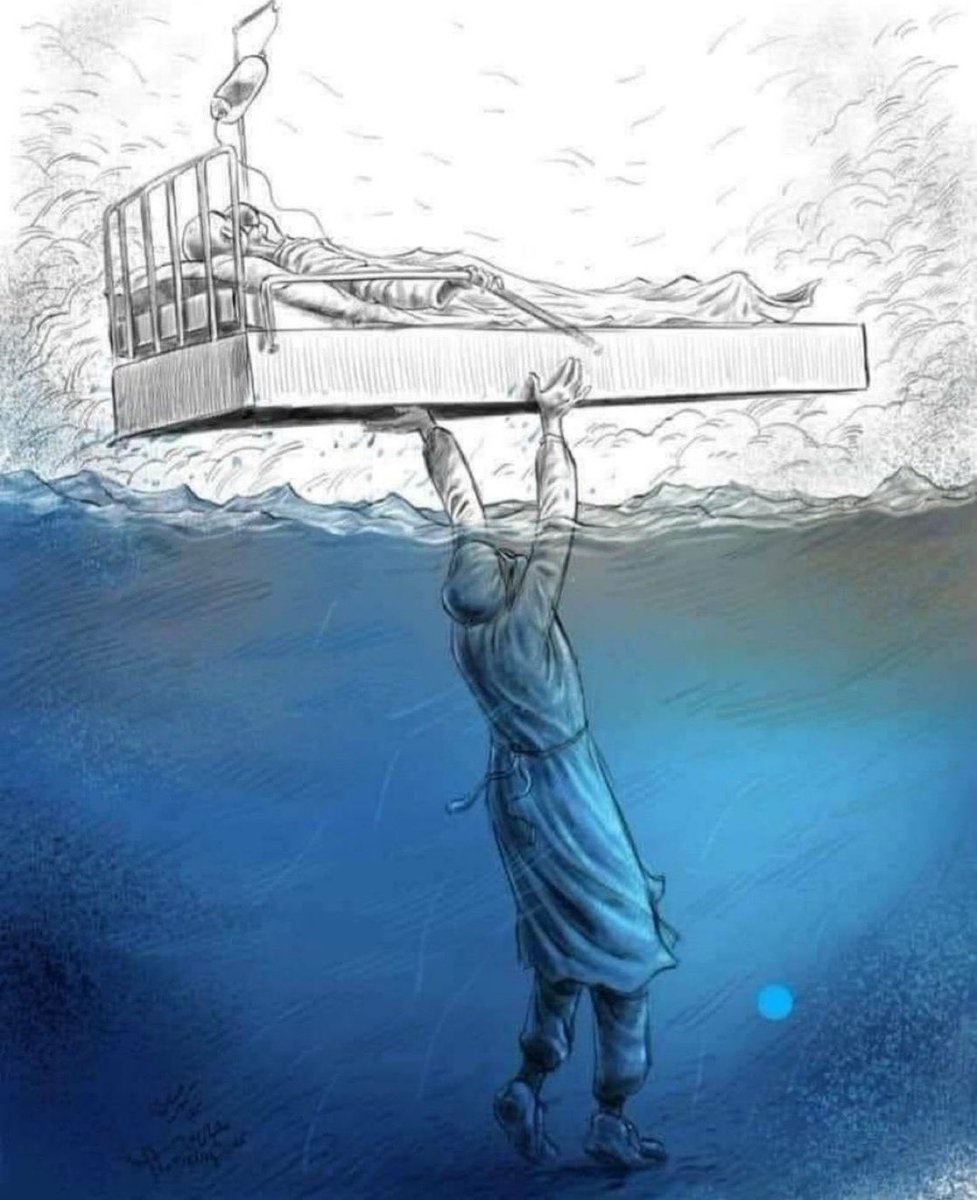
Yesterday an Iranian girl at the university in Tehran was attacked by the ‘morality Police’ for not wearing her hijab properly so she took off her clothes in protest. This artwork says everything about the struggle of women inside Iran and the smallness of the regime that oppresses them.
Her life is in danger.
Ahoo Daryaei is the student who took off her clothes in protest against the mysogeny and oppression of the vice police of the ayatollahs.
They arrested her and she has been missing ever since.
Where is Ahoo Daryaei ?
We demand her immediate release.
Say her name!
#AhooDaryaei