My piece about the Census Bureau’s questionable approach to race and ethnic measurement is no longer accessible on @TheMessenger (they’re apparently out of business). You can still access a version of the article at the @afrolatinoforum via the link below: https://t.co/kETifUxAGE
Two months ago, I left my statistician career with the Census Bureau. I became agitated w/ the agency’s pursuit of a combined race and ethnicity question. Today, I wrote about how this question may result in irrevocable damage to race and ethnicity data.
https://t.co/LOiDl5Ooiw
That man spit racism like if it was his job. For once listen to Afro-Latinos. He had a few bops sure but he learned everything from Black people and then acted racist towards Black women (usually Afro-latinas) whenever he had the chance. Ya not willing to condemn him is telling.
Tonight I am here where I’m supposed to be in my beautiful Island with my people celebrating and watching with awe how well Benito represented us and our culture
I am proud to be Puerto Rican, and I am proud to be an American citizen. Puerto Ricans are not “fake Americans.” We are citizens who have contributed to this country in every field, from military service to sports, business, science, and the arts, and our identity and citizenship deserve respect.
I would not have the opportunities I have today without the support and belief that Most Valuable Promotions and Jake Paul showed in me, and I will always be grateful for the role they have played in helping change my life and in elevating women’s boxing. At the same time, I want to be clear: I do not agree with statements that question the legitimacy or identity of Puerto Rican people, and I cannot support that characterization. It is wrong.
I fight with the pride of Puerto Rico and represent my flag every time I step into the ring. I will always stand with my people, with respect for who we are, and with pride in where we come from.
I will never change and will forever be a Proud Boricua.
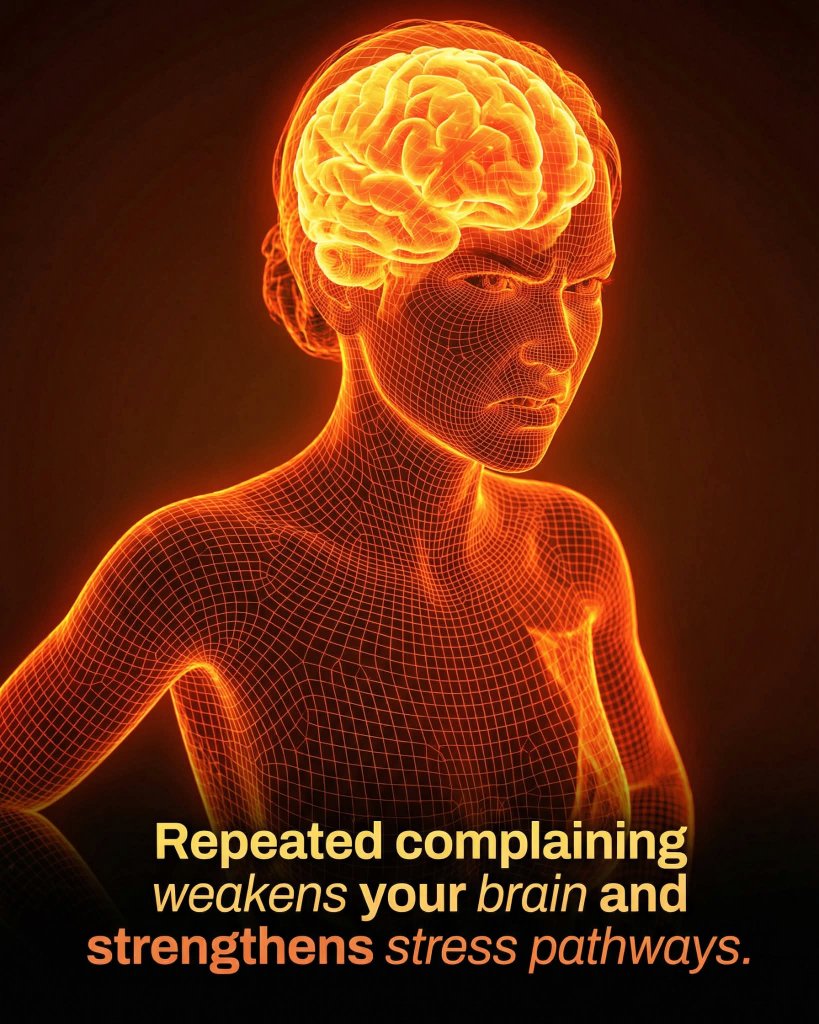
🚨 Research shows repeated complaining physically rewires your brain to prioritize stress and negativity.
The way we speak about our daily challenges does more than just vent frustration; it physically alters the architecture of the brain.
When we engage in chronic complaining, we repeatedly activate neural networks responsible for detecting threats and processing stress.
Through the biological process of neuroplasticity, these circuits become stronger and more efficient every time they are used. Essentially, the brain learns to become more adept at finding things to be unhappy about, turning a temporary mood into a permanent biological predisposition toward negativity and fear-based thinking.
As these negative pathways become the brain's default setting, individuals often experience a measurable increase in baseline stress levels and emotional volatility. This heightened sensitivity means that even minor inconveniences can trigger an intense stress response because the brain has been conditioned to interpret the world through a lens of threat. Findings discussed by the Stanford University School of Medicine emphasize that while this mechanism is powerful, understanding the science of affective neuroscience is the first step in consciously redirecting those pathways toward more resilient emotional patterns.
Source: Stanford University School of Medicine. (2023). Neural Plasticity and the Impact of Negative Thought Patterns on Emotional Regulation. Stanford Medicine News.
When Kobe Bryant said his insane level of confidence came from knowing he’d done all he could to prepare, it taught me that anytime I’m nervous it means I didn’t prepare enough.