Nobody is okay right now.
Gas is $4.50 a gallon.
Rent is $1,800 in the hood.
Daycare is $1,500 a month.
Groceries are up 40% since 2020.
Credit cards are at 21% interest.
A starter home requires a $80,000 down payment.
Health insurance is $500 a month with a $6,000 deductible.
And somehow everyone is still showing up.
To work. To parent.
To pay bills. To hold it together.
We are not lazy.
We are not irresponsible.
We are not making excuses.
We are exhausted from doing everything right in a system designed to keep us behind.
Give people grace right now.
Everyone is one unexpected bill away from falling apart.
And most of them are smiling through it.
15 psychologists who figured you out before you did :
1. Sigmund Freud — your unconscious is running the show, not you
2. Carl Jung — the parts of you that you hide end up controlling you
3. Abraham Maslow — you cannot find purpose before you find safety
4. Viktor Frankl — suffering becomes bearable the moment it has meaning
5. B.F. Skinner — your behavior is shaped by what follows it not what causes it
6. Albert Bandura — you become what you consistently watch and repeat
7. William James — your habits are literally rewiring your brain every single day
8. Ivan Pavlov — your triggers were trained into you long before you noticed them
9. Erik Erikson — every stage of your life has one question it needs you to answer
10. Alfred Adler — most of what drives you is the need to feel that you matter
11. Karen Horney — anxiety is not weakness, it is what unsafe childhoods produce
12. Leon Festinger — when your beliefs and actions clash, your mind will lie to fix it
13. Daniel Kahneman — you have two minds, the fast one makes most of your mistakes
14. Martin Seligman — happiness is not the absence of pain, it is the presence of meaning
15. Erich Fromm — the greatest human fear is not death, it is the freedom to choose your own life
There is a very formative moment for many young people where, once you start to get into more serious rooms, you quickly realize just how human everyone is.
Many of the “accomplished elders” who seem put together and like they have it all figured out, are in reality, also still trying to figure it out. They know a lot, they have reps and experience, but things like insecurity and imposter syndrome tend to stick around.
Many older men aren’t used to being challenged in any way and as a result, can react poorly to it.
Many people put on a facade of having it figured out when they are just as unsure of the future as I am.
Many people struggle to show vulnerability or admit when they don’t know or feel backed into a corner.
These are human characteristics, and regardless of power, access, or experience, they seem to stick around.
Everyone is slowly dying inside :(
- Some stopped taking photos.
- Some lost interest in new clothes.
- Some hate love now.
- Some got used to loneliness.
- Some stopped meeting friends.
- Some stopped comparing.
Some just accepted what they couldn’t achieve.
The same people who once dreamed big are now just pushing through days.
Check on your people. Not everyone is okay.
After this week, this whole lesser of two evils talk from Black men about voting democrat is shut the f*** down.
Nah. Bruh. Zip it. Hillary was right. Kamala was right and you ALL were wrong.
My grandma once told me the “Chair Theory” and I never looked the relationships the same way.
She said…
If you walk into a room and there aren’t enough chairs for everyone, pay attention.
Some people will grab another chair for you.
Some will offer you theirs.
Some will shift around to make space.
And some people?
Will stay exactly where they are
while you’re left standing.
That’s when people reveal themselves.
Because life works the same way.
Some people naturally make room for you.
They support you, include you, and genuinely want to see you grow.
Others will watch you struggle
without ever moving an inch.
Notice the ones who make space for you.
Those are your people.
The rest?
Let them stay where they are.
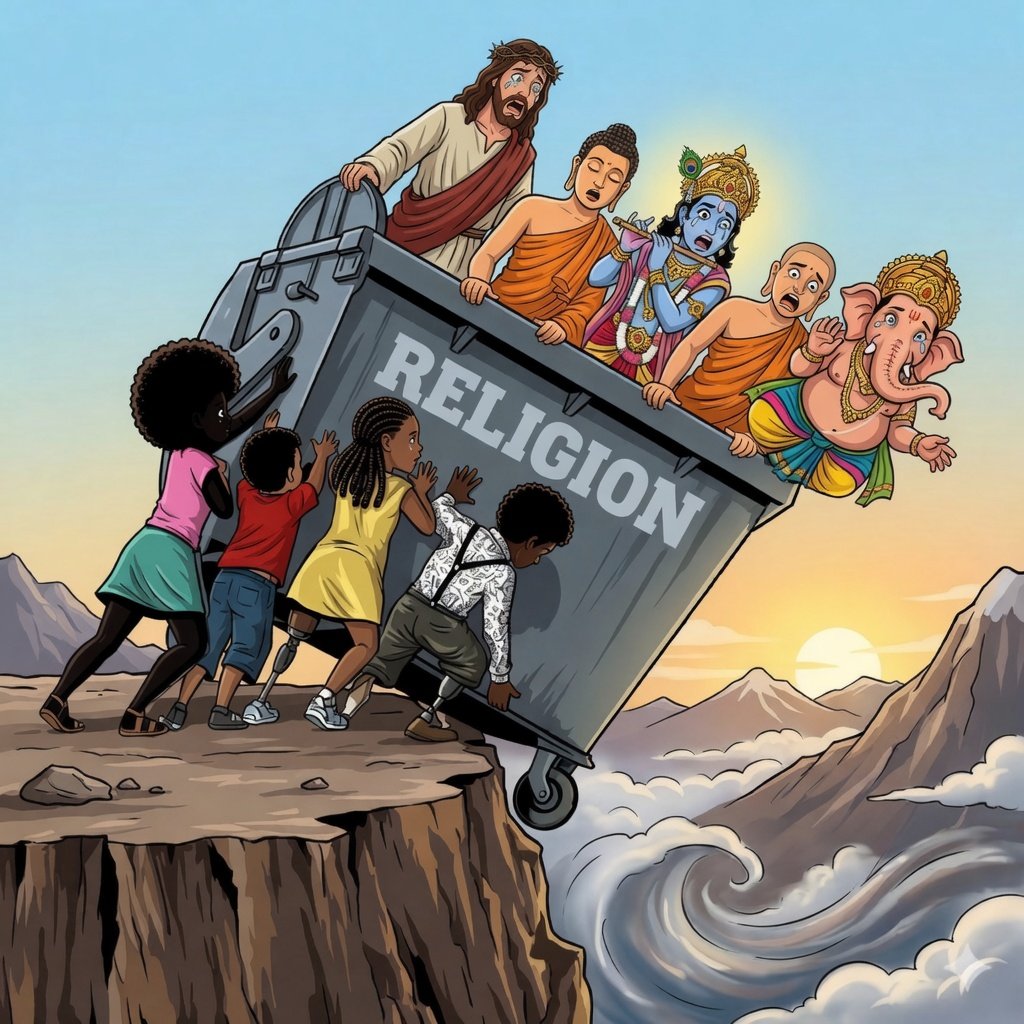
Religious people will describe heaven as a classless, stateless, moneyless society with no private property, no suffering, and everyone’s needs met, then turn around and call communism evil. It will never stop being funny.
“Wemby’s too emotional.” “Wemby should stop crying.” “Wemby’s gay.”
Can we stop with the tired old clichés that treat emotions as a weakness, either in sports or in life in general?
I asked Wemby about why that is. Here’s his response:
“That’s a tough question. I think it’s first and foremost a fear of judgment. Like this feeling that you have to act a certain way, social codes, I guess. Personally, I refuse to carry the burden of having to hide my emotions.”
Carl Jung wrote: "The more intelligent and self-aware a person is, the more they suffer from the general unconsciousness of society."
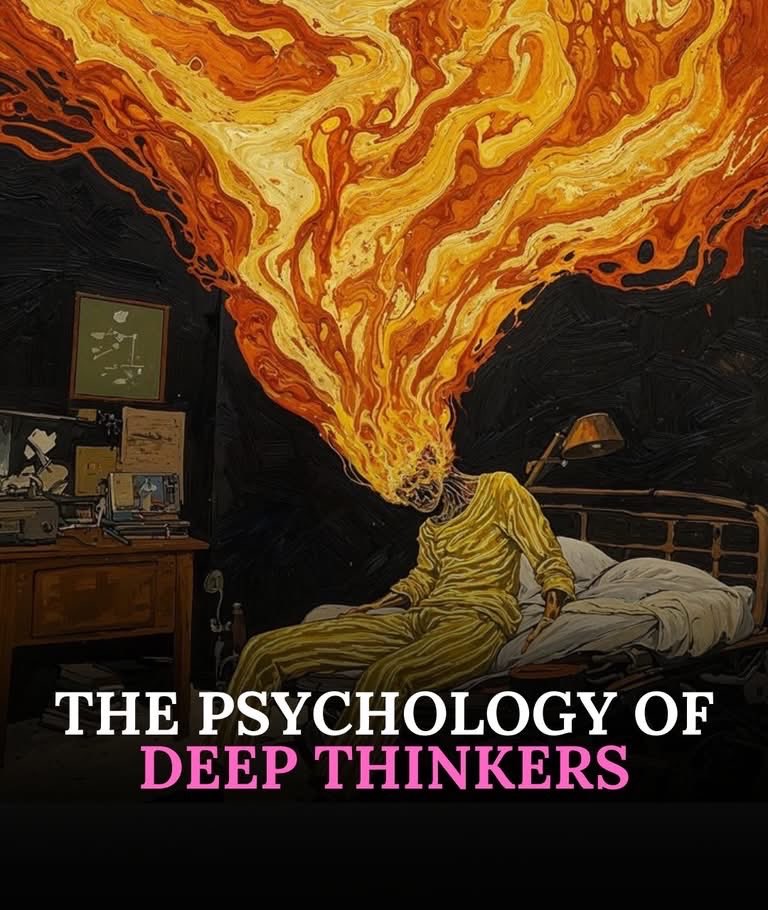
This is not a badge of honor. It is a recognition of the weight carried by those who cannot unsee what they have already seen. This is the psychology of the deep thinker and if you recognize yourself here, this one is for you:
The architecture of alienation. It starts early. The child who asks why adults say one thing and do another. The one whose questions are always labeled as "overthinking." Nietzsche described these people as "free spirits" — essential for progress, but wandering in a wilderness everyone else refuses to enter.
Research by Dr. Elaine Aron suggests approximately 20% of the population processes information more deeply and notices subtleties others completely miss. In a world that rewards speed, this depth can feel like a disability.
The frequency of truth. Deep thinkers operate on a different wavelength, the frequency of truth rather than the frequency of comfort. Most people live without ever questioning the fundamental assumptions of their own existence. But the deep thinker has glimpsed behind the veil.
Like Plato's prisoner who escapes the cave and returns to share what he saw only to be rejected and called a troublemaker—the deep thinker carries the burden of the witness. They see the masks, the exploitation, and the pain that everyone else has agreed to ignore.
The emotional sponge. Deep thinkers do not just observe emotions, they absorb them. They feel the anxiety of a stranger as if it were their own. They perform enormous amounts of invisible emotional labor — checking in on people, listening, supporting, acting as the unofficial therapist of every room they enter. And yet the relationship is almost always asymmetric. They give at a depth most people cannot match. They live with the quiet loneliness of being the strong one, the one everyone leans on, but no one thinks to ask: "Are you okay?"
The mask of normalcy. To survive, many deep thinkers learn to wear a mask, laughing at jokes they do not find funny, feigning interest in conversations that feel hollow, modulating their intensity to avoid being too much. This is not deception. It is survival. But the cost is enormous.
Maintaining the split between the complex private self and the simple public self is exhausting. And the mask, while protective, makes true connection nearly impossible. You cannot be fully known while hiding.
The wounded healer. Jung wrote about this archetype; the person who transforms their own brokenness into a source of healing for others. The wounds of rejection and misunderstanding become sources of deep compassion. The person who has felt most unseen becomes the most gifted at seeing others. But the challenge is learning to give without emptying yourself completely, to love others without losing yourself in the process.
The alchemy of solitude. For deep thinkers, there is a crucial distinction between loneliness and solitude. Loneliness is the pain of disconnection from others. Solitude is the joy of connection with yourself. In solitude, the deep thinker finally breathes. The noise of the world falls away. The internal landscape becomes clear. Isolation transforms into introspection and that is where the real work happens.
The revolutionary act of authenticity. In a world that profits from insecurity, choosing to be genuinely yourself is a radical act. When a deep thinker chooses authenticity over performance, it creates space for others to do the same. It gives people permission to be real in a culture that rewards shallow.
If you recognize yourself in any of this, stop apologizing for your depth. You are not broken. You are not too much. You are not too sensitive. You are awake in a world that prefers to stay asleep. Your sensitivity is a superpower. Your intensity is a strength.
✨🙌🏾💫
Harvard University is offering a FREE online course on the US Constitution! Understanding our Constitution has rarely been more important. Enroll in a free, short, engaging online course.
HarvardX: American Government: Constitutional Foundations | edX https://t.co/fm2LcQ1eZ2
If you paid even a penny in federal income tax last year, you paid more than:
Tesla
Southwest
Disney
Live Nation
HP
United
PayPal
CVS Health
Palantir
Citigroup
PG&E
3M
That's right. They paid $0 in federal income tax.
It's time for big corporations to pay their fair share.